Philip Polkinghorne murder trial live updates: Personal trainer gives evidence
WARNING: DISTRESSING CONTENT
The jury in the murder trial of Philip Polkinghorne has heard from a police officer involved in a raid on the Mt Cook chalet where the retired eye surgeon was holidaying with an escort after the death of his wife.
Detective Senior Sergeant Lisa Jane Anderson, of Auckland City CIB, told the court she travelled to the Mt Cook Lakeside retreat and seizes escort Madison Ashton’s phone for the purposes of a search warrant.
Earlier today, the jury heard from the personal trainer who trained Polkinghorne and his wife Pauline Hanna.
Newmarket personal trainer Barry John Payne told the court he trained the retired eye surgeon and his wife separately and would see them both about twice a week before Hanna’s death.
He last saw them Saturday April 3, 2021. Hanna was found dead in their Remuera home on Monday April 5, 2021.
STORY CONTINUES AFTER LIVEBLOG
Trial ending for the day. Jury heading out
James Wheeler
In the police interview, we are now up to 3.47pm on the day Philip Polkinghorne reported his wife dead by suicide: April 5, 2021. Easter Monday.
Detective Ilona Walton is returning to the topic of the orange rope.
Defence lawyer Ron Mansfield interjects, asking for a pause.
The video pauses.
Justice Graham Lang is stopping for the day.
"Members of the jury, I think it's been a long, full day."
The jury is heading out, and the trial will resume at 10am tomorrow.
There's about an hour left of the police interview.
'How has that happened?': Polkinghorne asked about fresh forehead wound
James Wheeler
Polkinghorne is asking if he could go to the mortuary to view the body. He begins crying, rueing that he hasn't said goodbye.
Walton said she'd need clearance from her bosses.
Polkinghorne said he wants her to be in clothes so she has some dignity, rather than in a body bag.
Walton said that was an issue for when the body is released to a funeral home.
Now, Polkinghorne is saying it might be better for him to say goodbye at the funeral.
P: I don't need to say goodbye to her in a bloody mortuary.
He'd been to enough mortuaries, he said.
Polkinghorne said he used to go to them to retrieve eyes from donors.
Talking quickly again, Polkinghorne is saying funerals in Auckland are "bloody awful".
Walton says another break is coming.
P: Can I go for a walk then?
W: Probably not.
Walton is asking Polkinghorne about the fresh bleeding wound on his forehead that the attending officers noted.
W: How has that happened?
P: Well, I don't know. Ruth [his sister] said I may have hit the tiles on the stairs.
P: I've got no idea. I can't even feel it.
He said he has tried to wash it off, and asks the detective how it looks.
You can hear his breathing. Another male detective asks if he's all good.
He says he's freezing.
P: I'm shivering.
Polkinghorne has been given a cup of tea.
Walton returns to the room.
Polkinghorne again complains about being cold, and trails off, mumbling.
Police interview switches focus to rope
James Wheeler
Back to the rope once more.
Had it been used for the tip run to Onehunga the day before?
Polkinghorne thinks so, but can't be sure. It could have just been with the "stretchies" – his word for bungee cords.
How long have you had the rope for? asks Detective Walton.
P: Oh, years.
W: Where does it normally live?
P: With the truck.
W: It was just one orange rope?
P: Yeah, I think so, yeah.
Yet another long, long pause.
Now Polkinghorne wants to ask a few questions of his own.
It's about the fact Hanna was vaccinated the day before her death – a fact he thinks should go before the pathologist.
"Some people on the first vaccination have no trouble at all," he said.
But others have an adverse flu-like reaction to the second jab, says the eye surgeon.
Police quiz Polkinghorne on how wife was found
James Wheeler
P: The rope was attached to the balustrade above.
P: That was granny knots too, from memory.
P: I said to someone afterwards, I was surprised the balustrade had taken a dead weight of 70kg. I don't know whether the knot slipped. I'm just trying to think, why was she sitting there in the chair? Maybe she was standing on a chair and went off and... maybe, I don't know.
P: 70kg on that balustrade, that's a hell of a weight.
Walton asks Polkinghorne what happened after he undid the granny knot. How slack or tight was the rope?
Polkinghorne said, in his hurry to undo it, he was concerned about his wife's hair.
He said when he got her down, "It looked too hideous to me."
So he undid the granny knots upstairs, tied to the balustrade.
P: It looked awful just hanging there.
P: It was offensive to me, the rope.
An ambulance arrived, followed by uniformed cops then detectives, Walton said.
Polkinghorne said he thought he had taken the rope off straight away, but apparently not.
W: It was still there when I left?
No it wasn't, said Polkinghorne.
W: But you've undone it from the balustrade? You recall doing that?
P: I'm pretty sure I did.
P: It must have been before you arrived,.
W: Where did you put the belt initially?
In the kitchen area, said Polkinghorne.
He said he rolled it up, put it on the servery, and left it there.
As for the rope, he thought he untied it and left it on the landing upstairs, or possibly dropped it down to the second set of stairs landing to the garage.
Another long pause.
He was trying to give her some dignity, Polkinghorne said.
W: What about the dressing gown, how was that arranged?
Both arms were in the sleeves but it was open in the front, skew-whiff and half off, Polkinghorne said.
W: What about her leg position?
They were going in opposite directions, the eye surgeon said.
P: It looked grotesque really.
Yet another long pause in the interview, as the detective reviews some notes.
What happened after Polkinghorne found wife
James Wheeler
Polkinghorne and his sister Ruth took a sheet off the balustrade, he remembered.
P: When I got her off the chair, the dressing gown was all over the place. It just looked awful.
He noticed all her rings, some with diamonds, they were all on the inside.
P: So I turned them around.
These bloody rocks, Polkinghorne said.
P: Ruth said 'give her a pillow'. So we did.
Polkinghorne said he felt sorry for the ambulance people. They did a couple of ECGs, he said.
The lady on the 111 call Polkinghorne made dispatched the ambulance.
But his sister had also called 111, asking for police, he remembered.
Officers arrived about 10 minutes later. One gave him a booklet to read.
W: So I know it's hard but I need to go back a little bit more. Where did the chair come from?
P: It's from the dining room/TV area.
W: Is it normally there?
P: It's not.
In the main dining room, there's a very much larger table they use once or twice a year, Polkinghorne said.
Hanna had bought more chairs than the table could take, Polkinghorne said.
He's laughing.
In the courtroom: A man in the public gallery has his head in his hands. Polkinghorne, sitting at a bench usually reserved for lawyers, is on a laptop, not watching his interview.
The public gallery is mostly full, as it has been for much of the trial.
Hanna, dead in the chair, was looking not straight at Polkinghorne but her face and body were facing as if she'd just walked in the door, he explains.
Her back was towards Darin Ln, which runs off Upland Rd, Polkinghorne said.
Polkinghorne, once again, is saying he's unsure of the exact layout of the belt and the orange rope.
P: Maybe I've missed something.
Pokinghorne on when he found wife dead, draws picture for detective
James Wheeler
P: I don't think she was sitting all the way back in the chair.
He's drawing a picture now for the detective.
P: Then around her neck was my belt and... but the belt wasn't that tight, I don't think. The orange rope went up, like so.
To get her out of the chair he undid the granny knots, he said.
It may have been the other way round actually, he said. He might have undone the belt first. He trails off.
Walton asks if there are holes in the belt.
There are not, it's woven leather, like plaits, the trial heard earlier.
P: It wasn't that tight, I don't think.
P: I would have thought it had to be tight to do the business, but maybe, I don't know.
Maybe the belt went around her neck a couple of times, he says. Whether the other bit of the belt was tucked in, he says he doesn't know.
A long pause from Polkinghorne, not filled by the detective.
P: My understanding was that in the days when people used to be hung for whatever, they used to stick the knot up against the garroted...
W: So the granny knots were at the back of the belt?
P: Yes.
P: I remember now. When I was undoing the knot here that I um [inaudible] some of the hair.
P: I don't want to hurt her.
P: I know that I undid the knot but I'm not sure that I undid the belt.
P: Maybe then um the slouched position became top-heavy. She's only 70kg.
P: I was surprised at how heavy she was.
Polkinghorne told the detective he then put Hanna down on the tiles in the hallway.
Ruth, his sister, is mentioned. She appears to have been there before emergency services.
He's talking quickly, drawing a picture for the detective showing the layout of the home once again.
Police ask Polkinghorne about where and how Pauline Hanna was found dead
James Wheeler
Back into descriptions of the layout of the home.
Detective Ilona Walton asks where in the hallway Pauline Hanna was found.
About two-thirds inside, a third back from the entrance to the lounge, Polkinghorne said.
W: She was slouched forward into the chair?
P: Not quite.
Polkinghorne stands up in the victim room, gets a chair, and sits down to act it out.
P: I think she was leaning forward like so.
Key to the defence case is that Hanna hanged herself by "partial suspension", sitting in a chair rather than suspended in the air like a traditional execution-style hanging.
P: I thought I saw her breathe, move, sometimes dead people do that.
It's really important, says Walton again, that she understands how Hanna was sitting. But Polkinghorne is off on another point.
He is saying the belt, secured to the orange rope, wasn't tight. He got fingers under it. He undid the orange rope.
W: You undid it?
P: Yes. They were "granny knots" not surgical knots.
Polkinghorne police interview to resume
James Wheeler
Philip Polkinghorne's police interview is about to resume, being played on five screens of Courtroom 11 in the Auckland High Court.
We will be using P for when Polkinghorne is speaking, and W when Detective Ilona Walton is speaking.
Polkinghorne: 'I was trying to get her out...as I did so I dropped the phone'
James Wheeler
P: I was trying to get her out, to put her down flat. I think they told me to do that.
P: As I did so, I dropped the phone.
He was sobbing uncontrollably. he said.
P: It was just like having an arm pulled off you. It was horrible.
When the police came over, they gave Pauline Hanna a pillow and tried to make her comfortable. Polkinghorne took her off the chair and her legs buckled.
P: It was a dog's breakfast what I did there.
W is asking how Hanna was positioned on the couch. The detective backtracks. The video stops.
Justice Lang has called the afternoon adjournment.
We'll be back about 3.45pm.
'I was a wreck': Polkinghorne tells police of moment he found wife dead
James Wheeler
Now on to the gym visits, canvassed with the couple's personal trainer Barry Payne.
They went to the trainer on Saturday, April 3. She had the 9am appointment, He was at 10am.
They went to the City Fitness gym in the Westfield Newmarket, a relatively new upscale mall.
It shifted into the new mall in about 2020 from its former spot in Nuffield St.
P: "The last few months I've been going in the morning usually about 7.30am."
P said that meant he could get to work about 8.30am.
P: Pauline and I used to go at the end of the day. No more.
"She, certainly in this new job, she hasn't been able to get to the gym as much as she'd like. There's always some disaster," P said.
She was meant to go that morning at 9am, Polkinghorne said, because she had a Zoom meeting at work.
She was packed up and ready to go, he said.
That was another funny thing about last night, Polkinghorne said.
Why did she choose to go to their son's room, when all her stuff was in the master bedroom?
P: "I don't know. Anyway."
That morning he went to his ensuite bathroom first, then downstairs to put three bits of toast in the toaster.
McKenzie bread is quite big, he said. So once the tea is made, he then turns the toast over so the remaining couple of cm is toasted.
"Browns it off a bit," Polkinghorne explains.
He had turned the jug on and put the toast in.
P: "But I don't think I did anything more than that."
Then he went into the hall and saw Pauline slouched.
There was a chair there, but Polkinghorne said he could see the dressing gown was half on and half off. I could see her arm was blue.
"And I knew she was dead straight away," he said.
P: "I don't think her face was contorted. I don't think she looked at peace or anything, my God no."
He went to look for his phone to call 111. But he didn't have his glasses and panicked so he couldn't use his phone.
So he went to the landline. He called 1114 first then 111.
P: "I was a wreck."
P: "Pathetically... I didn't know what to do."
'I was a wreck': Polkinghorne tells police of moment he found wife dead
James Wheeler
Now onto the gym visits, canvassed with the couple's personal trainer Barry Payne.
They went to the trainer on Saturday, April 3. She had the 9am appointment, He was at 10am.
They went to the City Fitness gym in the Westfield Newmarket, a relatively new upscale mall.
It shifted into the new mall in about 2020 from its former spot in Nuffield St.
P: "The last few months I've been going in the morning usually about 7.30am."
P said that meant he could get to work about 8.30am.
P: Pauline and I used to go at the end of the day. No more.
P: She, certainly in this new job, she hasn't been able to get to the gym as much as she'd like. There's always some disaster.
She was meant to go that morning at 9am, Polkinghorne said, because she had a Zoom meeting at work.
She was packed up and ready to go, he said.
That was another funny thing about last night, Polkinghorne said.
Why did she choose to go to their son's room, when all her stuff was in the master bedroom?
P: I don't know. Anyway.
That morning, he went to his ensuite bathroom first, then downstairs to put three bits of toast in the toaster.
McKenzie bread is quite big, he said. So once the tea is made, he then turns the toast over so the remaining couple of cm is toasted.
"Browns it off a bit," Polkinghorne explains.
He had turned the jug on and put the toast in.
P: "But I don't think I did anything more than that."
Then he went into the hall and saw Pauline slouched.
There was a chair there, but Polkinghorne said he could see the dressing gown was half on and half off. I could see her arm was blue.
"And I knew she was dead straight away," he said.
P: "I don't think her face was contorted. I don't think she looked at peace or anything, my God no."
He went to look for his phone to call 111. But he didn't have his glasses and panicked so he couldn't use his phone.
So he went to the landline. He called 1114 first then 111.
P: "I was a wreck."
P: "Pathetically... I didn't know what to do."
Polkinghorne tells police about morning Pauline Hanna died
James Wheeler
Now on to the morning of April 5.
P said he's been left confused by the times due to Daylight Saving.
"Spring forward, fall back?"
She has the same breakfast every day, he said: one piece of toast. It has to be McKenzie bread, Olivani margarine and lime marmalade. They have French Earl Grey tea.
"Isn't it delicious?" agrees the detective.
Yes, says P, and laughs when saying he once made the mistake of buying it online.
Usually, he's off to work by about 7.30am, says P.
Hanna likes to "smooth into the day". But she was always home after him, he remembered.
"So you're in constant daily communication?" asks W.
P: "Oh yes."
How? The "messagey thing" text messages, he confirms. Not WhatsApp.
P: "We're not Facebook people."
P: "She rings me when she's coming home."
Sometimes, if she's very lucky, I'm standing at the top of the stairs holding a glass of wine for her, P said.
"Oh, very nice," said the detective.
The interview is being played on five screens in the expansive Courtroom 11 of the Auckland High Court.
The jury is watching but many are referring to the transcript.
Polkinghorne: 'She's never hit me, I've never hit her'
James Wheeler
W. So I'd just like to go back if you don't mind.
The detective wants to return to the argument at the dinner with his sister a couple of days before her death.
"I just thought it was a bit niggly." The argument was over the bach at Ring's Beach.
There were no raised voices or anything like that, P said.
"I'm trying to find a whole lot of things... what may have triggered it."
"It wasn't raised voices."
"She's never hit me, I've never hit her," he said.
W: "It's a disagreement? A discussion?"
P said the beach house is quite expensive.
P: If she'd told me 10 years ago she wanted to paint it rather than stain it, I wouldn't have minded. But it was now closer to retirement.
W: How often do those sorts of more heated discussions arise, like on Saturday night?
P: Very infrequently. But when she had "more than her quota", she could become argumentative. When she was in that state, there was no point responding.
P said he had learned "by bitter experience".
Hanna had once recently asked Polkinghorne why he wasn't drinking much, and why he was making her out to look like a big drinker, remembered the eye surgeon.
W: How much did you drink on Saturday?
P: A couple of glasses of red.
"She drinks Pinot Noir and I drink Shiraz."
On the night before her death, she had finished her bottle of Pinot Noir and started into the Shiraz.
P said he asked her if she realised she was now on to the Shiraz.
She confirmed she was aware, and wanted something "meatier".
"So that means a bottle and a half has gone down. And I think that's too much."
Was she drunk? No, said Polkinghorne.
Polkinghorne: 'I just wondered why she suddenly rang these people'
James Wheeler
Polkinghorne said Hanna, on the day before her death, had talked to his mother on the phone, which she didn't do often. She had also talked to her niece and nephew.
P: "I just wondered why she suddenly rang these people yesterday. I just don't know. She doesn't usually... she hates talking on the phone."
P: "Her mother died about six weeks ago."
W: "Oh did she?" asks W.
Cricket had been on some time shortly before her death.
Hanna's mother was a big cricket fan, P said.
P: She had said, oh I better ring my mother to tell her. Then she realised her other was dead.
P is saying there may have been other such signs of distress that he may have missed.
P observes that his account is "jumping all over the place" and then he goes back to the Netflix series they watched on the evening of April 4, New Amsterdam, a medical drama.
P: "When she went to bed, I think I worked in the office for a while."
The document Hanna had helped him with had come out as a .dat file, which he couldn't open.
So he had to use her laptop. Then there were difficulties with printing.
The interview is bouncing around all over the place.
Polkinghorne tells police about wife's trip to Onehunga tip
Vera Alves
Now a break in the interview.
W has heard someone knocking on the door of the victim room. It was someone watching the interview, asking for P and the detective to sit closer to the microphone.
P is sitting slouched on the two-seater couch in the police victim room for his first interview, appearing absolutely worn out.
W: Can you tell me a bit more about Hanna going to the tip?
P said he was concerned about her going because of the ute's difficulty reversing.
The trip to the Onehunga tip was April 4, the day before he reported her dead.
The ute's tray was chocka. The rubbish was tied on with "stretchies" – and the nylon orange rope.
That rope was the centrepiece of last week's evidence.
The Crown says he used it to stage the scene as a suicide. Polkinghorne said his wife used it to hang herself.
He had singed the end of the rope to stop it fraying, he said. Singed as in burned.
What was Hanna like, asks the detective, in the lead-up to her death?
Pretty good, P said. But the night before she was less friendly.
P told the detective sometimes when she drinks, she gets a bit argumentative.
She didn't like the way the beach house (in the Coromandel) had been stained.
P said it's a shame they didn't paint it.
"That went down like a lead balloon."
That was on the Saturday night, at a dinner with his sister.
His sister and her partner were planning to head to the beach house. Hanna, Polkinghorne said, didn't recall that arrangement.
Polkinghorne describes wife's final night
Vera Alves
P now talking about roadworks, sometimes trailing off.
P is describing the upstairs area, which can be locked off.
The house is like a rectangle, he said, drawing a picture.
Upstairs, you come up some stairs, and then there's a small landing.
The room here, that's the library. It's got a small deck out the front.
Adjacent to the library is a large sliding door that enters into the master bedroom.
There's another door, into the ensuite.
"Master sounds a bit sexist but anyway."
As we come out of the study, there's a landing, with a second staircase. Across the landing is one of his son's bedrooms.
Many rooms in the home can be locked off, P said.
Sometimes Hanna gets nervous when P is away and stays in a motel, he told the detective.
Someone had tried to break in after climbing up on to the deck, which left his wife terrified.
Was that reported to the police, asks W?
P can't remember. It was 10 years ago.
Hanna had locked herself in a bedroom one night before her death, P told the detective.
He reiterated she was concerned about an intruder climbing up on to a deck and into her room.
Polkinghorne recounts evening and morning around Pauline Hanna's death
Vera Alves
P is now talking about how the District Health Board (DHB) staff handle vaccine reactions. Pauline Hanna had told him they'd had five cases of anaphylaxis.
"Staying on for 30 minutes is really a waste of resources."
P says they discussed this and other things on previous occasions. He's now talking about chilly bins and vials.
Reminder: We are watching the video interview of Walton (W) with Polkinghorne (P) on the morning he reported his wife dead, on April 5, 2020.
Back to Upland Rd. P remembers her finishing dinner on the night of April 4 and then wanting to watch the Netflix series, New Amsterdam, a medical drama.
They watched three episodes, he thinks.
W: Which bed did you sleep in ?
P: That's funny, in the afternoon I slept in the other bed.
He's saying that in the afternoon she slept in the master bedroom. That's the bedroom the court earlier heard Polkinghorne slept in on the night of April 4.
W is talking about the layout of the home, with two bedrooms on the top level. The master bedroom and a guest bedroom were formerly used by one of Polkinghorne's children.
"I don't recall her coming into my bedroom," he said.
"Usually if she goes to bed later than me, she'll wake me up, then I'm awake for hours," he said.
"By mutual agreement, we don't disturb [each other]".
He had been away in Whangārei in the days prior, so he wouldn't disturb her if he came home late.
What was he up to in Whangārei, asks W?
P said it was a board meeting.
"It was pouring with rain."
Pictured: Philip Polkinghorne's police interview the day his wife Pauline Hanna died
James Wheeler
Polkinghorne recounts details to police
James Wheeler
Polkinghorne (P): "On Easter Sunday, I made Pauline breakfast and she had that and because it was a fine day, she decided to wash a whole lot of stuff. So the place looks a little bit like a laundry that day. I'm not quite sure what I did in the morning after that, I worked and I know we met for lunch. Pauline wanted to do something... she asked me to take a car home... which I did, then I think I worked in the afternoon and I suspect Pauline did too."
Polkinghorne appears to have trouble remembering and is jumping around times.
Walton (W): So you went to the friends'?
Polkinghorne: But I forgot to take his laptop back [on Saturday] because he wanted me to fix it.
P: Last night, when she got back about seven, we had a couple of drinks in the library and we just talked about the day. I think she just offloaded.
P: The cop who was taking my statement before must have been pulling his hair out.
Polkinghorne is saying she wanted to go to the Highbury Vaccination Centre for several reasons.
Because out there, the workers in the car park directing traffic had to have covers, he said. A tent-like structure for the guys to be under so they don't get wet in the winter.
P: The tent has to be bigger than she envisaged. So she was making notes.
P: There are various procedures which she wanted to go and check.
Polkinghorne is rambling, he's all over the place in the early stages of this interview.
Polkinghorne asked about Pauline Hanna's laptops and cellphones
James Wheeler
Polkinghorne is confirming his wife used the red Ssangyong to take rubbish to a tip in Onehunga.
He's not sure if she used it to make a trip to their elderly, unwell friends on the North Shore, to whom she delivered dinner.
He is saying the front left wheel of the ute doesn't rotate backwards so well, so reversing is tricky.
Polkinghorne confirms Pauline Hanna cooked pork for him the night before.
They then talked briefly about her work with the vaccine rollout.
Walton asked Polkinghorne about which laptops and cellphones belonged to his wife.
He said he was exaggerating when he said there were cellphones and laptops “all over the house”.
Detective Walton is taking Polkinghorne back to the day before – April 4, 2021.
Polkinghorne police interview starts
James Wheeler
Detective Walton (W): It is 1.11pm. Today's gone quick, hasn't it? On the 5th of April 2021. Thank you.
W: We are in the Auckland police station hub in the victim interview hub.
Philip Polkinghorne (P): My name is Philip John Polkinghorne. I live at Upland Rd, Remuera. I'm married to Pauline Kay Hanna and I am an ophthalmic specialist.
W is asking if there's anyone in the interview room besides them and another cop Polkinghorne calls the "muffin man" is identified. He had earlier bought Polkinghorne a muffin at a service station in Auckland's Newmarket.
W is running through the events of the morning, about how P called the police after finding his wife dead, police arrived, and W asked P to come back to the station.
W had told P a pathologist was on the way to the house.
Polkinghorne police interview
James Wheeler
Justice Lang has given the jury a bit of caution about the transcript of the video they have just been handed by a registrar.
The transcript is not evidence and can contain mistakes, Justice Lang said.
The video is the evidence of the interview.
Polkinghorne is seated on a couch wearing a pink shirt and blue jeans.
Detective Walton is sat at a right angle to him in a chair.
We will use W for Detective Walton and P for Polkinghorne to cover who is speaking.
Polkinghorne police interview to be shown
James Wheeler
The Crown has recalled Detective Sergeant Ilona Walton.
Auckland Crown solicitor Alysha McClintock is asking Walton about a video interview she conducted on the afternoon of April 5, 2021.
That morning, Polkinghorne had called 111 to report his wife's death, he said by suicide.
Now, the Crown is about to play Walton's interview with Polkinghorne, at College Hill Police Station in central Auckland.
It is two hours, 45 minutes long, with the breaks removed.
PI, Pauline Hanna, communicate over 'infidelity investigation'
James Wheeler
In the form, Pauline Hanna said she had lost her cellphone and was in the process of replacing it. She wanted to make an appointment to come to see someone about an infidelity investigation.
Pollock said he replied to the website form, saying he would recommend conducting surveillance as a first step.
She said she could not reply properly because she was on her Middlemore work email.
He replied, saying they would need to speak on the phone or in person.
Hanna replied, asking for the day and time for a call.
Pollock said he was free that afternoon for a call.
Hanna asked if 4.30pm was suitable.
He said yes, Hanna said thank you, but he didn't receive that call at 4.30pm, or ever.
Defence lawyer Ron Mansfield had one question in cross-examination, just confirming the witness never met with Hanna.
He confirms he did not. The PI is free to go.
Pauline Hanna asked private investigator to conduct 'infidelity investigation'
James Wheeler
The Crown has called Jacob Torensen Pollock, a private investigator.
Pollock works for a firm called The Investigators NZ.
Pollock is a young man with a law degree and a gravelly voice.
Pauline Hanna made an inquiry via The Investigators' website.
"She wanted to arrange a meeting to conduct an infidelity investigation on her husband," Pollock said.
In the inquiry, she said she preferred not to give out too many details because she was on a work email.
She said she'd call about 4.30pm but Pollock said he never heard from her again.
The contact was made Monday, July 20, 2020.
Trial resumes after break
James Wheeler
We are about to resume the third session on day eight of Philip Polkinghorne's trial.
Polkinghorne attended body corp meetings as Philip John
Vera Alves
Defence lawyer Ron Mansfield will now begin his cross-examination of Myra Riddington.
"You must have a very beautiful garden do you?" Mansfield asks.
"I do, thank you. It's very large," Riddington replies.
Her garden encompasses much of Melrose Court and extends into the land of the neighbouring body corp.
Now on to the issue raised at the body corp re Riddington's irrigation scheme.
Alaria gets confused, says Riddington.
"We've never had an irrigation system," the witness says.
Mansfield asks if there was a dispute between Riddington and Alaria. Yes there was, the witness says.
Riddington said the fact it was raised at the body corp meeting didn't annoy her. But it was hard when someone was confused about such a matter, the witness said.
She wanted the irrigation system, which did not exist, to extend to her vegetable garden, which neighbours had encouraged her to keep.
Polkinghorne was at the meeting, under the name Philip John, as her proxy.
"Dr Polkinghorne was he there to help her express her opinion?" Mansfield asks.
"Yeah," Riddington says.
Was he there more like once a week? the defence lawyer asks.
No, it was more frequent, said Riddington.
That ends the evidence of Myra Riddington.
Justice Graham Lang is taking lunch early.
Court resumes at 2pm.
Trial resumes after brief pause in proceedings
Vera Alves
The jury is back after a brief pause in proceedings. As this blog observed before, nothing can be reported from discussions when a court goes into chambers without permission from a judge, though the media can remain in court.
Crown solicitor Brian Dickey has a few more questions for the witness, Myra Riddington.
"How long would RETINA's visits to Rachel aka Alaria last at Melrose Court?" Dickey asked.
"Well over an hour," Riddington replies.
Justice Lang interjects: "Don't say what other people have told you."
"Was there any pattern to the days or times he would visit?" Dickey asks.
"Generally in the day," says Riddington. "Between 10 and 2 or something," she said.
"Were there other day visitors to Rachel's apartment?" Dickey asks.
"Yes," says Riddington, adding that "she had regular male visitors".
What sort of numbers of visitors, asks the former Auckland Crown solicitor?
"I would say about five that I noted myself," Riddington says.
Did any overlap in time? No, different times, definitely.
Did Rachel leave the address during work hours?
No, she's very much in her home, Riddington says.
Another neighbour talks of seeing RETINA around North Shore apartment complex
Vera Alves
The Crown calls Myra Riddington to the witness box.
Riddington is another neighbour from the block of apartments in Church St, Melrose Court, where Polkinghorne was observed visiting a woman.
Crown solicitor Brian Dickey is asking if she knew Rachel/Alaria.
Riddington said she knew her first as Rachel, before the woman asked to be called Alaria.
How long had she been living there, asks Dickey?
At least 12 years, says Riddington.
"I used to see a lot of her in the early years. She'd often come over when she was upset."
On to the RETINA Mercedes.
Riddington reckons the visits were more frequent than Masters thought and over a longer period, around four times a week over 18 months to two years.
"He was a terrible driver, terrible at parking and nearly ran into me."
Polkinghorne, seated beside a security guard, is laughing along with the public gallery at that comment.
He came to two body corporate meetings, Riddington said.
"Rachel had a number of clients. Some of them were very nice and friendly. I'd often be in the garden and they might chat about the garden."
Riddington is maintaining she saw RETINA at least four times a week.
She would say hello to RETINA if she walked past. But she wasn't introduced until a body corporate meeting, where he was there as a proxy for Alaria, and introduced himself as "Philip John".
Rachel, later Alaria, had a theory Riddington had been paid thousands by the body corp to install an irrigation system.
"We don't need to be involved in the particular issue," says Dickey, to more laughs.
"He's a man who likes to stand out. He'd come with champagne and gifts for her," Riddington remembers.
In particular, she remembered him arriving in scrubs and a hat.
Riddington was annoyed at his gifts of alcohol to Rachel / Alaria, because he was a professional man, she was an alcoholic, and she should know better, in the witnesses view.
"Champagne, you know, alcohol, she wouldn't refuse."
At the second body corporate meeting, RETINA spent the night on his phone.
The meeting was the Wednesday before Hanna died.
Did he speak, asks Dickey? "Not really, he was sort of involved with his phone," said Riddinton.
What was the vehicle with the RETINA plate? Riddington is not sure. But sometimes he came in a red ute as well.
Earlier, the trial heard Polkinghorne and Hanna had a red Ssangyong ute. She used it to make a trip to the tip in South Auckland the day before she died.
RETINA and Alaria would often wander into the garden, Riddington remembered.
Mansfield cross-examines witness who reveals to be a former cop
Vera Alves
Ron Mansfield KC is beginning his cross-examination of Rob Masters.
"Your neighbour told you that she thought Rachel was a sex worker?" Mansfield asks.
"Yes," confirms Masters. He says Melrose Court used to be a motel but has since been converted into a number of apartments.
Master's apartment is two-bedroom, about 60sq m. All are about the same.
Rachel had two sons who did not live with her, but they would visit sporadically, Masters agreed.
"It sounds like the neighbourhood watch is quite strong in your apartment, given your careful observations?" asks Mansfield.
Masters has revealed he used to be a cop, and served for almost 20 years.
"It must have become apparent to you that Dr Polkinghorne knew Rachel and well enough to try and help her out with the body corporate issues?" Mansfield asks.
Yes, confirms Masters.
At the body corporate, asks Mansfield, he was helping her put forward issues important to her?
Yes, Masters replies.
Mansfield moves on to the bags. "You described them as fancy bags, are you just meaning cardboard bags you might get from a luxury or designer store?"
Yes, confirms Masters.
"You couldn't see inside the bag though, could you?" asks Mansfield?
No, says the ex-cop.
Were you aware Polkinghorne met Rachel when she took her son into his clinic for eye treatment?
No, said Masters.
Were you aware she was struggling financially?
No.
Certainly at the body corp meeting, he appeared interested in helping her?
Yes.
And they got on well?
Yes.
"Thank you," said Mansfield, ending his cross-examination.
Polkinghorne's car routinely seen outside North Shore apartment, witness says
Vera Alves
The Crown has called a man called Rob Masters, who was living in a unit in Northcote Pt's Church St. The property is called Melrose Court.
He was living in the block of 12 apartments in the North Shore at the time.
Prosecutor Brian Dickey is asking about activity he had observed relating to a vehicle with the number plate RETINA.
The trial heard earlier Polkinghorne drove a white Mercedes with that plate. He is a retired eye surgeon.
Masters said he first saw the car about 2019.
He came to realise its relevance when the story of Hanna's death broke in the media.
The car with the RETINA plate was a white Mercedes, Masters confirmed.
"It would be visiting Melrose Court at least on a weekly basis," Masters said, adding it was sometimes more often than weekly.
Masters is a part-time personal trainer. He'd quite often be out in the driveway doing his training, and would see the white Mercedes arrive.
Always the same male driver, said Masters. Did he ever meet the person? he was asked.
A couple of times, Masters replied. He came to the apartment AGM once. And another time, perhaps in the driveway.
The driver was white, grey hair, sometimes wearing glasses, 60+ years of age at the time.
He was introduced at a body corp AGM as "Philip John".
He was visiting apartment four in Melrose Court, an upstairs apartment.
A woman would come out on to the balcony as he walked up the stairs.
Her name was Rachel, or Alaria. She went by both names, Masters said. He knew her "just as a neighbour".
She had a Greek-sounding name "Papa – Consta – something along those lines," said Masters.
She was white, in her early to mid 50s. Slight build. Height 170, 175cm at the absolute maximum. Long blonde-ish, greyish hair.
Hard to put a frequency to the visits, says Masters. There would be times where you'd go out, see the car and think "Oh RETINA's here". But he was a consistent visitor over 18 months or so.
Masters said he'd train about 4pm to 4.30pm. RETINA would visit around then. He would stay an hour or an hour-and-a-half, sometimes longer, Masters said.
"It wouldn't be an overnight thing or anything like that. He'd be there for a couple of hours."
He would have alcohol, champagne, or sometimes a bag of women's clothing or underwear, Masters said.
He remembered RETINA carrying the underwear in a "fancy bag" not a "Farmers bag".
"He was a well-dressed man. He always had nice clothes on."
Once he turned up wearing doctor's scrubs, Masters remembered. "It stood out."
Did he visit during lockdown?
Not during Level Four. But on the first day we went to Level Three, there was RETINA, said Masters.
"It was definitely the day after, because it was like, oh yep, that didn't take long."
Laughs from the gallery. Polkinghorne is stony-faced.
He was at the body corp meeting and spoke on behalf of the owner of unit four.
The owner, Rachel aka Alaria, was not very confident and a big environment there was hard for her, Masters said.
Polkinghorne put something forward that she wanted to raise, he remembered.
Were there other visitors to this unit? he was asked. Yes, at least two other regular visitors, Masters replied.
But RETINA was the most frequent.
Were you aware of Rachel's work, asks Brian Dickey?
"My understanding was Rachel was a sex worker," Masters said.
When the story broke of Hanna's death, the neighbours no longer saw the RETINA vehicle.
But what about the lead-up to the death? He couldn't say.
Trial resumes
Vera Alves
The jury is back.
They've asked a question: what was the date of the Mt Cook search warrant?
Well, said Justice Lang, it was executed on April 30, 2021. The date written on the warrant is not yet in evidence, said the judge.
Vera Alves
The Philip Polkinghorne murder trial will resume shortly but the jury has not heard who is up next.
The couple's personal trainer and a detective who raided the "Matariki Room" of a Mt Cook chalet the accused shared with an Australian escort were the main events of a frenetic morning of evidence.
The escort, Madison Ashton, refused to hand over the Pin codes to her two cell phones, the jury heard.
There has been no evidence yet on whether the digital forensic unit was able to crack her personal phone or the escort's work phone.
Vera Alves
Justice Lang is taking the morning break early after a dramatic morning of high-tempo evidence.
Defence lawyer cross-examines officer who seized escort's phone, asks about unrelated incident
Vera Alves
Defence lawyer Ron Mansfield is now going to cross-examine Detective Senior Sergeant Lisa Jane Anderson, of Auckland City CIB.
"Just to change the topic entirely, I understand you were involved with investigations on 16 April, 2021?" Mansfield asks.
"Correct," Anderson says.
That was a warrant for an address in Nihill Cres, Mission Bay.
That's the address of Polkinghorne's sister Ruth, where he was staying while police conducted their lengthy scene examination of his Remuera home.
Anderson was there to seize shoes. That was because of shoe prints found on a tipped-over ottoman in Hanna's bedroom.
One footprint had been linked to Hanna. Police were trying to see if the other footprint could be linked to Polkinghorne.
Police took his black-and-white sneakers after visiting the Nihill Cres home. Polkinghorne was co-operative.
Another police officer compared the sneaker's footprint to the footprint on the ottoman. It was similar.
No more questions from Mansfield, who did not ask anything about the raid on the Mt Cook chalet where his client was spending time with Madison Ashton.
Police detail raid on Polkinghorne's Mt Cook chalet he shared with escort days after wife's death
Vera Alves
The Crown calls Detective Senior Sergeant Lisa Jane Anderson, of the Auckland City Criminal Investigation Branch (CIB).
She travelled to a property in Mt Cook Village in the South Island where Polkinghorne and his girlfriend Madison Ashton were staying, after Hanna's death.
They were at the Mt Cook Lakeside retreat on the date of her visit, on April 30. Anderson had a warrant for their lodge.
She was there to seize Ashton's phone.
Two detectives from Christchurch were with her.
Brian Dickey is leading Anderson's evidence.
A white Toyota vehicle was there. Polkinghorne and his escort companion had a standalone unit, called the Matariki Room.
Polkinghorne had hired the white Toyota.
They went to the front door. Polkinghorne opened the door and they showed their police IDs.
"We advised Mr Polkinghorne we were at the address to execute a search warrant. And we went inside," Anderson said.
The detective explained they were there to seize the Australian escort's phone.
Anderson spoke with Ashton to establish her identity.
"We explained to Ashton why we were there, to seize her phone."
She pointed to it on a counter.
Polkinghorne and Ashton were advised they were being detained for the purposes of a search warrant.
Her detective colleague seized the phone. Then it emerged a second phone belonging to Ashton was there. It was a work phone, Ashton told the detectives. It too was seized.
Both phones were password-protected.
They asked Ashton for her Pin number.
"She declined to provide the Pin numbers," Anderson said.
Both phones were then secured in Faraday bags, a small bag that electronic devices go into that protects their electronic integrity, Anderson said.
The detectives left the lodge and returned to Christchurch.
'He was devastated. He loved Hanna,' witness said in statement
Vera Alves
Now a witness' statement is going to be read by a registrar.
This witness, John Garland Norton, has since died after giving his police statement.
His partner Graham had treatment from Philip Polkinghorne many years ago and the couple became and remained close friends.
The couple were unwell in the lead-up to Hanna's death. They did not see her much, but she bought them food on April 4, the day before she was found dead.
She arrived at their North Shore apartment out of the blue. She had not phoned to tell the unwell couple she had come.
Hanna had bought uncooked lamb shanks.
"She seemed as she always did, glamorous, beautiful, bubbly," Norton's statement said.
She was wearing a chequered dress suit.
Polkinghorne turned up at their apartment on the Tuesday after Hanna's death.
He was devastated. He loved Hanna, Norton remembered.
Hanna and Polkinghorne never talked about their relationship with each other.
On the Tuesday, Polkinghorne had started to talk about the death, but Norton cut him off.
They did not want to hear those details, Norton said.
Defence cross-examines nurse
Vera Alves
Defence lawyer Ron Mansfield is cross-examining registered nurse Pelenaise Latu.
"It seems like a long time ago that we were that worried about Covid, even thoug it's still here, but on 5 April 2021, so that weekend of Easter, were you guys working quite hard in the vaccination centres," asks Mansfield.
"Yes," said Latu.
When Latu spoke to the police, she told them Pauline Hanna looked different, more casual and with less makeup.
"Is this the same question that was being asked before?" said Latu.
Yes said Mansfield, we do that.
Latu remembered Hanna, a DHB manager, taking pride in her appearance during the work week.
Latu said she didn't remember Hanna suffering a bruise, because she didn't see her again after the dose.
Nurse who vaccinated Hanna gives evidence
Vera Alves
The Crown has called Pelenaise Latu, a registered nurse.
She worked for Counties Manukau DHB in April 2021.
At the time, she was involved in the Covid vaccine rollout.
She knew Hanna from her role in the vaccination programme.
She administered the vaccine to Hanna on April 4, 2021. She remembered seeing her before then and she always seemed professional and well dressed. She was more casual on the Sunday when Latu gave her the vaccine.
She administered the Covid-19 vaccination at the Highbrook vaccination centre, which was very busy at the time.
She was giving 300 to 500 doses per day, Latu remembered.
She came in around lunchtime on April 4.
What does she mean by her looking more casual, asks prosecutor Pip McNabb?
Just less formal than during the work week.
Latu asked her if she was well enough for her second dose. Hanna said she was, and received her second dose. Latu said she had not spoken to Hanna before this.
She spent less than three minutes with her on April 4, she remembered.
There were no injuries or marks on her body. Hanna went to the recovery area after receiving her dose, where she waited for 20 minutes. That ended Latu's involvement with her.
'She is gone Barry, she's gone': Personal trainer recalls moment he found out about Hanna's death
Vera Alves
Polkinghorne sent a message to personal trainer Barry Payne organising a session a few days before Hanna's death.
"Hi Barry I am on fire, Intent to break every record. I will be there at 9."
The message went on to say his wife would be there after him unless there was "any disaster on the viral front".
He turned up, trained all through the session and did not show any signs at all of drug use. The Crown has said Polkinghorne was a heavy meth user.
They then had a chat about the session planned for Monday.
He later told police it was initially not going to work, but they were good clients and he made time.
Then, Hanna made her session earlier, before Philip, the opposite to what was planned. That was because she had a work-related meeting on that Easter weekend.
They both seemed normal and quite happy with each other, Payne agreed.
"Nothing untoward between them?" asks Mansfield.
"Not that I saw, no."
The last thing Hanna said to Payne was something like thanks Barry, that was a good workout, see you Monday.
On Sunday he got a message from Polkinghorne confirming Hanna would come in first followed by him.
On Monday April 5, around 8.30am, Payne was at home getting ready to get out the door and see Hanna.
At 8.36am he received a call from Polkinghorne.
The first thing he said was "She's dead, she's dead."
What was the tone of voice.
"It was heart breaking. Wailing, almost."
Payne had never heard Polkinghorne sound so distraught, and thought he was joking.
But Polkinghorne confirmed he wasn't joking.
"She is gone Barry, she's gone," Payne remembered.
Polkinghorne then told Payne she had taken her own life by hanging herself, he remembered.
"I was quite stunned."
Polkinghorne told Payne he wasn't able to do anything but weep, though he promised to keep in touch.
After he was charged more than a year after Hanna's death, Polkinghorne appeared in court and was granted bail. One of his bail conditions was not to talk to Payne, because the personal trainer was going to give evidence at this trial. He has not been in touch.
Payne said he thought he made clear to the police Hanna was under pressure from his work.
Silence has descended over the court before the next witness is called.
Personal trainer contradicts evidence of family friend - says Polkinghorne wasn't weird or erratic
Vera Alves
Defence lawyer Ron Mansfield is now cross-examining the couple's personal trainer, Barry Payne.
Payne confirmed that a lot of his clients were older, 50s to 70s.
Each training session is about an hour, he said.
He'd been training Polkinghorne for 15 years. A long time, Payne agreed.
The couple had ran through all the things they'd done in life.
They were very much into keeping fit. Payne's motto, he agreed, was "use it or lose it".
"Sounds like something we should all take a note of," says Mansfield.
They were also keen watchers of their diets, Payne said.
"We'd go over various ways of eating," said Payne.
"You can't train it all off."
A lot of chat about diets, which amounts to rubbish in, rubbish out.
Hanna always had herself groomed well.
Payne, as with family friend Stephen MacIntyre yesterday, is describing Polkinghorne losing weight about 2017 or 2018. He lost about 8kg.
"He was training quite well but as I say you had to diet to get it off rather than train it off."
"You'd be pretty chuffed with that outcome?"
"Absolutely."
They had a bit of friendly competition about how many push ups they could do.
Once he shed the pounds he didn't seem to bulk up much, staying pretty trim.
Was Hanna ever bothered about her constant lateness?
"Sometimes a bit guilty. But to do it time after time, how guilty could he have really been?" Payne asked. "I've never had anyone who's like that."
That said, they got along famously, Payne said.
Would she talk about her work? Sometimes. She was working hard "on the Covid thing" and sometimes had to rush away, Payne remembered.
Mansfield asked if her work was a strain on her?
"I thought it was. She seemed ... haggard is not the word... but run down, I would say," Payne said.
Two years before she died, Payne was training Polkinghorne two to three times a week, Payne agreed.
Did you see any signs of drug use?
"I didn't," Payne said.
He'd seen lots of drug taking around gyms, Payne said. The eye surgeon gave no signs or symptoms of being on drugs, in Payne's view.
Unlike the family friend yesterday, Stephen MacIntyre, Payne said he did not notice a behavioural change.
He was not manic, did not "turn into a weirdo" and was not erratic, Payne agreed.
'It was a bit grim': Couple's personal trainer takes the stand
Vera Alves
Barry John Payne, occupation personal trainer (PT). He has worked as a PT for more than 25 years and is based out of City Fitness in the Newmarket area.
He first began training the doctor about 15 years ago, and started training Pauline eight years ago.
"I didn't train them together, generally couples don't work that well training together."
He trained them both about twice a week and he'd sometimes see them one after the other.
Payne looks to be in his 60s or 70s. His evidence is being led by Pip McNabb, the young prosecutor assisting Auckland Crown solicitor Alsyha McClintock and former Crown solicitor Brian Dickey on the front bench during the Crown.
"Did you see them interact as a couple?" McNabb asks.
Yes, said Payne.
"Generally they would get on fairly well, conversations would be normal," he said.
Did you ever see them when things weren't so good? McNabb asks.
Yes, said Payne, sometimes there might be a tiff. But they seemed quite fond of each other.
"That's what you have to deal with in this sort of job."
Payne said he'd call Hanna a friend. But she was a serial offender when it comes to lateness. It was slightly annoying, but not too bad because it was the last session of the day.
Polkinghorne was always on time.
Did she talk about her personal life? Not really. We were professional friends not socially, said Payne.
Did she talk about her relationship? A bit. She thought Philip had a girlfriend, she once said. Payne ignored it, not wanting to wade into that area of their life.
Did she talk about her work as a DHB manager? Often. They worked her pretty hard, Payne reckoned. She'd take heaps of work home.
She was in good shape, Payne said. She dressed well, always looked immaculate. He remembered her taking long walks alone at a good pace.
Hanna trained hard at the gym, Payne said.
He said he had a good relationship with Polkinghorne too. But they did not socialise outside the gym.
"He was very accurate with his times," he said.
He'd warm up on the treadmill then begin pushing tin.
"For a man of his age he trained very, very well," he said.
He saw the couple on the Saturday before Hanna was reported dead, on the morning of Monday, April 5.
Hanna was planning to come in on the day she was reported dead by her husband.
He saw them at 9am and 10am, April 3, 2021. The appointment was arranged by text.
He trained Polkinghorne first then Hanna next.
Polkinghorne texted on the Sunday that Hanna was going to come in at 9am on the Monday, and he would follow.
"She was doing a lot of the Covid work at the time," Payne said.
Hanna presented well on the Saturday.
He remembered small talk with the DHB manager. Did he see the couple interact? Yes, all seemed normal, with a comment about seeing you at home. No tensions.
On Monday, Payne said Polkinghorne called him when he was sitting on the couch in his exercise gear. That was unusual. He normally texted.
"When I answered, he said: 'She's gone, she's dead.'
"Philip was pretty distraught at that time."
Payne said he was a "stunned mullet".
What happened? Polkinghorne didn't say.
"It was a bit grim."
Polkinghorne said: "See you later in the week, we'll have a coffee, go over it."
"Did you send up seeing him that week?" McNabb asks.
"No, he was too distraught," Payne said.
This could be the phone call Polkinghorne made while being taken to the police station by detectives.
Payne remembered Hanna's mother had died shortly before she herself was found dead.
"She seemed to handle it okay," he said.
"Pauline could be a little bit... moody's the word. She could be uptight," Payne remembered.
"Once she relaxed, she was really good company," he said.
Did you ever see Hanna unhappy? asks McNabb.
A pause.
"Not really, I'm sure she was a bit grumpy some days. Not breaking-down unhappy," Payne said.
Personal trainer to give evidence
Vera Alves
The Crown has called Barry Payne.
He was a personal trainer to both Philip Polkinghorne and Pauline Hanna.
Vibrators, lubricant and tissues: Jury shown photo of Polkinghorne's bedroom
Vera Alves
The jury is back, the public gallery is filling up with some of the regulars from the previous day's evidence, and Sergeant Jonathan Hurn is back in the witness box. Defence lawyer Ron Mansfield is resuming his cross-examination.
He is asking about the search of the master bedroom, where Polkinghorne slept.
Mansfield is asking about, and showing the jury photos of, what was found inside some drawers inside the master bedroom.
They are vibrators, lubricant and tissues.
Mansfield is moving on.
After about five minutes of cross-examination, Mansfield is done, and Hurn is free to go. He looks relieved.
Eighth day of Philip Polkinghorne murder trial set to begin at 10am
Vera Alves
Good morning all – the third day of the second week of the Philip Polkinghorne murder trial is set to begin at 10am.
We are now well into the Crown case but there are still many prosecution witnesses left to call.
Most of the crime scene cops and forensic scientists have been called. Sergeant Jonathan Hurn will return to the witness box at 10am today for more cross-examination from defence lawyer Ron Mansfield about his examination of the home. Yesterday he admitted he did not record some of the items found in the home, and said he was new to the CIB at the time.
The jury has not been told who is up next after Hurn.
Our coverage sticks to what the jury sees and hears as the trial progresses, along with some of the views and interpretations of our team of experienced writers and reporters who are in court covering the case – read Steve Braunias' latest instalment here and Craig Kapitan's report of Tuesday's evidence here.
We cannot report discussions in chambers, when the nine men and three women who will decide the case return to the jury room, without express permission from the judge.
A recap of yesterday's evidence
First to be called was Stephen MacIntyre, who appeared via audio-visual link from Wellington. MacIntyre is a veteran mariner and ship's master who owned a home at Ring's Beach in the Coromandel, where Polkinghorne and his wife Pauline Hanna also had a bach.
They holidayed together for more than 20 years. But in the lead-up to Hanna's death, reported by Polkinghorne as a suicide but soon treated by police as a homicide, MacIntyre said he noticed a change in his long-time friend. He became slimmer and more muscular, but also a bit more erratic. MacIntyre said Polkinghorne told him about crashing his ute, and changed his story about what happened, first saying he swerved to avoid a dog but then admitting he'd fallen asleep, and asked him not to tell his wife. He began to suspect, but had no hard evidence to suggest, that he was using drugs, possibly P.
During Mansfield's cross-examination, it emerged that Polkinghorne's crash had been caught on a security camera. It also emerged the eye surgeon had paid the owner of a damaged fence more than four times the repair bill as compensation.
Mansfield said both Polkinghorne and his wife had become fitter and started a weight-loss and fitness regime in the years leading up to the death. He also managed to draw a story out of MacIntyre of a time he needed an eye exam and Polkinghorne, known as "Polky" in the Ring's Beach community, dropped everything to rush to Auckland to fit him in.
Later, the trial heard from former Consumer NZ head of testing Paul Smith, who analysed the power use in the Polkinghorne home from April 4 to the morning of April 5, when Hanna was reported dead by her husband.
He said the washing machine used a tiny amount of power because it had a hot water connection, and could have been used at any point overnight. But the dryer, by his analysis, could probably have only be used from 6.30pm on April 4 to 10pm on April 4. Not on April 5, when Hanna was found dead.
Earlier, the jury had heard a top sheet was found slightly damp in the dryer. Hanna's bed was missing a top sheet.
Mansfield, in cross-examination, presaged some defence evidence by revealing he had an expert who had reached different findings.
Later we heard from ESR forensic scientist Helen Poulsen, who conducted a toxicology analysis on Hanna's blood and hair.
Her blood alcohol level was about half the legal driving limit. Legal drugs were also found in Hanna's blood.
They were Fluoxetine, an antidepressant, Phentermine, an appetite suppressant and Zopiclone, a sedative and hypnotic.
The levels of Fluoxetine and weight-loss drug Phentermine were normal.
The amount of Zopiclone was twice the normal therapeutic dose, Poulsen said. It was also not recommended to mix it with alcohol.
A hair analysis was negative for methamphetamine for the six months before her death.
But it was also negative for Phetermine, which she was taking and which is a stimulant.
In cross-examination, Mansfield revealed Hanna was dying her hair every three weeks. Treatment of hair via hair dye, Poulsen said, can reduce the ability for drugs to be found in a hair sample.
As a result, Mansfield opened the door to the possibility of Hanna having taken meth before her death but this not having been picked up. He also raised the point the drugs she was on could cause low moods and even suicidality.
Later, the Crown called more forensic experts, who described at length the methamphetamine found in significant quantities around the Polkinghorne home in Upland Rd. He admitted two meth charges at the outset of the trial.
🎧 LISTEN | Accused: The Polkinghorne Trial
Vera Alves
STORY CONTINUES
The wife of Auckland eye surgeon Philip Polkinghorne was using weight loss and sleep drugs that could have deepened her depression and prompted erratic behaviour, the defence suggested at his murder trial yesterday as some of the final police and forensic analysts slated to testify took turns in the witness box.
But it was Polkinghorne – not wife Pauline Hanna – who was showing a troubling shift in demeanour, a longtime friend of the couple told jurors.
“I felt something wasn’t right with him,” said Stephen MacIntyre, who recalled the shift in the defendant to have evolved in the year or so before Hanna was found dead in their Remuera home.
MacIntyre, who said he had grown close to the couple over the roughly 25 years they owned nearby baches in a small Coromandel Peninsula beach community, is the only friend of the couple to have testified so far in the high-profile trial, which began last week in the High Court at Auckland.
Polkinghorne, 71, is accused of having strangled Pauline Hanna, 63, in April 2021 before staging her death to look like a suicide. Part of the Crown’s circumstantial case is that his behaviour had been influenced in part by a growing methamphetamine problem.
The defendant has pleaded not guilty to murder but has admitted to possession of 37g of methamphetamine – described by prosecutors as up to 370 “points”, or doses - found throughout his house during the scene examination that followed his wife’s death. He also pleaded guilty to possession of a meth pipe found underneath his bed.
MacIntyre, testifying via audio-video feed from the High Court at Wellington, told jurors he had strong suspicions about drug use as his interactions with Polkinghorne evolved in the final year or so of Hanna’s life.
“I felt that Dr Polkinghorne was changing or changed,” he said. “Some things I saw and felt I didn’t particularly like, and I probably backed off the relationship a little bit...
“He became a lot more manic, a little bit irrational at times. I didn’t feel he was behaving truthfully to me at all times. I felt he was using drugs.”
The witness was asked by prosecutors to elaborate on some of the examples of uncharacteristic behaviour.
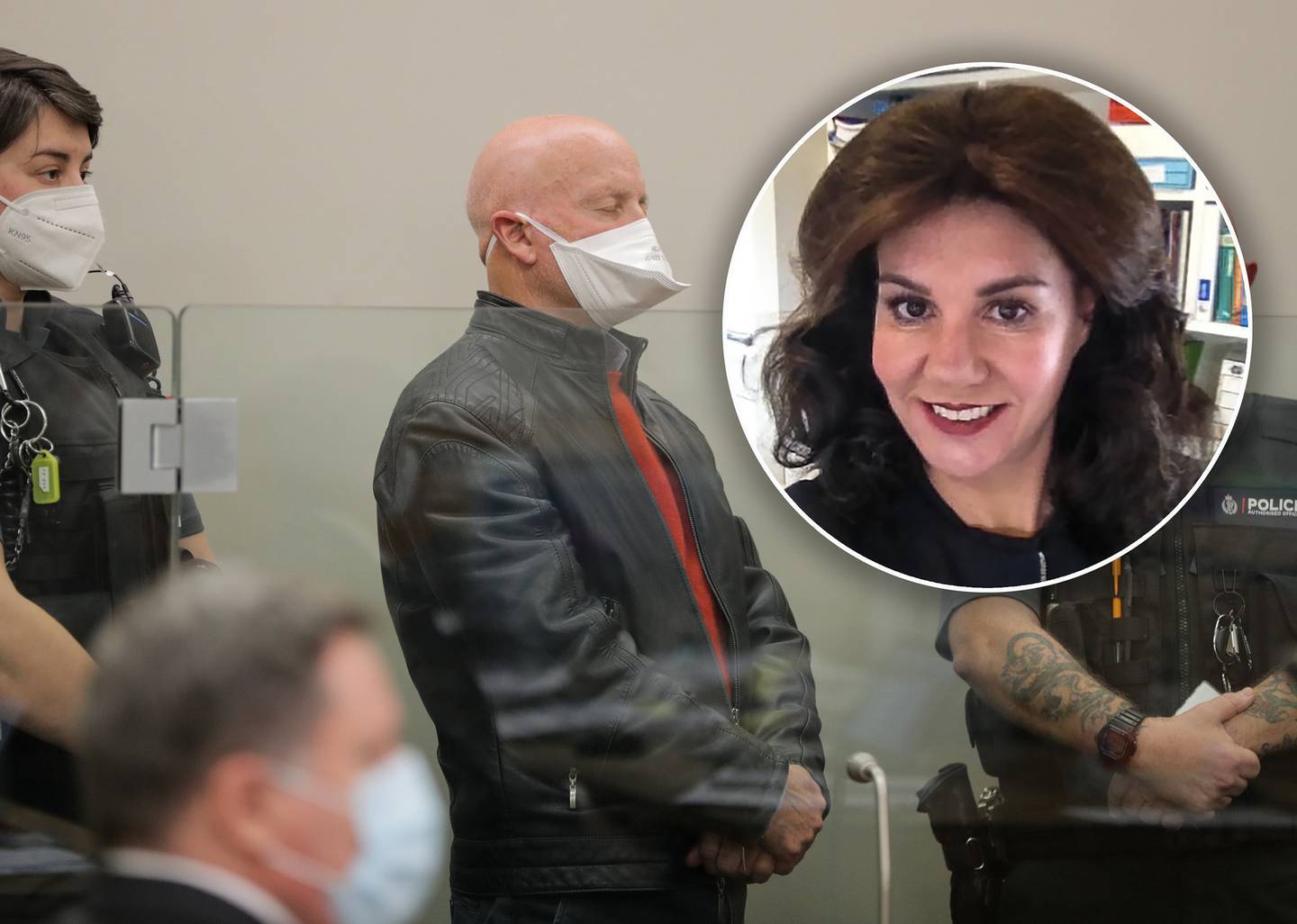
“He told me some strange things which I didn’t believe and I didn’t know why he was telling me,” MacIntyre explained. “He became jumpy, slightly irrational. I thought, ‘This is a guy, for one thing or another, under a lot of stress.’”
The witness recalled how on one occasion Polkinghorne told a story of swerving to miss a dog on a country road before crashing through a paddock gate and rolling his ute. But the vehicle landed upright and he was able to drive it back to Auckland before trading it in, the witness recalled him saying. Nobody saw the crash and he just left, with no involvement from police, Polkinghorne allegedly told the friend.
“A couple of weeks later, he voluntarily changed the story to me,” MacIntyre recalled. “He told me he fell asleep. ... He also asked me specifically not to tell Pauline.”
MacIntyre said Polkinghorne was known within the small Rings Beach community of mostly bach owners by the nickname “Polkie”, or sometimes “Doc”. Up until the change, he said, they would often spend early mornings together when both at their properties – often during long weekends. They would golf, fish and dive together, and both the couples would sometimes have a barbecue at night.
“He was a very intelligent, funny, witty, generous man,” he said, describing Polkinghorne as “a close friend” but not outside the community. “We always had a lot of laughs together.”
MacIntyre and his wife were also close with Hanna, he said, adding that he didn’t see any changes in her in the months prior to her death other than a drop in weight.
“She was a very vivacious woman. She was a very proud woman,” he recalled. “[She was] keen to put her best foot forward. She was always meticulously turned out. She didn’t like you seeing her in the morning until she was made out. She was a well-presented woman.”
In cross-examination, defence lawyer Ron Mansfield KC suggested that his client had gone to the bach less frequently in the 12 to 18 months before Hanna’s death, so the witness’ recollections would be based on a limited sample size.
He also zeroed in on the specific examples of how the witness said Polkinghorne had acted strangely. Mansfield noted that his client was known for having a dry sense of humour, suggesting that might account for some of the discrepancies in the telling of the story about the crash. It is true that no one saw the crash, Mansfield suggested, noting that Polkinghore paid $2000 for roughly $400 worth of damage to make the matter go away after he was contacted by the landowners, who had security camera footage.
“You get some information and you realise, ‘Oh, it’s not as odd as I thought,’” the lawyer suggested.
But the witness remained adamant that it wasn’t any one specific incident as much as an overall change in demeanour gradually over time. He wondered at one point if it was methamphetamine to blame but didn’t have any solid evidence, he acknowledged.
“The problem was I couldn’t understand where the change was coming from,” he said in a police statement that was read aloud as his testimony finished. “I was trying to find an explanation for why my friend was acting like a weirdo.
“It was not like he was having a bad day. It was a behavioural change.”
The longtime friend was followed on the witness stand by two experts – one on energy usage and another on toxicology tests.
Scientist Helen Poulsen tested samples of Hanna’s blood, urine, hair and vitreous humour – a substance found in the eye – for a variety of drugs. At the time of death she had alcohol in her system, although not at a level that would have resulted in a driving violation, as well as normal dosage amounts of an anti-depression medication and a weight-loss drug.
However, she had a higher-than-normal amount of Zopiclone, a sedative often used to help people sleep, Poulsen said.
“The amount found in her blood was about twice what you’d expect from normal use,” she explained, adding that the drug can “be quite dangerous” when paired with alcohol.
An analysis of a 6cm strand of Hanna’s hair, which would have accounted for roughly six months of growth, found no indication of methamphetamine use. However, a urine sample pulled from the toilet next to a guest bedroom where Polkinghorne said his wife had slept the night before her death suggested someone had been using methamphetamine. The Crown contends it was Polkinghorne.
But the defence noted during cross-examination that Hanna was known to dye her hair every three weeks, a process that the expert acknowledged can throw a hair test out of whack. Methamphetamine might not show up for a casual user, Paulsen agreed.
Mansfield also suggested that Hanna had received over 40 prescriptions for the weight loss drug over the course of 10 years, even though the drug is supposed to be prescribed for short periods only. That’s in part because the drug has been associated with unpredictable effects on mood or disinhibition and suicide, Mansfield prompted. The expert said she didn’t know – it would be a question best directed at a pharmacologist.
Chronic use of the sleep drug, Mansfield suggested, is known to sometimes worsen depression. The witness again said it wasn’t her area of expertise and couldn’t answer.
The other witness – Paul Smith, who has a PhD in engineering and until recently was Consumer New Zealand’s product test manager – gave jurors a primer on energy use during his time in the witness box this morning. He was asked to analyse power usage data from the Polkinghorne household in the hours leading up to the defendant’s call to 111 reporting his wife’s death.
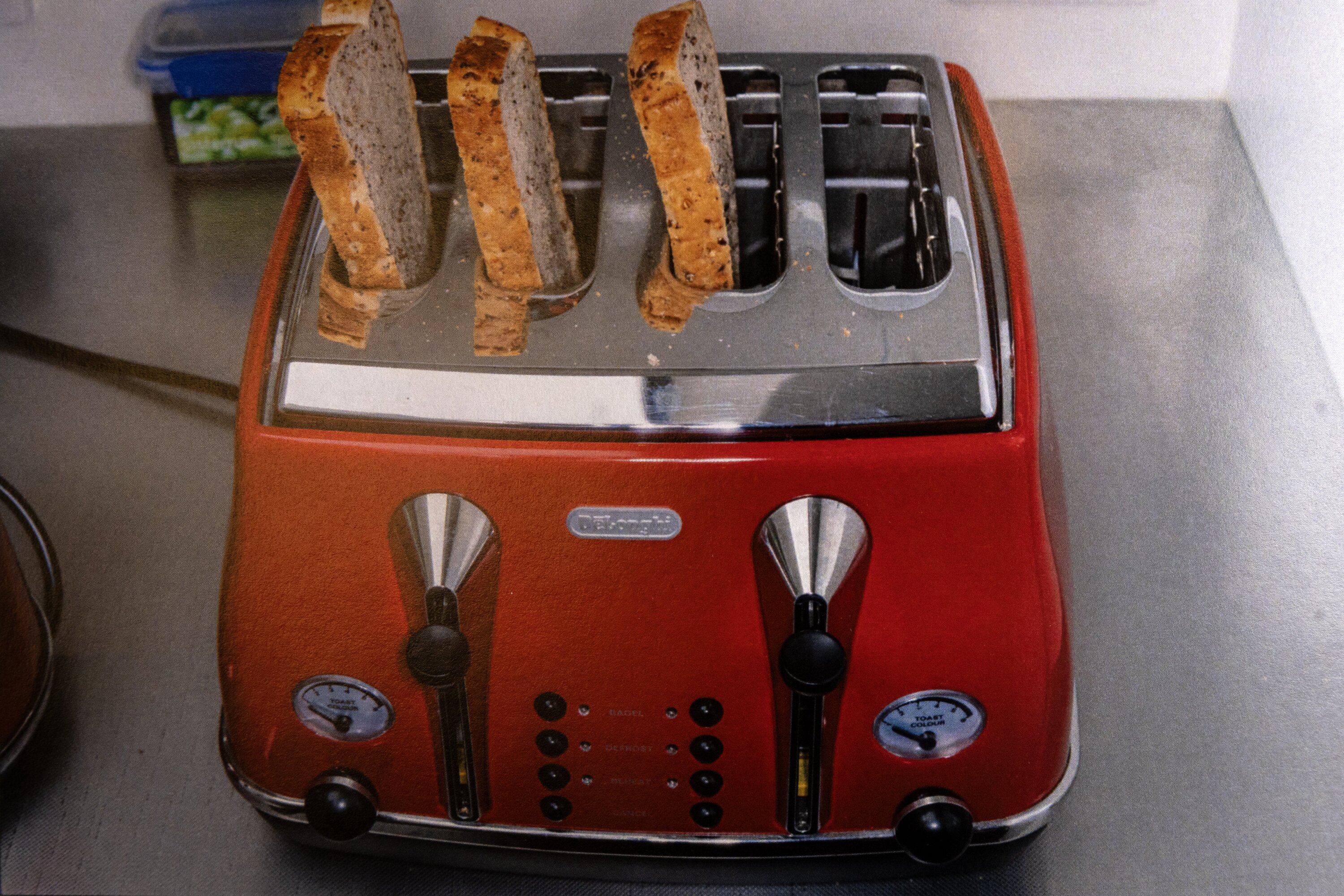
Polkinghorne had told police he found Hanna’s body in the entryway of their home after going downstairs to make her toast and tea for breakfast. During the hours between 4am and 7.30am, the power usage data suggests the kettle and the toaster could not have been used at the same time, although it’s possible one of them could have been used, he surmised.
Mansfield noted that the toaster was on the lightest setting, which might have accounted for less energy use, or that the toaster might not have been turned on at all. Police found three slices of bread in the device, but in the photos the food appears untoasted. At any rate, the defence, noted, they have their own expert energy analyst who will report different findings than the Crown witness.
The final witness of the day was Sergeant Jonathan Hurn, who helped with the scene examination of the Polkinghorne home. The defendant put his head in his hands and appeared to be briefly overcome by emotion as the officer held up the belt that the defendant said his wife had used to hang herself. Mansfield quietly checked if he was okay but the testimony continued.
Jurors at the start of the trial last week were read aloud a list of 62 planned Crown witnesses, roughly a third of which comprised of police, paramedics and crime scene or evidence analysts. Those professionals have provided most of the testimony over the past week and a half, but most of them have now finished. The bulk of remaining witnesses are people who knew or worked with the couple.
The trial is set to continue tomorrow before Justice Graham Lang and the jury.
Craig Kapitan is an Auckland-based journalist covering courts and justice. He joined the Herald in 2021 and has reported on courts since 2002 in three newsrooms in the US and New Zealand.
The Herald will be covering the case in a daily podcast, Accused: The Polkinghorne Trial. You can follow the podcast at iHeartRadio, Apple Podcasts, Spotify, through The Front Page feed, or wherever you get your podcasts.