Philip Polkinghorne murder trial live updates: Longtime friend suspected drugs for change in Auckland eye surgeon’s behaviour
WARNING: DISTRESSING CONTENT
The wife of Auckland eye surgeon Philip Polkinghorne was using weight loss and sleep drugs that could have deepened her depression and prompted erratic behaviour, the defence suggested at his murder trial today as some of the final police and forensic analysts slated to testify took turns in the witness box.
But it was Polkinghorne – not wife Pauline Hanna – who was showing a troubling shift in demeanour, a longtime friend of the couple told jurors.
“I felt something wasn’t right with him,” said Stephen MacIntyre, who recalled the shift in the defendant to have evolved in the year or so before Hanna was found dead in their Remuera home.
MacIntyre, who said he had grown close to the couple over the roughly 25 years they owned nearby baches in a small Coromandel Peninsula beach community, is the only friend of the couple to have testified so far in the high-profile trial, which began last week in the High Court at Auckland.
Polkinghorne, 71, is accused of having strangled Pauline Hanna, 63, in April 2021 before staging her death to look like a suicide. Part of the Crown’s circumstantial case is that his behaviour had been influenced in part by a growing methamphetamine problem.
The defendant has pleaded not guilty to murder but has admitted to possession of 37g of methamphetamine – described by prosecutors as up to 370 “points”, or doses - found throughout his house during the scene examination that followed his wife’s death. He also pleaded guilty to possession of a meth pipe found underneath his bed.
STORY CONTINUES AFTER LIVE BLOG
Defence cross-examines sergeant
Vera Alves
Defence lawyer Ron Mansfield is now cross-examining the witness, Sergeant Jonathan Hurn.
Mansfield is pointing out Hurn is not on the witness list, and is asking what that's about.
Hurn explains that he was summonsed initially, then stood down the morning of the trial, before being asked to bring the belt in and produce it as an exhibit.
To clarify, he was not told until right before giving evidence that he needed to bring the belt in and produce it as an exhibit.
Mansfield is asking about containers of Zopiclone he found, a sleeping pill Hanna used. She had more than the recommended dose in her blood at the time she died, and had drunk alcohol while taking the sedative, which is not recommended. A couple of the containers contained only a few pills, Mansfield observes.
Mansfield is taking aim at the young sergeant for not recording where a bag containing Zopiclone was found.
"In all honesty, at the time I was very new to the Criminal Investigation Branch [CIB]," he said.
"You had a photographer there, why didn't you take a photo of it in situ?" Mansfield asks.
"I don't know," Hurn replies.
Mansfield is asking about inconsistencies between photographs captured by police in the bathroom.
One shows a towel on the floor and the other does not.
Are police moving items during their exam? Mansfield asks.
Hurn is unsure.
There appears to be some women's cosmetics in the bathroom drawers, Mansfield says.
Hurn says he wouldn't know.
"It's not an item I'm familiar with."
Then a silver-topped container, what's that? inquires Mansfield.
"I didn't catalogue everything in that drawer," Hurn replies.
Justice Lang has had enough.
That's it for today. Hurn returns tomorrow for more cross-examination from Mansfield.
The trial will resume at 10am tomorrow with more cross examination of Hurn, now a sergeant but who examined the scene as a constable relatively new to the CIB.
Polkinghorne appears distraught as police officer holds belt in court
Vera Alves
The next witness isn't on the witness list. He is Jonathan Hurn, a young police sergeant with jet black hair.
At the time in April 2021 he was a constable.
When he first got to the Upland Rd property on April 5, he was tasked with the scene examination.
A pathologist was at the scene when he arrived.
Earlier, the trial heard it was not quite usual for a pathologist to come to the scene for suicides by hanging. But police had quickly become suspicious that there was more to the scene than the suspected suicide reported to emergency services.
When he was at the scene, ESR was conducting laser scanning with a device that was unfamiliar to Hurn.
He saw the orange rope hanging down from the balustrade when he came in through the entrance near Darwin Ln, which runs off Upland Rd.
Neither that rope nor the section on the stairs leading down to the garage was a focus for Hurn, he said.
Hanna's body was covered with bedding, possibly a duvet, Hurn said.
Hurn seized the duvet.
There was a sheet underneath the duvet.
He seized the sheet as well.
The specifics of examining the body was the responsibility of another officer, he said. He did not recall much, if anything, about the robe.
He had a look at the small blood stain underneath her head. His police colleague used a clean glove to verify the blood was dry.
Hurn also seized the leather belt Polkinghorne said was wrapped around Hanna's neck and attached to the orange rope.
Sergeant Jonathan Hurn is holding the belt. Polkinghorne appears distraught upon seeing the belt again. He has his head in his hands and can't look at the witness.
Polkinghorne is sitting behind his lawyer Ron Mansfield, beside a security guard.
Polkinghorne has stayed relatively stoic during the trial, even sharing laughs with a security guard. But upon seeing the belt he says his wife used to hang herself displayed by Sergeant Jonathan Hurn, he appears to have become deeply upset, placing his head in his hands and weeping quietly.
Mansfield has checked the 71-year-old is okay but the trial continues.
Defence cross-examines witness
Vera Alves
Defence lawyer Ron Mansfield back for yet more cross-examination of a scene cop, this time Detective Constable Nicholas Foo.
He is asking if Foo was aware if Hanna had been seen using the vehicle to make the trip to the tip. Foo said he couldn't be sure.
Foo was also assigned to speak to a number of potential witnesses, Mansfield confirmed.
He would let the witness know what they were to speak about and how it was relevant when setting up the interview, Foo agreed in response to Mansfield's questions.
One of the people he interviewed was Stephen MacIntyre, the friend from Ring's Beach who described Polkinghorne's change in behaviour in the months before his wife died.
Foo is unsure if he knew at the time MacIntyre was a part-time resident at Ring's Beach.
MacIntyre gave evidence this morning and said Polkinghorne became skinnier and somewhat erratic, and he wondered if he was using drugs.
What police found in the ute
Vera Alves
The Crown has called Detective Constable Nicholas Foo.
Foo said he had recently left the police. In 2021, he was based at Auckland Central police station and was involved in examining the red Ssangyong ute.
Pip McNabb is again leading his evidence.
He was tasked with undertaking a general and forensic examination of the Korean ute.
Fiona Matheson conducted the forensic examination of the ute. She swabbed for DNA, that sort of thing, said Foo.
Various mundane items were found in the ute, including a contact lens case.
Some named items were found, said Foo. They included medical instruments, with a handwritten evidence saying they belonged to Philip Polkinghorne. The accused is a now-retired eye surgeon with decades of experience.
The day before her death, Pauline Hanna used the ute, and the orange rope Polkinghorne says she used to hang herself, to take some rubbish to a South Auckland tip.
Vera Alves
Detective Sergeant Amanda Reed now being cross-examined by defence lawyer Ron Mansfield.
She was last at the Upland Rd home on April 15, 10 days after Hanna was found dead, and after the visit of the two Crown prosecutors to the Remuera home. She was not privy to the conference and walk-through involving police and prosecutors inside the home. Reed is describing organising OCS to come in and clean the property.
OCS, a cleaning firm, were told to clean all the fingerprinting dust from the walls.
That was not usual police practice but was done out of respect following the death of Hanna because police had been there for some time, Reed said.
Mansfield is again asking when the portaloos ordered by police arrived at the Upland Rd home.
Reed said she does not know when they arrived, but Mansfield says it was between April 7 and April 9, two to four days after the death.
Where were they using the bathroom, asks Mansfield?
There was a cafe down the road, says Reed.
Scene guards would wait until they were relieved by colleagues, she said.
Since last week, Mansfield has been circling the suggestion that the meth-contaminated urine in Hanna's bathroom could have been deposited by someone who did not live in the home.
Vera Alves
The Crown has called Detective Sergeant Amanda Reed, of the Auckland District CIB. In April 2021, she was also a detective sergeant but based out of the Glen Innes station, tasked to assist at the Upland Rd home following the death of Pauline Hanna, as scene co-ordinator.
Her role was to assist the officer in charge of the scene.
Prosecutor Pip McNabb, who is assisting the current and former Auckland Crown solicitors on the front bench during the Polkinghorne trial, is leading the detective's evidence.
Reed is describing examining and seizing the red Ssangyong ute Pauline Hanna had used the day before to take some rubbish to the tip.
She arranged for the vehicle to be seized and towed to the police's secure location in Mt Eden. Police as usual asked for a "forensic tow", whereby the ute is put up on to the bed of the tow truck, so it isn't disturbed too much.
Reed's evidence-in-chief has finished.
Defence cross-examines forensic expert
Vera Alves
Defence lawyer Ron Mansfield is cross-examining former ESR forensic scientist Cameron Johnson on the Eutylone found in the home, a Class C controlled drug.
It was most similar to cathinones, the scientist said. They are stimulants similar to amphetamines, Johnson said.
Can drugs such as Eutylone, mixed with a cutting agent, be sold to unsuspecting purchasers of methamphetamine, asked Mansfield.
Johnson doesn't understand the question.
Mansfield rephrases, saying unwitting users might not know they were purchasing a stimulant like eutylone versus methamphetamine.
Johnson agrees and says he's aware of testing users can conduct to verify they are in fact buying meth.
The drugs found in Polkinghorne's home
Vera Alves
The Crown has called another forensic scientist, Cameron Johnson. He worked for ESR at the time of the analysis he will be questioned on.
Johnson was the ESR drugs case manager for the Polkinghorne investigation.
Johnson is wading through the crystalline white powders found in the Polkinghorne home.
Eutylone, a controlled Class C drug similar to MDMA, was found in the home, alongside methamphetamine, a Class A controlled drug.
Other substances found with the drugs were "cutting agents" used to bulk up drugs like MDMA or meth but not themselves having psychoactive properties.
Police found meth in several rooms in the home, often in plastic containers. Polkinghorne pleaded guilty to two previously suppressed meth charges at the start of the trial relating to the search of his home after he reported Hanna's death.
Johnson's evidence wears on. A self-sealing bag, more meth, another container, yet more meth.
One sample of meth alone amounted to 14.4g of methamphetamine.
A public gallery update
Vera Alves
The entire first row is again full of onlookers, numbering about 20. About the same number are sitting in the two rows behind them in the spacious Courtroom 11, upstairs in the High Court at Auckland.
Two women the Herald spoke to at lunch said they did not have any connection to the case but found the evidence fascinating and were trying to come as much as they could. Others are in the same boat. Law students continue to rotate in and out. Absent are Polkinghorne's children.
Two detectives remain in the gallery: Detective Senior Sergeant Chris Allan, the officer in charge of the case, and Detective Inspector Aaron Pascoe, who was also heavily involved in the inquiry.
Detectives always seem to sit near the door.
Vera Alves
Defence lawyer Ron Mansfield is questioning ESR forensic scientist Timothy Power on the intricacies of DNA testing, including the Y STR test. It looks for the male Y chromosome in DNA and can be used to filter out male-only DNA in a female-heavy sample. There is no analogous test for female DNA because the female XX chromosome does not have the stand-out Y.
Power is agreeing with Mansfield that the fact Polkinghorne and his wife lived in the home meant their DNA would be all over the home.
The high-use areas would contain screeds of both of their DNA, Power agreed.
After a high-tempo morning of evidence we are back into the weeds. Mansfield is emphasising the ease of transfer of DNA around a home, and questioning the relevance of the samples.
One juror has been resting her eyes.
DNA expert takes the stand
Vera Alves
The Crown has called Timothy Power, another ESR forensic scientist.
Power has a Masters in biological anthropology and has more than 20 years' experience at ESR. His area is DNA analysis.
This is the second DNA analyst called by the Crown. The first, Nicholas Curnow, found the following:
– Pauline Hanna's neck had DNA from both herself, Polkinghorne, and a much smaller amount possibly from a third person.
– DNA testing is extremely sensitive and DNA can be transferred indirectly, via intermediary objects.
– There were no conclusive results from the analysis of seven samples from the two orange ropes found at the scene.
Power said he tested four samples.
Auckland Crown solicitor Alsyha McClintock is leading his evidence.
The four samples had been shown to have very small amounts of DNA and required testing by Power via a sensitive and specialised method.
A sample taken from inside the home showed a mixture of Polkinghorne and Hanna's DNA.
Another from a handrail leading to the garage had DNA from Polkinghorne and some other DNA from someone who could not be identified due to the quality of the sample.
DNA taken from a plastic container could have been from Polkinghorne, he said.
Power's evidence was over almost as quickly as it began and did not appear to tell the trial too much more than was already known.
Vera Alves
Back to the hair sample.
The sample was sent originally to ESR in Auckland, then down to ESR forensic scientist Helen Poulsen's laboratory in Porirua, then over to Victoria.
Defence lawyer Ron Mansfield asks if only one of the medications, the sleeping pill, was found to be present in the hair.
Correct, says Poulsen.
She said she would have expected to see the diet drug Phentermine, but not Fluoxetine, because the Aussie lab doesn't analyse for that.
Phentermine was certainly part of the range of drugs they looked for, she said.
Treatment of hair via hair dye, Poulsen said, can reduce the ability for drugs to be found in a hair sample.
That could extend to meth, she agreed.
"Have you looked at the hair treatment received by Mrs Polkinghorne from her hairdresser every three weeks?" Mansfield asks.
"No I haven't," Poulsen said.
Mansfield, having had the witness list the various chemicals in hair dye, is asking how they could strip meth or other drugs from the hair sample.
Poulsen said she couldn't exactly say.
Poulsen, however, agreed the dye could explain why a drug she took frequently, like diet drug and stimulant Phentermine, might not be found in her hair.
She said she never received a hair, blood or urine sample from Philip Polkinghorne.
What Mansfield is trying to do here is to show Hanna may have been taking meth but the hair dye she used could have meant it wasn't detected by the Australian laboratory.
The cross-examination is over and Helen Poulsen is free to go.
Defence questions whether prescription drugs could have played a part
Vera Alves
ESR forensic scientist Helen Poulsen said she had not seen Pauline Hanna's medical records and did not know if Hanna had a drinking problem.
Defence lawyer Ron Mansfield is asking if she was aware that combining Fluoxetine and alcohol could lead to decreased inhibitions. Poulsen again said she couldn't comment.
On to Phentermine, the diet drug / appetite suppressant.
Poulsen agreed it was a stimulant and was usually prescribed to someone "seriously overweight" for short periods.
"And that's because of issues in relation to dependence, tolerance and abuse of the medication, correct?" Mansfield asked.
Yes, agreed Poulsen.
Was she aware, asks Mansfield, that Hanna had been prescribed 40 scripts of Phentermine over 10 years?
Poulsen again said she wasn't aware of Hanna's medical records.
Now Mansfield is saying via questions that long-term Phentermine use has been linked to mood changes and even suicidality.
Mansfield is hammering his point that the drug cocktail Hanna was on could have led to low mood and even suicide.
Poulsen is not biting, saying it is not her area and she's not a pharmacologist.
On to methamphetamine, which can be found in urine for anything up to 48 hours to four days after use. And it's not possible, Poulsen agreed, to correlate the concentration of meth in urine with the dosage taken, because people metabolise the drug at varying rates.
What was in Pauline Hanna's blood when she died?
Vera Alves
Defence lawyer Ron Mansfield is beginning his cross-examination of ESR forensic scientist Helen Poulsen.
He is asking about the drugs found in her blood: Fluoxetine, an antidepressant, Phentermine, an appetite suppressant, and Zopiclone, a sedative and hypnotic. All are prescription drugs. No illicit drugs were found in her system or hair.
Responding to questions from Mansfield, Poulsen is saying she did not analyse any fluids found around the home, such as water in bottles or wine Hanna may have drunk.
Poulsen is explaining the role of toxicologist. They examine biological samples for the presence of drugs or toxins or poisons that may have influenced or even killed people.
Hanna's urine was only analysed for alcohol, not for any prescribed or controlled drug. Just her blood, Poulsen said.
Questions now about the difference between a toxicologist and pharmacologist.
"There's no suggestions here that any of the prescribed medication... resulted in death, correct?" Mansfield asked.
"That's correct, yes," Poulsen said.
Mansfield asks if they could have caused her to be unresponsive.
She couldn't comment on that. However, Zopiclone and alcohol is not a good combo, the veteran scientist told Mansfield.
A hair sample taken from Hanna showed she had been using zopiclone for at least six months. Some 6cm of growth was analysed, corresponding to about six months of life.
Trial resumes with cross-examination of forensic scientist
Vera Alves
The third session of the seventh day of the Polkinghorne murder trial is set to resume with defence lawyer Ron Mansfield cross-examining ESR forensic scientist Helen Poulsen.
Before lunch, Poulsen told the jury of the toxicological analysis of Hanna's blood, urine, eye fluid and hair.
Her blood alcohol level was about half the legal driving limit, the jury heard. She had higher than recommended levels of Zopiclone, a sleeping pill, in her blood. She also had Fluoxetine, an anti-depressant, and Phentermine, a diet pill, in her blood.
Urine found in her toilet was positive for methamphetamine. But examination of her hair showed she had not used meth in the past six months.
'There is no evidence that she'd used methamphetamine,' forensic scientist says
Vera Alves
Now on to a hair sample.
The hair sample was taken by a pathologist from Pauline Hanna.
It was sent to Melbourne for analysis because that kind of analysis can't be done in New Zealand now, ESR forensic scientist Helen Poulsen said.
The Australian analysts were looking for evidence of drugs in the hair.
The hair sample was about 34cm in length. Poulsen asked them to analyse about six months, or 6cm, worth of growth.
The hair segments were analysed for amphetamines, opiates and sedatives.
Zopiclone was the only drug detected. No other drugs were detected.
"There is no evidence that she'd used methamphetamine... certainly within the six months prior to her death," Poulsen said.
"It is a very sensitive test."
Poulsen said they can detect meth in the hair of children who had been in high drug-use environments.
Does meth break down when it's in the toilet water, asks the Crown's Brian Dickey?
No, meth is a very stable drug and won't break down in a liquid solution like that, said Poulsen.
Defence lawyer Ron Mansfield was about to begin cross-examining Poulsen, but Justice Graham Lang says it's time for lunch.
Court will resume around 2.10pm.
What a toxicologist found inside Hanna's body
Vera Alves
The Crown has now called Helen Poulsen, an ESR forensic scientist who will give evidence on toxicology.
She is an ESR veteran who obtained her PhD in chemistry in the 1980s and worked for the old Department of Scientific and Industrial Research (DSIR).
She examined samples of Hanna's blood, urine and vitreous humour (the liquid from inside the eye).
Poulsen also received a sample from Hanna's toilet bowl.
The blood, urine and eye fluid was analysed for alcohol and 27mg/100mL of alcohol was found in the blood. The legal alcohol limit is 50mg/100mL.
Lower alcohol levels were found in the other bodily fluids.
Once someone dies, the alcohol levels stay static because the body isn't processing the alcohol.
Legal drugs were also found in Hanna's blood.
They were Fluoxetine, an antidepressant, Phentermine, an appetite suppressant, and Zopiclone, a sedative and hypnotic.
The levels of fluoxetine and weight loss drug Phentermine were normal.
The amount of Zopiclone was twice the normal therapeutic dose, Poulsen said. It was also not recommended to mix it with alcohol.
No other drugs were found in her system.
However, meth and amphetamine were detected in the liquid found in her toilet. Methamphetamine metabolises to amphetamine in the body so it was normal to find it in the fluids of a meth user.
Defence lawyer cross-examines witness on power usage
Vera Alves
Defence lawyer Ron Mansfield's cross-examination of former Consumer NZ product test manager Paul Smith is beginning.
Smith is saying he was head of product testing up until Easter this year.
His job was to look at the value of a product. This included its energy use but also its manufacture and whether it was fit for purpose. That included a review of how much electricity it might use.
Mansfiled is referring to an analysis conducted by another power expert – presumably a defence expert he will call later.
Smith again said the dryer could only be used from 6.30pm to 10pm on April 4, 2021. Not on April 5, when Hanna was found dead.
But you couldn't be exactly sure what appliance drew the electricity, Smith said. You could only see changes in the total amount of power used.
When he was provided the electrical data from the Remuera home, he was not told anything by police about why the data might be of interest. He was just given data from one 24-hour period from a smart meter outside the sprawling Polkinghorne home.
"Did you know much about the electrical requirements at 121 Upland Rd as far as lighting configuration?" Mansfield asked.
"In my initial report, I considered the use of lighting and made comments about the use of lighting that could have considerable impact if it was old incandescent light bulbs," Smith said.
He was told it had LED downlights, which don't use much power. But he had no knowledge of how the lights were used. He was also unaware at the time of the assessment that the product had underfloor heating, he has conceded to Mansfield.
Mansfield said the other expert had looked at a longer span of power use.
"What is a baseline load?" asks Mansfield.
Smith explains it's anything that's constantly plugged in, like a microwave, clock, freezer or underfloor heating – if it was on all the time or set on a timer.
The other expert had calculated that the long-term standard loading for this property was high, Mansfield said.
Smith said the standard load was the baseline used to look for any spikes used.
"I question the validity of the standard load for a period of time outside of this 24-hour period because we cannot say what devices were in use during that time," said Smith.
Mansfield said the standard load from 12am to 6am on April 5 was 0.505kW per half-hour period.
Mansfield is attempting to hint at the evidence of what appears to be a competing power expert he will deploy later.
The average load between 8am to 8.30am was even higher, according to this other expert in energy modelling.
The only other period when the washing machine could have run was from 6am to 6.30am, according to the other expert.
Smith agreed this was one period where the washer could have run, but disagreed it was the only period where it could have run.
"We don't know what is causing this energy," Smith said. "We're dealing in this period with a very, very small increase in energy."
There was a 10% variation in the baseline energy use overnight, he said.
The washing machine in the period in the early morning still showed that level of variation. As a result, he said it was unhelpful to use the variation at 6am to show the washer was or was not used, Smith said, because of the variation in the baseline overnight.
Smith accepts there are a number of other possibilities that could result in the slight increase in electricity use at 6am beyond the washing machine.
The underfloor heating could be coming on and off throughout the day as it was set to a thermostat, Smith agreed.
Mansfield asked if Smith had watched Polkinghorne's video interview from April 5.
He had not.
Mansfield said his expert had concluded the jug could have been used before 8am, as his client had told police it had.
Smith said he had based his assumptions on the amount of water in the kettle on the tests used at Consumer NZ, which assume about 1L of water in the kettle.
What about the assumptions about the toaster? asks Mansfield.
Well, said Smith, he had assumed the toaster was set high enough to toast the bread quite thoroughly.
Earlier, the trial heard the DeLonghi toaster was set to a low setting.
A photo shown by Mansfield to Smith and the jury shows the four-slice red DeLonghi toaster was set to its lowest setting.
Now we are back on to the jug.
There are questions from Mansfield about the amount of condensation on the lid of the kettle. Smith said he couldn't use the level of condensation on the lid to draw inferences on when it was used.
Mansfield is zooming in on photos of the jug to see how full it was. People in the public gallery remain glued to the evidence.
Smith and the other expert who the trial is yet to hear from, a man named Beattie, agreed that there was a period on the evening of April 4 when the washing machine and dryer may have been used. Hanna was found on the morning of April 5.
No further questions from Mansfield or the Crown and Smith is free to go.
Energy use in the home under the spotlight
Vera Alves
There were a couple of jumps in energy use in the early morning, former Consumer NZ product test manager Paul Smith said.
The first period had a very small jump in energy; lower than would be used by the toaster or the kettle, so he ruled out their use. That period starts at 4am and runs up until the end of the 7.30am period on April 5, Smith said.
His assessment was that we can reasonably rule out the use of the kettle over that period, Smith said.
The Crown is attempting to establish Polkinghorne was lying about using the kettle via this power analysis.
The pattern of energy that we see from 4am means something is drawing on the electrical energy of the house. The fridge is a great example. The extra energy is not sufficient to support the use of the kettle, unless something else had been turned off.
Now to the period after 8am. This shows a slightly larger increase in energy to support the use of either the kettle or the toaster. It's perhaps not sufficient to support the use of both of them, but one or the other could have been used in each of the half-hour slots after 8am.
Now on to the make and brand of the toaster and kettle.
Was a washing machine used overnight, asks Dickey?
That's tricky, Smith said. The one at the property uses very little energy, as did the hot water kettle.
In fact, the washing machine used less energy than the kettle, because of its hot-water connection.
The Crown has repeatedly suggested Polkinghorne could have washed a top sheet from Hanna's bed.
Smith said it was very difficult to rule out the use of the washing machine during the overnight period because of the tiny amount of energy it used.
From 10.30pm to 11.30pm the night before, there was a small increase of energy.
It was very difficult to rule out the use of the washing machine during this or any of the four skyscraper energy spike periods covering the lead-up to Hanna being found dead.
Earlier, the jury heard a top sheet was found slightly damp in the dryer. Hanna's bed was missing a top sheet.
Now on to the dryer.
It uses significantly larger amounts of energy over a longer period than the washer.
The only period when the dryer could be used and could go through a complete drying cycle was skyscraper four, between 6.30pm on April 4 through to about 10pm.
New witness takes the stand, focused on power usage around the time Hanna died
Vera Alves
The Crown has called former Consumer NZ product test manager Paul Smith, who is giving evidence on power usage at 121 Upland Rd.
He has a PhD in engineering. He received data from police in June 2021 relating to power use at the Remuera home.
He was head of product testing at Consumer NZ until recently.
The power data reports in 30-minute intervals, Smith said.
Brian Dickey is leading Smith's evidence.
The data shows how much power was used in a half-hour period, but there is no way to be precise over a five- or seven-minute period.
"It's cumulative power use over that period," Smith said.
Every house has a baseline amount of energy that is used, for instance overnight.
"Every house has a period where there’s a minimum amount of energy that is used," Smith said.
"The first thing to do is establish this baseline."
The baseline is in the very early hours of the morning for the Upland Rd home, as is typical of most households, Smith is explaining.
"During that baseline, the home will use an amount of energy that will not depend on an activity."
The energy will be used by things like a fridge or freezer. That sets a zero point, allowing analysts to see what other appliances are used.
There are four periods where there was a significant jump in the energy usage of the home on April 5, 2021, Smith said. [Hanna was reported dead by Polkinghorne that morning, he told a 111 call-taker.]
The spikes suggest significant energy use, possibly cooking or space heating.
Police asked Smith to assess if a toaster or kettle were used. Polkinghorne told police he turned them on before discovering his wife dead.
Toasters or kettles use relatively small amounts of energy, Smith is explaining.
'My friend was now acting like a weirdo'
Sophie Ryan
The jury is back and we are ready to go, with some re-examination of the presumably former Polkinghorne family friend Stephen MacIntyre.
He is the first Crown witness to have been a family friend of the couple and has provided several insights into Polkinghorne's behaviour and mental state in the months leading up to Hanna's death.
He is now reading from a part of his police statement, about Polkinghorne's behaviour and suspicions he may have been on drugs.
"I was trying to find an explanation as to why my friend was now acting like a weirdo."
He said he wondered if he was "using P" but had no evidence to support this.
"It was not like he was having a bad day, it was a behavioural change."
A note on names
Sophie Ryan
Crown lawyers are calling the deceased Ms Hanna, whereas Mansfield refers to her as Mrs Polkinghorne.
The state of their relationship is set to become an issue as the trial wears on, as foreshadowed in the opening addresses.
For convenience, the Herald – we no longer use honorifics – will refer to her as Hanna.
Polkinghorne examined friend's eye before Hanna's death
Sophie Ryan
MacIntyre, responding to more questions from Mansfield, said he was aware Polkinghorne was under pressure in the 12-18 months before Hanna's death due to issues with his impending retirement and the size of an exit payment he was set to receive from Auckland Eye.
"Amongst other things, yes," said MacIntyre.
"You've also talked about his general character, in particular his generosity?"
"Yes."
About this generosity – MacIntyre said he called the man known as "Polky" when he was having an eye issue.
Mansfield said Polkinghorne told him to get to Auckland immediately for an examination, considering it was so urgent and he was such a friend that he wanted to examine him immediately. MacIntyre agreed this characterisation of events was correct.
"So despite seeing these changes in Polkinghorne in the lead-up to Hanna's death, you were still happy to have the long-time friend examine your eyes?" Mansfield asked.
MacIntyre said that was correct.
"He was totally professional," MacIntyre said.
But after Hanna's death, he thought he should tell police about the changes and erratic behaviour he had noticed in his long-time friend shortly before his wife's death.
Nothing further from Mansfield.
Dickey has a few questions in reply.
"The changes [in behaviour] all came after he looked at my eyes," MacIntyre said.
The behavioural changes came after the generous, short-notice eye examination.
There is a dispute between the Crown and defence as to whether a part of MacIntyre's police statement alludes to a belief Polkinghorne may be under the effect of drugs.
We are taking the morning adjournment.
Court will resume around 11.30am.
Family friend pressed on his statement to police
Sophie Ryan
Mansfield is still trying to box MacIntyre in on his statement to police, noting that he only mentioned three strange interactions with Polkinghorne in his May 2021 police statement.
The three things MacIntyre had told police in his statement that he had noted as changes in his long-time friend were the vehicle accident, the loss of weight and the absence over the 2019 Christmas period, the witness agreed.
"Those are some of them," MacIntyre responds, insisting there were others.
Now the lawyer moves on to a Christmas Eve incident.
"You mean he wasn't there for a couple of weeks and then he turned up and he gave this explanation?"
"Correct".
"Are you a drug user?" asks Mansfield.
"I don’t think I have to answer that," MacIntyre responded.
Justice Lang interjects, saying he does have to answer that unless he's worried he is about to incriminate himself.
MacIntyre explains that he is a ship's master, and has worked in the industry for 50 years.
As part of his profession, he had to assess people to see if they're suitable to take over a watch or command.
"Drugs are not uncommon in the marine industry," MacIntyre explains.
Polkinghorne paid thousands to fix damaged fence after ute crash, defence lawyer says
Sophie Ryan
Mansfield is asking if he was aware of another person writing off a white Mercedes.
MacIntyre said he was not.
Was he getting confused about the two stories, asks the lawyer?
Highly unlikely, said the former family friend.
Mansfield did not clarify if it was Polkinghorne's white Mercedes which was written off by this mystery person.
Mansfield said the accident with the red ute subject to the two stories was captured on a security camera.
As a result, Polkinghorne was contacted about the damage to the fence, the KC said.
He had told MacIntyre he had been asked for a certain amount to fix the fence but he had offered them more.
"He told me that he paid them double," MacIntyre said.
In fact, said Mansfield, Polkinghorne had paid the unlucky fence owner $2000 – well over double the repair cost.
"What you felt was an unusual story from him becomes a bit less unusual in light of those details, correct?"
It's a little more plausible, MacIntyre reluctantly conceded.
Ute crash examined by defence lawyer
Sophie Ryan
We are back to questions about the ute accident.
MacIntyre did not believe Polkinghorne's account of rolling the ute into a paddock after swerving to avoid a dog.
MacIntyre can't quite recall when he heard of the incident.
Polkinghorne is watching his long-time friend intently as he gives evidence, leaning forward and rubbing his chin.
After the crash, Polkinghorne repaired the vehicle and traded it for a similar model, a red Ssangyong ute.
MacIntyre remembered the doctor asking him not to tell his wife of the crash. He also said MacIntyre was the first one to notice the changed vehicle.
Mansfield is showing images to the jury of damage to the front of the red Ssangyong ute.
“Were you aware of another occupant up at the beach who had been involved in an accident that was more serious?
“Perhaps you could elaborate on that please."
Mansfield is becoming more terse with the witness...
“Can you remember around the same time someone else having an accident?"
“No."
He initially told MacIntyre he had swerved to hit a dog, he confirmed.
MacIntyre agreed with Mansfield that Polkinghorne is known for his dry sense of humour.
Later, Polkinghorne admitted to MacIntyre he had drifted off to sleep and driven off the road, the jury is hearing.
'He was in a mind-altered state': Defence lawyer cross-examines family friend
Vera Alves
First question from defence laywer Ron Mansfield: "I understand everyone in Rings Beach would refer to him as Polky?"
"Correct."
It was the sort of community where everyone said hello to each other, MacIntyre said.
He is saying again that the couple would travel to Rings Beach less frequently than usual in the 12 to 18 months before Hanna's death. Before that, Hanna and Polkinghorne had travelled there virtually every holiday or long weekend, the jury heard.
About half a dozen times, MacIntyre said.
But Polkinghorne would still call in on his bach, MacIntyre said.
On about half the times he visited, he had visited the MacIntyre bach.
"On most of the times that I saw him, I commented that he seemed changed," the witness said.
"I certainly considered that he was in a mind-altered state on several of those occasions."
MacIntyre said it was quite common for him and his wife to comment on Polkinghorne's changed appearance and demeanour in the lead-up to his death.
"He went from just being a normal guy to being fairly buff."
Mansfield said his client was going twice a week to the gym, where there was a focus on both "losing weight and gaining muscle tone".
The defence lawyer revealed we are to hear from Polkinghorne's personal trainer later in the trial.
"Were you aware that he and Pauline were watching what they were eating as part of that training?"
"No I wasn’t aware of that.
"He may have mentioned he was going to the gym."
Mansfield is saying the weight loss and toning-up of his physique was around 2017 to 2018.
"It's not a bad thing though, is it? If you were wanting to look slimmer and fitter?" the defence lawyer asked.
"Not at all, I take my hat off to him."
'I could tell she wasn't happy': Family friend recalls encounter with Hanna
Vera Alves
Stephen MacIntyre is remembering seeing Pauline Hanna at Christmas 2019, a little under two years before her death.
"I saw her unloading the car. I stopped and we had a quick chat and a hug," he said.
"I could see she was not happy about something.
"I could tell she wasn't happy."
It was unusual that [Polkinghorne] was not there, MacIntyre said.
"She told me he was at a medical conference, which I didn't actually believe. I don't think they have too many medical conferences around Christmas Eve and Christmas Day," he said.
"I could tell something wasn't quite right, so I left it."
Under questioning from Dickey, MacIntyre said the two friends had usually hung out virtually every time they were both at Rings Beach together.
That changed in the year leading up to Hanna's death.
"Whenever he arrived, it would be fair to say we would see each other. In the 12 months or so prior, not so much."
'Something wasn't right about him': Family friend describes 'very unusual incident' with Polkinghorne
Vera Alves
Family friend Stephen MacIntyre is now recounting what he described as a "very unusual incident" that revolved around a vehicle accident.
Polkinghorne said he swerved to avoid a dog in Manaia and rolled his ute into a paddock.
He then left the scene but did not call police.
Polkinghorne asked the family friend not to tell his wife what happened.
"I didn't believe the circumstances," MacIntyre said.
"A couple of weeks later, voluntarily, he changed his story to me.
"I’m still not sure I believe the final version. I just couldn’t quite reconcile how he had changed, but he had changed," he added.
"I felt something wasn't right with him."
As for Pauline Hanna, there was just one change he noticed before her death.
He saw her walking on the beach in the Coromandel and observed she had lost weight.
"That struck me at the time. But other than that, I didn’t notice any difference in Pauline."
'I felt he was using drugs' - family friend of Polkinghorne and Hanna
Vera Alves
The former friend of Hanna's and Polkinghorne's has described strange and erratic behaviour from the eye surgeon in the year or two before her death.
Stephen MacIntyre said he became jumpy, erratic and he thought Polkinghorne was using drugs.
Here's what MacIntyre said:
We didn’t see him quite as much as we did previously.
I felt that Dr Polkinghorne was changed or changed.
Some things that I saw and felt I didn’t particularly like.
I probably just backed off the relationship a little bit.
He was a very intelligent, funny, witty, generous man.
We always had a lot of laughs together.
I felt that in that period leading up to Pauline’s death, I felt that he was quite changed.
He told me some things that turned out … I doubted the truth of them.
His nature changed, his physical presence changed.
He became slimmer and sort of more muscly.
A different physique from what he had.
He became a bit more manic, a little bit irrational.
I didn't think he was behaving normally or truthfully to me at all items.
I felt he was using drugs.
'Very vivacious woman': Family friend gives evidence in trial
Vera Alves
Family friend Stephen MacIntyre and Polkinghorne both bought baches at Rings Beach on the Coromandel, about 15 minutes north of Whitianga, around the same time.
They had known each other for about 25 years.
He described them as close friends, who frequently spent time together on long weekends and other holidays, whenever they were both there together, often early in the mornings.
They would enjoy coffee in the mornings, swimming, diving and boating.
They were close friends when in the community but they didn’t spend time together outside of the remote beachside community, the jury heard.
“My wife and I were close friends with both of them,” he said.
MaIntyre described Hanna as a “very vivacious woman”.
“She was a very proud woman and a woman that was very keen to put her best foot forward,” she said.
She was career-focused, and always meticulously turned out.
“She didn’t really like me seeing her in the morning until she was made up.”
"She was a good friend as well."
MacIntyre said he never visited their home in Upland Rd, despite several offers from the now-retired eye surgeon.
Family friend to give evidence
Vera Alves
The jury is in and court has resumed for more Crown witnesses on day two of the second week of the Philip Polkinghorne murder trial.
The public gallery in the expansive Courtroom 11 on the first floor of the Auckland High Court has the usual mix of the older crowd of mostly women who have been perennial features, glued to the evidence, alongside a smattering of law students and one or two detectives who worked the case over the past three-and-a-bit years.
First up is Stephen MacIntyre, a family friend of Philip Polkinghorne and Pauline Hanna.
He is appearing via audio-visual link, from the High Court at Wellington.
Prosecutor Brian Dickey is leading his evidence.
What we learnt yesterday
Vera Alves
Yesterday, the jury heard more from ESR forensic scientist Fiona Matheson, who spent 53 hours at the 370sq m, four-bedroom, four-bathroom home on Remuera's northern slopes, above the Ōrākei Basin.
A new piece of evidence emerged and with it, a new defence argument – the plush white Terry Towelling dressing gown worn by DHB manager Pauline Hanna when she died.
It was stained yellow in its lower reaches.
Polkinghorne told detectives he found his wife on a chair in the entranceway, having hanged herself leaning forward while sitting in the chair with her neck tied in a belt itself tied to an orange rope.
That means the hanging would amount to a partial suspension, like a prison hanging, rather than a full suspension hanging as used in executions.
Defence lawyer Ron Mansfield repeatedly suggested in cross-examination that the urine stains on the dressing gown, focused around the lower back of the gown, support the scenario of her dying in the chair as she hanged herself.
Matheson urged caution, saying there were many variables governing how the urine could have been distributed around the dressing gown. She also said ESR currently had no test to confirm the presence of urine, after an earlier test was deemed to give too many false positives.
Then, the Crown called ESR forensic scientist Nicholas Curnow, who specialises in DNA analysis.
McClintock rushed through his evidence and there wasn't much cross-examination. In her opening address, the Crown didn't urge the jury to put much stock in the DNA results. DNA is easily transferred, the jury heard, especially if two people live together.
To summarise Curnow's findings:
- Pauline Hanna's neck had DNA from both herself, Polkinghorne, and a much smaller amount possibly from a third person.
- DNA testing is extremely sensitive and DNA can be transferred indirectly, via intermediary objects.
- There were no conclusive results from the analysis of seven samples from the two orange ropes found at the scene.
The seventh day of the trial of Philip Polkinghorne is set to begin
Vera Alves
It's day seven of the Philip Polkinghorne murder trial and the Crown is slowly but steadily making its way through their witness list.
The jury, who elected their foreman yesterday, have yet to hear who the prosecution will call today.
But Auckland Crown solicitor Alysha McClintock and her predecessor Bran Dickey are expected to run through several more police officers and forensic scientists involved in the 11-day examination of the retired eye surgeon's home in Remuera's Upland Rd.
The trial is set to begin at 10am.
🎧 LISTEN | Accused: The Polkinghorne Trial
Vera Alves
STORY CONTINUES
MacIntyre, testifying via audio-video feed from the High Court at Wellington, told jurors he had strong suspicions about drug use as his interactions with Polkinghorne evolved in the final year or so of Hanna’s life.
“I felt that Dr Polkinghorne was changing or changed,” he said. “Some things I saw and felt I didn’t particularly like, and I probably backed off the relationship a little bit...
“He became a lot more manic, a little bit irrational at times. I didn’t feel he was behaving truthfully to me at all times. I felt he was using drugs.”
The witness was asked by prosecutors to elaborate on some of the examples of uncharacteristic behaviour.
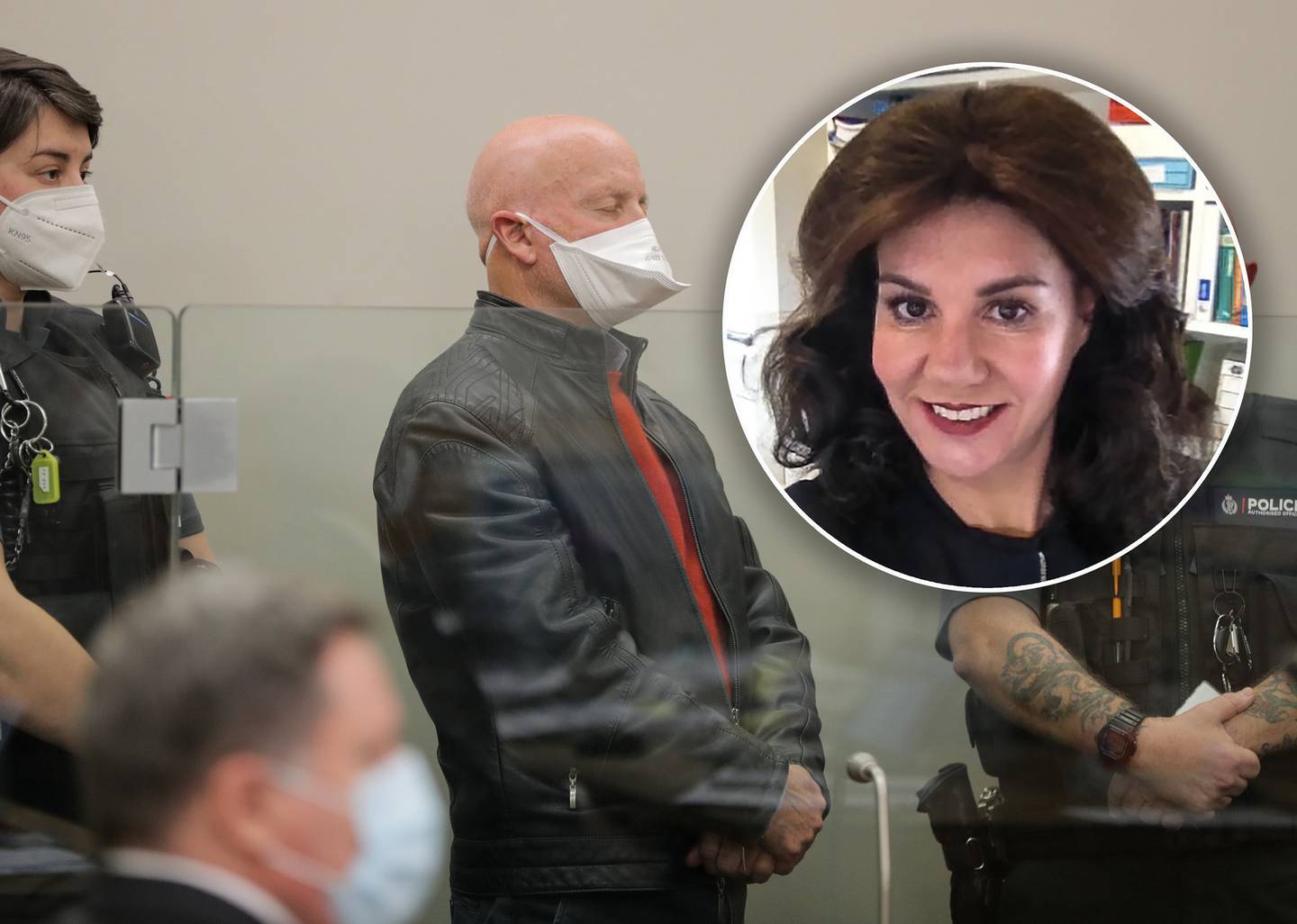
“He told me some strange things which I didn’t believe and I didn’t know why he was telling me,” MacIntyre explained. “He became jumpy, slightly irrational. I thought, ‘This is a guy, for one thing or another, under a lot of stress.’”
The witness recalled how on one occasion Polkinghorne told a story of swerving to miss a dog on a country road before crashing through a paddock gate and rolling his ute. But the vehicle landed upright and he was able to drive it back to Auckland before trading it in, the witness recalled him saying. Nobody saw the crash and he just left, with no involvement from police, Polkinghorne allegedly told the friend.
“A couple of weeks later, he voluntarily changed the story to me,” MacIntyre recalled. “He told me he fell asleep. ... He also asked me specifically not to tell Pauline.”
MacIntyre said Polkinghorne was known within the small Rings Beach community of mostly bach owners by the nickname “Polkie”, or sometimes “Doc”. Up until the change, he said, they would often spend early mornings together when both at their properties – often during long weekends. They would golf, fish and dive together, and both the couples would sometimes have a barbecue at night.
“He was a very intelligent, funny, witty, generous man,” he said, describing Polkinghorne as “a close friend” but not outside the community. “We always had a lot of laughs together.”
MacIntyre and his wife were also close with Hanna, he said, adding that he didn’t see any changes in her in the months prior to her death other than a drop in weight.
“She was a very vivacious woman. She was a very proud woman,” he recalled. “[She was] keen to put her best foot forward. She was always meticulously turned out. She didn’t like you seeing her in the morning until she was made out. She was a well-presented woman.”
In cross-examination, defence lawyer Ron Mansfield KC suggested that his client had gone to the bach less frequently in the 12 to 18 months before Hanna’s death, so the witness’ recollections would be based on a limited sample size.
He also zeroed in on the specific examples of how the witness said Polkinghorne had acted strangely. Mansfield noted that his client was known for having a dry sense of humour, suggesting that might account for some of the discrepancies in the telling of the story about the crash. It is true that no one saw the crash, Mansfield suggested, noting that Polkinghore paid $2000 for roughly $400 worth of damage to make the matter go away after he was contacted by the landowners, who had security camera footage.
“You get some information and you realise, ‘Oh, it’s not as odd as I thought,’” the lawyer suggested.
But the witness remained adamant that it wasn’t any one specific incident as much as an overall change in demeanour gradually over time. He wondered at one point if it was methamphetamine to blame but didn’t have any solid evidence, he acknowledged.
“The problem was I couldn’t understand where the change was coming from,” he said in a police statement that was read aloud as his testimony finished. “I was trying to find an explanation for why my friend was acting like a weirdo.
“It was not like he was having a bad day. It was a behavioural change.”
The longtime friend was followed on the witness stand by two experts – one on energy usage and another on toxicology tests.
Scientist Helen Poulsen tested samples of Hanna’s blood, urine, hair and vitreous humour – a substance found in the eye – for a variety of drugs. At the time of death she had alcohol in her system, although not at a level that would have resulted in a driving violation, as well as normal dosage amounts of an anti-depression medication and a weight-loss drug.
However, she had a higher-than-normal amount of Zopiclone, a sedative often used to help people sleep, Poulsen said.
“The amount found in her blood was about twice what you’d expect from normal use,” she explained, adding that the drug can “be quite dangerous” when paired with alcohol.
An analysis of a 6cm strand of Hanna’s hair, which would have accounted for roughly six months of growth, found no indication of methamphetamine use. However, a urine sample pulled from the toilet next to a guest bedroom where Polkinghorne said his wife had slept the night before her death suggested someone had been using methamphetamine. The Crown contends it was Polkinghorne.
But the defence noted during cross-examination that Hanna was known to dye her hair every three weeks, a process that the expert acknowledged can throw a hair test out of whack. Methamphetamine might not show up for a casual user, Paulsen agreed.
Mansfield also suggested that Hanna had received over 40 prescriptions for the weight loss drug over the course of 10 years, even though the drug is supposed to be prescribed for short periods only. That’s in part because the drug has been associated with unpredictable effects on mood or disinhibition and suicide, Mansfield prompted. The expert said she didn’t know – it would be a question best directed at a pharmacologist.
Chronic use of the sleep drug, Mansfield suggested, is known to sometimes worsen depression. The witness again said it wasn’t her area of expertise and couldn’t answer.
The other witness – Paul Smith, who has a PhD in engineering and until recently was Consumer New Zealand’s product test manager – gave jurors a primer on energy use during his time in the witness box this morning. He was asked to analyse power usage data from the Polkinghorne household in the hours leading up to the defendant’s call to 111 reporting his wife’s death.
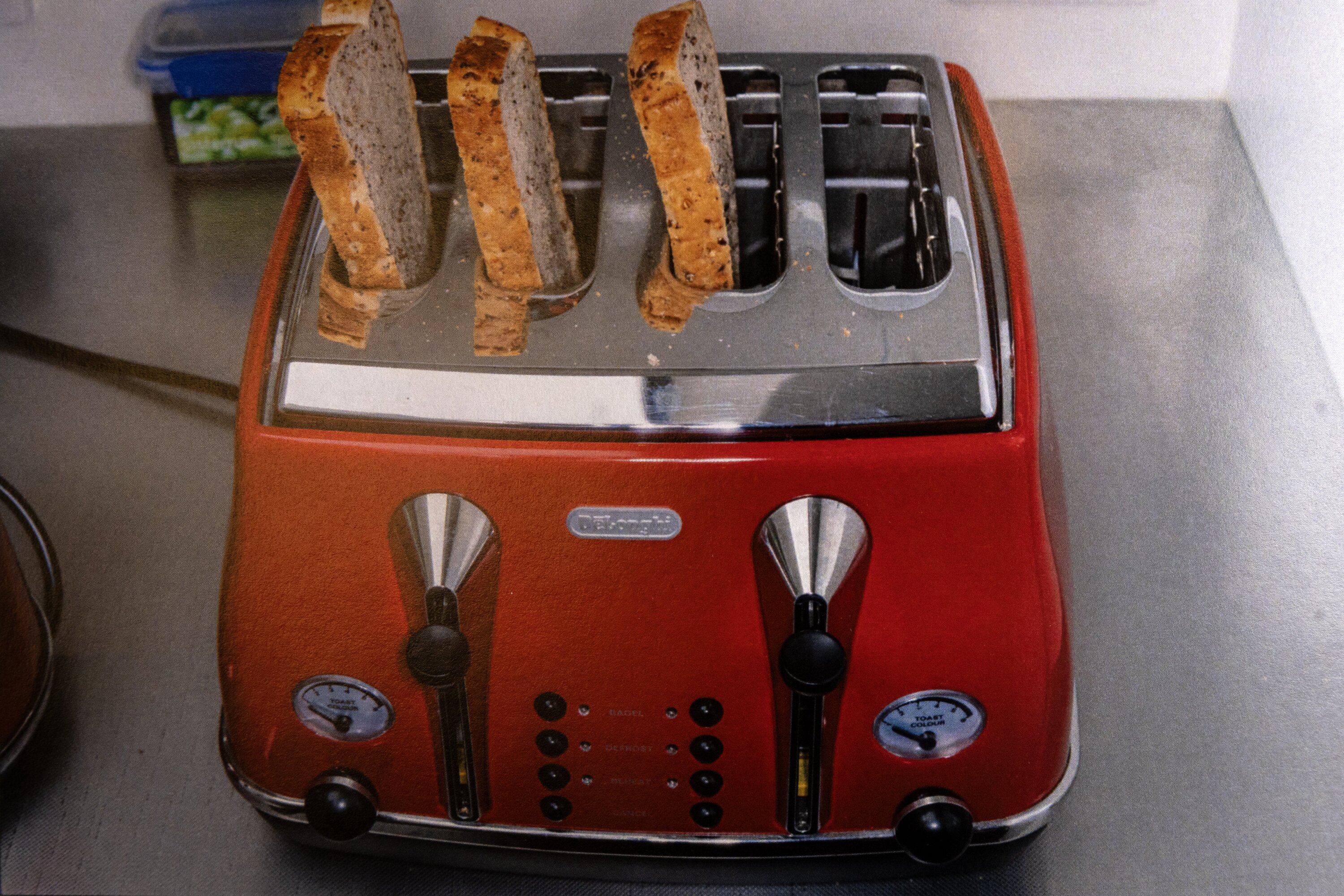
Polkinghorne had told police he found Hanna’s body in the entryway of their home after going downstairs to make her toast and tea for breakfast. During the hours between 4am and 7.30am, the power usage data suggests the kettle and the toaster could not have been used at the same time, although it’s possible one of them could have been used, he surmised.
Mansfield noted that the toaster was on the lightest setting, which might have accounted for less energy use, or that the toaster might not have been turned on at all. Police found three slices of bread in the device, but in the photos the food appears untoasted. At any rate, the defence, noted, they have their own expert energy analyst who will report different findings than the Crown witness.
The final witness of the day was Sergeant Jonathan Hurn, who helped with the scene examination of the Polkinghorne home. The defendant put his head in his hands and appeared to be briefly overcome by emotion as the officer held up the belt that the defendant said his wife had used to hang herself. Mansfield quietly checked if he was okay but the testimony continued.
Jurors at the start of the trial last week were read aloud a list of 62 planned Crown witnesses, roughly a third of which comprised of police, paramedics and crime scene or evidence analysts. Those professionals have provided most of the testimony over the past week and a half, but most of them have now finished. The bulk of remaining witnesses are people who knew or worked with the couple.
The trial is set to continue tomorrow before Justice Graham Lang and the jury.
Craig Kapitan is an Auckland-based journalist covering courts and justice. He joined the Herald in 2021 and has reported on courts since 2002 in three newsrooms in the US and New Zealand.
The Herald will be covering the case in a daily podcast, Accused: The Polkinghorne Trial. You can follow the podcast at iHeartRadio, Apple Podcasts, Spotify, through The Front Page feed, or wherever you get your podcasts.