Interislander ferry Aratere grounding: Government to come under pressure – Georgina Campbell
Georgina Campbell is a Wellington-based reporter who has a particular interest in local government, transport, and seismic issues. She joined the Herald in 2019 after working as a broadcast journalist.
OPINION
The Aratere ferry running aground isn’t quite the Government’s worst Interislander nightmare but it will still have ministers waking up in a cold sweat.
KiwiRail’s only rail-enabled ferry departed Picton at 9.45pm yesterday before suffering a steering failure and running aground shortly after.
The ageing and increasingly unreliable Interislander ferries have been running on borrowed time. A serious incident like this has almost felt inevitable.
Just this week, the Herald reported annual maintenance costs to keep the fleet running could almost double to $65 million by next year, and keeping the three ferries afloat will be an “ongoing battle”.
A previous assessment of the fleet’s condition raised concerns about steel corrosion, metal getting weak and cracking, and prohibitive maintenance expenses.
This information came from a 2021 business case for two new mega ferries set to replace the fleet as it reached the end of its working life.
That mega ferry project was left dead in the water in December after overall costs, including new terminals and wharf upgrades, ballooned to almost $3 billion and the Government refused to fund the blowout.
The political risk in this decision was that a major incident could happen on Cook Strait before the Government got a new plan sorted.
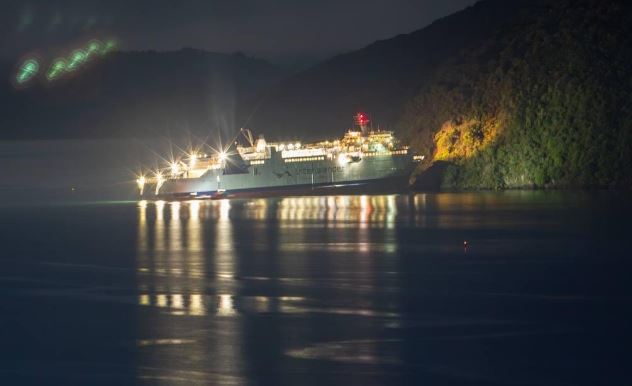
That risk could start to play out now that Aratere has grounded.
The Aratere was undertaking a freight-only sailing at the time of the incident, with eight commercial drivers and 39 crew aboard.
Ministers were advised last night that there was no indication of injuries, danger to life or danger of oil pollution to the marine environment. The vessel was watertight.
That means the most significant consequence of this incident is likely to be how long the ship is out of action and how much disruption that brings to the country’s supply chain.
The Government’s worst nightmare would be something more like last year’s Kaitaki incident, if that ferry had not narrowly avoided disaster.
There were 864 people on board when the ship lost power in Cook Strait, started drifting towards Wellington’s rocky south coast and issued a mayday call.
Thankfully, power was partially restored and the ferry limped back to Wellington.
It could have been one of New Zealand’s worst maritime disasters. We know that Wellington Hospital was put on standby for mass casualties in preparation for the worst.
The mega ferries were not due to arrive until 2026, so yesterday’s grounding would not have been prevented if the mega ferry project was still going ahead.
It is also clear this project had serious problems. For example, at one point, KiwiRail assured Grant Robertson when he was the finance minister that the worst-case scenario for the cost blowout would be an extra $300 million, before requesting $1.2b a few months later.
But it was a plan. We have no idea what this Government’s plan is.
A Ministerial Advisory Group to consider the future of the Cook Strait service was put in place in February.
That group has been reporting to KiwiRail’s shareholding ministers behind closed doors. The public hasn’t been told much, other than the group’s three members were paid more than $80,000 between them just two months into the job.
The Government urgently needs to bring its plan B to Cabinet to be signed off.
It’s not just the Government that will come under pressure after the Aratere incident. KiwiRail also needs to be held accountable.
This week Transport Minister Simeon Brown revealed he was “highly unimpressed” with KiwiRail’s maintenance of its ferry fleet.
The state-owned enterprise has been improving maintenance protocols significantly from the poor ones that were in place, Brown said.
“They understand, and have had it impressed upon them, the importance of having well-maintained Cook Strait ferries – which has not been the case in the last few years.”
KiwiRail has stressed safety is its top priority and said earlier this week it can continue to run a safe and reliable service while a replacement project is worked out.
Public confidence in the ferries has been shaken by the Kaitaki mayday call, the Aratere running aground and all the other mechanical faults in between those incidents.
The Interislander fleet cannot hang on much longer. No one wants to find out what a third serious incident might look like.