Philip Polkinghorne trial live updates: Crown to finish closing address before defence closes
WARNING: DISTRESSING CONTENT
The defence has begun its closing address in the murder trial of Philip Polkinghorne, the Remuera eye surgeon accused of killing his wife Pauline Hanna and staging the scene to look like a suicide.
Ron Mansfield KC told the jury, “this has been a trial prosecuted by emotion, and where the victim was logic.”
Auckland Crown Solicitor Alysha McClintock spent all day closing the Crown’s case yesterday and jurors heard more from her this morning.
STORY CONTINUES AFTER THE LIVE BLOG
Jury likely to begin deliberating tomorrow
Helen Van Berkel
There was no injury to the thyroid cartilage of the neck, one pathologist said, which would be expected in an older victim of strangulation, Mansfield says.
Justice Lang calls an end for the day, noting Auckland's weather is worsening and the jury needs to get home.
Mansfield will finish his closing address tomorrow morning.
The judge will sum up the case.
Justice Lang tells the jury members they will likely begin considering their verdict around 3pm tomorrow and should tell family and friends they will not be able to contact the outside world during deliberations in the jury room.
Court will resume at 10am tomorrow.
Hanna's bruise
Helen Van Berkel
The bruise on Hanna's right side under her temple was another non-specific injury that could have been caused within a week of her death, Mansfield says.
Setting up the hanging mechanism would have involved bending down and around the balustrade, and there could have been unsuccessful initial attempts, the defence lawyer says.
Hanna also went to the tip the day before her death, when she could also have suffered the injury.
Helen Van Berkel
The lividity, or the redness because of the pooling of blood in Hanna's legs, is entirely consistent with what Polkinghorne reported about the cause of her death, says Mansfield.
'Takes us nowhere'
Helen Van Berkel
"That's relevant, folks, because now the Crown seeks to rely on that of it being indicative of a homicidal killing rather than a death by way of hanging," Mansfield says.
The cluster of bruising on the back of Hanna's right arm could have been a result of moving the body from the scene, the pathologist also said. Kilak Kesha, who conducted the autopsy, acknowledged the arm bruises could have come from someone steadying her.
"Both agreed it's not specific, it takes us nowhere," Mansfield says.
Injuries consistent
Helen Van Berkel
The belt impression on the right side of Hanna's neck was entirely consistent with how Polkinghorne reported his wife to be positioned, Mansfield continues. The fact it disappeared had no significance, said the pathologists.
Facial congestion and petechiae (blood spotting) also did not help help with establishing a cause of death, Mansfield says.
Blood emerging from Hanna's right ear was not an injury; her ear was simply congested as a result of blood pooling due to neck compression.
Defence pathologist Dr Stephen Cordner considered the blood found only between her fingers could have been transferred from her ear when she was transported, Mansfield reminds the jury. Not one pathologist placed any weight on the blood found between her fingers, he adds.
Blood on the steps
Helen Van Berkel
Mansfield moves on to what the Crown said was Polkinghorne's attempt to plant evidence: blood on the steps examined by a defence forensic analyst two years after Hanna's death.
There was no evidence otherwise of any altercation with Hanna and the injury to his head could be described as non-specific, Mansfield says.
Polkinghorne always knew there was going to be the risk of contamination and the report furnished to the Crown makes that clear, the defence lawyer says.
But, consistent with an innocent man, he went to the expense of enlisting overseas expert Dr Timothy Scanlan to assess that area, Mansfield says.
Why would you go to that cost and face that obvious criticism unless you were driven to prove you did not have an altercation with your wife, and his injury was not caused by this altercation? the defence lawyer asks.
The reality is, the evidence establishes his motivation to establish his innocence, knowing full well of the criticism he was opening himself up to, Mansfield says.
"It is not an attempt to plant evidence and should not be seen as such."
Mansfield says he needs to respond to all the points raised by the Crown to support "a motive that did not exist" so his closing will continue for about an hour tomorrow, he says.
The note
Helen Van Berkel
Polkinghorne naturally looked for a suicide note and found a note, which he showed to Ring, suggesting it might be a note Hanna had left. He was not clear where it was found, says Mansfield: he was just sharing with a friend a note he's found that he believes supports what he believes happened to his wife.
"This is not the act of someone seeking to manipulate another person."
Ring's distaste 'understandable'
Helen Van Berkel
That Alison Ring, Polkinghorne and Hanna's friend, found interactions with him after he was charged, 16 months after his wife's death, distasteful, was understandable, says Mansfield.
Ring did not want to know about the inner, private workings of her friends' relationship but Polkinghorne, isolated and faced with a murder allegation, maybe understandably thought he could speak openly about the situation, the lawyer says.
He's no 'master manipulator'
Helen Van Berkel
Mansfield says the suggestion that his client has tried to manipulate witnesses is based on the comments of Paul Adriaanse, his friend and barber.
During the conversation Adriaanse described in evidence, Polkinghorne simply advised him that no one needs to make a statement to police, which is true, says Mansfield.
Polkinghorne had no reason to influence Adriaanse into not making a statement, says Mansfield.
It does not show he's a "master manipulator of people".
Helen Van Berkel
Nothing about the search "unmask[ed] the murderer" as the Crown promoted, Ron Mansfield says.
"That is just scare tactics, and frankly quite bizarre," Mansfield says.
"All he wanted to know was what was causing this suspicion."
Nor was it an isolated search on Duck Duck Go – a search engine designed for privacy – there were other searches, Mansfield says.
Polkinghorne's internet searches
Helen Van Berkel
The Crown relies on a number of actions they say were inconsistent with a grieving husband, Mansfield says, but he deleted the messages because he didn't want police or others to judge him for his relationships outside of marriage.
The search for "leg edema after strangulation" came shortly after the autopsy, says Mansfield, after which police gave Polkinghorne no information.
Mansfield suggests Polkinghorne made the search because he wanted to know why the death was still considered suspicious.
Killing Hanna an 'absurd suggestion'
Helen Van Berkel
It seems odd, Mansfield continues, that if Polkinghorne was interested in a relationship with Ashton and Hanna was in the way, as the Crown alleges, that he couldn't just separate from his wife as they had already talked about.
The reason the Crown promoted the use of meth was to explain the "absurd suggestion" he would kill his wife to get her out of the way so he could be with Ashton, Mansfield says.
There is not one suggestion of any tension between Hanna or Polkinghorne on April 4, or that they were discussing separating, he says.
Husband helping women may have made Hanna feel 'down'
Helen Van Berkel
The relationship with the sex worker Alaria was more than sex, but it wasn't one Hanna was worried about, says Mansfield.
And the same applies to Jody, he says.
Polkinghorne knew Madison Ashton since 2015, when Hanna herself participated, through to 2021. Over that period he paid her $106,000.
He was developing an interest in the women's lives and would help them with their personal issues, Mansfield says.
Hanna had no issue with him seeing sex workers, even though he was trying to help them. That help, Mansfield tells the jury, says a great deal about the doctor.
Ultimately, the use of sex workers may have been another factor that led to Hanna feeling down, and seeking to take her own life, Mansfield says.
Polkinghorne used meth recreationally
Helen Van Berkel
He would use the drug recreationally, but he denies using it at Auckland Eye, says Mansfield.
After Polkinghorne allegedly left the pipe in the Auckland Eye clinic in October 2020, a cleaner found no meth pipe, Mansfield says.
The evidence shows he used methamphetamine and Polkinghorne concedes he did, Mansfield says.
Helen Van Berkel
Polkinghorne interacted with trained paramedics, who would be quick to identify if someone was under the influence of meth or on the "comedown", Mansfield says. There was no suggestion Polkinghorne was under the influence of meth the morning Hanna was found dead: no dilated eyes or animated behaviour, the defence lawyer says.
The paramedics did not suggest anything that would indicate such behaviour, Mansfield says, and nor did the police officer who took his first statement.
There is no evidence at all meth was involved in what happened at the Polkinghorne/Hanna home on April 4 or 5, 2021, Mansfield says.
If Polkinghorne was regularly buying or using the drug, it would be seen in his communications, but it is not, the defence lawyer says.
The meth pipe
Helen Van Berkel
Ron Mansfield moves to the discovery of the Sweet Puff pipe at Auckland Eye in October 2020.
An investigation at the time was unable to conclude whose pipe it was and the Crown relied on movement inside the clinic by Polkinghorne on the Saturday night before it was found, captured on CCTV, to suggest it was his, Mansfield says.
Meth traces were also found in other consultation rooms, the defence lawyer says.
Helen Van Berkel
Ron Mansfield tells the jury they don't need to spend much time on the meth evidence, because traces of meth were also found in the toilet water of the bathroom adjoining Hanna's room.
Bear in mind, he tells the jury, that the intoxicating effects of meth last four to eight hours. Think about when, if at all, it has been asserted Polkinghorne used meth on the day of Hanna's death, the defence lawyer says.
Meth can remain in the urine for up to four to five days, Mansfield says, but for regular users, it can be up to seven days. So meth in urine might have nothing to do with its use on April 4 or 5.
Defence to resume wrapping up
Helen Van Berkel
Court is about to resume and the public are back in the gallery, awaiting the arrival of Justice Lang and the jury.
The court takes a break
Helen Van Berkel
Justice Graham Lang has called a 15-minute adjournment and the court will resume shortly after 3.30pm.
'Why would this man, at this age, suddenly resort to violence?'
Helen Van Berkel
It would be hard to understand why Polkinghorne would resort to violence, when it had not been a signature of their relationship, says Mansfield.
"Why would this man, at this age, suddenly resort to violence?" the defence lawyer asks.
Mansfield urges the jury to be cautious about the suggestion the meth could have caused violence.
Besides the 37g found at Polkinghorne's home, there's no evidence about the level of his meth use. The fact the meth was put away in containers around the home shows it may not have been used that often.
The level just represents how much was bought at one time, says the defence lawyer. Buyers risk apprehension every time they purchase meth, Mansfield says, so it is safer and cheaper to buy large quantities at one time.
The amount of meth found in the home shows Polkinghorne could afford that much, now how often or how much he was using, the defence lawyer says.
"At best we have recreational use that was not interfering with his work," Mansfield says.
The doctor's work as an eye surgeon required a steady hand and a clear mind. There was no suggestion his work was inferior, he says.
The jury was also urged to bear in mind that while Polkinghorne could be grumpy or confrontational in the operating theatre or at board meetings, nothing was raised other than him being reprimanded for being critical of the support staff. After that, he simply settled down, Mansfield says.
"You just need to be really careful around that evidence – that he was somehow agitated so as to reflect the use of methamphetamine," Mansfield says.
The doctor's meth use
Helen Van Berkel
Ron Mansfield moves on to Polkinghorne's meth use.
The defence lawyer recalls Dr Emma Schwarcz's evidence that people who use meth might be prone to increased violence, but she made it clear it wasn't a risk for everyone who used methamphetamine, or even those with a meth use disorder. She said most of those with a meth use disorder don't go on to be violent or use violence.
Meth is everywhere, continues Mansfield, and if everyone who used meth became violent or homicidal, the courts would suddenly be even fuller than they already are.
Helen Van Berkel
The fact two doctors who left in acrimonious circumstances were to receive more money than him was a "kick in the guts", especially as Polkinghorne had given the required notice.
"That's why he was frustrated, that's why he was angry. They weren't in financial disaster territory," Mansfield says.
The finance side of things was secondary to the way the clinic was treating him, the defence lawyer says.
The surgeon was already of senior years and wanted to retire and spend time with his wife – as shown by the fact she helped him with his resignation letter on April 4, right before she died.
Helen Van Berkel
There are differences and inconsistencies in what Pheasant and John Riordan reported about Pauline Hanna's supposed demonstration of the strangulation threat, says Ron Mansfield, and the couple agree that Hanna never spoke of it again, the defence lawyer says.
There is absolutely no other evidence of physical violence in Hanna and Polkinghorne's relationship. To go from no violence to controlling and violence doesn't fit comfortably with what others report of their relationship, says Mansfield.
John Riordan went out of his way to paint Polkinghorne in a bad light – as manipulative towards his wife, says the KC.
The jury might find it more reliable to rely on Hanna's own words in the Longlands recording, where she makes it clear that she is safe and that Polkinghorne is angry about what was happening at Auckland Eye, Mansfield says.
The anger wasn't around money: it was around how he was being treated given he was a founder of Auckland Eye and the fact he continued to provide services during Covid, the defence counsel says.
Despite that, the clinic wanted to treat him as a "bad leaver".
What the Riordans remembered
Helen Van Berkel
Mansfield says he cannot comment on the recollections of the Riordans of a dinner with Hanna at Malo near Havelock North. But he adds there's no suggestion in their initial communications after Hanna's death that they believe Polkinghorne could have strangled Hanna.
"I'm not going to suggest that Pheasant and John Riordan are liars," says Mansfield, adding that the jury needed to contrast their evidence with what Hanna said to her brother as captured in the recording, when she said she was not physically battered and was not a doormat, the defence lawyer says.
Alcohol behind exaggerated talk?
Helen Van Berkel
Hanna talks about stress coming from the dispute at Auckland Eye and talks in exaggerated terms, perhaps due to her consumption of alcohol, about the potential monetary loss as a result, defence lawyer Ron Mansfield says.
She makes it very clear to her brother Bruce and her niece Rose Hanna that she is not physically battered, Mansfield says. Hanna goes on to make it clear that if the issues were not resolved in the following months and that she would not be not a scapegoat or a doormat, he says.
Helen Van Berkel
Look at the recent evidence of their relationship, Mansfield tells the jury. Messages in 2021 and the end of 2020 show they love and support each other, he says, despite the way they operate their relationship.
It is also clear what lay behind the difficulty in their relationship in 2019, when Hanna described him as being "beastly" or "on the roof", says Mansfield.
She did describe him as an angry man "with the world", but also made it very clear in that recording he was not angry with her, the lawyer says.
Doctor wanting to run off with Ashton not supported by evidence
Helen Van Berkel
Neither of them expected the very personal and private lives they had, by agreement, would be subject to public comment or scrutiny in the media or at a trial, the lawyer says.
The suggestion that Polkinghorne wanted to run off with Ashton before Hanna's death is not supported by the evidence, Mansfield says. That might have changed after her death, when he was isolated and desperate, says the lawyer.
Hanna knew her husband used sex workers
Helen Van Berkel
What was causing an issue was not the sex workers – it was that Polkinghorne might be in a relationship with another woman, says Mansfield.
In the Longlands recording, she made it very clear "Philip screws other women" and it wasn't love, but sex.
It's perfectly clear Hanna was aware of her husband's association with and use of sex workers, Mansfield says.
Longlands recording important
Helen Van Berkel
The jury members should not impose their or the Crown's disdain on Polkinghorne because they would live or act differently, says Mansfield.
He points to the Longlands recording as incredibly important because it shows both Hanna and Polkinghorne used sex workers outside their marriage. Her concern was not that he was seeing sex workers, but that he might have been seeing a woman in Auckland.
Helen Van Berkel
At least $10.5 million worth of assets would have been divided between the two of them.
Hanna also made it perfectly clear other suitors would be interested in her if she was not with Polkinghorne, Mansfield says.
Hanna made her own decisions – Defence
Helen Van Berkel
Hanna was involved in the initial meeting with Ashton, and subsequent meetings with male and female sex workers for group sexual experiences, defence lawyer Ron Mansfield says.
And it's not for us to judge, Mansfield repeats.
It would be wrong to blame Polkinghorne for that and to say Hanna had no voice in what was happening, even though it seems that around 2019 she wasn't so keen on it, and was no longer participating, he says.
That just shows it was very much a decision for her to make, Mansfield says.
She was independent, intelligent and earning an incredibly good salary, the lawyer says. On separation, she would be entitled to her share of the matrimonial property. Nothing was hidden, says Mansfield.
'Highly sexualised' relationship
Helen Van Berkel
Mansfield says there was a very private and personal understanding between Hanna and Polkinghorne about sex outside of their marriage and cautions the jury against judging them for that. "That was how they chose to live their lifestyle."
Hanna was also involved in sexual encounters with Ashton and others, says Mansfield.
Body shots taken in 2010 show Polkinghorne and Hanna's relationship was highly sexualised for years.
Clearly, Hanna was getting the photos and much larger framed photos for Polkinghorne for his birthday. It shows an insight into their relationship, Mansfield says.
Helen Van Berkel
He had a number of faults, and some members of the jury may see his traits or conduct as something they might not like in a friend or partner, defence lawyer Ron Mansfield says, but "this is not a court of morals".
The Crown tried to paint Polkinghorne as immoral through his use of sex workers – which is quite lawful – and his use of meth. Like it or not, says Mansfield, meth is relatively common in the community.
The Crown says there was a course; that Polkinghorne had two lives: one with Hanna and a secret life with Madison Ashton – but Mansfield suggests it is clear on the evidence that there is nothing secret about the relationship with Ashton.
Hanna was involved at the outset of the relationship in 2015, the lawyer says.
The Longlands recording showed there was clear discussion and an understanding that Polkinghorne's sexual appetite was addressed through the use of sex workers.
He was seeing at least three women until Hanna died, says Mansfield.
"I have no doubt many, if not all of you, will not like that."
But the important thing to appreciate in a court of law is that we don't impose our lifestyle or values on other people, says Mansfield.
Helen Van Berkel
As a couple, they had worked hard and attained a number of shared assets, he says. If they separated, they'd share those assets 50/50, Ron Mansfield says.
But the Crown solicitor attributes an arrogance to him not borne out by the evidence, the defence lawyer says.
None of us would want to be exposed as the two individuals subject to this prosecution were exposed, continues Mansfield.
Polkinghorne's entire lifestyle has been laid bare, unnecessarily, to create the villain the Crown needs, he says.
The jury needs to be careful to look at the evidence rather than taking a submission painting him as the villain at face value, Mansfield says.
Defence continues to sum up its case
Helen Van Berkel
"It's Murder 101; for there to be a murder there first must be a culpable homicide," says Ron Mansfield.
Every good murder mystery starts at that point: someone dies, the defence lawyer says. Usually the death is obvious as is the cause: the real issue is looking for who might be the perpetrator. But we can't even start from that position, he says.
A lot of time in this trial has been invested in creating a villain, says Mansfield.
Auckland Crown solicitor Alysha McClintock has done that, describing Polkinghorne in terms no one else used, he says.
She attributes to him a combination of facts, including intelligence, wealth and arrogance, Mansfield says.
"She calls him the master manipulator."
The way in which she seeks to describe him is carefully crafted to turn you off Polkinghorne, Mansfield tells the jury.
Hanna and Polkinghorne were intelligent. She had a Masters degree and was a very accomplished administrator in the health industry, says Mansfield.
Helen Van Berkel
The jury is back and Ron Mansfield KC has returned to his lectern to continue his closing address.
Polkinghorne trial resumes
Helen Van Berkel
Court is about to continue before a packed public gallery. Ron Mansfield KC will soon resume his closing address.
Court adjourns for lunch
Vera Alves
We are taking the lunch adjournment and will return at 2.15pm.
Crown calling Polkinghorne a liar – Defence
Vera Alves
Ron Mansfield says he'll take the jury through what his client told police in his "open and frank interview" and how if fits with the scene.
What he said was overlooked or undervalued by the police, the defence lawyer says.
Tracey Hanna was called a liar in very bold and harsh terms by the Crown, Mansfield says.
Professor Stephen Cordner was called a liar but in professional speak, by being called an "advocate", he says.
Now Polkinghorne is being called a liar, Mansfield says.
Whenever the Crown encounter evidence that doesn't fit with their theory, it's belittled by calling it a lie, Mansfield says.
Finally, he will look at what we know about Hanna.
The Crown has again sought to belittle and be critical of Polkinghorne's defence, by suggesting he's criticising his wife.
No one including Polkinghorne disputes his wife was a beautiful person.
"But she was vulnerable and she had vulnerabilities and it's wrong just to whitewash over those vulnerabilities."
Those vulnerabilities do not detract from her being a beautiful person and they do not detract from the risk factors she had for suicide, he says.
It doesn't do Hanna any credit by pretending those vulnerabilities didn't exist, says Mansfield.
Before that, he says he will confront the main thrust of the Crown case, the relationship between husband and wife and the use of meth.
'Pathology provides more than a reasonable doubt' – Defence
Vera Alves
"The pathology provides the complete answer to this case. The pathology provides more than a reasonable doubt, it provides proof that she died by way of an incomplete or partial hanging," defence lawyer Ron Mansfield says.
The pathology fits entirely with what Polkinghorne told police that afternoon, and provides the only logical explanation for Hanna's death, and that was by way of incomplete or partial hanging, Mansfield says.
But that's just one part of the picture, albeit a very important part, he says.
After the break, I'll talk to you about the scene, says Mansfield. Like the pathology, the scene supports what Polkinghorne has seen and said at his interview, he says.
Evidence supports suicide theory – Defence
Vera Alves
There is other evidence supporting entirely an incomplete hanging, says defence lawyer Ron Mansfield. That is the pooling of blood in her legs reflecting the fact she was seated, for some time, to let the blood pool in the way it was seen, he says.
Pathologist Kilak Kesha, who conducted the autopsy, accepts this, says Mansfield.
That's entirely consistent with what Polkinghorne reported, that when he found Hanna, she was seated in that usual way in the chair, he says.
Martin Sage doesn't rule it out either, but he does say it might mean she was seated on a step. It's hard to say how being seated on a step fits with any particular case, says Mansfield.
The belt impression is also relevant, he says. Given how Polkinghorne described her, leaning to one side, that fits with why the impression was only on one side. And if it's removed within hours of her death, we know it might dissipate to the point where it can't be seen at autopsy.
There is further corroborative evidence of the fact she is restrained in a chair with a belt applying pressure to her neck in the way described, says Mansfield.
The absence of a struggle is very relevant, he says.
"We don't have it."
And there are no specific injuries we might see if there was a fight for life or a struggle, Mansfield says.
"Nothing to her, nothing to him."
'Murder mystery' Crown case in Polkinghorne killing relies on a 'phantom', defence says
Vera Alves
There was also debate as to whether the arm bruising could be caused after death by moving the body, defence lawyer Ron Mansfield adds, citing Stephen Cordner's view that it could well be explained by moving the body.
Even the explanation Martin Sage proffered for the Crown of the fireman's hold to move the body might explain these injuries after death, Mansfield says.
None of her minor injuries proved anything other than she's come into contact with some surfaces, whether it be by trying to arrange the belt over her head, or by setting up the rope upstairs or getting it from the garage.
All of these types of mechanisms provide obvious and understandable explanations for what are a very minor group of injuries the pathologists say should not be brought into consideration, Mansfield says.
The Crown has to, doesn't it, point to some form of injury consistent with an assault, even though they're not there, because the Crown wants you to accept its "emotional plea" that this was a homicidal strangulation, which must have involved a struggle, Mansfield says.
If you're interested in logic and evidence, as I'm sure you are, the lack of injuries is why all the pathologists say the examination of Hanna shows a reasonable explanation is her death came from death by hanging, Mansfield says.
Polkinghorne's injury 'has a number of explanations' – Defence
Vera Alves
Those rings in and of themselves could have injured Polkinghorne or Hanna during a struggle, defence lawyer Ron Mansfield says.
That injury on his face has a number of explanations. It just means his head's come into a surface and split, Mansfield says.
"It's an injury he didn't even know that he had."
If he'd been involved in an altercation with her and had suffered an injury, he'd seek to attend to that and might try to have an explanation for it, Mansfield says.
"The most obvious thing you would do if you feared that was indicative of being caused by a struggle, or an assault, would be to have an explanation for it."
Polkinghorne had many opportunities after finding his wife dead by suicide and cutting her down as instructed to sustain that head injury, Mansfield says.
The wound fell within the category of "non-specific injury" for all four pathologists, the defence lawyer says.
The three other injuries the Crown sought to rely on can easily be dealt with by the fact all four pathologists, individually or viewed together, were also non-specific. They could not be shown to be consistent with any assault or altercation that might occur between two people in a homicidal strangulation, Mansfield says.
If the bruises on her arm were from someone grabbing her, why there was no corresponding thumb mark? he asks.
Hanna's body showed no signs of struggle – Defence
Vera Alves
You also know no one can actually say whether the belt impression was left during or after death, says defence lawyer Ron Mansfield. But we've heard no logical explanation how it could be left or applied afterwards by Polkinghorne as part of supposedly staging a hanging that never occurred.
Seeing it disappear over the day after her death is consistent with it being used and then released, which is likely what happened, Mansfield says.
The injuries that were seen are entirely consistent with a partial or incomplete hanging, Mansfield says. There were no injuries on Hanna of her fighting for her life, none of the scratches or bruises that can occur as she fought back and tried to release the pressure.
On to the injury to Polkinghorne's head. It's not indicative of someone scratching at someone, seeking to remove the pressure on their neck, says Mansfield. She's got acrylic nails on, and they remained on when she was found at the scene, the defence lawyer says.
Her acrylic nails remained on, they were then bagged and assessed, Mansfield says. There was no blood, skin or DNA under them, he says.
If that injury was left by Hanna, there was no sign in her nails, Mansfield says.
Nothing in her three rings either, despite how they are manufactured, indicated any struggle, he says.
A murder would have more injuries, defence claims
Vera Alves
If that is the way this case is being prosecuted, based on this theory, this phantom that potentially exists, that tells you a great deal, says defence lawyer Ron Mansfield.
Professor Stephen Cordner did a great deal of research into this and he told you fairly, Mansfield says, that studies showed in 70% of cases there was always an injury or combination of injuries that was easily seen, sometimes quite grotesque or obvious. In the other 30% of cases, Cordner said there was a clear explanation as to why there were not the usual injuries present.
That's why Kilak Kesha and Martin Sage simply say neck compression, that is why they leave it open, says Mansfield.
Mansfield goes back to the breadth of experience of the defence pathology witnesses, Christopher Milroy and Stephen Cordner. They say that if we needed to report neck compression after every incomplete or partial hanging, then anybody is a potential suspect who has been around someone that has taken their life in that manner, says Mansfield.
"And pathology is evidence-based, like a trial's meant to be."
"As pathologists, they both report to you that they would report this as death by way of hanging, by way of suicide."
For them, it was a classic incomplete hanging and there was no need to leave any of it open, the defence lawyer says.
This case is not a phantom, the unachievable, it's exactly what Cordner and Milroy said. It's a case of incomplete or partial hanging and that is how it should have been reported, Mansfield says.
Sage conceded that in a homicidal strangulation, the offender uses more force than is required and leaves an injury, says Mansfield.
In a strangling of an intimate partner, the "red mist comes down" and the assailants don't care about if they're leaving injury, Mansfield says.
What you know from all the four pathologists is there were no other internal or external injuries to Hanna's neck reflective of a homicidal strangulation, says Mansfield.
There's also a struggle during a strangling as someone fights for their life, the lawyer says.
If a ligature was used in the strangling, and it seems to be left open to you, then it would have to be selected so as not to leave any mark by this so-called master manipulator, says Mansfield.
But there is no injury other than the disappearing mark on the external part of her neck, and nothing internally, even given her age and the resultant greater brittleness of her bones.
You would expect to see no external or internal injury in a partial or incomplete hanging, says Mansfield.
'He would have to be The Phantom'
Vera Alves
Out of the four pathologists you heard from, three of whom are eminently senior in our world of pathology, only two had potential examples of this "phantom" theory of a potential death by way of homicidal strangulation but leaving no injury at all, Ron Mansfield says.
"Really? Is this where we are to see this particular case falling?" the defence lawyer asks.
To be that exception, where despite the absence of any injury, someone has died via strangulation, Mansfield says.
"We have unmasked the phantom folks apparently, and it's Dr Polkinghorne."
He would not just be a master manipulator, but a highly trained killer, to not leave any of the expected injuries for a homicidal strangulation, Mansfield says.
"He would have to be The Phantom."
That's how the Crown is prosecuting this case, he says.
The phantom murder that none of the four pathologists had been able to confirm themselves. The answer lies in Polkinghorne. Without any training in martial arts, or being a big or strong man. Fit yes, had bragged about his fitness, yes. He has, with skill and grace, managed to kill his wife without leaving any of the tell-tale signs, Mansfield says.
"It sounds absurd because it is. It sounds unachievable because it is."
'All the pathologists tell us the same thing' – Defence
Vera Alves
All the pathologists tell us the same thing, defence lawyer Ron Mansfield says. Dr Kilak Kesha and Dr Martin Sage readily accept the injuries they found via the autopsy or the report provide a reasonable explanation for death by way of hanging – suicide, says Mansfield.
Sage defended Kesha reporting of the death being via neck compression so as to leave open the theory there could be a homicidal strangulation that leaves no injuries, he says.
"Folks, it's available in theory, but it's not seen in reality."
Sage boasted of the number of autopsies and hangings he'd been involved in, but could recall only one case he was aware of where there were no injuries consistent with a homicidal strangulation, yet that is what he thought it was to be.
It seems he reached out to Dr Christopher Milroy (who later became one of the defence pathology witnesses) not because he was sure in himself, but because he was seeking to see if it was possible, says Mansfield.
You might think the very fact that he was making this kind of investigation, at an international conference, was to see whether this phantom might well exist, says Mansfield.
It certainly seems there was nothing else that might support that cause of death, the defence lawyer says.
Milroy says there was only one other case he was aware of, says Mansfield, and he's nearing retirement and very much at the top of the group of international pathologists.
He's been recognised via OBE for his services in the UK and Canada, and he only knew of one other example, says Mansfield.
One example where there was no internal injury from a homicidal strangulation, but he was unsure even of that, because of the complicating factor of the victim having ingested a high level of a drug that could itself have caused the death.
Even then, there were two potential, competing causes of death, says Mansfield.
Polkinghorne trial 'prosecuted by emotion... victim was logic' – defence says in closing
Vera Alves
Defence lawyer Ron Mansfield says to the jury that they might think his criticism of the way the prosecution was conducted might cause him to "rile up".
That is because, says Mansfield, Polkinghorne has been required to prosecute this case to show you his wife died by hanging.
He's had to deal with wide and generalised evidence "slung at him" in the course of the trial, often shown to be unreliable, Mansfield says.
He's also needed to call experts, including two overseas pathologists and two psychiatrists, to talk about the "cocktail of lollies" Hanna was given by her doctor as if they should be freely prescribed without caution or follow-up, and a psychologist to discuss the suicide myths "upon which the Crown hung itself on".
He's needed to prosecute the case to prove his wife died by suicide even though he has no burden or onus to prove anything, says Mansfield.
Some of our community has already condemned him before having heard any evidence, says Mansfield.
"This has been a trial prosecuted by emotion, and where the victim was logic."
The Crown case was our own modern day murder mystery, like a binge of every Murder She Wrote – with our very own Angela Lansbury presenting it, says Mansfield.
Vera Alves
Court is about to resume.
Trial takes short break
Vera Alves
It's time for a 15-minute break.
The closing addresses are being delivered in shorter instalments of about an hour because of the level of concentration required of the jury, Justice Graham Lang has decided.
'The forensic evidence in this case provides the answer' – Defence
Vera Alves
The evidence has provided the complete answer from April 6, when the autopsy report was given, defence lawyer Ron Mansfield says.
"The pathology and the forensic evidence in this case provides the answer, and it always has, and it continues to do so."
We have endured weeks in this courtroom, the defence lawyer says, but Polkinghorne has endured months before he was charged and then much longer before this trial, with this allegation hanging over his head, when the pathology and what was found at the house provides the complete answer – that Hanna sadly died by a partial or incomplete hanging.
When you look at the scene fairly, it was entirely consistent with the scene, and consistent with his interview that very same afternoon, Mansfield says.
"The answer has always been in the pathology. The answer is still in the pathology. The problem is the answer doesn't justify the way in which Dr Polkinghorne was treated."
The answer doesn't justify the long wait to find out he was going to be accused of his wife's death, or the long wait to getting to trial, so the police had to build a motive for a crime that simply was not conducted, Mansfield says.
"A murder that has not been committed."
That is the only reason why we have been here weeks, Mansfield says, trawling through potential motives for a crime that has not been committed, for a murder that has not occurred. To try to establish and justify that conduct of that man for this long.
'He had to bury his wife with that suspicion' – Defence
Vera Alves
Polkinghorne's meeting with Madison Ashton in Mt Cook Village 25 days later needs to be understood in that context, says defence lawyer Ron Mansfield. He had to live with people thinking he was involved in his wife's death, and couldn't participate fully in the planning or the funeral because he was a suspect in her death.
He had to bury his wife with that suspicion, that loneliness, hanging over his head.
When the property was released on April 16, he still remained under suspicion, having to endure it for 16 months, as police scoured for any evidence they could to try and find something to support a homicide, says Mansfield.
They didn't have an open mind because they'd already gone through the home with the Crown solicitor, who would not worry himself with mere possession of meth, Mansfield suggests.
The indignity, the insult didn't end there. Because, given the investment in the investigation and the death, he was charged with killing his wife, the defence lawyer says.
You might think that was the final insult. But no. The final insult was when the Crown solicitor said he was to be blamed for blaming his wife for her own death, says Mansfield.
"If you want to add insult to injury, there you have it."
'You have to understand the isolation that resulted from this police investigation' – Defence
Vera Alves
That changes everybody's attitude, other than those really close to Polkinghorne, defence lawyer Ron Mansfield says.
It also made them think differently when it eventually came to them being interviewed by the police, he says.
Things that might have otherwise been duly explained or drunken banter that didn't place much weight on, became for them quite important, Mansfield says,
There is the real risk of people wanting to help with the police investigation given that he was now being accused of killing his wife, he says.
What you get as a result was a version of events skewed against him and in Hanna's favour, Mansfield says.
He says he's not asking the jury to ignore the evidence from her family or close friends.
But I am asking you to consider how their minds, attitudes and experiences were informed by the fact Polkinghorne was suspected by police of killing his wife, Mansfield says.
He was yet to bury his wife, but now had to deal with the indignity and the insult of their entire private lives being turned upside down by this investigation, reported on for 16 months until he was charged.
This man had not even had the opportunity to bury his wife, but he was now being treated as a suspect, and everyone believed that, because it's what they had been told.
A legitimate issue with a contact lens became him dragging her away from a party, Mansfield says.
That's an example of how peoples' views changed in a flick of a switch with the release of that information, he says.
Then there's the reality he is on his own. The only person who was engaging with him was Madison Ashton, with whom he had been in a relationship with for six years, since 2015. He was providing assistance to her, and he was well known to Hanna, Mansfield says.
Hanna talks about her knowledge and relationship with this woman in Australia and even goes as far as to say she prefers her over him. So they have, weirdly, this bond, and he definitely has this bond with Ashton, and she is reaching out, says Mansfield.
Her messages show the enthusiasm with which she is reaching out, says Mansfield.
It's easy to judge him for his continued relationship and his meeting up with her, Mansfield says.
He asks the jury to consider the context. Firstly, as a result of this police investigation, he has become isolated and is not getting support, other than from his sister Ruth Hughes, whom he's staying with. Ashton is the only other person who's reaching out to him, and there's sexual discussion consistent with their earlier relationship over the past six years.
Secondly, says Mansfield, given she's the only person that's communicating with him, it's hardly surprising their relationship draws closer.
You have to understand the isolation that resulted from this police investigation and the way it was reported through word of mouth and the media.
'Tongues were wagging around Remuera' – Defence
Vera Alves
If he was covering up a homicide, you might wonder why, when he didn't get any information, why he wanted to have his own pathologist review the position via a second autopsy, says defence lawyer Ron Mansfield.
Dr Rexson Tse couldn't do it, due to a conflict of interest, so he instructs a lawyer to see whether Dr Martin Sage could help. (Sage later gave evidence for the Crown.)
David Jones KC, who had then been instructed, was helping him investigate the potential for a second autopsy, says Mansfield.
The fact Sage was consulted was confirmed by him, and he provided the advice that the autopsy already conducted can be viewed as independent and very little else could be achieved by way of a second autopsy.
Why, if he had known he had killed his wife, would he involve a pathologist to conduct a second autopsy? asks Mansfield.
The lawyer then says Polkinghorne wanted the second autopsy to work out why he was still under suspicion.
"Tongues were wagging around Remuera" because of the presence of the police, and soon the press was on to it, says Mansfield.
People soon came to know the death was being treated as suspicious, he says.
Now, not only was there a police investigation, but there was the further insult that those close to Polkinghorne now knew Hanna's death was being treated as suspicious by the police.
There were a large number of kind messages being received by Polkinghorne. Not one of them, says Mansfield, were thinking that this death was suspicious or that he was a suspect.
That includes family friends the Riordans, initially, says Mansfield. It only changed after they were called by the Hannas.
When it became public, everything around him started to shuts down, started treating him differently, and he became isolated, says Mansfield.
Police did not treat Polkinghorne as a 'loved one' – Defence
Vera Alves
At the end of that interview, while deciding to protect his and their dignity, you might have thought he'd have some faith the autopsy would reveal she had taken her life by suicide, through a hanging, Ron Mansfield says.
You know the autopsy finished that day, around lunchtime, April 6, the defence lawyer says. But Polkinghorne wasn't advised of its outcome or given any access to either a briefing or a report, says Mansfield, because he contacted within the next day or two another pathologist, who had worked with him at a hospital.
Polkinghorne reaches out to Dr Rexson Tse, not knowing his calls were being intercepted, because no one is sharing any information with him regarding his wife's death, says Mansfield.
He's not concerned, he just can't understand what is going on, the lawyer says.
That's a further insult, says Mansfield, police not treating him as a loved one or giving him any details in relation to the autopsy, to share the information that she had died via neck compression.
What would have been the harm to confirm to him that what he had found and seen was entirely consistent with what the pathology revealed through the autopsy? Why couldn't he have been given that information? asks Mansfield.
Polkinghorne justified in deleting WhatsApp messages – Defence
Vera Alves
Defence lawyer Ron Mansfield says the deleted WhatsApp messages came after the revelation to Polkinghorne that he was being treated as a suspect.
What does he do, this master manipulator? Does he shut things down out of concern, or does he continue asking the questions asked of him? He basically completes that interview, says Mansfield.
He's been there all that afternoon and he completes the interview even after learning of that insult.
You might think he could have some faith in the autopsy that might follow.
One might understand why he decides at that time to delete his WhatsApp messages recording relationships outside of their union, says Mansfield.
When you think about the focus of the investigation, why would he want the police to learn of something that was private, and always had been, between him and his wife, in relation to what he got up to by way of sexual relations outside of their union, the lawyer says.
It's entirely understandable why he might seek to delete WhatsApp messages that would damage both of their reputations and that were intimate and embarrassing, Mansfield says.
He leaves the police station and doesn't challenge the fact police are still at his house.
Police had it sealed off from April 5 to 16. His wife's funeral was April 15, they held it a day longer because the senior officers and the ESR staff involved wanted to do a walkthrough with the then Crown solicitor. That apparently ranked over his family's need to make arrangements for the removal of personal effects for the funeral.
Polkinghorne had to investigate purchasing new clothes for fear he wouldn't be able to get any of her personal effects from the address, Mansfield says.
Polkinghorne was 'open and honest' with police – Defence
Vera Alves
While he was at the police station being open and honest, forensic teams were being called to that address, pursuant to an inquiry into what they considered a suspicious death, defence lawyer Ron Mansfield says.
Very soon, an ESR forensic team and a photographer were "set loose", the lawyer says.
"All of them working in unison in complete ignorance for Dr Polkinghorne as to their presence or what was occurring."
For hours he sat at that police station being open and honest in an interview he thought would not be viewed by anyone except perhaps the coroner, Mansfield says.
"My learned friend has been weirdly critical of that interview," says Mansfield to the jury.
But you might think he was doing his best to answer the questions, given the way he had changed the scene to allow entry by paramedics and police.
This suggestion he might not have realised the police would come seems to defy common sense in relation to his medical experience, says Mansfield.
At the very least, this man with medical experience would have some appreciation of that simple function of the coroner, he says. A death such as this wouldn't be rubber-stamped, it would be investigated – objectively one would hope – and end up before the coroner, Mansfield says.
In no time during the interview, when he opened up and was honest, did he know the purpose of the interview or that there was a forensic team at the address.
There were long gaps in that interview when Detective Ilona Walton spoke to Detective Sergeant Chris Allan, so she would have known what was happening at that address, Mansfield says.
It was only during one of those breaks that a friend of "Mr and Mrs Polkinghorne" contacted him, a lawyer who was wondering why he was still at the police station and why he wasn't home with his family.
He clearly became upset, concerned and annoyed at that point that he'd been misled by the officers, with whom he'd co-operated, says Mansfield.
Mansfield says it was another insult given he had been speaking with the police openly and honestly, to find his home was being violated and he was being treated as a suspect.
Police failed to tell Polkinghorne they were treating the death as suspicious – Defence
Vera Alves
From his house, Polkinghorne was taken to the police station. He wanted to help police, because he considered that was the right thing to do, defence lawyer Ron Mansfield says.
A "master manipulator" might have lawyered up right at that point, when it was clear he was going to be interviewed by a detective, the lawyer says.
It was an insult because what lay behind that, the suspicion they never informed him of or gave him the opportunity to respond to then and there, Mansfield says.
Despite grieving the death of his wife, Polkinghorne agreed to be interviewed at the scene, when he detailed quite consistently what happened that morning, his lawyer says.
"A master manipulator need not have done so, But he did so, in the state that he was in." All the while, having to call family and friends.
During the interview, the tension check happened, and things changed for the police to focus on establishing what they were quickly coming to think was a potential homicide, in spite of the lack of any objective evidence supporting that theory, Mansfield says.
They came into that address expecting a full-suspension hanging, says Mansfield, and failed to turn their mind to an incomplete or partial-suspension hanging.
There are plenty of examples where well-known, highly successful people, sophisticated people with a lot to lose, take their life by hanging, he says. Mansfield says that type of person often uses that type of suicide method.
Mansfield says he can understand the detective going upstairs and pulling on the rope and thinking it's odd.
What you might find less forgiving is the fact it's not, in any way, recorded. There's no specific record of what the officer did or how when he pulled the rope, says Mansfield.
There's a reference during the trial to how he presented, and a suggestion that when dealing with the authorities he was relatively composed and together, says Mansfield.
But none of the ambulance officers who attended harboured any suspicions, no doubt because of their more robust and informed experience of hangings of this type, he says.
The insult was that police failed to tell Polkinghorne that they considered the situation to be suspicious and that they considered him a suspect for his own wife's death.
"Just lured him to the police station, albeit under a false pretence that they wanted an interview."
Treating him like a suspect, for his own wife's death, says Mansfield.
It wasn't the only insult of that day, the defence lawyer says. He couldn't be at home with his family to be comforted and to express his grief. He was lured to the police station under a false pretense.
"At least tell him that we consider what we've found to be suspicious," Mansfield says.
"Is it too much to ask for our New Zealand police to be honest and upfront in such a situation?"
Defence begins closing address
Vera Alves
The jury is back and defence lawyer Ron Mansfield is at his defence lectern.
"Your honour, Mr Foreman and members of your jury, what a final insult."
The final insult has just been made, says Mansfield. It's been suggested Polkinghorne's to blame for his wife's death and he's described as the master manipulator.
The first insult he faced was when police walked through that front door with an "open mind", they would have us believe, and then saw the rope and gave it what they describe as the "tension check".
From there, he and his property were treated as if they were involved in his wife's death, the first of many insults he has faced during the long process leading up to the trial, when he finally had the chance to show the evidence that vindicates his position, says Mansfield.
Defence to begin closing address
Vera Alves
The public are back in the gallery and court is about to resume.
Defence lawyer Ron Mansfield's closing address will begin shortly, covered by the Herald, subject to a 10-minute delay.
Polkinghorne killing wife was 'final insult' says prosecutor as Crown wraps up closing address
Vera Alves
Crown prosecutor Alysha McClintock says there's no one way for the jury to approach this. She asks them to put aside sympathy and prejudice and analyse the critical issue: "Has the Crown proven to you that this was murder?"
One way to approach it is to step through the parts of the evidence.
"I suggest when you do that the proof is there. His conduct after his wife's death is telling against him. He's not being the devastated husband. It is telling against him as the master manipulator.
"Pauline Hanna lived with her challenges, she was not suicidal on all of the evidence on April 4, 2021."
Even if she was, it's incredibly hard to fathom she would kill herself by that rope in that doorway in that way, dressed in a robe and nothing else.
The prior strangulation evidence, only 13 months before, is significant, she says.
There were tensions in this marriage, and their two worlds were on a collision course.
He either decided to kill his wife or killed her during an argument.
He then faked the rope, faked the breakfast and secretly tried to check via Duck Duck Go if he had left a sign of what he had done – strangulation – on his wife's body.
And then he went and met with Madison Ashton, where he saw his future.
He had the meth-fuelled courage, says McClintock.
Polkinghorne blamed her for a lot during her life, the prosecutor says.
"It is the final insult to her to blame her for her own death."
That ends the Crown's closing address.
Defence lawyer Ron Mansfield will begin his closing at 11am.
Scene was 'wholly interfered with' – Crown
Vera Alves
On to the tea and toast. Crown prosecutor Alysha McClintock says we don't know for sure if the jug was put on before he, for some reason, went towards the entranceway.
There's a much simpler explanation, she says.
He said he got the butter out for the toast, but that's not out, McClintock says.
At the end of the day, the Crown says the breakfast scene is just a façade, she says.
He set it up to make it look like everything was normal.
The experts agree the washing machine and dryer could have been used the night before, she says.
Another sheet is in the dryer, and if it's the one from the upstairs bed, it's hard to understand in the context of the suicide narrative, and the fact another top sheet was found on her body.
There's an odd collection of items in the washing machine, including an acrylic toe nail, says McClintock.
The meth traces in the toilet place him in Hanna's bedroom, where he does not wish to be placed, says McClintock.
"And that's significant in my submission."
The scene has been wholly interfered with. It had no integrity, which is why police spent 11 days there. They were trying to understand why this was said to be a suicide, given everything at the scene was out of kilter, McClintock says.
"It simply shouldn't be that hard if this was a suicide."
Signs of struggle in Hanna's room – Crown
Vera Alves
The room upstairs, where Hanna slept, is left in a state, Crown prosecutor Alysha McClintock says.
The ottoman is tipped over on its side: yes, that could have been to get into the cupboard, but the footprints are on its top, not its side, says McClintock.
"It doesn't make any sense that she would go to bed with that room in that state," says McClintock. That wasn't the person Hanna was.
It's not necessary for there to be blood all over the place or marks on the walls, but there are signs of disruption and a struggle, she says.
'He's trying to recount a lie, that's why it doesn't make sense'
Vera Alves
Why did Polkinghorne loosen the rope at the top of the balustrade? He told police it looked awful hanging there. But when police arrived, it was still hanging there, Crown prosecutor Alysha McClintock says.
He did not expect to be interrogated like he was, the prosecutor says.
"If this was a suicide, it should have added up and it didn't," McClintock says.
Why did he need to go upstairs to touch the rope at all? He's been told to leave everything as it is. It only makes sense that his whole explanation only occurs once he sees the photo, and he presents quite differently once he's challenged with that, McClintock says.
He thought his manipulation of the scene would do the trick, she says.
Then the manipulation of evidence continues after the interview as he begins deleting messages and searches, the prosecutor says.
What purpose would there be in untying some of the knots at the top of the balustrade, but not all of them? asks McClintock.
"He should be able to explain this. It's not something you get completely wrong."
He initially said there's only one rope. But he's then asked why there's two bits of rope, one on the stairs and one tied to the balustrade, McClintock says.
"There's two ropes at the scene, that's clear."
He accounts for one, he says he undid that one, she says.
The rope on the lower stairs is even longer, so it's far too long to have factored into the equation at all, it's 11.4m, McClintock says.
"You're probably confused about this rope and you shouldn't be."
And the reason for this is it's a fake rope, it was not used to hang Hanna at all.
"He has strung things up and forgotten what he's done," McClintock says.
"He's trying to recount a lie, that's why it doesn't make sense."
Polkinghorne should have been able to explain the rope – Crown
Vera Alves
Those things were never part of a suicide scene at all, Alysha McClintock says.
There's also blood wedged between her left index and middle finger, the Crown prosecutor says.
But no injury between her fingers, and yet when they're separated, there's blood wedged between them.
"If she committed suicide, how'd that get there? It's not a pathology issue, it's a piece of circumstantial evidence found at the scene that you may consider doesn't fit with her committing suicide," McClintock says.
There's bleeding from her ear, but how on earth did it end up from there only in between her fingers? she asks.
"That doesn't add up on a suicide scenario either."
Polkinghorne should have been able to explain the rope, says McClintock, he'd only just found his wife dead.
But he couldn't explain anything about it, such as why there was a long tail, where it was tied and why there was a piece on the lower stairs.
He drew some pictures for the detective, but they don't explain it either, says McClintock.
Even after the tension test, that rope is not at full length.
The long rope tail that there would have to have been doesn't make it into his drawing at all, she says, given there's only a few granny knots.
If it was tied as he said, it would have been far too long for her to have hanged herself. It's 4.2m, a long rope, and a lot for her to handle, McClintock says.
Crown says scene staged by Polkinghorne
Vera Alves
Polkinghorne couldn't even leave things alone when police were at the scene, Crown prosecutor Alysha McClintock says.
He went and got the belt while police were there, and was wrapping it around his hands and takes it into the kitchen.
"Why's he doing that? He said that was around his wife's neck as a suicide mechanism."
"Trying to make sure his DNA's on it? Who knows."
He's had bread out on the bench, three pieces of untoasted bread in the toaster, and why was he even in the entranceway if he was actually in the kitchen? asks McClintock.
The defence has shown you the cat bowls, and McClintock says she's not sure why.
"I'm not sure the answer is in the cat bowl."
Why did he leave the kitchen to walk down towards the landing where he says he first saw his wife? the prosecutor asks.
"Does that make any sense? The Crown says all of this was staged."
Crown shifts focus to the scene as closing address nears finish
Vera Alves
Back to the scene. Crown prosecutor Alysha McClintock says she's left it to last deliberately.
That helps you understand who he had become and his willingness to manipulate people and evidence.
"The scene that those first responders went to that morning was a deception."
Pauline Hanna had not committed suicide; if she had, it should have been obvious, McClintock says.
But it didn't make sense, as the police officers who had attended suicide scenes recognised, she says.
The very first piece of evidence the jury heard, the 111 call, was at 8.07am when Polkinghorne said he'd found his wife hanging. He was told to cut her down, she says.
The ambulance officer says "I need you to cut her down immediately", McClintock says. Then Polkinghorne confirmed she wasn't breathing.
He goes on to say "oh yeah yeah" and there's these background sounds, McClintock says.
After the call-taker says have you cut her down, there's background activity, and at some point he drops the phone and picks it up again.
On his account, he says Hanna was sitting partially suspended on the chair, with a belt around her neck, connected to a rope, McClintock says.
To get her down on to the floor where she was found, he would have had to undo the belt, unwrap its several turns from around her neck, and undo the knots from the rope – and all the while he has to be holding on to her.
He's got to then lift her up, turn her around and lay her out by the stairs where she was found.
"That's a lot to do, especially when he says he's in shock."
"Yet, he managed to do it all in about 10 seconds."
He's clearly not purporting to have cut her down when he's speaking to the call-taker immediately prior, McClintock says.
So it has to have happened in about 10 seconds, she says.
"He couldn't possibly have done all that in that timeframe."
"His lie is revealed in that 111 call. He can't possibly be taking her down in that time," she says.
He's also told "leave everything as you have found it", McClintock says.
By the time paramedics get there, everything used to facilitate her death on the supposed suicide narrative had been moved, she says.
It's also odd that there's a set of car keys on the chair where he said his wife died, McClintock says.
There's also an unexplained piece of rope on the small set of stairs leading towards the garage.
Polkinghorne is 'a master manipulator' – Crown
Vera Alves
"The one thing he can't explain is that rope," Crown prosecutor Alysha McClintock says.
There's an extreme level of detail about things that don't matter, and an odd calm, McClintock says.
The detective needs to keep bringing him back to the scene and the fact his wife had died.
"Critical remarks of her proliferate that interview," McClintock says.
There's no acknowledgement that this relationship had problems, the prosecutor says.
"He is a master manipulator."
The interview's just another example of that: he spent three hours trying to deflect away from that scene, McClintock says.
When he's pinned down on the fact the rope is tied halfway up that balustrade, his demeanour changes.
"He's been caught out."
I suggest much of the interview is a complete deflection from the truth, McClintock says.
Polkinghorne 'expected the rubber stamp: suicide'
Vera Alves
There was a time limit, and Polkinghorne did not tidy the upstairs room or flush the toilet, says Crown prosecutor Alysha McClintock.
But he did not expect the police to go all through his house over an 11-day scene examination, she says.
"He expected the rubber stamp: suicide."
On to his interview.
"Did you think his interview was unusual?" the prosecutor asks.
McClintock says she's not trying to promote the idea there's one way to grieve. But it's an "incredible mixture" of jokiness, a relaxed presentation, and at one point what appears to be feigned grief before he bounces back, she says.
He was not truthful about what he was doing that night, says McClintock. He earlier said he was fast asleep all night but that's contradicted by phone data showing he was awake and using his phone in the early hours.
'Something has happened between them that night'
Vera Alves
He'd been so active that night he never plugged his phone in, says Crown prosecutor Alysha McClintock.
When he first spoke to police he had to grab his charger, she says.
In contrast, there was nothing unusual or out of character with Hanna's phone use – it was not used after it was plugged in at 10.47pm on April 4.
The defence suggestion she used her phone to draft two messages are a distraction, and an inaccurate claim, McClintock says.
"The iMessages being drafted at 4am are in my submission a complete red herring."
Police forensic analyst Jun Lee has experience and is right to say the look-up processes cited by the defence are just an automatic background process, and there is nothing in the logs showing it was turned on, McClintock says.
The defence forensic analyst Atakan Shahho relied on the Cellebrite report but Lee used the raw data, the prosecutor says.
It was clear Shahho had never done what Lee had done to check the raw data to see the user activity, she says.
It defies logic, says McClintock, that Hanna is starting a message to her friend's teenage daughter at 4am in the morning, as the defence alleged, or to her daughter, down the hallway.
Everything about her phone activity shows she was either asleep or dead, she says.
"Pauline Hanna's digital trail went quiet the night before."
Polkinghorne's, by contrast, is active throughout the night, she says.
"Something has happened between them that night," McClintock says.
Polkinghorne's phone was also "inexplicably on Airplane Mode", she says.
Polkinghorne was 'acutely aware' there was a time limit
Vera Alves
Crown prosecutor Alysha McClintock asks the jury to again consider the fact a top sheet was on Pauline Hanna's body, and missing from her bed, a fact for which Polkinghorne has no real explanation.
She says there are other curious features if it was in fact a suicide, such as the fact Hanna would have had to cut the orange rope, and then apparently put the cutting implement away before hanging herself.
Polkinghorne had ample time to stage the scene as a hanging, and would not have used surgical knots, as the defence suggested, McClintock says.
The Crown does not need to prove every nuance, but we must prove Hanna was killed by her husband, who had murderous intent, says McClintock.
There was a time limit here, she says. A personal training session with Barry Payne booked in for 9am, with Hanna to go first.
He's acutely aware of that time restriction, because one of the first things he did after calling 111 was to ring her personal trainer, a little over 10 minutes after calling emergency services.
"He knows he's working to a time limit."
Prosecutor corrects comment
Vera Alves
Auckland Crown solicitor Alysha McClintock is back at her lectern before the jury of eight women and three men.
Justice Graham Lang says there's a reason he's tried to avoid 9.30am starts given Auckland traffic and wet weather and it's no bother that one of them was slightly late.
McClintock says she will do her level best to be done within an hour. She's on to her comment about the search via Duck Duck Go search engine, for "leg edema after strangulation". Yesterday she said it was his only search via Duck Duck Go, meant to afford privacy.
McClintock says she needs to draw to the jury's attention the fact Detective Andrew Reeves had said in cross-examination it was in fact not the only time he'd used Duck Duck Go.
But the point remains that after his wife's death he used the privacy-focused search engine to search for something related to strangulation, she says.
Trial about to resume
Vera Alves
There's been a knock on the jury room door so we could be under way soon.
The public are filtering into the gallery and the trial will soon be under way.
There are slightly fewer people than yesterday but still at least 70, including about 10 members of the Hanna and Polkinghorne families.
Vera Alves
There is a delay in proceedings resuming – court was set to begin at the earlier time of 9.30am, but it appears that will not be the case.
A crowd is massed outside the doors of Courtroom 11, behind a velvet rope set up to keep them from thronging around the doors.
Polkinghorne trial day 33 to resume with end of Crown closing address
Vera Alves
Welcome to the Herald’s live coverage of the second day of the eighth week of the murder trial of Philip Polkinghorne, the Remuera eye surgeon accused of killing his wife and staging the scene to look like a suicide.
Court will resume at the slightly earlier time of 9.30am when Auckland Crown solicitor Alysha McClintock will wrap up her closing address. McClintock was on her feet all of yesterday and her closing is set to run for possibly another 30 minutes to an hour, it is expected.
Defence lawyer Ron Mansfield is then expected to deliver his closing address for the defence, summing up their case that the evidence they called suggests Hanna killed herself amid work pressures and longstanding mental health woes.
McClintock said yesterday all the various pieces of hard and circumstantial evidence, woven together and followed to their conclusion, led to the conclusion Hanna did not hang herself, as Polkinghorne claimed.
"The Crown says once you fit everything together here you can be sure that suicide can be excluded here," she said.
"This was murder."
The most significant piece of evidence in the case is this prior strangulation, as recounted by Hanna to John and Pheasant Riordan at a dinner in early 2020, McClintock said. That was just over a year before her death, and the Riordans said she had placed her hands on her neck to show what her husband had done, going on to say that he’d told her he could do it again. That prior strangulation was a key marker of future escalating violence, the prosecutor said.
"He's got a tendency to impede blood flow to the neck to risk serious injury by neck compression," said McClintock.
"He's a doctor, he knows what that does."
Then there’s the searches after his police interview, including “how to delete iCloud storage” while he was still at the police station. Then the day after his wife’s death, on April 6 when her autopsy was being undertaken, he searched for “leg edema after strangulation” using Duck Duck Go, a search engine designed to make searches private.
“This search unmasks the murderer I suggest. Leg edema after strangulation,” McClintock said.
"After. Strangulation."
There was also his meth use and his relationship with Sydney sex worker Madison Ashton, with whom he was plainly infatuated, the prosecutor said. Polkinghorne’s and Hanna’s worlds were on a collision course, and they collided on April 4 or 5, 2021, she said.
His meth use would have caused increased aggression, according to the Crown and a witness they called, psychiatrist Dr Emma Schwarz of the Community Drug and Alcohol Service.
“Being an older wealthy privileged man does not make him immune from the effects of methamphetamine,” McClintock said.
Added to all that was the series of unusual circumstances the jury would need to believe were they to be convinced Hanna hanged herself, the prosecutor said.
She would need to have woken up and not touched her phone or ever searched anything about how to hang yourself, despite being an inveterate user of Google to search anything and everything.
Then she would have had to go downstairs, with no makeup and wearing only a dressing gown, and hanged herself in the most public part of the house, near a glass street-facing door, despite her famous pride in her appearance and immaculate presentation, McClintock said.
The fact she never went to the bathroom – her autopsy showed a full bladder – is also curious, as is the fact she was able to clatter around downstairs without alerting her husband, who appears to have been awake for at least part of the night, the prosecutor said.
As well, she would have needed to have done all this while under the effects of double the recommended dose of the sleeping pill zopiclone, mixed with alcohol, she said.
STORY CONTINUES
Proceedings will resume at the slightly earlier time of 9.30am at the Auckland High Court today before Justice Graham Lang and a jury of eight women and three men.
Yesterday, McClintock said all the various pieces of hard and circumstantial evidence, woven together and followed to their conclusion, led to the conclusion Hanna did not hang herself, as Polkinghorne claimed.
“The Crown says once you fit everything together here you can be sure that suicide can be excluded here,” McClintock said.
“This was murder.”
McClintock, in her opening address to the jury 49 days ago, said the staged suicide was the crescendo of a double life Polkinghorne had been leading where he used meth heavily and spent thousands upon thousands on sex workers.
She said the killing was presaged by domestic violence, as recounted by family friends of Hanna’s who said she had told them her husband had placed his hands on her neck and told her he could do it again, any time.
Crown lays out case for Polkinghorne’s guilt
The two worlds of Dr Philip Polkinghorne – in one the renowned eye surgeon and loving husband of Pauline Hanna, and in the other a shadow life involving meth, aggression and fantasies of a new start with his well-compensated escort mistress – were about to collide.
The result, prosecutors said as they devoted an entire day to delivering a closing address in his murder trial, was both violent and tragic.
“Here we have a man spending hundreds of thousands of dollars on sex workers and drugs in secret and trying to keep his second life away from Pauline Hanna,” Crown solicitor Alysha McClintock told jurors. “Dr Polkinghore has become aggressively more and more shambolic ...
“He’s obsessed with [Sydney escort] Madison Ashton. He’s thinking he’s setting up a life with her ... He’s haemorrhaging money, and money’s something he’s preoccupied with.”
And all the while, it was alleged, his methamphetamine dependency was increasing, resulting in friends and coworkers sometimes noticing a change in his behaviour, and Hanna was starting to have suspicions.
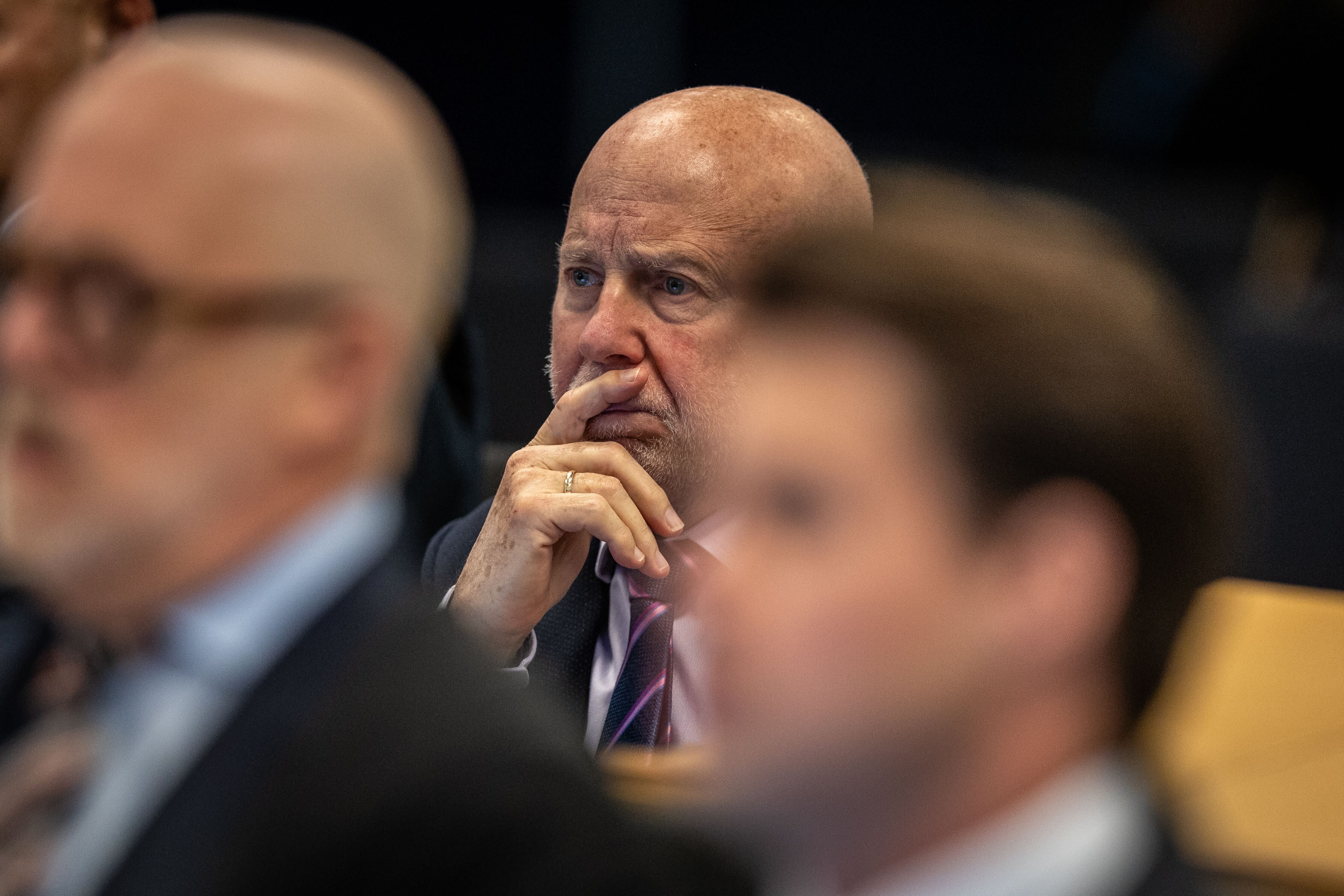
“There’s a tinder box ready to go up,” McClintock said this afternoon, theorising that it culminated overnight on April 5, 2021, with either a surprise attack on his wife as she slept or an argument that turned fatally violent.
Polkinghorne, 71, is now in the eighth week of his high-profile trial in the High Court at Auckland, where the Crown has accused him of fatally strangling his wife before staging the scene at their Remuera home in an attempt to make it look like a suicide. His lawyers, who are expected to give their own lengthy closing address either tomorrow or on Wednesday, have said it’s a clear case of suicide warped by police overreach and the Crown’s fascination with his sex life.
McClintock was unable to cram the entire Crown closing address into one day. She’s expected to finish this morning, at which point it will be decided if jurors are sent home for the day or if defence lawyer Ron Mansfield KC goes immediately into his closing address.
The Crown solicitor acknowledged to jurors today that the allegations against the eye surgeon were both bizarre and unusual. But with the only two viable explanations being suicide or murder, the circumstantial evidence points strongly at the former, she said. Most of the afternoon was spent weaving together the circumstantial threads that led her to believe so.
“The single most significant piece of evidence in this trial is that Dr Polkinghorne had tried to strangle Pauline Hanna before,” McClintock said, referring to an outcry in 2020 that two of her longtime friends recalled being present for. “There was no challenge – none – to the fact that she said that he’d done it and that she demonstrated he’d done it.”
She read aloud transcripts of John and Pheasant Riordan’s evidence about the incident, in which they recalled Hanna putting her own hands around her neck to demonstrate.
“Sadly, John Riordan was right [when he told her], ‘If he’s done it once, he’ll do it again’,” the prosecutor said.
The defence insinuated during cross-examination of the witnesses that Hanna was drunk and might have been lying. Whether she was intoxicated or not has no real relevance, but it would make no sense at all for her to have lied to her friends, McClintock argued.
“She did nothing ... but defend him, paper over his bad behaviour over and over again,” she explained. “She defends him constantly. Why would she lie about that?”
Polkinghorne, she said, “wants to make this all about her state of mind”.
“Don’t look at me, he says, look at her. I ask you to look at him. Look at his behaviour.”
You can read the full recap of the first day of the Crown’s closing address here.
Seven weeks, more than 80 witnesses
After seven straight weeks of testimony involving more than 80 witnesses, both sides have finished presenting evidence in the high-profile murder trial of eye surgeon Philip Polkinghorne.
Justice Lang instructed jurors early on Friday, after the final witness had left the courtroom, to return to the High Court at Auckland on Monday for the Crown’s lengthy closing address. The defence will give a closing address on Tuesday, with deliberations expected to start Wednesday.
Jurors are probably distrustful regarding timing predictions by now, Justice Lang joked of the unusually lengthy trial, which was initially scheduled to be finished in six weeks but now has the potential – depending on how long the jury deliberates – of stretching into a ninth week. However, the plans from this point on are relatively firm, he said.
Polkinghorne, now 71, was charged with murder in August 2022 – 16 months after wife Pauline Hanna, 63, was found dead in their Remuera home. The defence has been adamant that her death was exactly as it initially seemed – a suicide by partial hanging in the entryway of their home that had taken place sometime overnight while Polkinghorne was sleeping. The Crown, however, has presented a much more nefarious picture in which the surgeon strangled his wife of 24 years and then staged the scene to look like a suicide.
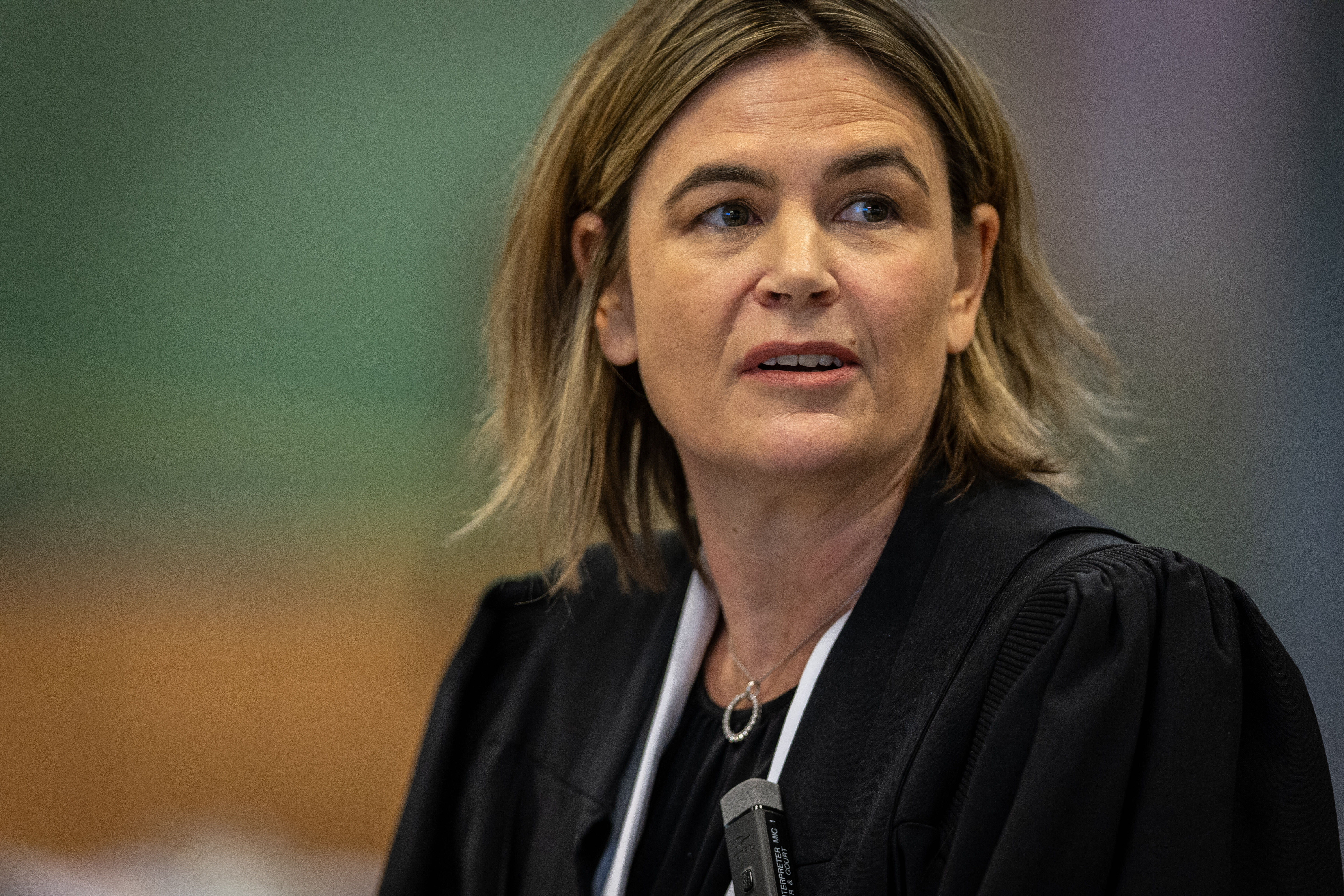
Prosecutors spent more than four weeks calling evidence that focused on, among other things, Polkinghorne’s methamphetamine usage, the hundreds of thousands of dollars he spent on sex workers, his alleged “double life” with Sydney escort Madison Ashton and an alleged prior outcry by Hanna in which two witnesses said she reported her husband had strangled her non-fatally.
Ashton did not testify and neither did Polkinghorne. His sister, who arrived at the scene before paramedics and police, was also not called by either side to the witness box.
The defence has sought to dismiss much of the sex and drugs evidence as irrelevant. The past two-and-a-half weeks have focused largely on Hanna’s mental health, which included a decades-long prescription for Prozac, revelations in her own emails noting at-times-intense work stress, a call to her GP in December 2019 reporting thoughts of suicide and an alleged outcry to her sister in the early 1990s about a previous attempt at self-harm.
The final witnesses did not stray from that theme.
Craig Kapitan is an Auckland-based journalist covering courts and justice. He joined the Herald in 2021 and has reported on courts since 2002 in three newsrooms in the US and New Zealand.
The Herald will be covering the case in a daily podcast, Accused: The Polkinghorne Trial. You can follow the podcast at iHeartRadio, Apple Podcasts, Spotify, through The Front Page feed, or wherever you get your podcasts.