Philip Polkinghorne murder trial live updates: Crown begins day-long closing address
WARNING: DISTRESSING CONTENT
“This case is binary: if it’s not suicide, it’s murder.”
After seven weeks of evidence, that’s what Crown solicitor Alysha McClintock told jurors in the High Court at Auckland today as she began what is expected to be a lengthy closing address in the high-profile murder trial of prominent Auckland eye surgeon Philip Polkinghorne.
Allegations of planted evidence, trying to sway witnesses, deleted files and manipulating his wife’s body to stage a suicide - paired with his high standing in society - make for a rare set of circumstances so bizarre it almost beggars belief, the prosecutor acknowledged. But that’s what the defendant is counting on, she said.
“His lawyer says he shouldn’t have been there [suspected of murder] - not Dr Polkinghorne, not the renowned eye surgeon, not the man of wealth, of standing,” McClintock said. “Supposedly police should have just rubber-stamped this [as a suicide]... but they didn’t.
“... Once you understand Dr Polkinghorne’s ability to manipulate things .. it starts to all make sense.”
McClintock’s address is set to continue through the afternoon, after jurors take a lunch break. All of tomorrow has been set aside for the defence closing address, with jury deliberations tentatively set to begin on Wednesday.
STORY CONTINUES AFTER BLOG
Trial adjourns for the day
Vera Alves
Crown prosecutor Alysha McClintock does not have far to go in her closing address, so we'll start again at the earlier time of 9.30am so we can finish her closing, Justice Graham Lang says.
The judge urges them to continue to keep an open mind because they have not heard the defence closing or the judge's summing-up.
Meth in the toilet means Polkinghorne was in that bedroom - Crown
Vera Alves
There's also the meth traces in Hanna's toilet, because it puts him in that room, and he doesn't want that, says Crown prosecutor Alysha McClintock.
"He knows what happened when he went there. He killed his wife."
On his own account, he's going to the gym twice a week with personal trainer Barry Payne, and he's ready to break records, says McClintock.
The prosecutor says he could have carried her down the stairs.
There's also an important detail suggesting she was brought down the stairs. She's covered in a sheet when first responders arrive, and a sheet is missing from the bed where she slept.
The sheet was on top of her, under the duvet. No sheet was mentioned in the interview, McClintock says.
What Polkinghorne did the night Hanna died
Vera Alves
Crown prosecutor Alysha McClintock is now turning to what Polkinghorne did that night.
There's no evidence she was active at all that night. But he was, and he lied about it. He told Detective Ilona Walton he was asleep all night, from about 10pm, said McClintock.
Polkinghorne seems to be watching a documentary when he gets the last email from his wife.
At 11.16pm, he's on WhatsApp. Then his phone's off at 1.10am, when he is awake and back on WhatsApp, for seven minutes. We don't know what the message was because it's been deleted.
At 1.11am, he turns his phone on to flight mode, where it remains until 8.06am, McClintock says.
He only did that one other time, says the prosecutor. It's very unusual that the night his wife dies, his phone goes on to Airplane mode and stays on until 8.06am, the prosecutor says.
There's a lot of activity on his phone while on Airplane mode, including accessing the Photos app on his phone. There are also 90 pornographic videos, including some of him and Madison Ashton, she says.
There is photo and video app usage through to 8.05am, two minutes before he calls 111, McClintock says.
"The point is that he had plenty of time to kill her," she says.
Plenty of time to have a toot on his meth pipe, or to either surprise his wife in his bedroom or strangle her there or somewhere else, though the upstairs bedroom does seem the most likely place, McClintock says.
Plenty of time for his wife to leave at least one mark on him, that cut to his head he couldn't or wouldn't explain.
The mark he did not have on April 4, she says.
'These two worlds, they're going to collide'
Vera Alves
Here we have a man spending hundreds of thousands of dollars on sex workers and drugs to try to keep this second life away from Pauline Hanna, says Crown prosecutor Alysha McClintock.
There's one person in this marriage who actually had her life pretty together: Hanna, says McClintock.
She turns up dead, in a sheet under the stairs, totally out of the blue and a shock to those who knew her.
But the other person in this marriage had become progressively more shambolic and was on meth and seeing multiple sex workers, plainly infatuated with Madison Ashton, says the prosecutor.
"These two worlds, they're going to collide. They can't run in parallel forever," McClintock says.
Polkinghorne spent 'vast sums' on things Hanna knew nothing about – Crown
Vera Alves
On April 12, 2021, Polkinghorne sent another sex worker companion, Rachel/Alaria, a message asking if she's up and that he was considering Ubering over, Crown prosecutor Alysha McClintock says.
It's perfectly obvious his expenditure, in vast sums, went to things Hanna knew nothing about, the prosecutor says.
There were huge withdrawals in Australia, increasing significantly over the years, McClintock says.
Polkinghorne 'clearly obsessed' with Madison Ashton – Crown
Vera Alves
Polkinghorne even purchased Madison Ashton a washing machine and had it delivered to her house, Crown prosecutor Alysha McClintock says. They were even planning to spend Christmas 2020 together.
They discuss home jobs, and Polkinghorne even gives her a little CV about what he's good at, McClintock says.
"Playing at husband and wife, at least in his world," she says.
He's clearly obsessed with Ashton, the prosecutor says. She's effectively his mistress, that he's planning a future life with, she says.
Polkinghorne is emotionally and financially fully invested in Ashton at the time of Hanna's death. It doesn't matter what Ashton's true intention were, or whether she was genuine or not genuine, McClintock says. It's about what he thought and he wanted.
This dream life that he had with Ashton could not be reconciled with the life he had at home with Hanna, the prosecutor says.
"Something's got to give."
He's also stressed about Auckland Eye and what payout he might get, McClintock says.
Polkinghorne wanted to pursue a future with Madison Ashton – Crown
Vera Alves
The trial has resumed.
Crown prosecutor Alysha McClintock says Dr Emma Schwarcz said meth use is associated with an increased risk of violence.
This gives you a clear context, and the association with aggression extends beyond the period of intoxication into periods of withdrawal, McClintock says. Polkinghorne had shown signs of aggression at work, including in the operating theater, as well as at work.
"Being an older, wealthy, privileged man does not make him immune from the effects of methamphetamine."
There's a tinderbox, ready to go up, says McClintock, and it starts from about mid-2020 with all these issues bubbling away.
Hanna knew there was a sexual relationship with sex worker Madison Ashton, but Polkinghorne was planning a future with her, including discussing their future domestic life together, McClintock says.
In 2018, Ashton had said she's not ready to commit, the prosecutor says. Polkinghorne had said let us love each other and leave the future to the future. He later talked about making plans to split from Hanna, and splitting the assets 65 to 35 in his favour. He promised to discuss this with Ashton before agreeing anything.
"Isn't that interesting?" asks McClintock.
Of course Hanna wasn't aware of all this, says McClintock.
Meth use associated with increased libido
Vera Alves
Polkinghorne's meth use and habit had got reckless at this point in time, and that tells you something about its extent, and the increasing level of dependence he had on meth, says McClintock.
His longtime Rings Beach neighbour Stephen MacIntyre said he found Polkinghorne more erratic and jumpy, Crown prosecutor Alysha McClintock recalls.
Unusual behaviour and aggression are symptoms of meth use, as we heard from expert witness Dr Emma Schwarcz, of the Community Drug and Alcohol Service, the prosecutor says.
Use of the drug is associated with an increased libido, McClintock says.
"We know his to be very high."
She complained to friends about him wanting sex every day, calling him a sex fiend, she recalls.
Fatigue, in particular, is something associated with a meth comedown and something reported by Polkinghorne's colleagues.
Justice Lang calls a 10-minute break.
Polkinghorne 'not simply a casual user' of meth – Crown
Vera Alves
It's easy to try and excuse it as advancing age or an old-school manner, says McClintock. But it's all happening at the same time as Polkinghorne's problematic meth use, she says, and it's not a coincidence.
The amount at his home shows the significance of the habit – 37.7g.
At the same time, he's going through the cash and was being controlling of and abusive to his wife, and had an ever-developing relationship with Madison Ashton, McClintock says.
That changed behaviour, she suggests, goes hand in hand with his meth use: 37.7g is 370 individual uses, and more than $13,000 worth.
He used it regularly enough he had that "vast quantity to hand, left over" when the police searched his home.
He's not simply a casual user at that volume, says McClintock.
This is not just every once and so often, she says.
The suggestion he's not responsible for the meth in the toilet adjoining Hanna's room is just "silly", says McClintock. And he also tried to blame the meth pipe found at Auckland Eye on others, she says.
Look at what you do have about his level, about his use, his ready access to all that meth throughout the house, McClintock says. It's his DNA on the containers, not hers.
There was also a used meth pipe under the bed, she says.
He wrote up his goals to 2040, including avoiding meth, suggesting it was a problem, the prosecutor says.
And he'd also saved an image to his laptop showing how to make a meth pipe out of a light bulb. He was obviously using at home, and the Crown says his habit had increased to the point where he was using it at work, albeit not while he was operating, the prosecutor says.
We know he was at Auckland Eye the weekend before the meth pipe was found, says McClintock. He is visible in the clinic before leaving a little after 10pm on the Saturday.
Of course he smoked it at work that night, otherwise why would a meth pipe be left there, and the premises was contaminated with meth as well, she says.
Polkinghorne's behavioural changes in the spotlight
Vera Alves
On to Polkinghorne's changed behaviour over the last 18 months to two years.
Many people picked up on the fact he was acting differently, Crown prosecutor Alysha McClintock says. It's not massive or drastic but a number of people noticed, including Auckland Eye colleagues. Fellow eye doctor Dean Corbett said there were rapid, exaggerated changes in mood.
Another doctor, Susan Ormonde, found him more irritable in the year or two before 2021, McClintock says.
Ormonde was the one Polkinghorne disclosed the meth use to after Hanna died, recommending at one point she try it.
Others spoke about him coming on to a Zoom call and being outright agitated or even rude.
He was standing up, being intimating and causing his colleagues to become distressed, right before Hanna died, McClintock says.
Issues 'boiled over' for Polkinghorne that night – Crown
Vera Alves
Crown prosecutor Alysha McClintock turns to Polkinghorne's life in the 18 months before his wife's death.
His behaviour had changed, becoming increasingly angry and agitated, possibly tied to his use of meth.
He's obsessed with Madison Ashton and thinks he's setting up a life with her, she says. He's also haemorrhaging money.
Any one or more of these support the inference, the logical conclusion, that these issues boiled over for Polkinghorne that night, she says.
'Circumstances' allow jury to view this as 'the homicide that it was' – Crown
Vera Alves
The evidence suggests Polkinghorne had used meth since at least 2019, Crown prosecutor Alysha McClintock says.
He's preoccupied with other women, money and meth, says McClintock. The real problem, in his mind, is his wife, she says.
Whether Polkinghorne decided to end her life having watched videos that night of Madison Ashton before smoking meth, or whether it came after an argument, both are available to you, says McClintock to the jury.
The circumstances surrounding the issues in that relationship, they provide exactly the sort of additional context that allows you to see this as the homicide that it was, she says.
Hanna concerned about Polkinghorne's meth use – Crown
Vera Alves
We must add to all of this, says Crown prosecutor Alysha McClintock, that Hanna was a woman whose husband was on meth.
We know he took it, says McClintock. He pleaded guilty to possession of 37.7g of it. But there's no evidence she took it, the prosecutor says.
The evidence is she's naïve about meth and concerned about his use of it, says McClintock.
Hanna opened a personal loan account right before her death – Crown
Vera Alves
After the sale of their rental property, Polkinghorne spent almost $300,000 on sex workers. That's not an investment, not for Hanna at least, Crown prosecutor Alysha McClintock says.
The Hanna Polkinghorne Trust was intended to be an asset to her, says McClintock. Whatever the convenient accounting that went on after her death so Polkinghorne could have the money, that's not the point, she says.
The point is what Hanna knew about where the money from the trust is going, the prosecutor says. And that is another reason for there to be an argument between these two. Because the truth is, he's running down the remainder of the value of that asset for himself.
She got to the point where she opened a personal loan account right on the cusp of her death, McClintock says.
Hanna was scared Pokinghorne had big-shot lawyers on his side – Crown
Vera Alves
Their two worlds were on a collision course, and the centre piece of that collision course was his infidelity, Crown prosecutor Alysha McClintock says.
It's unclear why he didn't leave her and the reasons could have been anything from arrogance to appearances to money, the prosecutor adds.
Hanna was scared he had big-shot lawyers on his side and she would end up with nothing, that's what she's telling people, McClintock says.
She was worried she'd been naïve with signing documents and may not have any money in her name any more, she told her niece Rose Hanna.
This is relevant to the bubbling tensions, it adds to the myriad of things there could have been an argument about or why he may have taken things into his own hands, McClintock says.
Infidelity concerns relevant factor – Crown
Vera Alves
Polkinghorne's letter to Hanna was all blame and lies, Crown prosecutor Alysha McClintock says. But her response was pleading and conciliatory, and saying that if he was going to do so, to please do it quickly so she could make arrangements.
Alison Ring remembered Hanna saying she doesn't care "how many prostitutes he f**** in Sydney" but she didn't want him having an affair within her circle, which Ring took to mean in Auckland.
But there were no searches about problems in an open relationship, says McClintock.
Then there was a dinner in Tauranga in August 2020, when she told her niece Rose she had contacted a private investigator. While she didn't follow through with the PI, it's clear things were not good in the relationship, says McClintock.
There were 18 internet searches over a certain period, and 13 were about infidelity or being treated badly, says McClintock.
The prosecutor says infidelity concerns had taken hold of this relationship so of course the sex with others was relevant.
"This is not about him being a poor husband, I think he'd fail that test, this is not about that," the prosecutor says.
Her concerns he's being unfaithful are relevant to there being an argument that day or whether Polkinghorne might have wanted her out of the picture, she says.
No evidence that the couple were in an open relationship at the time – Crown
Vera Alves
While her sexual experiences with her husband and others is not an infidelity issue, what was suggested by defence lawyer Ron Mansfield is that they had an open marriage, so it is irrelevant, says Crown prosecutor Alysha McClintock.
The evidence tells us Hanna knew her husband had sex with prostitutes in Sydney, not that she liked it.
She sees him as a "sex fiend" but one she loves, she says. Joining in is something she had tried, including with male prostitutes and her husband, says McClintock.
There is no evidence this is something she went and did alone, the prosecutor adds.
The evidence shows her saying she would have to drink two bottles of wine before going with another man "and it's just revolting, I hate it". But she did it because she wanted to stop her husband "going off the rails", McClintock says.
She told a friend she wasn't happy about it but had gone along with the threesomes.
There is no evidence of it having been an open relationship at the material time, 2021, she says.
Her fearing he was having an affair, as shown by the evidence, is at odds with the suggestion they were in an open relationship, says McClintock.
Bubbling tensions in the relationship 'important context' – Crown
Vera Alves
On to the jury's question about the time of death. It can't be estimated with precision, as is usual. But the lividity and the rigor mortis provide a window, such as the two to eight hours given by defence pathologist Stephen Cordner, Crown prosecutor Alysha McClintock says.
The Crown must prove two things: that Polkinghorne killed Hanna, and at the time he did that, he either intended to kill her, or was reckless as to whether his actions would kill her.
A very normal question to ask is: why? McClintock says bubbling tensions in this relationship provide important context.
Any one of them gives rise to the potential for an argument or a decision by him that these worlds were colliding, that she's in the way, and he's going to address it.
While the Crown does not need to prove motive, it's helpful to look at what was going on in the relationship, says McClintock.
Case doesn't have to be proven on the pathology – Crown
Vera Alves
Auckland Crown solicitor Alysha McClintock says we've been assessing Hanna through the lens of homicide victim, in terms of the prior strangulation incident and the injuries to her body.
On to lividity now, the redness resulting from the pooling of blood in her body. It is consistent both with her being in the chair and in another seated position, the prosecutor said. That doesn't tell you who put her in the chair, herself or her husband.
And let's not forget the search "leg edema after strangulation" by Polkinghorne, suggesting a concern by him, the prosecutor says.
The blow to her head was decent, it could have affected her ability to resist, as could the effects of the sedatives she had taken, she says.
Remember, this is a medical man we're dealing with, he is not trying to make it look like he killed her, McClintock says.
If you accept he was the one who killed her, the amount of time needed to compress her neck to cause death, at least one to two minutes, shows the intention to kill, the prosecutor says.
There were also the meth traces in her toilet, and the fact there is no evidence she had used meth, says McClintock.
Always remember, she says, pathology is important but the case doesn't have to be proven on the pathology.
"That's what circumstantial cases are about."
The conclusion that he had assaulted his wife, strangled her and lied about it is not excluded by the pathology, says McClintock.
Vera Alves
Court is about to resume. The public gallery remains as packed as ever with more than 70 people.
Vera Alves
Crown witness pathologist Martin Sage said it was unusual the direction of the neck mark was straight back, rather than back and up. The defence pathologists did not put much weight on it, but said you could not exclude it as evidence of homicide, Crown prosecutor Alysha McClintock recalls.
It's been an hour since lunch and we're taking another break.
Justice Graham Lang has said we are going to do the closings in shorter instalments because of the degree of concentration required.
Crown doesn't have to prove what type of strangulation was used – prosecutor
Vera Alves
When you combine it with what you know Polkinghorne's up to that night, it tells you how the injuries happened, says the Crown prosecutor, Alysha McClintock.
There's also the fact of the absence of other injuries cited by the pathologists, but homicide was not excluded by any of the four pathologists, McClintock says.
Dr Stephen Cordner said that in 70% of cases there were extensive defensive and neck injuries, she says: Cordner said in 30% of other cases there was a good reason, like an unwell or drugged person.
McClintock says that as Dr Martin Sage said, that sort of reasoning is dangerous, because those statistics don't tell you what happened in an individual case.
If that were true, we'd just need the pathologists, she says.
"It can and does happen that strangulation occurs without more injuries."
It is more rare, but it can happen, and depends on the relative strength of the victim and attacker, the degree of sedation and the type of strangulation, be it manual or with a ligature, McClintock says.
The Crown doesn't have to prove what type of strangulation was used, she says. In a criminal trial, the exact mechanism of death does not need to be proved.
But you do need to be sure the neck compression was caused by Polkinghorne and not by Hanna hanging herself, she tells the jury.
"It is very important to focus on the right issue," she says.
Vera Alves
In May 2019, Hanna had said in an email to her stepchildren that progress was being made with her husband's anger and frustration, before asking them not to relay her comments back to him.
"At times she's scared of his reaction, despite her love for him, Crown prosecutor Alysha McClintock says.
These factors are there, and then you have to add in his methamphetamine use, McClintock says.
The first and most significant piece of evidence is this prior strangulation, says the prosecutor again. Then there's the control and aggression. And when you look at the injuries to her through that lens, they're not so "non-specific" at all, McClintock says.
While they're non-specific in pathology terms, they're entirely consistent with her being assaulted by Polkinghorne, the prosecutor says.
Either she's been surprised, and in the ensuing struggle, punched and struck and gripped and strangled, or there's an argument during which she 's been struck and punched and gripped and strangled, she says. The Crown doesn't need to prove which.
Hanna referred to herself as 'emotionally bullied', said husband was 'an angry man'
Vera Alves
Back to the Longlands recording, where she said 2019 had been a bad year, "ugly-bugly".
Crown prosecutor Alysha McClintock says it's clear this trouble was not confined to Auckland Eye because she had referred to herself as "emotionally bullied".
She had also said her husband was an "angry man", McClintock recalls.
Anger is a theme, the prosecutor says.
Hanna sent an email to her niece Rose Hanna when she was coming to Auckland, asking if she'd rather stay in a hotel, in December 2019, McClintock recalls.
"PJP on the ceiling I don't what you to experience that," Hanna wrote to her niece.
Within days of that email, after writing his "letter of blame to his wife", Polkinghorne was off to Australia, says McClintock.
The anger was bubbling away in the year before her death, she says.
'Only one person is in charge of this relationship'
Vera Alves
John Riordan had also said Hanna had taken to calling instead of texting in reply. Rose Hanna, her niece, had observed a similar thing, says Crown prosecutor Alysha McClintock.
"That is behaviour by someone of their partner seeing what's in their texts and someone trying desperately to paint an outwardly rosy picture, knowing as she did that she had disclosed this critical thing to her dear friends."
"Only one person is in charge of this relationship."
He doesn't have to have strangled her exactly the same way, says McClintock. What we do know is she was willing to attack her by the throat, she says.
Most people use more force and cause neck injuries, but Polkinghorne intended to kill her thinking he'd try to pretend she had killed herself, the prosecutor says.
"This is an intelligent, medical man who knows better than most how the human body works."
"He wants to make this all about her state of mind."
But I ask you to look at him, look at his behaviour, McClintock says. This is a huge risk factor, part of the collision course that the worlds of these two were on, she says.
McClintock references a message from Hanna to her friend Margaret White where she said "Philip has become beastly". White said she took this to mean he had become enraged. Hanna said something to her about "I just need you to know if something happens to me", McClintock recalls, also showing her fear.
"Just over a year later something did happen to her. She died, from neck compression."
'He's a doctor, he knows what that does'
Vera Alves
Pheasant Riordan messaged Hanna the next day after the dinner, saying "I wish I could take some of your pain away".
The suggestion from the defence was that maybe she was lying, or had drunk too much, says Crown prosecutor Alysha McClintock. Time and time again, she defends Polkinghorne and papers over his behaviour, the prosecutor says.
"But why would she lie about this?"
Polkinghorne's tendency to attack his wife by the throat is demonstrated by this evidence, a hugely significant fact given his wife died by neck compression, McClintock says.
"He's got a tendency to impede blood flow to to the neck to risk serious injury by neck compression," says McClintock.
"He's a doctor, he knows what that does."
Dr Christopher Milroy, one of the defence pathologist, acknowledged that while rare, it was possible to strangle people wihtout leaving significant injuries, McClintock says.
Non-fatal strangulation is a key marker to an escalation of domestic violence, McClintock further recalls Milroy saying.
If we're going to get into suicide indicators, we should also get into homicide indicators, the prosecutor says.
Sadly, John Riordan was right when he said "if he's done it once, he'll do it again", McClintock says.
Prior strangulation most significant piece of evidence in case for murder – Crown
Vera Alves
Crown prosecutor Alysha McClintock is now moving on to the evidence supporting Hanna being a victim of homicide.
The single most significant piece of evidence in this trial, I suggest, is that Dr Polkinghorne had tried to strangle Hanna before, says McClintock.
She told her friends that early in 2020. She was dead from neck compression within 13 months of that disclosure.
She said it, and she demonstrated it, says McClintock, before reading Pheasant Riordan's evidence.
Pheasant Riordan said Hanna became agitated and described that Polkinghorne had done this to her, before the witness gestured with her hands to her throat, McClintock says.
Her husband John Riordan said during the dinner in 2020 that what she was telling them became more and more serious, before she placed her hands on her throat. After this, she said nothing for maybe five seconds, Riordan said, before saying "he tried to strangle me".
Riordan said in his evidence he was 100% certain Hanna had used the words "he tried to strangle me", McClintock recalls.
Vera Alves
The Crown says the evidence excludes the possibility of her being suicidal on April 4.
She's also had something of a personality transplant, because she's doing all of these things with ropes that make no sense given who she was – there's no note and there's no Google searches, says Crown prosecutor Alysha McClintock.
And never forget the importance of what was happening down the other end of that hallway, she says.
Crown details Hanna's injuries
Vera Alves
On to the cluster of arm bruises, they are made within the same 24-hour period, consistent with her arm being gripped, says Crown prosecutor Alysha McClintock.
And there's no evidence she was gripped in an innocent way before that time. Nor was there any evidence she was steadied by anyone, as the defence suggested, and it can't have been from the Covid vaccine, says McClintock.
"It's a grip injury that got there somehow within that 24-hour period" and wholly consistent with her being gripped during an assault before she was killed, she says.
And there's also the bruise to her temple in the same period.
This injury doesn't link to the process of an incomplete hanging either, says McClintock. She has to have banged her head hard with moderate force. If it's an accident, she's decently banged her head, as well as being gripped and injuring her nose.
It's really just a case of stopping and thinking logically about this, McClintock says.
What are the chances that she has both become suicidal and had this bumpy old time that's injured her in all these different ways? asks the prosecutor.
There's a fourth injury, an abrasion to her back, that McClintock says is a bit more equivocal. It's the only jury the two Crown pathologists both said could have been made after death.
"She could have been dragged at some point in either scenario."
You need to consider all the injuries together, says McClintock. When you do that, the pathologists agree you still have a "small set of non-specific injuries", but in all cases, specific "witness" injuries are rare.
Again, the answers here lie outside the pathology, she says. Hanna had no evident injuries on April 4 but here she is dead on April with those injuries, says McClintock. She died from neck compression and she's got those injuries on her, "and that I suggest is highly meaningful as to what happened", the prosecutor says.
Pathology 'only takes us so far' – prosecutor
Vera Alves
Auckland Crown solicitor Alysha McClintock returns to talking about what Hanna would have to have done if she committed suicide, such as tying and cutting and tensioning the rope, despite there being no evidence of her having researched that.
The rope used was also unnecessarily long and from a needlessly high point in the house, says McClintock.
It also did not have enough tension when found by police.
While the Crown accepts hanging yourself using that rope in that position is possible, it would need to be tied and tensioned properly. And that's not how it was when found, says McClintock.
The pathology only takes us so far, the prosecutor says.
The neck compression, on the pathology, could be caused either by manual strangulation or by the belt being used as a ligature to strangle her, she says.
"They're all available conclusions on the pathology, confined to the pathology."
They can't judge what the mechanism of death actually was, between suicide and homicide, she says. But we have other evidence for that, the prosecutor says.
The defence pathologists said they would expect Hanna to have suffered many more injuries if she had been strangled. But McClintock says the pathologists acknowledged the minority of cases where there are no or limited injuries are where there's a good reason, such as a (self) sedated victim or an assailant who knows what they're doing.
You also need to look at whether she had those injuries before April 5, and she didn't, says McClintock.
"These injuries are meaningful," she says.
Hanna had a nose injury which she didn't have around lunchtime April 4, when she got her Covid vaccine, she didn't have it between 2pm and 3pm on April 3 when she went to the tip, and she doesn't seem to have it at 6.30pm when she takes food to John Norton and his partner, McClintock says.
Something else had to have happened to cause that nose injury, she says.
Pathologist Kilak Kesha said she was alive when the nose abrasion happened, says McClintock.
Vera Alves
Court is about to resume before a still-packed public gallery.
Court adjourns for lunch
Vera Alves
Justice Graham Lang says we'll take the lunch break now. But it'll be a short break until just 2pm, because the judge says the weather is going to pack in later today.
Justice Lang has been conscientious of the jury's travel requirements throughout. See you in 45 minutes.
Crown casts doubts over events on the night Hanna died
Vera Alves
After that email, what would have to have happened? Crown prosecutor Alysha McClintock says.
We know she plugs her phone in, then on this narrative, she's got up despite the high levels of zopiclone at some point in that night, but she didn't touch her phone or her laptop, and she hasn't gone to the toilet, despite having a full bladder when she died. Instead of going to the toilet, she's made a mess of her room for some reason, stripping just the top sheet off the bed, and taking off the pillow cases, which appear to have vanished.
A suicidal woman, she'd become oddly concerned about sheets, but only one sheet? It makes no sense, says McClintock.
Why did she get up, apparently suicidal, and strip parts of the bed? she asks.
Hanna then went naked, apart from her robe, to get the rope, but we don't know exactly where from. If it's still in the ute, she went outside, full bladder, in her robe, hair and makeup undone, across the street to get it from the ute, says McClintock.
Polkinghorne had said he'd sealed the ends of the rope the day before. "Not much turns on it, it's interesting, but the rope had been cut between the sealed ends," says McClintock.
So Hanna had cut the rope, but then hidden the cutting implement, in her disinhibited state, the prosecutor says.
Hanna then trussed one bit of rope to the balustrade, without any search on her phone and laptop, before moving a chair into the hallway, all without noise or lights, she says.
"We know he's awake watching videos or photographs, one of the two, until 2.44am," McClintock says.
"He's almost certainly having a toot on the Sweet Puff meth pipe that's found under the bed."
There's an awful lot of activity in the open spaces of the property that has to have gone unnoticed, says McClintock.
Hanna also had to get the belt Polkinghorne said was tied to the orange rope. But the robe she was wearing itself had a belt, so why use the leather belt?
The entire time she has done all this, she hasn't gone to the toilet, says McClintock.
We don't know how Hanna tied the rope to the belt, she says.
Method of suicide argued by defence does not match what is known of Hanna – Crown
Vera Alves
Hanging is sadly an all-too-common suicide method for both women and men, says Crown prosecutor Alysha McClintock.
But it's a difficult method to fathom in a woman who had ready access to zopiclone, she says. And there's no evidence she knew how to tie and tension ropes in that way, says the prosecutor.
In addition to the zopiclone, there was codeine, McClintock says.
"There's enough drugs in that house to kill her," she says, adding that the defence psychiatrist Dr David Menkes accepted that.
Given that, why would she faff about, tying knots to the balustrade? McClintock says.
"Why not just take more drugs?"
Her supposed hanging happened in the front doorway in the most public part of the house, before a glass door, says McClintock. "Does that gel, given everything you've heard about her? How concerned she was about her appearance?"
She was also naked but for that dressing gown in the most public part of the house, this "hugely proud, immaculate woman" impulsively deciding to leave this world pretty much naked and, for her, dishevelled, says the prosecutor.
It was also a street-facing part of the house, says McClintock.
Suicide can be excluded as a reasonable possibility, the prosecutor says.
On the night of her death, she took twice the level of zopiclone needed, an odd thing to do if she intended to kill herself, McClintock says.
There is no evidence of her being impulsive over that six-month period when she was taking zopiclone.
Vera Alves
The messages between Hanna and Polkinghorne are strange and overly amicable given the problems we know of in their relationship, Crown prosecutor Alysha McClintock says.
"They're overplayed almost," she says.
"There's a constant flattery from him and a constant checking-in from her."
So something happened that night after Hanna sent that last email. Either some argument took off, or Polkinghorne decided to do something, says McClintock.
Hanna had no Google searches related to suicide
Vera Alves
There's also no evidence of searches around suicide or hanging. So for Hanna to kill herself, she already had to know how to hang herself, says Crown prosecutor Alysha McClintock.
And she was a person who searched for things, as shown by her searches about meth or infidelity or anorgasmia or Alcoholics Anonymous, McClintock says.
"But not once does she search anything that could be considered to do with killing herself and, in particular, hanging herself. Not partial or incomplete hanging, nothing."
Hanna did no research that can be linked to her dying by suicide on April 5.
"How did she know without searching aspects of what to do?" McClintock says.
Hanna had searched for asphyxia, but that was in 2019, and it was bookended between multiple searches of French literature from the decadent period, says McClintock. The court heard earlier she had also searched for the author Émile Zola, who died by accidental asphyxia due to a faulty stove pipe.
You would expect her device use to help on this issue in this day and age, the prosecutor says.
And it's that sort of investigative work that protects against the risk raised by defence pathologist Stephen Cordner, of many suicides suddenly being treated as homicides, McClintock says.
"Not all answers lie in the pathology."
"There isn't any evidence at all off her devices that that is what happened. I suggest that is very significant, given the type of person that she was and the type of things that she would search."
Prosecution says lack of suicide note is telling
Vera Alves
While there's a note in only a third or a quarter of cases, Crown prosecutor Alysha McClintock says the evidence shows Hanna left notes about everything.
If you did anything at all, Hanna would leave a note, says McClintock.
"Always notes, always notes," McClintock remembered Alison Ring saying.
The defendant knew that, and that's why he presented the note to Ring after he was charged, says the prosecutor.
Her pattern was to "reach out, and write down" if she was in pain, says the prosecutor. She would write to herself or write to family to get it out, she says.
And yet, she is said to have killed herself with no note, says McClintock.
"And I simply say for her, that doesn't gel."
Her last written communication was "does this work?" to her husband, attaching a draft version of the resignation letter.
Friends had no concerns about Hanna's mental health – Crown
Vera Alves
Who Pauline Hanna was is not confined to the two or three emails repeatedly read out to the court about concerns regarding her work performance, two of which come from 2020, says Crown prosecutor Alysha McClintock.
Yes, her work was stressful, and could be tough and lonely, says McClintock. But those emails are not all of who she was come April 4, 2021, she says.
She had opened up to her friend Sarah Prentice, who said Hanna had been congratulated for her performance in the week prior, McClintock says. Prentice told the court Hanna was performing as well as she'd seen her perform, McClintock says.
On the Easter Sunday before her death, her work emails were fine and were in line with what she'd normally send, the prosecutor says.
Ailsa Claire, one of her managers, said late emails were her preferred pattern, and she did not come to work early or stay particularly late, McClintock says.
Another colleague, Sharon Alabastro, found Hanna composed and calm, the prosecutor says.
Hanna was booked in to be at work after seeing her personal trainer, McClintock says.
Her GP, whom Hanna was open with, said she loved her work.
Sue Ormonde, a colleague of Polkinghorne's, saw Hanna nine days before her death at a Crowded House concert. Ormonde said Hanna seemed proud of what she'd achieved in a difficult situation and was happier and in better form than she'd seen her in a long time, says McClintock.
Alison Ring, another friend, said she felt Hanna was enjoying her work and was doing something good for the community. Her longtime friend Pheasant Riordan said Hanna was in no way overwhelmed by her work, she says.
John Riordan said Hanna was a very driven woman who was excited about her grandchildren when he last saw her, McClintock says.
Margaret White, a colleague and friend who saw her in February, said Hanna was in good spirits, she says.
White, this earnest and diligent woman, did not have any concerns about Hanna but said she was proud of what she'd achieved for the community in South Auckland, McClintock says.
There were 11 witnesses who all said as far as they were concerned, she was fulfilled and had purpose through her work and grandchildren.
What's not present in all of that? "There's no evidence at all of a trigger for her to commit suicide come April 2021," says McClintock.
By comparison, there was a clear trigger articulated in December 2019, when she made no attempt but contacted her GP, says McClintock.
Suicide can be impulsive, as defence witnesses said, says McClintock. But then you have to look at how she is said to have committed suicide, she says.
It's only after her death that Polkinghorne started talking about her stress, McClintock says.
While there's a note in only a third or a quarter of cases, McClintock says the evidence shows Hanna left notes about everything.
Hanna's love for husband came at the cost of her life, Crown solicitor says
Vera Alves
Court has resumed.
Crown prosecutor Alysha McClintock says she has nearly finished her section on who Hanna was.
And who her husband was to her, at the critical point of time on April 4. He was a husband who criticised her, blamed her, told her not to wear body suits and picked at her about benign things like picking up glasses by the rims, says McClintock.
John Riordan, Hanna's friend, said Polkinghorne would do it in public. He was the husband she apologised for when he was "on the roof" (her word for his anger), the prosecutor says. She was trying to appease him by drafting three versions of the pleading letter she was to send in reply to his admonishing letter, says McClintock.
She had searched for "how to stay sane when your husband is having an affair" and whether watching pornographic videos was normal male behaviour.
"He was the husband who had strangled her and who and threatened her that he could do it any time."
But the Crown is not disputing she loved him and was trying to be better for him, says McClintock.
"The great tragedy of all of this is that her love for Dr Polkinghorne ultimately cost her her life," she says.
"But it was at his hands, not hers."
When she went into that upstairs bedroom, she had just been helping Polkinghorne with his retirement letter. She was well, I'd suggest, says McClintock.
She was even potentially feeling hopeful about her marriage. She had told Alison Ring that "Polk" had been trying hard these past few weeks, the prosecutor says. As a result, the idea she was suicidal on April 4 is at odds with the evidence and everything she's doing around that time, despite the fact there had been dark times in her life, the prosecutor says.
Yet she somehow ended up dead at the bottom of the stairs, says McClintock.
"Suicide didn't put her there, her husband put her there."
Vera Alves
Court is about to resume.
Vera Alves
Polkinghorne was a very experienced medical professional who had zopiclone scripts she was taking. Would he allow her to take that if it was causing her harm? Crown prosecutor Alysha McClintock says.
Isn't it more likely he knew it would help her sleep, McClintock says.
Hanna had joined him for group sexual experiences to please him, but it was something she said she used to do, and the last evidence of that is in 2016.
She described her husband to friends, per the Longlands recording, as an "angry, angry man", the prosecutor says.
He had also gone missing in 2019, saying he was going on a course and could not be contacted because the fictitious course leaders said it wasn't allowed.
Instead, he flew to Sydney that Christmas, says McClintock.
"No doubt into the arms of Madison Ashton."
He was a husband that had other complexities for her, says McClintock. But before we traverse those complexities, Justice Graham Lang says we'll take another break.
The jury filters out.
On the basis of McClintock's description of the structure of her opening address, we are still a way away from the halfway point. There will be one more hour-long session before court adjourns for lunch.
'He was both her great love and her greatest vulnerability' – Crown
Vera Alves
Hanna was an immaculately presented woman, always, McClintock says, and that came at a price, literally.
"Dr Polkinghorne certainly behaved as if her expenditure was a crime because he belittled her for it in the letter he sent her at the end of 2019," says McClintock.
Polkinghorne felt fit to spend as he pleased but criticised his wife for the same, says McClintock.
She didn't have any injuries on April 4, when she went to get a Covid vaccine, then to the tip and to visit her friends. But she did have injuries on April 5. And going to the tip or to get a Covid vaccine, are those the actions of a suicidal person? asks McClintock.
Her risk factors for suicide need to balanced against her protective factors, including her children and the trip she was looking forward to.
There was another person in her life – because she was married to the complex personality of Polkinghorne.
"He was both her great love and her greatest vulnerability."
Meth traces in the toilet show Polkinghorne was in that room – Crown
Vera Alves
Pauline Hanna was open with and trusted her doctor, that's the point, Crown prosecutor Alysha McClintock says.
She was also a woman who had a number of interests, which she searched up, like French literature. We also know she was naive about meth because she searched in 2020 for what P looks like and what sensation it gives you, McClintock says. Someone using meth or familiar with its effects doesn't need to search those things, she says.
She was searching it around 7pm on Christmas Eve, clearly worried about the issue, and also taking photos of meth pipes she'd discovered.
Polkinghorne had waved at you the possibility she took meth to explain the traces of meth found in the bathroom of the room where she slept the night of her death, McClintock says.
But that idea can be dismissed in light of those searches and the toxicology, showing no meth in her blood or hair, she says.
"The meth traces in that toilet did not come from her."
And there's no evidence to support the idea raised by the defence that the hair dye could strip meth from her hair, she says.
That's significant, because Polkinghorne denied being in that bedroom, McClintock says.
"The meth traces in that toilet support that he was in that room," she says.
Suicidal 'thoughts' are not 'plans' – Crown
Vera Alves
Suicidal thoughts are alarmingly common, says Crown prosecutor Alysha McClintock, so it's important to distinguish whether she had thoughts or plans.
In the early 1990s, the Crown says she had neither, so you can put the evidence of Tracey Hanna to one side, McClintock says.
But it is clear she did have suicidal thoughts in 2019, says the prosecutor.
The call to the crisis team shows her mother was in hospital and her husband had abandoned her at Christmas time, she says.
Her thoughts, though, were not of hanging, they were of driving into a lorry. And she didn't get past those invasive thoughts, saying she was too scared and loved her family, says McClintock.
While she made a comment about chucking herself off a bridge in the Longlands recording, you had to be careful with that and how serious the comment was, she says.
"People can say things like that. But at least she voices them and gets them out."
She had significant protective factors in her life, namely her family, so it's important to look at what she did when she had those invasive thoughts, says McClintock.
She was open with and trusted her GP and reached out in 2019, and knew she could reach out at any time, the prosecutor says.
There's been a lot of criticism of how she didn't subsequently receive counselling but we don't know whose choice that was, says McClintock.
"Maybe she just felt better," the prosecutor says.
What she did about it in 2019 was key, she says. "She reached out, she asked for help."
I'm not saying it's a guarantee she would do it again, but it's helpful, says McClintock.
Polkinghorne's treatment of Hanna's alcohol use 'interesting' – Crown
Vera Alves
It would have to have been something that happened in the middle of the night. But when you look down the hallway, the activity that night was not the activity of Pauline Hanna. The person doing things that night on the evidence was Polkinghorne, not Hanna, says Crown prosecutor Alysha McClintock.
The prosecutor says Hanna had sought help to reduce her alcohol intake in the years before. By April 2021, she was no worse than she had been for many years, after reducing her alcohol intake in 2019.
McClintock says her husband's treatment of her alcohol use is interesting. He seems to have taunted her with it at times, and encouraged it at others, she says.
He would call her a lush in front of friends, as recounted by John Riordan. On the other hand, he paints this very grand and self-congratulatory picture of himself, saying he'd be at home at the end of the day, holding out a glass of wine at the top of the stairs.
Hanna was perhaps more open than many of us with her GP about how much she was drinking, says McClintock. But the key point is alcohol was no more of a factor in her life than it had been for many years.
Her blood alcohol limit at time of death was below the legal limit, she says.
In his police interview, Polkinghorne said she had drunk a bottle and a half of wine that night, but wasn't drunk, McClintock says.
"Perhaps her drinking is a deflection for him and what he was doing that night."
McClintock says Hanna did not attempt suicide between 1990 and 1992, as alleged by her sister Tracey Hanna in evidence. There were no medical records of it and no marks on her wrist, McClintock says. No one who was "truly close" to Hanna had heard of it, the prosecutor said, before asking why Hanna had kept the disclosure hidden for 30 years.
"I can't explain Tracey Hanna's motivation to say what she did about Pauline Hanna."
Whether it was driven by some sort of odd fascination with Polkinghorne or a wish to be the centre of attention, who knows, said McClintock.
No evidence that Hanna's mental health was worsening – Crown
Vera Alves
Hanna was a dear friend and colleague of Margaret White, who had seen Hanna over Christmas and New Year 2021 and said she was in good spirits. White also worked in the public health system and understood the stress and pressure, Crown prosecutor Alysha McClintock says, adding White was someone Hanna confided in.
Hanna was also someone on Prozac for 20 years, "her happy pills", says McClintock.
That's accepted, as is the fact she took a standard dose, she says.
McClintock says the defence expert Dr David Menkes said Prozac was used to manage symptoms of depression and anxiety and there was no evidence of her having a major depressive illness. Her GP had said she was "well maintained" on that medicine, and stable, says the prosecutor.
The GP's evidence is important because she saw and dealt with Hanna for years, says McClintock.
She had her in front of her for years on these medications. "That's not statistics, that's real people."
She was not experiencing side-effects, according to her GP.
What's the evidence that her mental health was actually worsening?
"There isn't any, come 4 April, 2021."
Prior to that night, there's no evidence her mental health was worsening for all of those years prior, McClintock says.
The prosecutor says she's not suggesting the medications she was on can't have a negative effect. "The question is: did it?"
She was a woman who liked to keep slim and took duromine to suppress her appetite, without any reported side effects since 2011.
"I'm not here to defend the prescribing practice," says McClintock, acknowledging it was not meant to be prescribed for over three months.
But that's not the issue, she says.
She'd been on all of these medications for a decade or more, and the evidence is the Duromine seems to be helping her state of mind.
"She looked good, she felt good."
The only evidence of mental health decline in the time she was taking Duromine was December 2019, and there were clear triggers for that which McClintock says she will come to.
Crown closing address turns to Pauline Hanna's state of mind
Vera Alves
Crown prosecutor Alysha McClintock is now moving to part two of her address. It's about Pauline Hanna.
McClintock says Hanna had her challenges but was not suicidal that night.
She had been painted by her husband as a "bit of a stress cadet" who drank too much and was obsessed with her appearance, says McClintock. Polkinghorne has also suggested she used meth, for which there is no evidence, she says.
"Pauline was a beautiful, successful woman in her early 60s."
She was from Hawke's Bay and was the sister of the "straight-talking, wonderfully supportive Bruce Hanna".
She was also the sister of Tracey Hanna, 11 years her junior, McClintock says.
Hanna was also the aunt to her beloved niece Rose.
McClintock says she treated Polkinghorne's children as her own and loved them, despite early challenges expressed to her GP.
She was an enthusiastic gym-goer and had booked in to see her personal trainer Barry at 9am on the morning she died, says McClintock. And that's important, the prosecutor says.
Hanna could suffer a crisis of confidence from time to time, especially in her work, as expressed in the occasional email to herself and her family, McClintock says.
"She also had very mixed feelings about and confidence in her husband."
But that's not unusual, and she had a sense of confidence and fulfilment at the time of her death, as she had ultimately flourished in her work in the Covid response, McClintock says.
Her friend told the court she found she was relishing her work, McClintock says.
"Perhaps it was also a welcome distraction from her husband's foibles."
She was all set on the night of April 4 to go to work the following day for that all-important vaccination centre rollout, set to be brought to fruition that week.
There's no indications of worsening depression or suicidal thinking at that time, McClintock says. The prosecutor says that includes the "my life is insane" email from March, and urges the jury to be careful looking at individual emails, because people are complex and words on a page don't always convey well what sits behind them, especially in isolation.
Covid was a weird time for all of us but perhaps in particular for those on the front line, says McClintock.
Exercise was important and she would reschedule meetings to go to the gym, the prosecutor says.
Yes, she took emails and attended Zoom meetings at the hairdresser. But McClintock says that's just what busy, time-stretched women do.
The people you've heard from did know, see and correspond with her, says McClintock.
"They saw nothing. Nothing off at all," the prosecutor says.
Not her friends, GP or husband, who in his interview said, in essence, she was fine, the prosecutor says.
Come Easter weekend 2021, she checked in with loved ones, was texting Rose, messaged friends and colleagues, and had also invited family to dinner. She'd taken some old curtains and belongings to the tip and had popped down the road to the local cafe with Polkinghorne.
Her job was demanding but at this point in time it didn't consume her, McClintock says.
To cast her actions in going to the tip or dropping food to friends as suicidal indicators confused even defence witness David Menkes, a psychiatrist, says McClintock.
"It seems desperate, to be frank, to look to that to suggest she was suicidal," she says.
"People go to the tip on long weekends."
The evidence tells us she was a kind person and these actions were normal, the prosecutor says.
She was sad about her mother Fay's death two months earlier, but was philosophical, as recounted by her friend Pheasant Riordan, says McClintock. It had hit her hard but she was coping.
That was also supported by her friend Alison Ring, who remembered Hanna saying she was pleased to have seen her mother the day before.
"She'd come to terms with the sad death of her mother. That's the evidence."
It is not the evidence of those closest to her that she was struggling with the death of her mother, the prosecutor says.
McClintock says Ring's evidence was that she left a note for everything. And she was looking forward to a trip to the South Island with friends.
She was a woman who prioritised checking in on those she loved, as she did with her niece Rose Hanna on April 4, the day before she died, says McClintock.
Vera Alves
Once you understand Dr Polkinghorne's capability to manipulate and interfere with things, the scene that confronted police on April 5 starts to make more sense, Crown prosecutor Alysha McClintock says.
If you accept he's covering things up, that's circumstantial evidence you can legitimately use to infer his guilt, says McClintock.
Cumulatively, they tell you an awful lot about this man who was not, I suggest, the devastated husband, says the prosecutor.
Crown says Polkinghorne planted evidence – blood – in his home to explain his head wound
Vera Alves
Here is the jury. Crown prosecutor Alysha McClintock is back at her lectern.
McClintock says Polkinghorne's deception got worse. She alleges he planted blood in his house to explain away the wound to his forehead, that he could not explain at his first interview.
"I appreciate this allegation that he planted this blood will sound shocking. But that's what the evidence tells us," she says.
ESR forensic scientist Fiona Matheson examined the house thoroughly for blood and did not find any on the steps, leading up from the entranceway to the small landing.
She did find a red brown mark on those steps, but said multiple times she'd screened that area for blood and did not take a sample because it did not look like blood and was not blood.
"That's how the testing works."
She's a highly experienced forensic scientist, she knows what blood looks like and how to test for it, McClintock says.
She also did luminol testing near Hanna's body, including on the steps, a sensitive test for blood. It did not show blood either, McClintock says.
But two years later, "along comes Dr Polkinghorne to interfere in all of that".
A defence forensic expert flew out from the US and was pointed to that area, but it looked different, McClintock says.
Polkinghorne directed the doctor to that area, and the results showed his blood was present, despite the thorough examination over 11 days back in 2021 by a very experienced forensic scientist, McClintock says.
There were visual signs of contamination. The mark is in the same place but the size and shape are very different, says the prosecutor.
"There isn't any way of being polite about it, Dr Polkinghorne put that there."
McClintock says he knew he hadn't explained that mark on his head and where it really came from: his wife.
The only person who ever suggested that maybe he banged his head on his step was his sister Ruth Hughes, who we haven't heard from, McClintock says. Hughes told police that perhaps Polkinghorne had banged his head on the step.
It's hard to believe, I know, says McClintock, that someone would fake their wife's suicide.
"But here he is faking evidence."
Vera Alves
The public filter back into the gallery and manoeuvre to secure one of the limited number of seats ahead of the second session of the closing address of Auckland Crown solicitor Alysha McClintock.
Vera Alves
The crux of Alison Ring's evidence is the so-called suicide note, Crown prosecutor Alysha McClintock says.
Police found no note but after Polkinghorne was charged, he went around to Ring's house with a note he said he had found in the bedding, which McClintock says was another lie.
Polkinghorne knew Hanna always left notes for everything and he knew question were being asked about why she didn't leave a note, McClintock says.
The prosecutor recounts Ring's comments that she felt Polkinghorne was trying to manipulate her via the note.
That conduct doesn't fit at all with a man whose wife has committed suicide.
McClintock has one more point about Polkinghorne's conduct after his wife's death, but we are taking the break for 15 minutes before that.
Polkinghorne tried to manipulate witnesses – prosecution
Vera Alves
The next step was what Crown prosecutor Alysha McClintock says were Polkinghorne's attempts to manipulate witnesses.
McClintock urges the jury to look at what the evidence tells them about Polkinghorne and whether or not he's devastated. Because following these deletions, police still haven't gone away, so he tries to work on the minds of those around him.
He went around to his friend Paul Adriaanse's house and encouraged him not to speak to the police.
Then there's Alison Ring, Hanna's good friend, McClintock says.
She says Polkinghorne went around to her house and started speaking ill of his wife. Ring said Polkinghorne claimed the meth found in the house was hers, and other disparaging remarks, like saying she "wouldn't just f**k one man, she'd f**k the team" or that she "couldn't get her clothes off fast enough".
"So why is this man so intent on sullying one of Pauline's friend's views of his wife?" McClintock asks.
If she committed suicide and he is devastated as opposed to liberated, why is he doing it? she asks.
Polkinghorne messaged Madison Ashton on day of wife's funeral
Vera Alves
From April 7, 2021, Polkinghorne was contacting Madison Ashton, Crown prosecutor Alysha McClintock says.
He's in highly regular contact with her, calling her on the phone, sending her a selfie, giving her advice on plastic surgery.
Other than the Herald article that Ashton sent and questioned if Polkinghorne had said those words, that his life with Hanna was perfect, and he said not a chance, and exchanges about what he's going to wear at the funeral, there is nothing in those messages about Hanna's death, she says.
There was clearly also a flight to Australia that never transpired due to an issue with his passport, McClintock says.
On the day of the funeral, after Polkinghorne's buried his wife, he's messaging Ashton. He's talking about setting up house with Ashton one week after he says his wife killed herself.
Mansfield says ignore all the sex. But let's get real, says McClintock, it is relevant, because Hanna did not know about this relationship that developed with Ashton.
Once his phone's seized, Polkinghorne's straight back on his messaging, she says.
From April 23, they start planning this trip to Mt Cook where they are found together, a remote location far away from his friends and family, the prosecutor says.
Make no mistake, it was not the devastated husband that took that trip to the South Island with Ashton, she says.
'This is the life he wanted': Crown highlights Polkinghorne's Mt Cook holiday with sex worker shortly after wife's death
Vera Alves
This case is an accumulating one, says Crown prosecutor Alysha McClintock. There's not one single thing the Crown can point to, but various pieces of evidence combine to form the conclusion Polkinghorne killed Hanna, she says. But she adds the search is compelling and telling evidence.
Moving to the next action that McClintock says doesn't fit with Polkinghorne's devastation: his holiday with Madison Ashton the month of his wife's death.
"It's also very telling," McClintock says. Just three weeks after the loss of his wife to a supposed suicide, he was off on a holiday to a remote part of the country with Ashton, she says, the sex worker he'd been smoking P with in 2019.
He was meant to be in the South Island with his wife on holiday. She'd booked a trip in the South Island on April 20 for a few days. Yet the police find him in Mt Cook in a luxury lodge with Ashton on April 30, 13 days after his wife's funeral and 25 days after her death.
"Either he and his devastation just happened to find comfort in the arms of Madison Ashton in the South Island, or this is what he wanted when he decided either that his wife was in the way and he strangled her, or whether he did that more spontaneously during an argument. It could be either of those things," McClintock says.
"But this is the life he wanted."
'This search unmasks the murderer,' Crown prosecutor says
Vera Alves
We've seen the WhatsApp messages between Dr Polkinghorne and Ms Ashton that were still on his phone, from April 5 to 16, Crown prosecutor Alysha McClintocksays.
And earlier messages were found on Ashton's phone, from 2017 to 2021.
But the contents of those messages have been scrambled together, McClintock says.
It's not a coincidence that all of the messages before April 5 are gone from Polkinghorne's phone and scrambled on Ashton's phone, the prosecutor says.
Polkinghorne has manipulated the evidence, she says.
The only inference to draw is that it's because they contain messages showing he was not the devastated husband at all. If this was an open relationship, as Mansfield urges, then what's the problem? asks McClintock.
"There is an immediate interference with evidence on his behalf."
There are also the deleted searches, she says.
The first is "how to delete iCloud storage" on April 5. At this point, he'd left the police station, and Ubered back to his home.
At 5.20pm, he searches how to delete iCloud storage, she says.
His wife died that morning and he's searching how to delete storage, says the prosecutor.
"He's not just searching it, he deleted the search. He took the extra step to delete the search that he had made."
The fact there's some embarrassing stuff on his devices does not explain it, especially, if as he says, his wife knew all about it, McClintock says.
The next search he makes and deletes is "hugely significant" she says.
"This search unmasks the murderer I suggest. Leg edema after strangulation.
"After. Strangulation."
Strangulation is an entirely different word to hanging. In this context it conveys murder, not suicide, she says.
The public presentation via the 111 call is Polkinghorne saying his wife had "hung herself", says McClintock.
And it's really significant, because the devastated husband doesn't even start typing "leg edema after strangulation", the devastated husband doesn't even think about leg edema after strangulation, says McClintock.
"That search in no way fits with a man whose wife has committed suicide."
The search is wholly incriminating because he used the word strangulation, and it was on the day of Hanna's post mortem, when pathologists are looking at her body to determine the cause of death.
He searched it twice, and he deletes it, and he does it on Duck Duck Go.
"This double-layered deception, the day after his wife had died."
The one and only explanation is he's trying to check if he had left behind a clue, McClintock says.
He understands the working of the body and was worried that he'd left a trace. As it turned out, he hadn't, the prosecutor says.
He made a mistake, McClintock says. Reeves described it as an encrypted web browser and it's one promoting anonymity, she says.
It's not something he used normally, his other searches aren't on Duck Duck Go, the prosecutor says.
He didn't know he wasn't doing it right, but he wasn't. (The trial heard earlier he used the browser's URL bar to make the search, so it was logged.)
There was no innocent explanation for that search via an anonymous search engine.
He knew the word strangulation doesn't convey hanging, she says.
The search at 5.38pm on April 6 had to be in secret, because it left a sign that he had strangled his wife, McClintock says.
'Extremely telling': Crown highlights Polkinghorne's conduct after wife's death
Vera Alves
On to Polkinghorne's conduct after his wife's death.
That's part one, says McClintock, of nine parts from the Crown's perspective.
There were two parts, says McClintock, to how he presented on April 5, 2021 when the first responders turned up.
He was largely calm with police and first responders, but not so when talking to family members and others about what was happening. He was described as wailing, she says.
People grieve differently and there is no one way to act, McClintock says.
A phone goes off in the public gallery and people sigh.
"You are right, members of the jury, to stress-test his devastation," McClintock says.
Actions speak louder than words, she says.
"I suggest it's extremely telling."
He deletes his WhatsApp messages, on the day of his wife's death, while he is still at the police station, the prosecutor says.
His priority, having made some calls about his wife's death, was the deletion of his WhatsApp messages, including his entire conversation history with Madison Ashton, dating back to 2017.
"Surely if his wife had just taken her life, that would be the very last thing on his mind."
McClintock says when Detective Andrew Reeves examined his phone later, he found no WhatsApp messages before April 5 at about 4.30pm. At that time, he was still at the police station and still had his phone, McClintock says.
During the police interview, he leaves the room for a break at 4.28pm. "There are no WhatsApp messages prior, to anyone... just after he goes for that break," McClintock says.
None of his messaging before then is available. But we know they'd been in regular contact before that. Reeves found screenshots of a WhatsApp communication between Polkinghorne and Ashton from December 8.
A further review of his phone showed he had accessed WhatsApp on the night of April 4, a number of times, McClintock says.
Firstly, at 11.16pm on April 4. "He told police he was asleep, by the way, those messages are gone. Deleted."
He then accessed it after 1am, also when he said he was asleep.
Polkinghorne then used it at 8.06am, the minute before he called 111, McClintock says.
'The Crown doesn't have to prove everything you have heard in this case'
Vera Alves
Crown prosecutor Alysha McClintock talks to the evidence of defence pathologist Dr Stephen Cordner.
There are cases where pathology can resolve the central issue, such as a gunshot wound through the chest, says McClintock.
"It is not here."
The true positive findings here are very limited, and not decisive. Nor need they be, for the Crown case, says the prosecutor.
The findings establish the cause of death as neck compression and not much more, she says.
It is speculative to use the absence of other injury to support suicide.
Cordner used the lack of injury to support the suicide theory, but he did not have all the evidence, says McClintock, such as the scene evidence or the prior strangulation evidence (as alleged by family friends the Riordans), or the evidence as to what Polkinghorne did before and after Hanna's death.
Several defence experts had to rely on Polkinghorne's account, which is self-fulfilling, the prosecutor says.
"Remember always, I suggest, the defendant is a clever medical professional, an experienced medical professional, and there is much more evidence about what happened here than the pathology."
McClintock says Cordner went too far and "exposed himself as an advocate".
The Crown doesn't have to prove everything you have heard in this case, the prosecutor tells the jury.
But to convict, they must feel sure on the evidence that they've heard that Polkinghorne killed Hanna, and he either intended it, or he did it recklessly, she says.
'Atypical man': Crown lays out 'unusual case' of staged suicide
Vera Alves
A staged suicide is a highly unusual situation, Crown prosecutor Alysha McClintock says. The defence pathologist Dr Stephen Cordner said as much, she says , that it was "mind-boggling" to imagine Polkinghorne had arranged her body like that.
But it's what happened, McClintock says.
"This case is binary, if it's not suicide, it's murder."
She did not die by accident, disease or mistake, McClintock says.
Hanna had a number of suicide risk factors, but there was no evidence she was suicidal on the night of April 4, she says.
"Do his actions support that claim that his wife committed suicide?"
McClintock says this case is not determined on suicide risk factors or probabilities.
This case is determined on the evidence of those who saw, knew and loved Pauline Hanna, her own voice in the Longlands recording, and her own letters.
"She was not a woman who had given up. She was a woman whose husband was giving up on her. She was in the way of Dr Polkinghorne's life with the intoxicating Madison Ashton and no doubt fuelled by the impacts of methamphetamine."
McClintock says she will start with Polkinghorne's conduct after his wife's supposed death by suicide.
"Because it's very revealing about the man that he had become."
This evidence clearly portrays a man that doesn't fit with a man devastated by his wife's suicide, the prosecutor says.
Firstly, he erased evidence; secondly, he secretly tried to assess whether he'd left a clue on his wife's dead body; thirdly, he started to try manipulate those who knew Hanna and tried to paint her as suicidal, McClintock says.
"Before you, he's gone one step further, and manipulated the evidence placed before you.
"He's faked a blood result to try and make it look like his blood is on the step at that address two years later when it wasn't there in April 2021."
"We are dealing, members of the jury, with a very unusual case and a very complex defendant.
"He is an atypical man with high levels of intelligence and self-assurance."
He appeared to be living a comfortable life in Remuera with Hanna as a renowned professional, McClintock says.
But he was living another life, centred around Madison Ashton, which, at least in his mind, was his future, she says.
"In this world there was secret financial support for a number of sex workers," McClintock says.
And he had,I suggest, a problematic methamphetamine habit, she says.
"Those two lives were always going to collide at some point."
And they did, on April 4, 2021, the prosecutor says.
McClintock thanks the jury for listening to the "morass" of circumstantial evidence in the case and says it's her job to fit together the parts of the evidence that can be used to prove Polkinghorne killed his wife.
"The Crown says once you fit everything together here you can be sure that suicide can be excluded here.
"This was murder," she says.
'As he blamed her in life, he blamed her in death': Crown begins closing address
Vera Alves
Crown prosecutor Alysha McClintock begins her closing address.
"Mr Foreman, members of the jury, when the police walked up those steps at... Upland Rd that morning 5 April into the house of Dr Polkinghorne and Pauline Hanna they assumed that the man who stood in front of them was the devastated husband and that the woman laid out on the floor in that position was his wife Pauline Hanna, victim of suicide. Pauline Hana's death at first pass did look like a suicide. It was meant to. The police going into that house, as they normally do, looked around to assess the suicide. And they looked at the supposed hanging mechanism, the rope, hung halfway up that balustrade as you see in that photograph. So they did their job, they tested that rope, not expecting what happened next to happen. Under minimal tension that rope fell away to the ground.
"It seemed that things were not adding up."
Police then invited Polkinghorne back to the station.
Polkinghorne might have thought he could talk his way out, says McClintock.
He might have thought police just wanted to rubber stamp it.
He talked a lot, McClintock says.
But he couldn't explain that scene, and he couldn't explain that rope. That's because Hanna hadn't hanged herself.
Only you can decide if he staged the scene as a suicide, McClintock says.
"He is highly intelligent, he certainly sees himself as smart. There is an arrogance in Dr Polkinghorne, I suggest, that you should not underestimate."
The Crown's case is that he has taken his wife's life and blamed her for it, McClintock says.
"As he blamed her in life, he blamed her in death."
Crown about to start closing address to a packed courtroom
Vera Alves
The Herald's live coverage observes a 10-minute delay. It appears the closing will be conducted in segments of an hour, with more regular breaks for the jury, given the level of concentration required.
All of the public gallery's 75 seats are full.
Crown to begin closing address at 10am
Vera Alves
The Crown closing address in the Polkinghorne trial, set to begin at 10am, is already drawing the crowds in what has been one of the most keenly watched trials in many years in Auckland.
Members of the public were gathered outside Courtroom 11 from shortly after the doors of the Auckland High Court opened at 8am. Several senior Crown and defence lawyers are also here to watch Auckland Crown solicitor Alysha McClintock close.
It's expected McClintock's closing address will go at least past the lunch adjournment, given the length of the Crown case and its 60 or so witnesses.
Polkinghorne murder trial week eight: Crown to deliver closing address
Vera Alves
Welcome to the Herald’s live coverage of week eight of the murder trial of Philip Polkinghorne, the Remuera eye surgeon accused of killing his wife Pauline Hanna and staging the scene to look like a suicide.
On Friday, the defence finished calling witnesses to give evidence to support its case that Hanna committed suicide amid work pressures and longstanding mental health issues.
Today, the 32nd day of the trial, Auckland Crown solicitor Alysha McClintock will deliver the closing address for the prosecution.
It is their last chance to convince the eight women and three men of the jury of Polkinghorne’s guilt. The Crown is given no right of reply to the defence closing address, likely to be tomorrow. The jury have heard the judge is then likely to sum up the case on Wednesday morning before they retire to consider their verdict.
Back in July, McClintock said the case was like “something out of a crime novel” in her opening address. The Crown solicitor foreshadowed the evidence of John and Pheasant Riordan, Hanna’s family friends, who said Hanna told them Polkinghorne had tried strangling her previously and told her he could do it again, any time.
McClintock, in her opening, said Polkinghorne led a double life of chronic meth use, domestic violence, splashing thousands upon thousands of dollars on sex workers, all culminating in the staged suicide of his wife.
There was no evidence Hanna was suicidal, McClintock said then, instead saying she was coping with a busy and challenging job, and looking forward to the future.
Her closing address today is likely to take a different shape to the opening, because the trial has now heard from nearly two dozen defence witnesses.
When the trial opened, the prosecution, as is normal, did not know if Polkinghorne would enter the witness box to give evidence, or have much of an idea generally about the shape of the defence case.
In the end, Polkinghorne did not give evidence. His lawyer Ron Mansfield KC said he had already given a full account of what happened to police on the afternoon of April 5, 2021, when his memories would have been freshest after discovering his wife dead.
But the defence did call nearly two dozen people, both expert- and lay-witnesses, to give their views on everything from the Crown’s pathology evidence to Hanna’s mental state leading up to her death.
McClintock is likely to address the evidence of the two defence pathologists who said the evidence from the autopsy was consistent with suicide by partial hanging, and there was a lack of evidence for homicidal strangulation, namely the lack of internal neck injuries or defensive wounds.
In cross-examination, McClintock said the pathology evidence was inconclusive and left the door open to several causes of neck compression, including strangling.
And as the prosecutors did in cross-examination, they are likely to scrutinise the evidence of Hanna’s sister Tracey, who said Hanna had described a suicide attempt in the early 1990s, after the death of her father.
Mansfield said this had similarities to what the defence said was her death by suicide three decades later, which came after the death of her mother in early 2021.
In cross-examination, McClintock made much of the fact Tracey was the only family or friend to have heard of the alleged attempt, for which there was no corroborating evidence from medical records or witnesses.
The trial is set to begin at 10am.
STORY CONTINUES
Prosecutors spent five weeks calling witnesses in their circumstantial case against the 71-year-old defendant, who is accused of having fatally strangled wife Pauline Hanna, 63, in the early morning hours of April 5, 2021, before staging the scene to look like a suicide by hanging. The defence, which spent two weeks calling witnesses, has been adamant that Hanna committed suicide after decades of depression and an especially stressful year of work pressure, marriage strife and watching her mother die from dementia.
“A staged suicide is a highly unusual allegation,” McClintock acknowledged at the outset of this morning’s address, quoting a defence pathologist witness who described some of the actions alleged as “mind-boggling”. “Look, the Crown agrees. There’s a lot to get your head around. But when you do, a clear picture emerges - it’s one of murder.”
She urged jurors not to determine the case on “risk factors and statistics and probabilities” regarding suicide and offered a warning: “He is highly intelligent. There is an arrogance in Dr Polkinghorne, I suggest, that you should not underestimate.”
McClintock described Hanna as someone who was “in the way of Dr Polkinghorne’s life with the intoxicating Madison Ashton, no doubt fuelled by the impacts of methamphetamine”. Ashton is the well-known Sydney escort who had initially been scheduled to testify at the trial but was never called. While Hanna had participated in group sex with Ashton and her husband in 2016, messages suggested Polkinghorne and Ashton had developed a level of intimacy well beyond paid services.
“He is an atypical man with high levels of intelligence and self-assurance. He was renowned. He was all of those things, it seems,” McClintock said. “But he was also living another life... a world centred around Madison Ashton... that at least in his mind was his future.
“In this world there was secret financial support for a number of sex workers.”
The two worlds - a marriage with Hanna and another involving Ashton and meth - “were always going to collide at some point and collide they did”.
“Ms Hanna’s death was the result of that,” McClintock said.
The prosecutor outlined how Polkinghorne’s actions in the immediate aftermath of Hanna’s death didn’t portray a devastated widower dealing with the shock of suicide but instead a cold and calculating killer giddy about starting a new life.
He claimed to be devastated, she said, but his first priority was to delete all prior WhatsApp messages with Ashton just hours after his wife’s death was discovered. He appears to have deleted the messages during a break in his three-hour police interview, apparently after realising that police had suspicions, the prosecutor said.
“Dr Polkinghorne is manipulating the evidence and deleting them,” McClintock said. “The clear and obvious inference as to why he did that... is because they contained messages demonstrating that he was not the devastated husband at all.”
He then searched “how to delete iCloud storage” soon after the interview - attempting to delete the search itself - before going to privacy search website DuckDuckGo on April 7 and conducting a search that prosecutors described as “hugely significant” to the Crown case: “leg edema after strangulation”.
“This search unmasks the murderer, I suggest,” McClintock said.
Earlier in the trial, the defence suggested that “strangulation” could have been a clumsy way of referring to a hanging. McClintock disagreed.
“’Strangulation’ is an entirely different word to ‘hanging’,” she said, noting that the search was made on the same day as Hanna’s post-mortem examination. “That search in no way fits with a man whose wife has committed suicide. It simply doesn’t fit...
“He’s trying to check if he’s left behind a clue.”
McClintock noted that the DuckDuckGo search appeared to be the only time he had attempted to use the app rather than a more common search website.
“There is not an explanation for that search that is an innocent explanation,” she said.
It’s also telling, the prosecutors said, that he was found at a secluded South Island chalet with Ashton just three weeks after his wife’s death.
“This is the life he wanted,” McClintock said, noting that there were aborted plans being made on April 12 - exactly one week after his wife’s death - for him to fly to Australia. “He’s talking about setting up house with Madison Ashton one week after he says his wife killed herself. Let’s get real. It is relevant... because Pauline Hanna didn’t know about the relationship that developed in this way with Madison Ashton.”
McClintock suggested Polkinghorne tried to manipulate witnesses by telling his barber, who knew one of the other sex workers he was seeing, not to talk to police. Then there was longtime friend Allison Ring, who said she felt she was being manipulated after Polkinghorne went to her one day with what he said was a suicide note he had found in the bedding.
“When she was in pain, that’s what she would do. She got it out. She wrote her feelings down all the time, or contacted people and talked it out,” McClintock explained. “For her, that [not leaving a note] doesn’t gel. He knows that’s significant. That’s why he’s playing these games with Allison Ring.”
The prosecutor suggested he also boldly manipulated evidence, smearing his own blood on the stairwell next to where the body was found then paying for an overseas scene examination expert to visit his home two years after her death. That area was extensively searched for blood during the initial scene examination and none was found. Jurors were shown side-by-side photos of the 2021 and the 2023 markings, which were noticeably different.
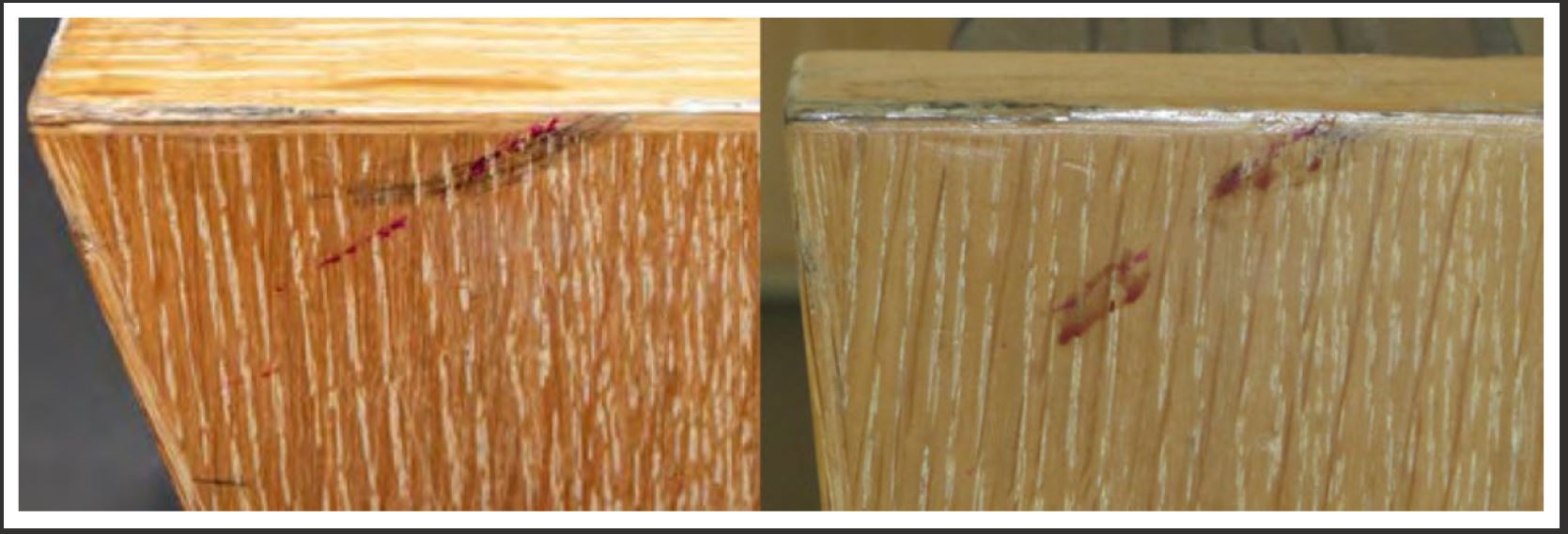
“There just isn’t anyway to be police about it - Dr Polkinghorne put that there,” McClintock said, explaining that it was necessary to explain away the bloody mark on his forehead first responders noticed when they arrived at the home. “He’s gone from fake rope to fake toast to fake blood, all trying to create a fake suicide.”
The Crown then turned focus to Hanna and why, they argued, a suicide would have been out of character for her. Sure, she had expressed low points and work stress earlier, but nothing suggested there was anything about the night of April 4 to trigger such an event, McClintock said.
There were no searches on her phone for self-harm, she noted, pointing out that even an expert who recreated the partial hanging scenario had to do research first.
“How did she know?” McClintock said before repeating the question: “How did she know without searching aspects of how to do it? I suggest that is very significant given the type of person she was and the type of things that she would research.”
There were plenty of drugs in the house that she could much more easily overdose on if that was her aim, McClintock said, suggesting it was weird that she would have used such a long rope in front of the glass front door where she could be seen, nearly naked and no hair or makeup.
Had she committed suicide, it would be a strange set of circumstances, McClintock said.
“She’s got up despite the high levels of Zopiclone [sleeping pills] in her system but she didn’t touch her phone. She didn’t touch her laptop. She hasn’t gone to the toilet,” the prosecutor said, noting that Hanna had a full bladder at the time of death. “Instead of going to the toilet, she’s made a mess in the room for some reason.”
Police found the guest room where Polkinghorne said his wife spent the night to be dishevelled, with the top sheet to the bed missing and pillow cases missing.
“A suicidal woman, one of her last acts alive, she’s concerned about sheets but only one sheet,” McClintock said. “It makes no sense.”
Hanna then would have had to cut the rope and put away the knife, McClintock theorised - all while not disturbing her husband, whose phone showed that he had been awake.
“He’s almost certainly having a toot on the Sweet Puff meth pipe,” she said. “He’s awake for most of the night, which he lied about.”
The Crown closing address continues this afternoon before the jury and Justice Graham Lang.
Craig Kapitan is an Auckland-based journalist covering courts and justice. He joined the Herald in 2021 and has reported on courts since 2002 in three newsrooms in the US and New Zealand.
The Herald will be covering the case in a daily podcast, Accused: The Polkinghorne Trial. You can follow the podcast at iHeartRadio, Apple Podcasts, Spotify, through The Front Page feed, or wherever you get your podcasts.