Philip Polkinghorne murder trial live updates: Pauline Hanna’s GP quizzed over anti-depressant use
WARNING: DISTRESSING CONTENT
When Pauline Hanna called her GP in December 2019 to say she believed her husband Philip Polkinghorne was leaving her and her mother was in hospital, she told her GP she had considered driving her car into a lorry while travelling to Mount Maunganui, but was too scared to do so because of the “strong protective factors” of her step-children and grandchildren.
Her GP, who has interim name suppression, continued to give evidence today in the Auckland High Court as the trial of Polkinghorne nears the end of its third week.
The Crown alleges Polkinghorne, 71, strangled his wife and staged her death to look like a suicide at their Auckland home but the defence says there is no evidence of a homicide.
The GP, in a tense cross-examination from defence lawyer Hannah Stuart, defended at length prescribing Hanna anti-depressants and weight loss pills despite what the lawyer alleged was a lack of referrals to counselling or psychiatric care, and a failure to regularly weigh the patient.
ARTICLE CONTINUES AFTER LIVE BLOG
Helen Van Berkel
Conelly confirms the P pipe was taken to the police station, but he tells Mansfield he is not sure if police finger printed or DNA tested it.
Justice Lang calls an end to the trial for the week.
The jury will return on Tuesday, when the trial will resume at 10am.
It is not sitting Monday because Ron Mansfield KC will be in the Supreme Court.
Helen Van Berkel
Mansfield cites information suggesting the prep room was last used on the Thursday, when a 17-year-old male patient was seen.
Conelly confirms no evidence was found of anyone going into the prep room over the weekend.
Helen Van Berkel
Conelly agrees Polkinghorne wanted more money but that he told the doctor he could not give more because the other specialists set to retire would then be "knocking on my door asking for the same package".
Mansfield's questions then move to the meth pipe found at Auckland Eye.
Conelly confirms it was found one Monday morning, and that he was told Polkinghorne was one of those who had entered the building the previous weekend, alongside support staff, cleaners and the chief executive.
A young patient had also been in the prep room, where the meth pipe was found, on the Thursday or Friday before that weekend, Conelly agrees under questioning.
Helen Van Berkel
Mansfield asks if it's correct the two specialists who left were paid $650,000 upon their acrimonious departure in 2019, plus interest.
Conelly says that is subject to a confidentiality agreement.
Mansfield asks if he's wrong.
Conelly says no.
Mansfield asks if he offered Polkinghorne about $360,000.
Conelly agrees that is about right.
"That's a valuation methodology that was applied consistently."
Conelly says he believed the two specialists in 2019 were paid out too much.
Helen Van Berkel
Mansfield notes board meetings started after hours: when would they finish? he asks.
Conelly says he would try and "time box" meetings and finish them by 7.30pm or 8pm.
Was he aware Polkinghorne would start each morning at 7.30am or 8am? Mansfield asks.
No, replies Conelly.
Helen Van Berkel
Polkinghorne was "quite intimidating" to the staff, says Conelly, who had turned around documents quickly and under a lot of pressure.
"It was quite an intimidating conversation one way," the witness says.
The way Polkinghorne handled it was distressing for staff, leading Conelly to call him out, in his words.
Polkinghorne was showing broad displeasure about a lot of topics, says Conelly.
"I'm an experienced director and I would describe it as out of line."
Helen Van Berkel
"You deal with a lot of boards by the sounds of things?" Mansfield asks.
"Correct."
Mansfield says some of the people on the Auckland Eye board were specialists and Auckland Eye was their only board.
Conelly agrees, but says he's well used to that."That's one of the roles of independent directors: to bring a sense of good governance to the board room."
Helen Van Berkel
Was Conelly aware that Polkinghorne would operate a clinic in Whangarei once a month on Mondays?
Yes, says the witness.
If Polkinghorne was short because he had travelled to Whangarei and worked all Monday and the board material may have been sent late, Conelly says he would have been expected to work through the material at the meeting, rather than launch into criticisms immediately as Polkinghorne did.
Helen Van Berkel
Polkinghorne clearly did not understand the pre-circulated board documents, the witness says.
Helen Van Berkel
Conelly agrees it seemed clear Polkinghorne wanted to retire, but he can't say if the turbulent departure of the two specialists amid litigation in 2019 had pushed back his departure.
Conelly reveals to the court, for the first time, that the two specialists had set up a clinic across the road from Auckland Eye in Remuera upon leaving in 2019.
There was a collective desire that they did not want a repeat of 2019 when faced with a "litigious outcome", said Conelly, so they reformed the shareholder agreement.
Helen Van Berkel
Mansfield suggests Polkinghorne's ill-temper when he appeared at a Zoom meeting, mentioned earlier, might be because older people were getting used to Zoom in the early stages of the pandemic. The witness says he can't be sure.
"He hadn't read the board papers, that was very evident," Conelly said.
"It was a very unusual conversation and everyone around the room was looking sideways, sort of 'what's going on here'?"
Helen Van Berkel
Mansfield asks, and Conelly confirms, if some eye doctors thought a medical professional should be chair of Auckland Eye.
But the doctors, including Polkinghorne, made it clear their opinion was not personal and tried to work with him a positive manner.
Polkinghorne was friendly and polite, says Conelly.
He was unaware of Polkinghorne's age - Mansfield says that by 2021, he was 67 going on 68 - but agrees he was one of the senior founding specialists.
So you would appreciate, says Mansfield, that he saw Auckland Eye as very much part of him? His baby?
Conelly agrees.
Helen Van Berkel
McNabb asks if Conelly was aware if anyone was a drug user at Auckland Eye when the meth pipe was found.
Not at all, says Conelly.
McNabb moves on to a May 2021 board meeting, which Conelly attended and where a doctor revealed a meth-related disclosure. A doctor told the meeting Polkinghorne had told her he was a meth user.
Conelly also says after Hanna's death, the board had often discussed what was being published in the Herald.
Mansfield now steps up for to cross-examine the witness.
Meth pipe found at practice
Helen Van Berkel
McNabb asks about items found at Auckland Eye before Hanna's death.
The first week the witness was appointed as chair, the chief executive rang him and said: "We've discovered a meth pipe in the practice".
Conelly says: "My immediate response was 'how did you know it was a meth pipe?'"
The chief executive told him they had pulled the CCTV for the previous weekend and four or five people had come into the practice.
One was Polkinghorne, one was the cleaner, one was the CEO and one was the CFO.
Conelly said the CEO was told to stand down because she was conflicted, having been filmed on CCTV.
The meth pipe was found in a preparation room, Conelly says.
Helen Van Berkel
He suspects Polkinghorne started planning his retirement before Conelly arrived on the board in 2019.
He was initially planning to leave in 2020, but then there was a discussion about giving 12 months' notice, and March 2022 started being discussed as a possible date.
A doctor was arriving from overseas and Polkinghorne was very keen to have him take over some of his patients, including in Whangarei, where he had a regular clinic.
So the company settled on June 30, 2022 as a retirement date, the trial hears.
Conelly says Polkinghorne was concerned about the value of his shares upon his retirement.
"There was a real desire to have clarity around the shareholder value," says Conelly.
Polkinghorne had said the figure he would expect, and Conelly had replied with the board's feedback about what they thought was appropriate.
Earlier the trial heard the two shareholders who left amid litigation eventually got $650,000. Polkinghorne got $450,000 and was aggrieved about that given his long service and having founded the clinic in the 1990s with others.
Conelly said the discrepancy had been discussed at a March 2020 Zoom call. He had told Polkinghorne his payout was in line with the shareholder agreements, including the fact it took into account the sale of property and dividends already paid.
How did Polkinghorne react to the news he would be getting a lower amount? Conelly is asked.
He wasn't happy and made it clear that, at a minimum, he wanted at least what the two doctors who left in 2019 had got.
Helen Van Berkel
Polkinghorne pleaded guilty to two meth-related charges at the start of his trial, stemming from meth and a pipe found at his home after Hanna's death.
Conelly said the company's legal adviser was tasked with leading the investigation into where the meth pipe had come from.
Helen Van Berkel
Before that, he was inclined to "drift off" at meetings, says Conelly.
Mansfield moves on to Polkinghorne's retirement.
There was a long runway for the retirement process, says Conelly.
Helen Van Berkel
Board meetings at that stage were monthly, starting about 5.30pm, the witness tells McNabb.
How prepared was Polkinghorne for the meetings - was material provided in advance?
"Patchy," the witness replies.
He was late to a March 2020, hadn't read the papers and was agitated and "outright rude", Conelly says.
"It was clear he hadn't read the papers. In fact I called him out," Conelly says, adding that was something he was inclined to do.
"It was a very odd exchange," he says.
Helen Van Berkel
He remembers a one-off dinner with Polkinghorne at the Northern Club, organised so the pair could get to know each other.
Conelly says he met Pauline Hanna two or three times and tells prosecutor Pip McNabb that Polkinghorne did not talk much about the couple's relationship.
Conelly remembers late-night emails from Polkinghorne about a range of topics: about the practice in general and governance in particular.
"I found the content quite ... sort of confusing. It was unclear to me."
Conelly says he didn't quite know what point was being made in the emails, which were being sent around midnight.
Helen Van Berkel
Justice Lang tells the jury the session is to finish at 3.30pm, for the new KC ceremony, and won't sit on Monday, because Ron Mansfield KC is in the Supreme Court.
The trial, set down for six weeks, is "broadly on track", he says.
"We'll know more in a week or so."
The Crown calls Mark David Conelly, board chair at Auckland Eye. The independent director joined the board in 2019 and became chair in 2020. He is not a clinician or shareholder.
Conelly says the much-discussed tension at Auckland Eye in 2019 over the departure of two shareholding ophthalmologists was before his tenure.
The circumstances of their departure, Conelly says, was "controversial, sudden and unexpected". Other shareholders felt betrayed, he believes, and the organisation was battered and bruised.
"Dr Polkinghorne made it clear to me on a number of occasions that he wasn't supportive of me being chair," says Conelly.
But Conelly says such criticisms are not unexpected after a governance change, as happened at Auckland Eye before the independent directors were brought on.
Friday session resumes
Helen Van Berkel
We are about to resume what should be the final session of the day.
There is an admission ceremony for new Kings Counsel downstairs in the hallowed high-ceilinged wood-panelled confines of courtroom one, in the old part of the Auckland High Court, at 4pm. It is likely lawyers in this trial will want to watch that ceremony.
Ron Mansfield KC ends his cross-examination of Susan Ormonde, Polkinghorne's colleague at Auckland Eye, with a single question: Does Polkinghorne have a sense of humour?
He does, says Ormonde.
Is it dry and a bit edgy?
She agrees.
Mansfield has no further questions.
Recap: Second session of the Polkinghorne murder trial - day 15
James Wheeler
- Auckland Eye ophthalmologist and clinical director Susan Ormonde told the court Philip Polkinghorne came to her lifestyle block the day before Pauline Hanna's funeral in 2021.
He said he told her there were things that would come out about him and his wife. One was their sex life, the other was drugs.
What drugs? they asked.
He said meth and asked if they'd tried it.
When they said no, he said "you should".
The way he talked about it suggested they both used it, but the trial heard there was no evidence in toxicology Hanna had taken it, though defence lawyer Ron Mansfield said her frequent hair dyeing could have removed it from the hair sample.
- Ormonde said she had known Polkinghorne for more than 20 years and visited his bach at Ring's Beach on many occasions. Ormonde told police Hanna and Polkinghorne were a "perfectly normal couple" and she never saw him put down, control, manipulate or abuse his wife.
- Polkinghorne made a voluntary disclosure to the Medical Council after telling Ormonde of his meth use.
James Wheeler
Defence lawyer Ron Mansfield KC tells Justice Graham Lang he needs to take an early lunch because of some material which has just come to his attention.
The trial will resume at 2pm, when Mansfield will resume his cross-examination of Susan Ormonde, the ophthalmologist who worked with Philip Polkinghorne for many years and was his friend.
Polkinghorne could get 'a bit snippy' in theatre, 'outright rude' if things were going badly
James Wheeler
Auckland Eye colleague of Philip Polkinghorne and witness Susan Ormonde told police Polkinghorne would get “a bit snippy” with people at times in the operating theatre, and could be “outright rude” if things were going badly.
A couple of nurses had raised his behaviour.
She said the rude behaviour was just in the moment in the theatre, but she hadn't noticed it outside of that stressful period during the time of turmoil at Auckland Eye.
Ormonde told police that 2019 was a stressful year for shareholders and staff at Auckland Eye because “lawsuits” followed the surprise departure of the two specialists.
She didn't know what was causing his irritability at the time.
Pauline Hanna 'in very good form' at concert two weeks before death, friend says
James Wheeler
Back to the Philip Polkinghorne house at Ring's Beach, where Auckland Eye colleague and witness, Susan Ormonde, had spent weekends over the years.
She told defence lawyer Ron Mansfield KC Polkinghorne would go to bed early and rise very early. Hanna would stay up until 2am if people were still up, and would therefore wake up later.
Now questioning moves to the Crowded House concert a few weeks before Pauline Hanna died.
Ormonde says there was some sort of Northern Club gathering before in Auckland's CBD.
She says she didn't talk to Polkinghorne much at that event but mostly spoke to Hanna, before the concert.
(The Crowded House gig was on March 21, 2021 at Spark Arena. Hanna was reported dead by her husband on the morning of April 5).
Ormonde agrees everyone had a great time.
"I thought Pauline was in very good form," she says.
She and her husband thought she was happier and in better form than she'd been in for a long time.
The gig was the last time Ormonde would see Hanna alive.
Auckland Eye colleague's evidence on Philip Polkinghorne's work ethic, long hours
James Wheeler
Would you agree Philip Polkinghorne was “old school” with support staff, defence lawyer Ron Mansfield KC asks Auckland Eye colleague Susan Ormonde.
Ormonde said she couldn't comment.
She concedes that “potentially” what is considered appropriate has changed over the years.
Mansfield asks if he was still working long hours in his late 60s and showing as ever the full commitment to his patients, and still travelling to Whangārei and Papatoetoe for clinics, alongside his work at the University of Auckland.
He did, says Ormonde.
Mansfield: At board meetings, there is a reference to him being tired?
Ormonde says she wasn't at those board meetings.
Mansfield: What time were those meetings?
Ormonde: Traditionally around 5pm or 5.30pm, but there was a time they were scheduled earlier.
Mansfield: And sometimes the agenda and relevant documents weren't being provided until the day or night before?
Ormonde: I wouldn't know.
Mansfield: How long would they go for?
She doesn't know.
Ormonde: When we had a full board... those meetings could go on to half nine.
There was also a strategic planning day once per year, Ormonde agreed, normally in the latter part of the year.
Mansfield coughs and apologises, saying he's just come down with a cold overnight.
This cold has been making its way around the trial.
Mansfield: Were the meetings dry or boring?
Ormonde: I can't comment on that.
Mansfield: Did you find them fascinating throughout the day?
Ormonde: Absolutely.
Court hears of Philip Polkinghorne's frustration over retirement payout
James Wheeler
Then there was the issue of Philip Polkinghorne's retirement, says defence lawyer Ron Mansfield, which needed to be postponed.
Mansfield: Even managing his retirement and how much he should get, that became a focus for him?
Auckland Eye colleague Susan Ormonde: Yes.
Mansfield: And during the time that he appeared tired, according to Ormonde, and more agitated than normal, was that around this time?
Ormonde: Yes.
She agrees Polkinghorne was committed to Auckland Eye and felt personally involved in its fate.
Mansfield is saying it didn't appear fair and he would express frustration the two specialists who left in acrimonious circumstances were to receive a bigger payout than he did, after his decades of loyal services to the clinic he founded. Ormonde doesn't dispute this.
Now questioning is back to the earlier mentioned weight loss of Polkinghorne.
Ormonde said she couldn't say the exact timeframe but it was significant.
She agrees with Mansfield she saw him eating differently.
Boiled eggs and raw cashews were his new lunch fare, she said.
Ormonde agrees the change in diet coincided with the weight loss.
Mansfield asks, and the witness agrees if Hanna and Polkinghorne were well presented “if a bit quirky” at social events.
Mansfield asks about Polkinghorne being more agitated and irritable. She agrees he liked his operating theatre run in a certain way.
Some surgeons operate differently from others. Some like quiet, like Polkinghorne, others liked music during operations, like Ormonde, it emerges.
There was a report from theatre staff, Mansfield said, about his criticism of any noise or disturbance being beyond what they considered appropriate.
The KC asks if older specialists operate differently than younger surgeons, like Ormonde, with a more modern approach.
"No, I wouldn't entirely agree with that."
The way people like their theatres spreads across all ages, she said.
Legal fees and disruption: Auckland Eye's 2019 specialist departures
James Wheeler
Was Philip Polkinghorne's retirement was effectively delayed?
That was what defence lawyer Ron Mansfield asked witness Susan Ormonde, an Auckland Eye colleague of Polkinghorne.
Effectively, Ormonde confirms, but she does not appear to be aware of the reason, which Mansfield said was the delayed arrival of another specialist.
Onto the two specialists who left in 2019 earlier than expected. The trial earlier heard this was a fraught departure, necessitating a lot of payments in legal fees.
At least one had set up a competing practice? asks Mansfield.
Correct, said Ormonde.
She confirms it was long and drawn out, and caused considerable disruption to Auckland Eye in 2019.
Philip Polkinghorne made voluntary Medical Council disclosure over meth use
James Wheeler
Questioning from the defence moves on to the meth disclosure made by Philip Polkinghorne to Susan Ormonde, an Auckland Eye colleague, shortly after his wife Pauline Hanna's death.
She said she reported it, and he had not asked her not to. But he wasn't aware she'd done it either, Ormonde adds.
Ron Mansfield KC: Are you aware that on April 14, 2021 he made a voluntary disclosure?
Ormonde says she was not, but says he had told her he had self-reported to the Medical Council.
The initial chat about meth was “very much a confidential conversation” with a friend and a colleague who was to attend his wife's funeral the next day, she said.
“I don't know what his motive was for telling me about it,” Ormonde said.
This new courtroom is a lot smaller and the media and public gallery are closer to the action.
You can see the lawyers conferring with each other at times in whispered tones.
Polkinghorne internationally regarded in a high-pressure field, colleague tells court
James Wheeler
Defence questioning of witness Susan Ormonde, who worked for many years with Philip Polkinghorne at Auckland Eye, continues:
Ormonde said Polkinghorne's speciality, vitreoretinal, involved more out-of-hours work because more urgent situations presented.
Earlier, the trial heard how his speciality was often the last stop before someone lost their sight.
It was a relatively new and high-pressure field, the jury heard earlier, and Polkinghorne was internationally regarded.
She agrees she had many opportunities to observe Polkinghorne.
Mansfield: Is it fair to say that, until the meth disclosure, she never saw him under the influence of alcohol or drugs?
Ormonde: Drugs no, but he'd drink at social events. But there was no concern he was never under the influence of alcohol or a controlled drug at work.
She added she is not an expert on the signs of drug use.
Other doctors had expressed concerns “like falling asleep in front of patients” regarding Polkinghorne.
She confirms she went to the Polkinghorne house at Ring's Beach, where she had stayed for weekends.
Her husband had done a lot of work on the property in the Coromandel and had built their deck.
Ormonde told police Hanna and Polkinghorne were a “perfectly normal couple” and she never saw him put down, control, manipulate or abuse his wife.
Polkinghorne gave a lot to business, worked with patients who couldn't afford private care - witness
James Wheeler
Ron Mansfield KC gets to his feet to cross-examine the witness Susan Ormonde, who worked for many years with Philip Polkinghorne at Auckland Eye.
Ormonde confirms she has known his client since 2001, when they worked together in the public health system.
At that point, he was a consultant in vitreoretinal surgery. He was already at Auckland Eye by that point.
Mansfield: Until 2018, he worked in the public health service?
Ormonde: Correct.
Mansfield: And that was an ethos at Auckland Eye, that specialists will give back?
Yes, correct. Ormonde still does so.
He was already at Auckland Eye when Ormonde joined. Over the years he had been on and off the board, she said.
And he was one of the older specialists? asks Mansfield.
Yes, he was probably the oldest since I joined, says Ormonde.
He was one of the founding specialists who had founded Auckland Eye, and gave a lot to the business, while working with patients who could not afford private eye care.
He worked at a clinic in Whangārei once a month, Ormonde confirms.
As he did with previous witnesses Mansfield is having Ormonde show how Polkinghorne worked long hours in both the public and private systems and at Auckland Medical School, where he helped with training and research.
On Thursday's he'd consult at the Papatoetoe satellite eye clinic, Ormonde confirms.
Then he'd come back to Auckland Eye's office in Remuera for more consulting, and surgery, if needed.
Mansfield: He was known for being a hard worker?
Ormonde: Oh definitely.
Ormonde agrees he was focussed on patient care and there would also be weekend work when patients had urgent eye health issues.
'Quite shocked': Auckland Eye colleague recalls Philip Polkinghorne's meth admission
James Wheeler
The jury has returned to hear more evidence from Auckland Eye ophthalmologist and clinical director Susan Ormonde.
Prosecutor Pip McNabb asks about when she heard of Hanna's death on April 5, 2021. It was that morning, just after 11am. Philip called 111 about 8am.
He called Ormonde and her husband while they were driving.
Ormonde: He said that she'd hung herself.
He sounded “almost incoherent” on the phone, Ormonde said.
Ormonde: We couldn't really believe what we were hearing.
Ormonde said she visited their home the day before Hanna's funeral, for lunch. Also, there was her husband.
He came over on his own. Polkinghorne made an alteration to the cremation form and the Ormondes walked him around their lifestyle block.
On that occasion, he talked about “the night that Pauline died and what he found”.
There were other revelations about things he was worried would come out, in his words.
The first thing he mentioned was his and Pauline's sex life.
The other was drugs.
Ormonde asked what drugs.
Polkinghorne said meth.
Ormonde: We were quite shocked, we weren't expecting to hear him say meth.
Ormonde: He wasn't specific, but he talked about it as if it was both of them.
Polkinghorne asked if they'd tried meth, and they said no.
Ormonde: He said 'well you should'.
He told them he “hadn't used meth for six weeks” regarding the meth revelation.
There was a silence after he said meth, and Ormonde believes he then said “and cocaine”, though isn't certain.
Is that something you reported to anyone else, the disclosure about the drugs?
“Absolutely,” said Ormonde.
As clinical director of Auckland Eye she had an obligation to keep patients safe.
Philip was no longer working and was on bereavement leave.
She told their company lawyer and phoned the Medical Protection Society, the indemnity and legal advice society for doctors in New Zealand.
The Society advised that as he wasn't working at that moment there was no immediate risk. But they said he should be encouraged to self-report to the Medical Council.
She later found out he did self-report to the Council, but not about the meth.
Ormonde said she didn't tell anyone else until the Herald broke the news about the meth found in the Polkinghorne home.
The news broke during a shareholders meeting at Auckland Eye, Ormonde said.
No further questions from the Crown.
Morning recap
James Wheeler
- When Pauline Hanna called her GP in December 2019 to say she believed husband was leaving her and her mother was in hospital, she told her GP she had considered driving her car into a lorry while travelling to Mt Manganui. But she was too scared to do so because of the "strong protective factors" of her step-children and grandchildren.
- Her GP, who has interim name suppression, defended at length prescribing Pauline Hanna anti-depressants and weight loss pills despite what lawyer Hannah Stuart alleged was a lack of referrals to counselling or psychiatric care, and a failure to regularly weigh the patient.
- After an interjection during cross examination by Auckland Crown Solicitor Alysha McClintock, the defence confirmed they intended to call evidence suggesting a link between the prescription of duromine, fluoxetine and other drugs with an elevated suicide risk.
- Stuart produced several datasheets and prescribing guidelines suggesting, at the very least, that the GP did not follow best practice or guidelines in continuing to prescribe Hanna the weight loss drugs and anti-depressants she sought over many years, without offering other treatment. The GP said Hanna responded well to the drugs, and real life is different from what happens on paper.
Colleague observes Philip Polkinghorne's weight loss, irritability before 2021
James Wheeler
Auckland Eye clinical director Susan Ormonde said she noted Philip Polkinghorne was losing weight and then started to get a bit more irritable, maybe over a one to two-year period before 2021.
There was "quite significant weight loss" said Ormonde, but she knew he was on a diet.
What he ate at lunch changed quite markedly, so the weight loss wasn't a surprise, she said.
Justice Graham Lang has called a 15-minute break.
Court is back at 11.45am.
'More irritable than usual': Concerns raised over Polkinghorne's behaviour at Auckland Eye, court hears
James Wheeler
Crown prosecutor Pip McNabb is leading her evidence.
Auckland Eye clinical director Susan Ormonde said she had a good working relationship and friendship with Philip Polkinghorne, and socialised with him outside work.
She told the court she had met Pauline Hanna many times.
Ormonde said she would fairly frequently go down to the Polkinghorne bach in Ring's Beach in the Coromandel, north of Whitianga.
Hanna only talked about her relationship with Polkinghorne once, at a dinner, where she aired some concerns.
She saw her nine days before her death, at a Crowded House concert. Polkinghorne was also there.
Ormonde said she spent 45 minutes to an hour with her and they exchanged a long and detailed conversation, mainly about her work with the Covid-19 vaccine and PPE.
"She seemed quite fired about it," said Ormonde, proud and excited about her work.
"I think she was proud of what she had managed to achieve in a situation where it was actually very difficult."
Ormonde told the court Hanna didn't mention anything about being stressed.
Nor had Polkinghorne talked about her being stressed or her workload.
Ormonde: Not before her death.
McNabb: What about after?
Ormonde: He made comments about how stressed she'd been at work. He felt she'd been unsupported, that kind of comment.
McNabb: What was Polkinghorne like as a colleague?
"He's been an excellent colleague," Ormonde said.
Ormonde told the court they had shared patients because he dealt with the back of the eye and she dealt with the front of the eye.
McNabb: Concerns about his behaviour?
Ormonde: Only latterly.
A pause.
As clinical director at Auckland Eye, she had had a couple of people express concerns about certain aspects of patient care and his being irritable with staff in the theatre.
Ormonde: I certainly found him more irritable than usual.
Crown calls Auckland Eye director
James Wheeler
The Crown has called Susan Ormonde, an ophthalmologist at Auckland Eye, which Philip Polkinghorne founded in the 1990s alongside others and where he practised until his retirement.
She is the clinical director.
Ormonde said she met Polkinghorne in 2001 when they both worked in the ophthalmology department for the Auckland DHB.
Pauline Hanna's 2019 crisis call
James Wheeler
The line of questioning moves on to the crisis team referral in 2019 – Crown lawyer Alysha McClintock produces a clinical note from December 23, 2019.
The witness pauses to read it. It relates to the crisis call.
The first paragraph says Pauline is upset because her mother is very ill and thinks her husband has left.
It goes on to say Hanna had just driven to Mount Maunganui and “had thoughts of running into a lorry”.
But she was too scared to do so because her children and grandchildren are “strong protective factors”.
The witness said she called her the next day and she was feeling well, had spoken with the crisis team and planned to call her psychologist.
No further questions from McClintock. The doctor is free to go.
Tense cross-examination ends as GP defends prescribing practices
James Wheeler
No further questions from defence lawyer Hanna Stuart after that increasingly tense morning of cross-examination, where the barrister took aim at the GP's prescribing practices.
Auckland Crown Solicitor Alysha McClintock has some questions in reply.
McClintock: Was she aware of Philip Polkinghorne's descriptions to police in his 2021 interview after her death of his wife's drinking or mental health?
GP: No.
McClintock: When was naltrexone, the alcohol abuse treatment drug, last prescribed?
GP: May 25, 2017.
Defence lawyer questions GP over Pauline Hanna's duromine prescription
James Wheeler
Defence lawyer Hanna Stuart is once again asking why she never checked Pauline Hanna's weight.
Stuart: She shouldn't have been on duromine, should she?
GP: She was.
Stuart: She shouldn't have been on duromine?
GP: It helped her to maintain stability in her life obviously
Stuart: Well not obviously because she wasn't weighed?
GP: I disagree with that, it's fine.
Justice Graham Lang interjects again, asking the witness if she was aware if the combination of duromine and alcohol could increase suicide risk.
"She was [a] well-functioning woman in all aspects of her life," the witness said.
She presented absolutely perfectly, the witness said.
Stuart: Were you aware her mother passed away February 2021?
GP: No.
Stuart: Were you aware she was stressed?
GP: Just that she was working long hours.
GP referred Pauline Hanna to crisis team after tearful call near Christmas 2019
James Wheeler
The defence line of questioning moves on to December 2019, when Pauline Hanna reported her mother was in hospital, and her husband had left her. She was crying.
Earlier, the trial heard how Philip Polkinghorne had not turned up to family Christmas at their Coromandel bach in 2019 and Hanna was forced to lie about his whereabouts.
He turned up a few days later and acted like nothing was amiss, the trial heard.
The GP referred her to the crisis team.
She agrees she'd placed the onus on the patient to call the crisis team and that she expressed suicidal thoughts during the tearful call.
“It's an adjustment reaction,” says the GP.
Defence lawyer Hanna Stuart: It's a significant event for someone who's chronically depressed isn't it?
GP: She had suicidal thoughts. She didn't have any plans.
The GP said she'd called her the following morning and Hanna had reported she was feeling better.
The GP said Hanna had subsequently seen a psychologist, she thinks.
Stuart: Who's her psychologist?
GP: I don't know.
The GP said she appropriately asked her to call the crisis team and appropriately followed up the next day. It was also around Christmas.
The next day she thought it was “sorted” as Hanna had stabilised.
Crown interjects during question on medication
James Wheeler
The defence is on to the Medical Council of NZ, the regulator of practitioners like the witness.
Hanna Stuart, assisting defence lawyer Ron Mansfield KC is referring to a document setting the basic minimum statements for good prescribing practice.
It tells doctors to only prescribe medicine when they've adequately assessed the patient's condition.
"Exactly, that's what I've done,” says the witness, a GP who has interim name suppression.
It shouldn't be prescribed for the doctor's convenience or merely because the patient asks for them, says Stuart.
Auckland Crown Solicitor Alysha McClintock interjects, asking if the lawyer is suggesting a link between the duromine and the death.
“I wonder if that's the suggestion if we could get to it, sir,” said McClintock.
Yes, says Stuart, she tells the court she intends to call evidence suggesting a link between the use of duromine and other drugs with elevated suicide risk.
The last paragraph of the Medsafe data sheet said Duromine should not be used for weight loss for cosmetic reasons.
“If weight is one of the reasons why someone is feeling good and good about themselves then I think that what we read in the documents and the papers ... sometimes we can say, okay, that is going to be ... beneficial for this particular patient.”
Stuart said the data sheet said mixing alcohol and duromine should be avoided.
The GP said Hanna had been seen by a psychiatrist and was stable, and like yesterday, said there's a difference between “the paper” and “real life”.
The two glasses per night she'd reported drinking in 2019 was not abuse the GP said.
Stuart: Two or more?
GP: We don't know from this classification, it's speculation.
Stuart again has the witness admit there are cautions for mixing duromine with fluoxetine and with alcohol, but she continued prescribing both for 11 years, even with Hanna's disclosures about her drinking.
GP questioned on 11-year duromine prescription and weight monitoring dispute
James Wheeler
Evidence from a GP, who has interim name suppression, continues in the Auckland High Court.
She is being questioned by Hanna Stuart, assisting defence lawyer Ron Mansfield KC.
“I never thought that she's actually dependant on this medication I just thought that she really wanted to maintain weight,” the witness said.
So you just kept her on it for 11 years without being weighed? asks Stuart.
The witness, Hanna's longtime GP, again reiterated that she didn't have any side effects and appeared to be maintaining her weight.
Was weight something she was obsessed with? asks Stuart.
Justice Graham Lang interjects, to ask if she had an unusual preoccupation with her weight.
It was nothing out of the ordinary for a menopausal woman, said the witness.
So, says Stuart, if a menopausal woman comes in wanting duromine, they get it?
The witness says yes if it was appropriate for them.
“She was weighed enough times. She was not a patient who was 120kg,” the witness says.
She was prescribed duromine 46 times between 2010 and 2021, with no record of her ever having been weighed in that period?
That's not true, says the witness.
Stuart says she's gone through the record and found no evidence of that.
The witness maintains she was weighed, though she agreed that should be in the records.
Other doctors in the notes said her weight needed to be taken.
GP, lawyer's back and forth over 'short-term' weight loss drug
James Wheeler
Hanna Stuart, assisting defence lawyer Ron Mansfield KC, refers to a series of Medsafe data sheets laid out on her bench.
A registrar passes one to the witness, a GP with interim name suppression.
Stuart: Is this the New Zealand data sheet for duromine?
The GP agrees it's the guide for doctors prescribing this medicine, a weight loss drug:
The sheet says it's a "short-term adjunct" to be used alongside diet and exercise for obese patients with a BMI of over 30.
The witness agrees.
Stuart: She was given this medication not like weight loss in this situation but for maintaining weight.
She had a long history of taking appetite suppressants, the GP said.
Stuart: Short-term adjunct, is how it's described, not intended for long-term use?
GP: No, but it's not uncommon.
Stuart: So just because others do it that makes it okay?
A sigh from the witness, who says that as she said yesterday, all medications have side effects and if someone is doing well on a medication "there is no reason not to prescribe".
But, said Stuart, just wanting to maintain weight is not one of the indications on the data sheet?
The witness accepts this.
Patients who are not obese can be prescribed duromine if they have sleep apnea, diabetes or other conditions.
But Hanna had none of those, Stuart said.
"Someone like her didn't have co-morbidities," the GP says, again agreeing that on paper Hanna did not meet the criteria for the weight loss drug.
Stuart: Short-term use is recommended due to the risk of dependence?
GP: Yes
Stuart: Tolerance?
GP: She was always on the same dose, said the witness.
Stuart: Abuse?
The witness had never seen that with this drug.
GP asked about high levels of zopiclone found in Pauline Hanna's system at time of death
James Wheeler
The GP, who has interim name suppression, is continuing to give evidence.
She told the court Philip Polkinghorne had never contacted her and as far as she knew was never worried about his wife Pauline Hanna's drinking.
Hanna Stuart, assisting defence lawyer Ron Mansfield KC, asks if patients often downplay their drinking.
The GP says yes that's right.
Stuart: And she never sought corroboration on how much she was really drinking?
The GP says she did not.
Stuart again asks why she wasn't receiving regular counselling or psychiatric help while receiving years of Prozac prescriptions.
GP: She was well-maintained on these medications.
The questioning moves on to the zopiclone found in her system at high levels at the time of her death.
Stuart says there is no record in her notes of her being prescribed the sleeping pill.
The GP agrees and says she is sure the lawyer had worked out where it came from.
GP quizzed on Pauline Hanna medication use and history
James Wheeler
Over 18 months from 2013, Pauline Hanna was consistently prescribed Prozac and Duromine, Hanna Stuart, assisting defence lawyer Ron Mansfield KC, says and the GP, who has interim name suppression, agrees.
Stuart: But she was not receiving any mental health support other than the prescribing of these medications?
The GP said she was seen by the psychiatrist in 2013.
"I told you yesterday that patients stay on Prozac for decades and that's to stabilise their mood," said the GP.
GP: And obviously she had a need to stabilise her mood.
GP: It's nothing unusual.
Stuart asks why Hanna was continuing to be prescribed the appetite suppressant, given another doctor noted she had not had a weight check to accompany the prescription in some time.
"The doctor didn't know Pauline," the GP said.
The GP agrees there's no record in her notes of her having been weighed.
In 2017, Hanna was once again prescribed naltrexone by another doctor after again raising concerns about her drinking.
"She's relapsed?" asks Stuart.
"Obviously she was unhappy with the amount she was drinking at the time," the GP said.
More Prozac and more Duromine were prescribed that year.
Pauline Hanna sought help for alcohol issues from psychiatrist, defence says
James Wheeler
Pauline Hanna had also had positive feedback from her husband about her reduced alcohol intake, according to the notes.
Onto duromine. The notes say she was fearful of changing off the drug because managing appetite and weight was important.
The other doctor, says Hanna Stuart, assisting defence lawyer Ron Mansfield KC, noted her concern with her weight was something the other doctor was concerned about because she was not at that point overweight.
The GP says many women became aware of weight gain around menopause.
“I didn't find it very unusual.”
The GP agrees there were times when she was told to see someone else for alcohol issues.
Hanna repeatedly saw a psychiatrist in Auckland's Mt Albert who treated alcohol issues, her records suggest.
Another report, cited by Stuart, from October 2013: A note in her records said the psychiatrist said Hanna wanted to detox from alcohol and take antabuse.
Outpatient alcoholism treatment had been discussed, GP says
James Wheeler
The GP agrees Pauline Hanna's medical records show there was a discussion about outpatient alcoholism treatment.
She also received a script for naltrexone, used to treat alcohol use disorder and which helps with withdrawal symptoms.
As well, says Hanna Stuart, assisting defence lawyer Ron Mansfield KC, there was discussion of disulfiram, aka antabuse, which acts as a deterrent to drinking by causing feelings of nausea if someone starts drinking.
But she was not given disulfiram because she wanted to keep drinking in moderation.
Instead she took naltrexone, which is more about managing cravings, says the GP.
The other doctor recorded that Hanna had responded well to naltrexone.
She found she had a significant reduction in her desire to drink and felt better in the mornings, the other doctor recorded 11 years ago.
GP questioned on Pauline Hanna appointment
James Wheeler
Hanna Stuart, assisting defence lawyer Ron Mansfield KC, has resumed her cross-examination with more questions about an appointment in January 2013, when Pauline Hanna was seen by another doctor.
Following that appointment she went to see a mental health professional, the trial hears.
Hanna had said she had been drinking at least one bottle of wine most evenings for at least the last 10 years or so, Stuart says, citing the records.
She had a drink driving conviction from four years prior and was sometimes blacking out, and her drinking was reducing her functioning.
"These are really concerning symptoms of an alcohol dependence disorder, aren't they?" asks Stuart.
"Yes they are," the GP says.
Hanna at the time had been taking the stimulant weight loss drug duromine for the past five years, Stuart says.
Stuart says Hanna described herself as a perfectionist who wanted to achieve something substantial in her work at Counties Manukau DHB.
The GP agrees she was a perfectionist.
Trial resumes with GP back in witness box
James Wheeler
The trial resumes in the smaller and stuffier courtroom 13 of Auckland's High Court.
Reporters are now on the bench behind defence counsel and Polkinghorne and there is competition for seats, with business cards taped to spots.
Things are even worse in the public gallery, which rapidly filled to capacity when a registrar opened the doors today.
The nine women and three men who will be the jurors of this case enter from the jury room and the witness, a GP with interim name suppression, is back in the witness box.
🎧 LISTEN | Accused: The Polkinghorne Trial
James Wheeler
Trial nears half-way point, Pauline Hanna’s GP on the stand
Oskar Alley
Welcome to the last day of the third week of the murder trial of Philip Polkinghorne, accused of killing his wife Pauline Hanna at their Remuera home and staging the scene to look like a suicide.
He maintains his wife hanged herself amid the pressure of her role in the Covid vaccine rollout.
The trial has been set aside for six weeks so the end of today will mark the technical halfway point.
But the Crown is still calling witnesses and the jury has heard no indication of how many more are to come.
Meanwhile, Ron Mansfield KC has foreshadowed via cross-examination that he will call a number of expert witnesses for the defence, so who knows how long the trial could run for.
Today the trial moves down the corridor of the first floor of the High Court at Auckland to a smaller room, courtroom 13. That is because courtroom 11, used for the first 14 days of the trial, is being set up for the sitting of the five judges of the Supreme Court in Auckland next week.
The move will mean much less room for the throngs of people who have been coming to watch proceedings, many with no connection to the case.
Yesterday they again numbered about 70 and there’s no way that number will fit in courtroom 13.
There will also be less room for the teams of lawyers on either side, and for the media.
One Auckland barrister who posts on Twitter under the pseudonym @strictlyobiter said of the move: “It’s hard to describe what lawyers in Auckland think of lawyers in Wellington but it’s sort of like having Auckland’s murder trial of the year booted out of its courtroom because the Supreme Court is visiting and it needs the room.”
Pauline Hanna's GP to resume evidence
Today at 10am Hannah Stuart, a barrister assisting Ron Mansfield KC, will continue cross-examining Pauline Hanna’s GP of over a decade.
Stuart spent the latter part of the afternoon methodically working through Hanna’s medical records with the witness, showing she had been on the antidepressant Fluoxetine for many years, along with weight-loss drugs.
The GP has interim name suppression pending a request to keep her name secret permanently in connection with the case.
Under cros- examination, the GP defended continuing to prescribe Hanna fluoxetine and weight loss pills given her past reports of having an issue with her alcohol use.
The GP said Hanna was continuing to respond well to the drugs she was prescribed, and it was the reality that some patients could cope with drinking while mixing those medications.
Previous suicidal thoughts
During her evidence in chief, the GP told Auckland Crown Solicitor Alysha McClintock that Hanna had reported having suicidal thoughts in 2019.
This was around the time her husband had gone missing and was uncontactable during a family holiday, forcing her to lie about his whereabouts to family and friends, the jury heard earlier.
The witness said she had told Hanna she should call the crisis team, a community psychiatric services team.
The GP said she had called her the next morning to check how she was. She said she was feeling much better and had spoken to the crisis team.
McClintock earlier asked if she ever prescribed Hanna zopiclone, a sleeping pill. No, said the GP, and nor had anyone else at her practice.
Earlier the trial heard Hanna had zopiclone in her system at a high level when she died, suggesting tolerance.
Zopiclone was also found in her home. The trial has not heard how the Zopiclone was sourced.
ARTICLE CONTINUES
The trial resumed today in a new courtroom as it approaches the technical halfway mark of a case expected to take six weeks.
Today the trial moves down the corridor of the first floor of the High Court at Auckland to a smaller room, courtroom 13. That is because courtroom 11, used for the first 14 days of the trial, is being set up for the sitting of the five judges of the Supreme Court in Auckland next week.
The move will mean much less room for the throngs of people who have been coming to watch proceedings, many with no connection to the case. Yesterday they again numbered about 70 and there’s no way that number will fit in courtroom 13.
Today at 10am Hannah Stuart, a barrister assisting defence lawyer Ron Mansfield KC, will continue cross-examining Pauline Hanna’s GP of over a decade.
Stuart spent the latter part of the afternoon methodically working through Hanna’s medical records with the witness, showing she had been on the antidepressant Fluoxetine for many years, along with weight-loss drugs.
Yesterday the trial was told that two days before Christmas 2019, Pauline Hanna called her GP to report she was having bad thoughts.
“She was my last call of the day,” the physician recalled at the murder trial of Hanna’s husband, Auckland eye surgeon Philip Polkinghorne.
“She said that she is not feeling well, and her mother is in the hospital, and her husband has left her, and that she has some suicidal thoughts.”
The GP quickly wanted to know: “Do you have any [self-harm] plans?”
“No,” Hanna said. “I just don’t feel right.”
The call, along with Hanna’s longtime prescription for anti-depressants, has been repeatedly mentioned by Polkinghorne’s lawyers during cross-examination throughout the trial, which is set to wrap up its third week tomorrow. Yesterday, however, marked the first time jurors heard about Hanna’s mental health evaluation directly from her doctor.
Polkinghorne, now 71, is accused of having fatally strangled his wife – possibly while high on methamphetamine and during an argument about his exorbitant spending on sex workers – before staging the scene inside their Remuera home on Easter Monday 2021 to look like a suicide. He has denied the accusation, with his lawyers arguing that Hanna’s mental health history – paired with an allegedly massive spike in job-related stress as she coordinated the Covid-19 vaccine rollout – made suicide the only plausible explanation.
The doctor, who cannot currently be identified due to a pending request for name suppression, said the December 23 call was followed up the next day, on Christmas Eve. Hanna said she was feeling better and had been in touch with the crisis team, the witness recalled, adding that the patient did not want any more help on the matter.
The doctor said she would have likely heard back from the crisis team had the issue not been resolved, but the lack of communication gave her assurance. She didn’t see Hanna again for the next 15 months prior to her death.
Jurors have previously been told that Hanna’s mother was suffering from dementia and died in February 2021, two months before her. The reference to her husband leaving her was an incident in 2019, explained to jurors by several witnesses, in which Hanna said she couldn’t reach her husband for several days and had to lie to his family about why he wasn’t spending Christmas with them.
The physician noted that Hanna was already on fluoxetine, an anti-depressant more commonly known by the brand name Prozac, when she enrolled at the doctor’s office in 2001. It was initially given to stabilise mood swings caused by her contraception, medical records state.

But as the years progressed, so did her dosage and her periodic reports of alcohol or depression issues. The doctor acknowledged, although seemingly reluctantly, that by 2010 it could be characterised as “chronic depression”. Anti-depressants are not like antibiotics, where you only take them until you’re feeling better, the doctor said, explaining that using the drug for 20 years suggests it was doing what it was intended for.
For about six months in 2013 and again in 2017, Hanna was prescribed a medication intended to reduce her consumption of alcohol after reporting drinking up to a bottle of wine a night and frequent blackouts. She was also given a frequently renewed prescription for weight loss.
During cross-examination of the doctor, defence lawyer Hannah Stuart noted that mixing the anti-depressant with alcohol is discouraged in literature about the drug because it was known to enhance the effects of alcohol, possibly leading to impaired judgment. The doctor was repeatedly riled at the suggestion the prescription had been irresponsible given Hanna’s references to alcohol use.
“If you look what is written on the paper, you will never give anyone nothing – even Paracetamol,” she said, explaining that many people use anti-depressants and continue to drink without side effects.
“You just have to observe.
“She was adamant that she wanted to continue these medications because she didn’t have any side effects.”
The doctor estimated that probably half of those who take Prozac drink alcohol as well without issue. Hanna, she added, had “absolutely beautiful liver function tests”.
The doctor also disagreed that the weight loss medication prescribed to Hanna could magnify depressive thoughts or that it was improper to keep Hanna on the drug even though it was intended for obesity and she weighed about 70kg.
“That’s quite a powerful cocktail of these medications, isn’t it?” Stuart asked.
“It’s not,” the doctor responded.
After slowly and methodically paging through years of re-upped prescriptions, the defence lawyer asked again about the dangers of mixing alcohol and anti-depressants.
“Yes, on paper,” the doctor reiterated as testimony wrapped up for the day. “In real life, and if you knew Pauline Hanna, you wouldn’t say that. I guess I don’t know how many of you have seen Pauline Hanna sitting in front of them and presenting the way she was.
“...It’s a reality of life it can go together.”
The defence is expected to continue cross-examination tomorrow.
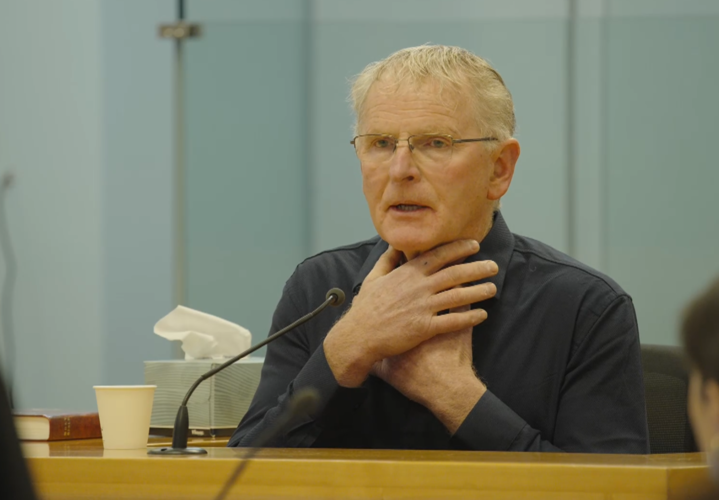
The testimony came after a morning of tense cross-examination of a key witness for the Crown’s case: a close friend of Hanna’s who said she revealed a previous strangling attempt by Polkinghorne just over a year before her death.
Fellow defence lawyer Ron Mansfield KC suggested that Hawke’s Bay resident John Riordan never liked Polkinghorne and was “gilding the lily” – embellishing his testimony – to “stick the boot” in the defendant. Riordan, whose testimony closely matched that of his wife a day earlier, rejected the idea.
He also dismissed the lawyer’s insinuation that he was in cahoots with Hanna’s extended family to strategise his testimony – a response to Mansfield noting to jurors that the witness had been seen speaking with Hanna’s brother and sister-in-law outside the courthouse the day before. He had simply been asking how they were holding up, as a friend was expected to do, he said.
Riordan said he wanted to “see this court provide justice for Pauline”, but perjury was not the way he expected to get it.
The trial is set to continue on Friday in a new courtroom. Justice Graham Lang ended court early yesterday so that the High Court complex’s largest courtroom could be cleared out to accommodate a visit by the Supreme Court. The trial is expected to return to the larger courtroom after the Wellington-based appellate panel’s week of hearings is concluded.
Craig Kapitan is an Auckland-based journalist covering courts and justice. He joined the Herald in 2021 and has reported on courts since 2002 in three newsrooms in the US and New Zealand.
The Herald is covering the case in a daily podcast, Accused: The Polkinghorne Trial. You can follow the podcast at iHeartRadio, Apple Podcasts, Spotify, through The Front Page feed, or wherever you get your podcasts.