Philip Polkinghorne murder trial: Detectives questioned over how suicide call-out morphed to murder investigation
WARNING: DISTRESSING CONTENT
First the rope, twisted in a “granny knot” around an upstairs bannister, didn’t seem to have enough tension to support the weight of a person.
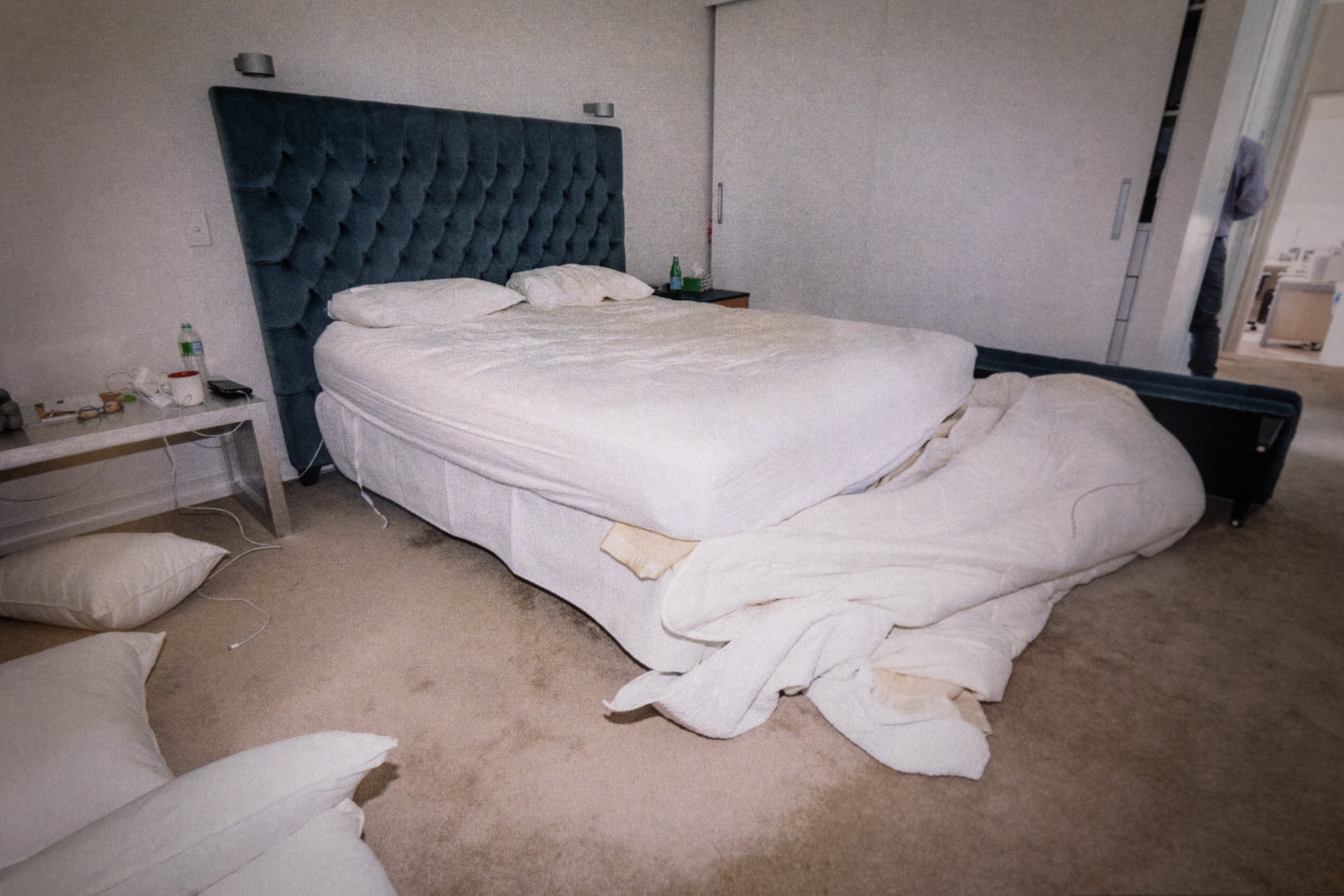
Then the bedroom where Pauline Hanna, 63, had reportedly slept before hanging herself appeared – with a bedspread and pillows scattered across the floor, an ottoman overturned and what appeared to be a faint blood stain on the bed’s fitted sheet.
A damp top sheet, missing from the bed, was found in the washing machine. And in multiple spots throughout the house were small plastic containers of methamphetamine.
For detectives Christian Iogha and Ilona Walton, assigned to what was initially considered a standard suicide callout, things in the Remuera home of eye surgeon Philip Polkinghorne and his newly deceased wife weren’t adding up.
The detectives were the only two in the witness box today, both answering a lengthy barrage of questions, as jurors in the High Court at Auckland sat through a third day of evidence in Polkinghorne’s six-week murder trial.
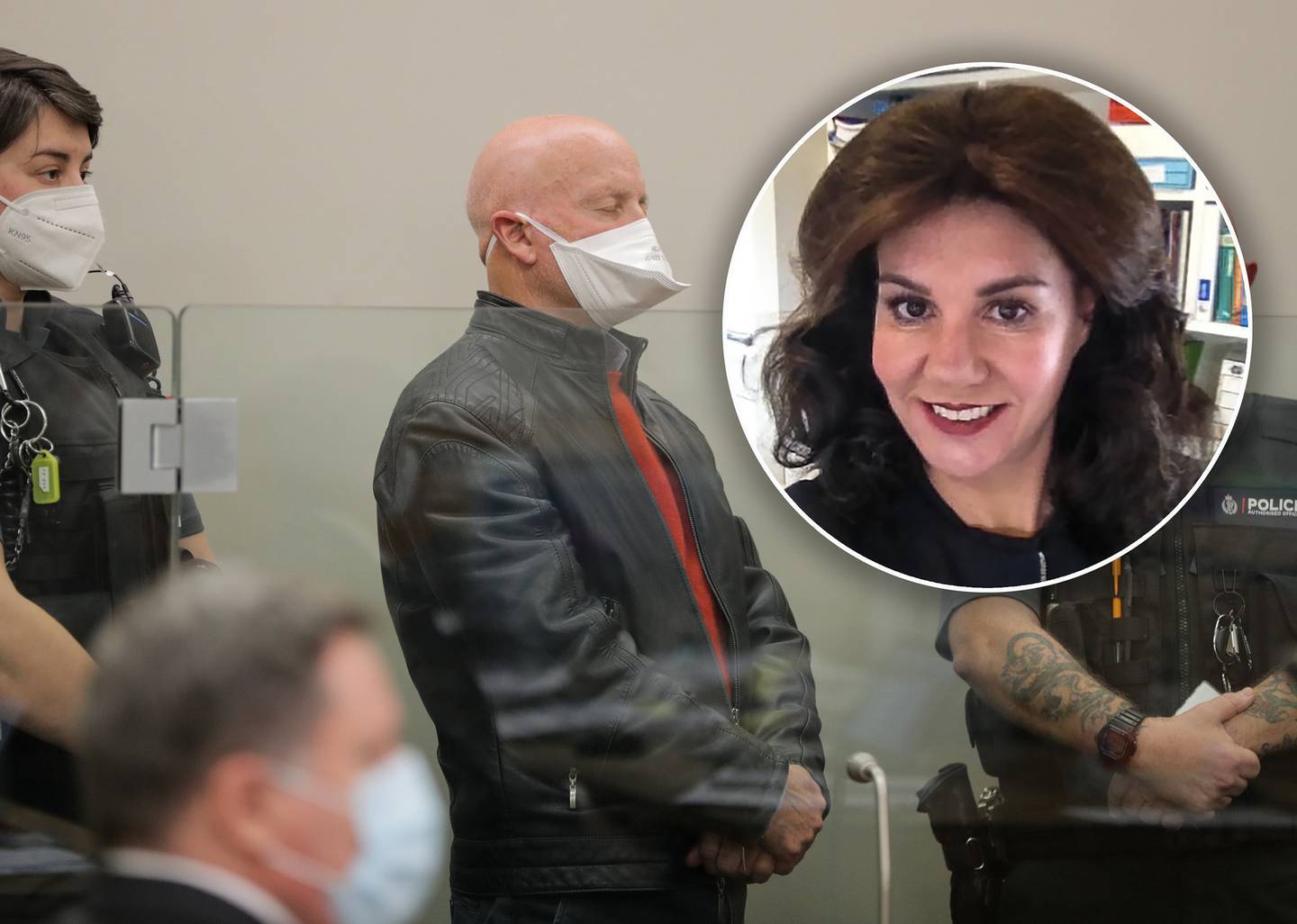
Polkinghorne, now 71, was at the time of the Easter Monday 2021 death a respected ophthalmologist who was nearing retirement. But behind the scenes, prosecutors have alleged, he seemed to harbour a significant methamphetamine habit, mounting expenses due to his extramarital affairs and liaisons with prostitutes, and a domineering attitude towards his wife of more than 20 years.
Authorities now believe he fatally strangled Hanna then staged the scene to look like a suicide.
But on that April morning three years ago, police said they were in the embryonic stages of piecing together their theory of what had happened – attending the death, as required by the Coroner’s Act, to obtain evidence that might support a finding of suicide. It would be another 18 months before they would file a murder charge against Polkinghorne.
The first indication that something might not be as it seemed, the detectives both testified, was when they examined the bright orange nylon rope that Polkinghorne said his wife had hung herself with. They decided to conduct a “tension check” – considered a standard procedure at suicide scenes to make sure the rope can handle the weight of a person.
Iogha delicately held his fingers apart as he demonstrated to jurors how he lightly pulled at the rope to see if it gave. It did. He said he found it odd that the knot, around three balustrades, had not been pulled to the base of the bannister in the course of Hanna’s death.
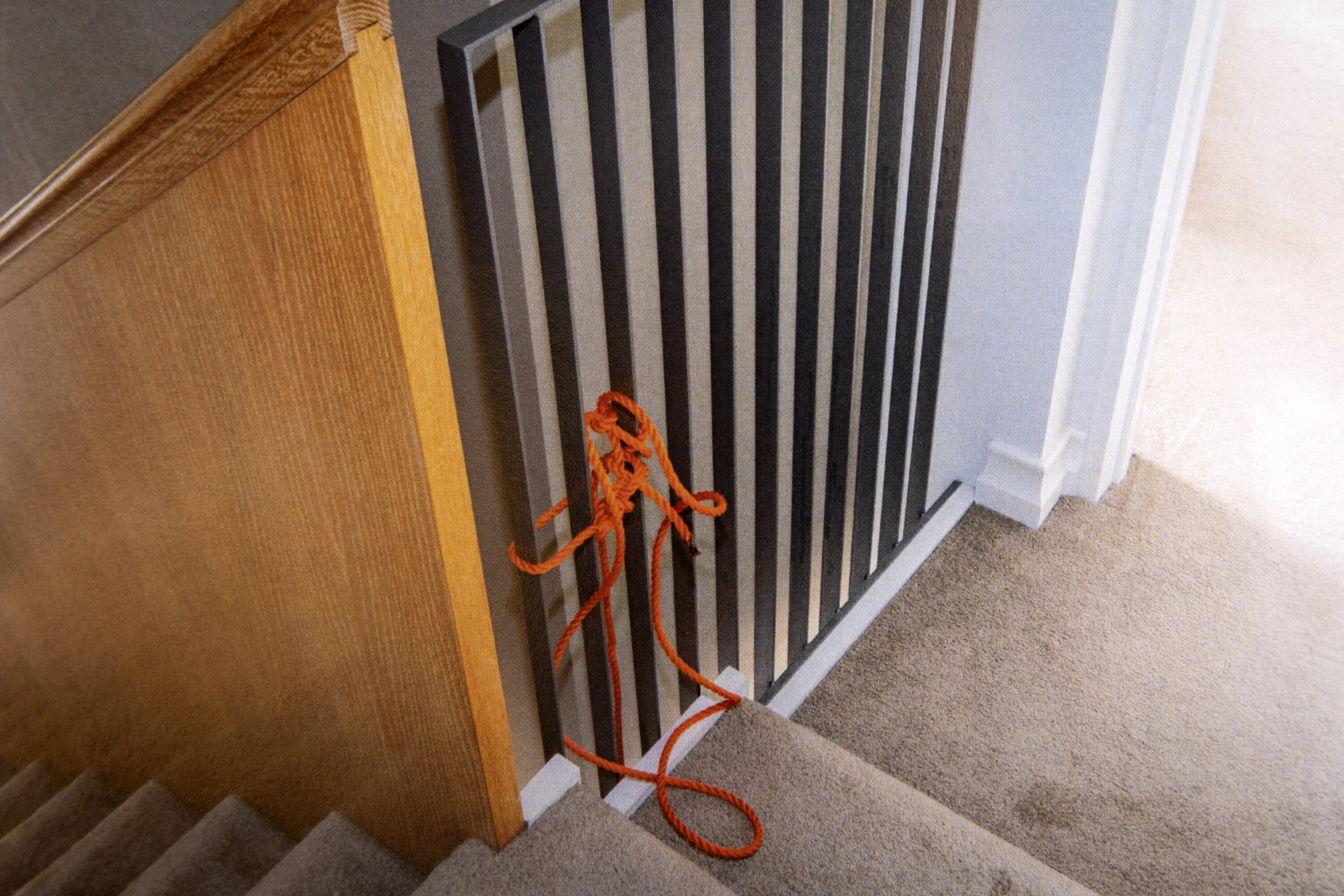
He recalled lightly pushing up and down on the knot to see if it would slide. It did.
“Our purpose was just to see if the rope would stay where it was if there was pressure on it,” he explained. “At that point, I didn’t believe it would sustain any weight.”
Defence lawyer Ron Mansfield KC has suggested investigators jumped to an erroneous conclusion almost immediately, tainting the investigation from there on out. They didn’t take into account his client’s statement that he had gone “upstairs to undo the knot from the cord” shortly after discovering his wife’s body, he said.
Soon after conducting the tension test, it was decided the scene should be treated as a suspicious death. Polkinghorne, who at that point had been giving a statement to another officer at his dining room table, was discreetly asked to complete the statement outside.
Detectives would spend over a week at the address, which Mansfield described as “practically unprecedented”. It was the longest period Iogha had ever spent searching a personal home, he acknowledged.
Next to the dishevelled bedroom, police found a container of meth in the attached washroom. The toilet had urine in it which was later tested for methamphetamine, Iogha said. While the positive test wasn’t directly attributed to Polkinghorne by prosecutors during their opening address earlier this week, Crown Solicitor Alysha McClintock did point out that Polkinghorne has pleaded guilty to a minor methamphetamine possession charge. Hanna, the prosecutor noted, did not have any traces of the drug in her system and had conducted internet searches indicating she knew little about the drug.
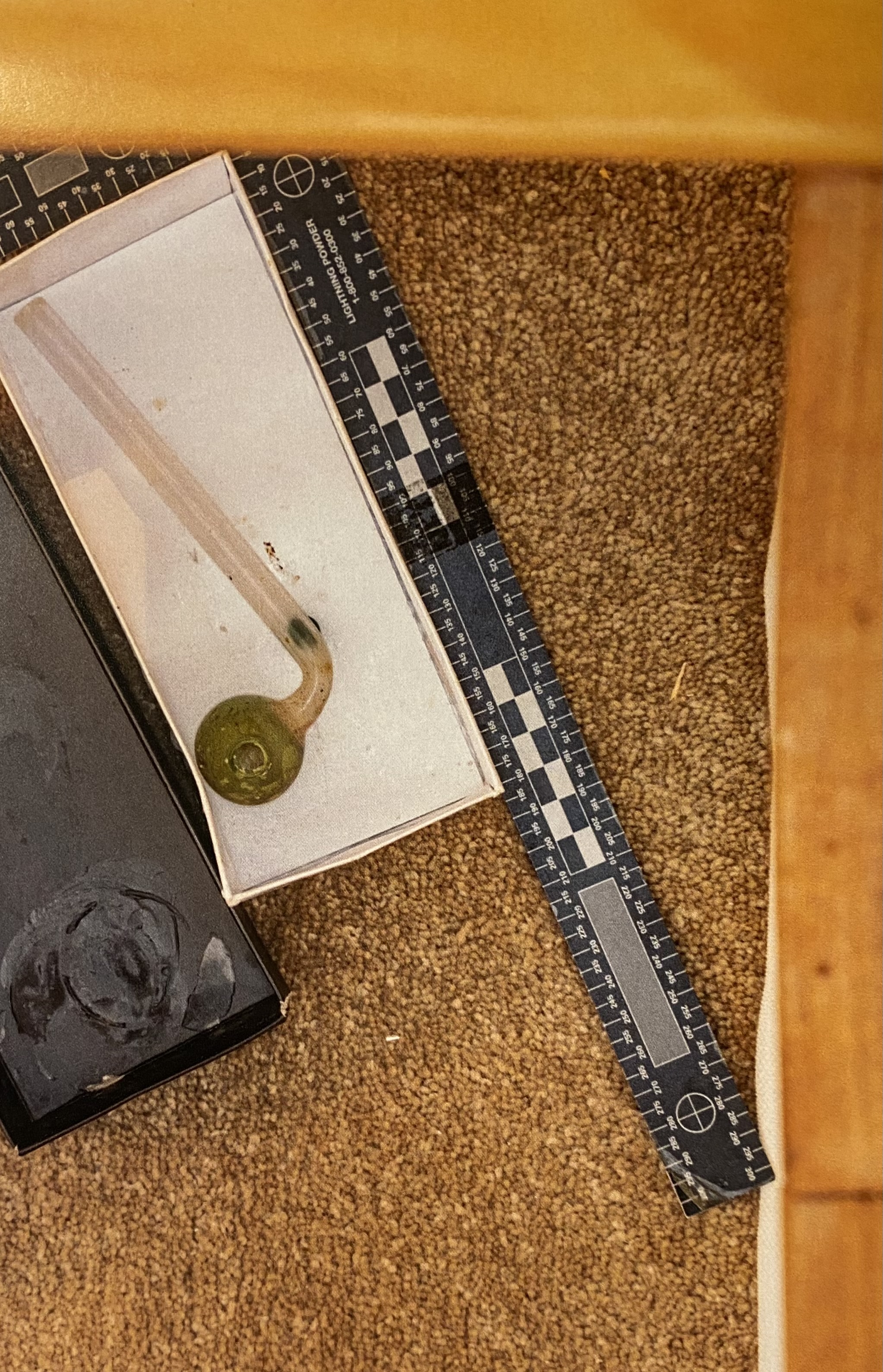
A search of the master bedroom and adjoining bathroom also uncovered methamphetamine stashes, as well as a lighter and a pipe under what appeared to be Polkinghorne’s side of the bed. Polkinghorne has also pleaded guilty to possession of a meth pipe.
After the tension test and Polkinghorne’s initial police statement concluded on the first morning of the investigation, Walson said she approached him outside, offering her condolences and asking if he would accompany her to the police station to provide “just a few more details”.
“He happily obliged,” she said.
The three-hour interview that followed is expected to be played for jurors later in the trial.
En route to the police station, the detective recalled Polkinghorne taking a call in which he told someone he couldn’t go into work that morning because his wife had died.
“It was just very business-like,” she said of his tone while on the call. “There didn’t seem to be any emotion behind it.”
STORY CONTINUES AFTER LIVE BLOG
Justice Lang has called an end to today's proceedings
Vera Alves
The third day of the trial has now concluded.
Tomorrow the trial will resume at 10am with an expert witness from Canada, who will give evidence via video link.
Join us tomorrow for live updates of the ongoing court case.
Police desperate to find evidence of wrongdoing, defence claims
Vera Alves
Polkinghorne's lawyer Ron Mansfield KC and Sergeant Christian Iogha spent several minutes bogged down in the minutiae of when certain forensic staff or detectives arrived or left the property during the days-long scene examination.
Iogha, under cross-examination, said staff pored over the property, taking samples from all over and analysing any samples or fluids found inside.
"Can we agree that the New Zealand police were looking for any evidence of a struggle or an assault at the house?" Mansfield asked.
Iogha said police were keeping an open mind and would have been open to any evidence that might have disproved a struggle or an assault.
Mansfield countered, saying Iogha did not have an open mind and was adamant the death was suspicious from the moment he conducted his tension test on the orange rope.
Police spent at least nine days at the home in Upland Rd in April 2021. Mansfield, in questioning, claimed the length of the search was unprecedented and suggested police were desperate to find evidence of wrongdoing or a struggle.
"The size of the house was a lot larger than a regular New Zealand home," Iogha said in response.
"We have a duty to the public to make sure that we conduct a thorough investigation."
Justice Graham Lang has called an end to today's proceedings.
Tomorrow the trial will resume at 10am with an expert witness from Canada, who will give evidence via video link.
Photo of meth pipe shown to jury
Vera Alves
Earlier this afternoon, jurors were shown a photo of a meth pipe that was found in Philip Polkinghorne's bedroom during the lengthy search of his home. He pleaded guilty earlier this week to possession of the pipe.
Defence claims police should have asked Polkinghorne for permission to hold the house
Vera Alves
In response to questioning from defence lawyer Ron Mansfield as to the legal basis for their continuing presence in the home, after police had begun to suspect the death was suspicious, Sergeant Christian Iogha said: "It was a very complex situation."
In his notebook, he had written Detective Sergeant Franich believed there was not enough evidence for a search warrant, but that they should hold the address under the consent of the owner.
Mansfield asked who in the Criminal Investigation Branch (CIB) team asked for Polkinghorne's consent to search the home.
Iogha said he was not sure, and confirmed he did not.
"It's fair to say isn't it that none of the CIB staff despite being aware of the need to approach Dr Polkinghorne for his consent, actually did that?" Mansfield asked.
"I don't know if anybody asked," Iogha replied.
"Can we agree that no one actually tried?" Mansfield asked.
Iogha again said he was not sure if anyone did.
Mansfield has spent several minutes grilling Iogha on the legal basis for their search of Polkinghorne's home after they had deemed the death suspicious.
The defence lawyer's point is that he believes police no longer had a legal basis under the Coroner's Act, given they suspected the death was not a suicide after conducting their contentious rope test.
Mansfield is suggesting police should have obtained consent from Polkinghorne to continue to hold the house, or immediately obtained a search warrant.
"Had a decision been made not to tell Dr Polkinghorne that the death of his wife was being treated as suspicious until after the interview?" Mansfield asked.
"There was no talk of it, no," Iogha replied.
'Longer than normal' scene examination detailed in court
Vera Alves
Ron Mansfield KC is beginning his cross-examination of Sergeant Christian Iogha.
He is questioning him about his notes regarding his involvement with the scene.
Iogha said they showed his team, including Detective Ilona Walton and Detective Sergeant Mark Franich, arrived about 8.55am.
Mansfield is asking why Iogha was not immediately made officer in charge of the scene. That was a decision for Detective Sergeant Franich, Iogha said.
"Was there some other reason why you couldn't do it?" Mansfield asked.
Iogha was made officer in charge of the scene on April 6, the day after Hanna's death.
Iogha said he had been in the CIB just over a year as of April 5, 2021, in response to Mansfield's questioning.
He had attended about 20 suicides and about half of those were hangings, Iogha said.
They had all been full hangings where the deceased's entire body weight was suspended, he said.
He eventually left the home on the afternoon of April 13, after 4pm, Iogha said.
Police were still present and Iogha said he simply handed over the role as officer in charge of the scene to another policeman.
He was unable to say when police finally released the home back to Polkinghorne, sparking incredulity from Mansfield, given Iogha's role in the wider investigation.
"I just want to understand from you when the address was released to Dr Polkinghorne," Mansfield said.
"You'll have to ask Detective Sergeant Reed," Iogha replied.
The defence lawyer and the detective then got bogged down in the dates of the scene examination, sparking some laughter from the gallery.
Mansfield asked if it was a very long scene examination.
"It's longer than normal, correct," Iogha said, adding that it was the longest such examination he had been a part of.
The sergeant said police were initially at the home under the Coroner's Act, making inquiries to confirm the death was in fact a suspected suicide as reported.
Mansfield moves on to the rope tension test that was the source of tense cross-examination of another detective earlier today.
The death was initially treated as unexplained, Iogha said.
He was unable to say if the change in status of the death was reported to the coroner.
"Who told you that you were authorised to commence a search at that point?" Mansfield asked.
"Just... under the guidance of Detective Sergeant Franich," he said.
Pauline Hanna's bedroom was found to be in disarray
Vera Alves
A photograph shown in court today illustrates the scene police found in Pauline Hanna's room that day, with sheets pulled out of the bed and an ottoman on its side.
The trial heard earlier the bed was missing a top sheet, and a slightly damp white sheet was found in a dryer.
Sergeant Christian Iogha also said testing showed a brown stain on a fitted sheet was likely to have been blood.
Jury shown 3D walkthrough of the home
Vera Alves
The trial has resumed for the final session of the day.
Crown prosecutor Alysha McClintock continues to lead the evidence of Sergeant Christian Iogha, who was an officer in charge of the scene and conducted the "tension test" of the orange rope that became the centre of today's evidence and cross-examination.
Missing top sheet and wet items in the washing machine
Vera Alves
Under questioning from Crown prosecutor Alysha McClintock, Sergeant Christian Iogha said police found a slightly damp, large white sheet in the dryer in the laundry.
The trial earlier heard the bed in the master bedroom was missing a top sheet.
There was also a range of wet items in the washing machine, including female clothing and tea towels, Iogha said.
“The washing didn’t appear that it had been there long," he said.
During their lengthy scene examination of the sprawling 370sq m Upland Rd home, police had ESR scientists conduct a 3D scan of the entire house.
McClintock is now playing that 3D computer-generated walk-through of the home for the jury.
She has paused the walk-through at the top of the steps near the balustrade where the orange rope was tied – the defence says by Hanna to hang herself, the Crown says by Polkinghorne to stage the scene as a suicide.
Silence reigns in the courtroom as lawyers, media and the dozens of people in the public gallery watch the fly-through video.
Police find meth at the scene
Vera Alves
Sergeant Christian Iogha said police found a container in a drawer at the home with what they suspected was methamphetamine.
He said they used their portable drug-detecting Lumi device, issued to police in 2021 by ESR to detect drugs, to confirm it was most likely methamphetamine in the container.
At the start of the trial, Polkinghorne pleaded guilty to two methamphetamine-related charges that were previously suppressed.
On the evening of Tuesday 5, hours after his home had become a crime scene swarming with detectives and forensic specialists, Polkinghorne returned to the property after his lengthy police interview at the College Hill station.
He was escorted into the home so he could take a shower and grab some belongings, Iogha said.
Police remained at the home for eight days. They charged Polkinghorne with Hanna's murder 16 months later.
He asked to take a laptop from the scene.
Iogha said he told him that because "police had changed their reasoning for being at the scene", he was not able to take the device.
Also in the house, police found a butane lighter beside a box. Inside the box was a glass pipe of the type commonly used to smoke methamphetamine.
During his lengthy questioning by Crown prosecutor Alsyha McClintock, Iogha described finding meth in other parts of the house, including the office, where a snaplock bag containing the "white browny crystal substance" was found.
Forensic tests show 'highly probable chance' of blood on bedsheet
Vera Alves
Sergeant Christian Iogha said police conducted fingerprint testing around Polkinghorne's bedroom.
Photos of the scene show an ottoman tipped over on its side.
Iogha said Polkihgorne told police the ottoman was on its side so he could use it to reach a cupboard above a wardrobe towards the ceiling.
The Crown prosecutor asked if there was anything about the sheet on a bed that warranted further examination.
Iogha said there was a brown smudge on the fitted sheet.
It was later tested by a forensic scientist. The result came back that there was a highly probable chance there was blood present on the sheet.
There was no top sheet on the bed, Iogha said.
'A bit odd': Why people at the scene deemed the incident suspicious
Vera Alves
The trial is resuming with the evidence of Sergeant Christian Iogha.
His "tension test" of the orange rope has been a focal point of cross-examination on the third day of the trial.
The Crown says his test shows the rope could not have supported the weight of Pauline Hanna.
Polkinghorne's lawyer Ron Mansfield KC has taken aim at the integrity and rigour of the test, which was not recorded or videoed.
Mansfield said his client had already removed and adjusted the rope to cut his wife down, as advised by the 111 call-taker.
Iogha said that while he and Detective Ilona Walton were conducting inquiries over where the rope was tied around the staircase balustrade, Polkinghorne walked past Hanna's body which was under a duvet, up the stairs, past the rope and into the bedroom.
He found the fact Polkinghorne was walking around the body "a bit odd", he said.
Iogha also described the fresh wound several witnesses have described Polkinghorne sporting.
"It looked like he had a small cut on his forehead," he said.
It looked fresh and not scabbed over, the sergeant said.
Police arranged for a pathologist, Dr Kilak Kesha, to come to the scene to examine Hanna's body.
Iogha said it was not exactly standard practice for a pathologist to come to the scene of a suicide rather than wait for the body to arrive at a mortuary.
But the senior detective at the scene, Detective Sergeant Mark Franich, had determined a visit by a pathologist that morning was necessary due to the circumstances, he said.
Iogha said a number of staff at the scene, including himself, had come to believe the death was suspicious that morning.
He said he became suspicious around the time he conducted the tension test and found a lot of slack in the orange rope.
Orange rope found on stairs remains focal point of questioning
Vera Alves
Crown prosecutor Alysha McClintock is now asking Sergeant Christian Iogha about his handling of the orange rope.
He said it is usual practice for police to send rope used in suspected suicides to the mortuary for testing, to see if it's strong enough to hold a body.
"I went up to the second level to analyse the rope," Iogha said.
Polkinghorne's defence is that Hanna used the rope to kill herself. The Crown says he used it to stage the scene as a suicide.
Iogha said he went up the stairs with Detective Ilona Walters.
He said there appeared to be a lot of slack in the rope.
"I didn't believe at the time it’d be able to hold much weight," he said.
There seemed to be a lot of excess slack in the line, the sergeant said.
Defence lawyer Ron Mansfield said the slack in the line was the result of Polkinghorne attempting to remove the rope and taking it from his wife's neck, as instructed by the 111 call-taker.
Mansfield earlier took aim at the quality of the "tension test" police said showed the line was too slack to be used in a suicide, including the fact the test was not recorded by the detectives.
Iogha said the little amount of rope hanging over the mezzanine and large amount of slack made him question if it could hold much weight.
He described moving two or three steps down the staircase, donning clean gloves then lightly pinching the rope.
"With minimum tension, it started to fall quite easily."
Iogha said he pinched and pulled the rope with his thumb and index finger with a "minimal" amount of force. It took about 30 seconds to pull the rope all the way to the floor, he said.
Walton took a photo of the rope before and after but did not photograph or video the tension test.
"Why not?" asked McClintock, the Crown prosecutor.
"I'm not sure, it just wasn't done," Iogha said.
He also tested the rope where it was tied around the three balustrades near the top of the staircase.
"I wanted to make sure to see how tight that rope was, to see if it would stay there if any pressure was put on it."
It slid down when pulled, and then back up when pulled again in the other direction, Iogha said.
"It just slid back up with ease."
Iogha said he wanted to see if the rope would stay where it was or would move when subjected to pressure.
McClintock asked for his conclusion.
"At that point I didn't believe it would sustain any weight."
He informed his supervisor, Detective Sergeant Mark Franich, that he did not believe the rope would have been able to support any weight.
Police then decided to leave the rope in situ, Iogha said.
The entire balustrade was then removed from the landing, with the rope, so the knot and rope could be kept intact for further examination later, Iogha said.
Polkinghorne's three children not at the trial
Vera Alves
Polkinghorne's three adult children are not present at the trial in the High Court at Auckland.
Polkinghorne, who is on bail, has been allowed to sit at one of the rear benches usually reserved for lawyers instead of in the dock, as sometimes happens during criminal trials.
Wearing a navy suit, the 71-year-old is following the evidence closely, leafing through evidential booklets and sometimes reading from a laptop.
Sergeant in charge of the scene takes the witness stand
Vera Alves
The Crown has called Sergeant Christian Iogha, who was another of the detectives who went to the Upland Rd home about 8.30am on April 5, 2021.
Iogha is being questioned by Crown prosecutor Alysha McClintock. He was an officer in charge of the scene and at the time worked in the Criminal Investigation Branch (CIB).
He assumed the role of officer in charge of the scene late on the morning of April 5 and remained in that role until the end of the scene examination eight days later, on April 13, 2021.
He took an exhibit schedule covering the items seized from the home and recorded extensive notes during his time in charge of the crime scene.
Iogha said police attended all deaths reported as a suicide because they are required to by law.
"Police are bound by legislation to attend a scene where the death has been ruled as a suicide," he said.
Officers look for notes at the scene and try to find any electronic devices which may show searches indicating an intention to end their own life, he said under cross-examination.
"Was anything resembling what might have been a suicide note found at the scene?" McClintock asked.
Iogha said in eight days they found no evidence of a suicide note or anything similar.
Iogha said the Upland Rd home was about 370sq m.
All rooms in the four-bedroom home, including the garage, were searched during the lengthy scene examination, he said.
They were also aware of a red Ssangyong ute that was seized and searched at the scene. It had been used by Hanna to go to the tip before her death, the trial heard earlier.
There were a number of areas of the home that became areas of focus, Iogha said.
The first was the area where Hanna was found dead, near the back entrance by a set of stairs.
That rear entrance is near Darwin Lane, a narrow road leading off Upland Rd and down to a number of other houses.
The public gallery in Courtroom 11, the largest in the Auckland High Court, remains near packed to capacity after the morning's evidence.
Among those in the gallery are film-makers and law students. Eleven members of the media are also on the two press benches.
Trial resumes, defence continues tense cross-examination of witness
Vera Alves
The trial has resumed after a short adjournment, with defence lawyer Ron Mansfield continuing his cross examination of Detective Ilona Walton, who was among the first three detectives on the scene and who conducted Polkinghorne's video interview.
Earlier, Mansfield took aim at the tension test conducted by another detective under Walton's supervision, saying the fact the rope easily unravelled was because his client had undone the rope to lesson the tension around his wife's neck.
Walton, who would later describe Polkinghorne as "business-like" while taking a phone call on their drive back to the Auckland City police station, is being questioned by Mansfield about how the eye doctor was behaving in the garden, as she read him his statement.
"I heard him crying," Walton said.
Mansfield is now questioning Walton on their conversation in the car en route back to the police station.
She created a bullet-point summary of topics they discussed.
Walton said she was in the front passenger seat of the police car while Polkinghorne was in the back seat.
Polkinghorne was hungry and the detectives stopped at a service station for coffee and food on the way to the station.
A detective purchased him a coffee and a muffin.
Upon arrival at the station, the detectives placed him in what's called a "victim's room", Walton said under cross examination.
A detective was able to monitor his interview in the victim's room.
"If he was being treated at this point as a victim, why was someone needed to monitor the interview?" Mansfield asked.
Walton suggested it was standard practice. The interview was monitored by a detective constable, a rank denoting the detective is still in training.
The interview started at 1.11pm and went all the way through to 4.57pm.
"Quite a long interview isn't it?" Mansfield said.
Walton agreed.
"And during that interview he sat on the couch answering your questions quite freely?"
"He did."
During the interview, Walton said she asked him questions about the rope and his actions at the scene.
The jury is yet to watch Polkinghorne's video police interview.
"Was he told at any point from when he was asked to leave voluntarily... that his home was now being treated as a crime scene?
"No. He was aware the pathologist was on the way and police were conducting a scene examination."
Mansfield asked why police did not tell him his house was secure and being treated as a crime scene.
Walton said she did not know that fact until the end of the interview.
"I knew there were questions that needed to be answered," she said.
Mansfield said the video interview shows quite substantial gaps when Polkinghorne is left sitting alone in the interview room.
Mansfield is asking how long Polkinghorne's Upland Rd home was secured before he could return home. Walton said it was a number of days.
"Throughout that interview, he didn't have any hesitation with answering any question you asked, did he?" Mansfield asked.
"No," Walton replied.
Tense cross-examination as detective reveals police did not record rope tension check
Vera Alves
McClintock has ended her questioning of Detective Ilona Walton and Polkinghorne's lawyer, Ron Mansfield KC, is beginning his cross-examination.
Under Mansfield's cross-examination, she said she arrived with a detective constable in one car while Detective Sergeant Mark Franich arrived in another car. He was the senior officer, Walton said.
Mansfield questioned Walton about the details of the other detective's "tension check" of the orange rope and the timings about when Polkinghorne got changed from his dressing gown, which he wore during his first statement to a uniformed constable, into clothes.
Mansfield asked about the smear of blood Walton described seeing on his client's forehead, variously described in evidence as being from a cut or graze.
"Did you see the underlying minor injury?" Mansfield said.
"I think I just saw the blood," Walton replied.
"And later, once it was cleaned up, I saw the injury."
The detective said it appeared to be a cut.
After her evidence-in-chief revealed her surprise at the results of another detective's "tension test" of the rope Polkinghorne claimed his wife used to hang herself, Mansfield is questioning Walton repeatedly on the photos of the orange rope tied to the balustrade.
Earlier, Walton said the rope continually unravelled in response to a light pull.
"Did you speak to Detective Sergeant Mark Franich before you authorised this rope to be touched or altered in any way?" Mansfield asked the detective.
"I’m sure I would have," she replied.
"But did you?
"Yes.
"But have you recorded that in your notes?
"No."
Franich, her superior officer, was not present for the tension check, she said.
Mansfield is asking why she did not photograph or video the tension test on her phone.
"I genuinely wasn’t expecting the rope to unravel in that manner," she said.
"In hindsight, possibly recording it would have been a good option."
Mansfield said there should have been a forensic record of the tension test.
Walton agreed.
She said her detective constable colleague was on the stairs going down towards the landing when he applied the tension test, reaching over the wooden wall.
KC skewers detective's rope-tension test
The detective's answers on how the rope test was conducted are becoming less clear, as Mansfield ramps up his questioning. She said she assumed he was in the position she had earlier described, before an interruption from Mansfield.
"Can I just pause you there, why are we assuming?"
Mansfield is continuing his skewering of the tension check on the rope conducted by a detective. He is pointing to photos presented as evidence to the jury showing the rope remained tied to the balustrade.
"Irrespective of the said tension check, if we look at photographs 43 and 44... while there’s less rope coiled upstairs, it’s still secured to the railing," Mansfield said.
Mansfield also had Walton admit she did not know at the time Polkinghorne had just told another police officer that he had been upstairs to attempt to untie the knot, after removing the rope from his wife's neck on the urging of the 111 call-taker.
"When you did this exercise, which sadly went unrecorded, you weren’t aware of what Dr Polkinghorne was telling Constable Rowland downstairs, were you?"
The detective said she was not.
Mansfield asked Walton why she did not ask Polkinghorne if he had handled the rope, suggesting she had missed the obvious explanation for why the rope had unravelled so easily during the tension test.
"That was why we invited him back to the police station to ask him that."
'Very business-like': Detective recalls Polkinghorne's phone call in police car
Vera Alves
Detective Ilona Walton has described Polkinghorne's reaction after he was read his initial police statement, saying she saw him crying in his garden.
Walton said she approached Polkinghorne to offer her condolences and tell him that while she appreciated he had already given a statement from an uniformed officer, she wanted him to come back to the Auckland City police station because she wanted to clarify a few more details.
“He happily obliged," Walton said.
Polkinghorne told Detective Walton as they drove to the station that he had seared the ends of the rope the day before, but they had owned the rope for years.
Walton said Polkinghorne received a call on his cellphone on their drive to the station. He told the caller “I can’t come into the office, my wife’s just died," Walton remembered.
The detective said he seemed "very business-like" on the phone. "There didn’t seem to be any emotion behind it."
Also on the drive, the eye doctor told the detective he had been doing most of the cooking, but his wife had cooked the previous night.
Polkinghorne said she made pork strips and veggies, and potatoes which she had forgotten to serve, Walton remembered.
They stopped at the Newmarket BP and another detective in the car got out to get some food and drink, while Walton and Polkinghorne stayed in the car.
He told her he was an ophthalmologist and his wife was involved in the Covid response, she remembered.
They arrived at the police station about 12.30pm. Walton told him they could conduct a video statement, which would be a free-flowing conversation, or they could do a written or typed statement.
"He was happy to engage in a video interview."
'Unusual, not normal': Detective surprised by rope's tension test
Vera Alves
Detective Ilona Walton said she walked down the stairs where Polkinghorne said his wife had hanged herself, avoiding the orange rope hanging from the balustrade. Polkinghorne said his wife used that rope to take her own life but police allege it was too slack and too long. In her opening address, McClintock said he used the rope to stage the scene as a suicide.
Walton described walking through the house into the garage where she saw two cars, one with its boot open. One of those cars, a Mercedes, had a personalised plate alluding to Polkinghorne's successful career as an eye surgeon - RETINA, the court heard.
Walton described moving back through the house, past Hanna's body in the hallway and up the stairs past the orange rope hanging from the balustrade.
Another officer with her conducted a check on the rope's tension, Walton said.
"He conducted a brief tension check on the rope and it very quickly unravelled," she said.
McClintock has honed in on the result of the check of the rope's tension in her cross examination. Walton said she was surprised by how the rope responded to the "gentle, light pull".
"I would have expected it would have been locked in position and wouldn't have moved," she said.
"It just kept going and going and going and going."
Key to the Crown case is its allegation Hanna would not have been able to hang herself with the rope police found hanging from the balustrade, given its length and lack of tension.
Walton said she alerted Detective Sergeant Mark Franich to the surprising result.
McClintock asked why she alerted her superior.
"Because it’s not in line with how we would normally expect a ligature of a person who’s hung themselves to react," she said.
"It seemed unusual and not normal that the rope would react in that manner.
"Normally I would have expected it would have locked."
'I noticed he had a smear of blood… on the centre of his forehead'
Vera Alves
Detective Ilona Walton said she was working the early shift when she was called to reports of a sudden death reported as a suspected suicide at the large home overlooking Orakei Basin in Remuera.
She arrived shortly before 9am with her Criminal Investigation Branch (CIB) colleagues to conduct a scene examination. The court earlier heard how another officer had deemed the scene to be suspicious soon after arriving, writing the police code "1C" on his hand for the benefit of colleagues, denoting suspicious circumstances.
When she arrived there were four uniformed police staff at the scene, together with Polkinghorne.
"I noticed he had a smear of blood… on the centre of his forehead," Walton said.
Third day of the trial underway
Vera Alves
The third day of evidence in the trial of retired eye surgeon Philip John Polkinghorne, who denies murdering his wife a little over three years ago, has resumed.
Crown prosecutor Alysha McClintock has called Detective Ilona Walton, who conducted a video interview with Polkinghorne after examining the scene in Upland Rd on April 5, 2021.
The public gallery and media benches are again nearly full to capacity on the third day of the trail, expected to last at least six weeks.
🎧 LISTEN | Accused: The Polkinghorne Trial podcast
Vera Alves
Jury read ‘suspicious’ affidavit from Philip Polkinghorne, accused of strangling wife Pauline Hanna in Remuera, Auckland
Vera Alves
Here's a recap of what happened yesterday, on the second day of the trial.
WARNING: DISTURBING CONTENT
Philip Polkinghorne arrives in court for day 3 of his trial
Vera Alves
Philip Polkinghorne has arrived at the Auckland High Court with his lawyer Ron Mansfield KC, ahead of the third day of his trial.
Proceedings will begin at 10am when the Crown is expected to call more police officers and detectives who examined the scene at his Upland Rd home on April 5, 2021.
He was charged 16 months after his wife died in what his defence says was a suicide.
Day 3 of the trial of Philip Polkinghorne set to begin
Vera Alves
Kia ora and welcome to the third day of the trial of Philip Polkinghorne, the Auckland eye surgeon accused of the murder of his wife, health worker Pauline Hanna.
Stay with us as we bring you the latest updates from the High Court in Auckland.
STORY CONTINUES
He also noted that he and his wife, a health administrator who was heavily involved in the Covid-19 vaccine rollout, had received their vaccinations the day earlier.
“He briefly questioned whether the Covid vaccine could have something to do with her actions,” the detective recalled.
The questioning of Iogha is expected to continue into a second day tomorrow when the trial resumes. But first, Justice Graham Lang told jurors, the officer’s trip to the witness box will be paused so that a rope expert from Canada can testify via audio-video feed.
Craig Kapitan is an Auckland-based journalist covering courts and justice. He joined the Herald in 2021 and has reported on courts since 2002 in three newsrooms in the US and New Zealand.
The Herald will be covering the case in a daily podcast, Accused: The Polkinghorne Trial. You can follow the podcast at iHeartRadio, Apple Podcasts, Spotify, through The Front Page feed, or wherever you get your podcasts.