Mexico hits back as Trump’s tariff threat shakes markets
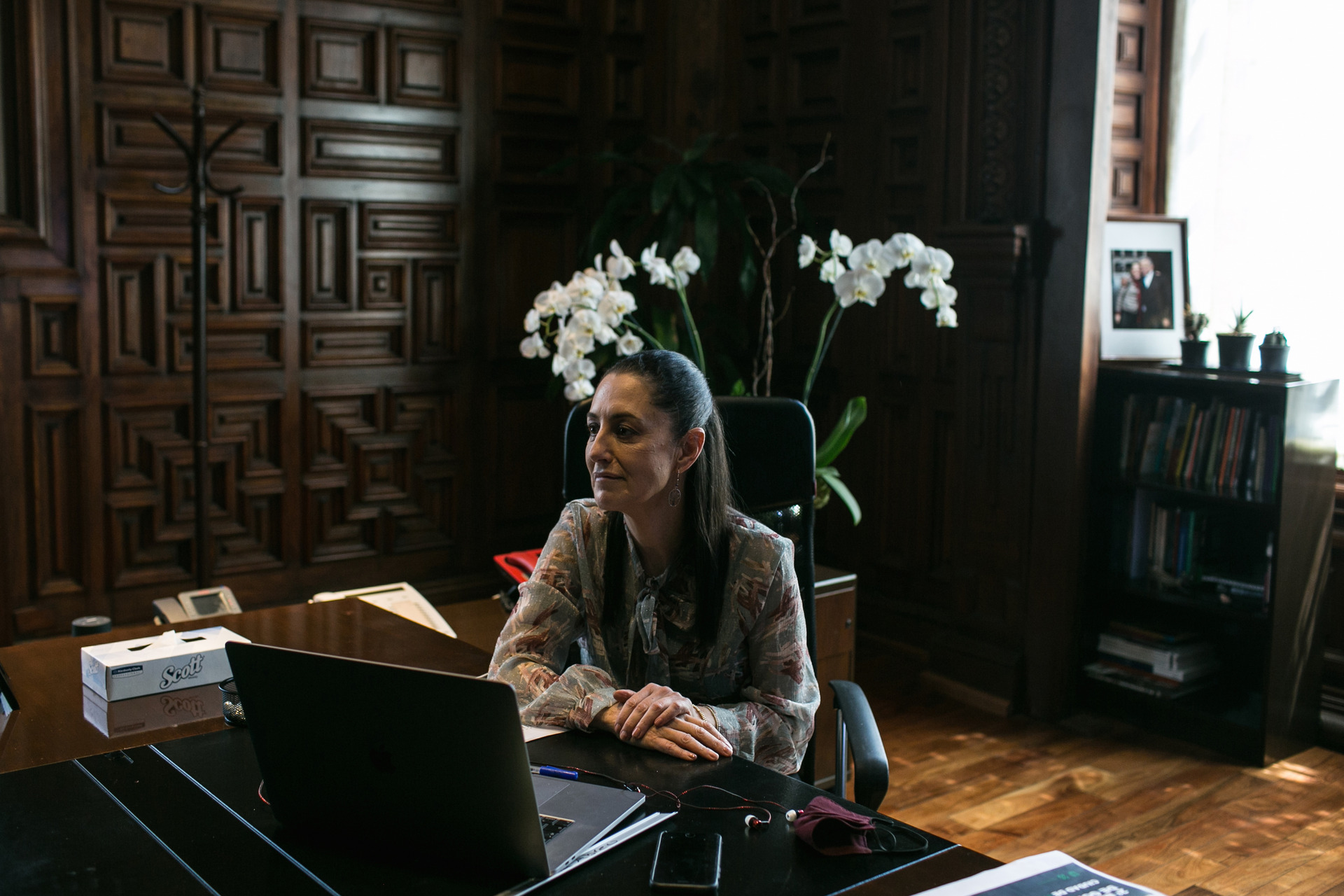
Mexican President Claudia Sheinbaum hinted at retaliation over US President-elect Donald Trump’s proposed tariffs on her nation’s exports on Tuesday as the peso slid against the dollar.
Trump vowed on Monday night to impose tariffs of 25% on all imports from Mexico and Canada on his first day in office, accusing the two countries of failing to do enough to curb illegal migration and drug trafficking.
“The phenomenon of migration or the consumption of drugs in the United States will not be dealt with by threats or with tariffs,” Sheinbaum wrote in a letter to the next US president, which she read out at her daily press conference.
“One tariff will come in response to another, and so on until we put shared companies at risk,” she said, noting big US car makers were among Mexico’s principal exporters to the US.
Sheinbaum added tariffs on such companies were “not acceptable and would cause inflation and joblessness for the US and Mexico”.
On Tuesday morning, the Mexican peso shed 2.3% against the US dollar, adding to a sharp depreciation this year, while the Canadian dollar fell to a four-year low.
The Mexican president added that Trump was “probably not aware” of the work Mexico was doing on migration, saying US border patrol apprehensions of undocumented migrants were down by three-quarters from last December and tonnes of illicit narcotics had been seized.
Trump said in his post on Monday that “thousands of people are pouring through Mexico and Canada, bringing crime and drugs at levels never seen before”.
Some commenters contrasted Sheinbaum’s outspoken letter with the approach of Andres Manuel Lopez Obrador, her predecessor as Mexico’s president, who built a strong relationship with Trump by avoiding critical comments and beefing up migration enforcement.
“It wasn’t necessary to react this way. There’s still two months until Trump’s inauguration,” said Antonio Ocaranza, director of Mexican consulting firm Oca Reputacion.
“At this rate, the number of letters to write from here to January could be numerous.”
The proposed tariffs marked the opening salvos in Trump’s protectionist trade plan since his victory in this month’s election.
The president-elect also said he would impose additional levies of 10% on Chinese exports, pointing to what he characterised as Beijing’s failure to stop “massive amounts of drugs, in particular fentanyl, being sent into the United States”.
However, this figure was lower than the 60% he had previously threatened.
China’s onshore renminbi slipped 0.2% to RMB7.25.
Canadian Prime Minister Justin Trudeau spoke to Trump on Monday night to discuss border security and trade.
On Tuesday, Trudeau told reporters: “There’s work to do and we know how to do it.”
In a sign of the reverberation in the US from the tariffs, the chief executive of US electronics retailer Best Buy warned that 60% of its cost of goods had historically come from China, with Mexico as the second-largest source of imported products.
There was “very little in the consumer electronics space that is not imported”, said Corie Barry. “Almost everything is imported.”
Written by: Christine Murray in Mexico City and Michael Stott in London. Additional reporting by Gregory Meyer in New York.
© Financial Times