US President-elect Donald Trump says he will hit China, Canada and Mexico with new tariffs
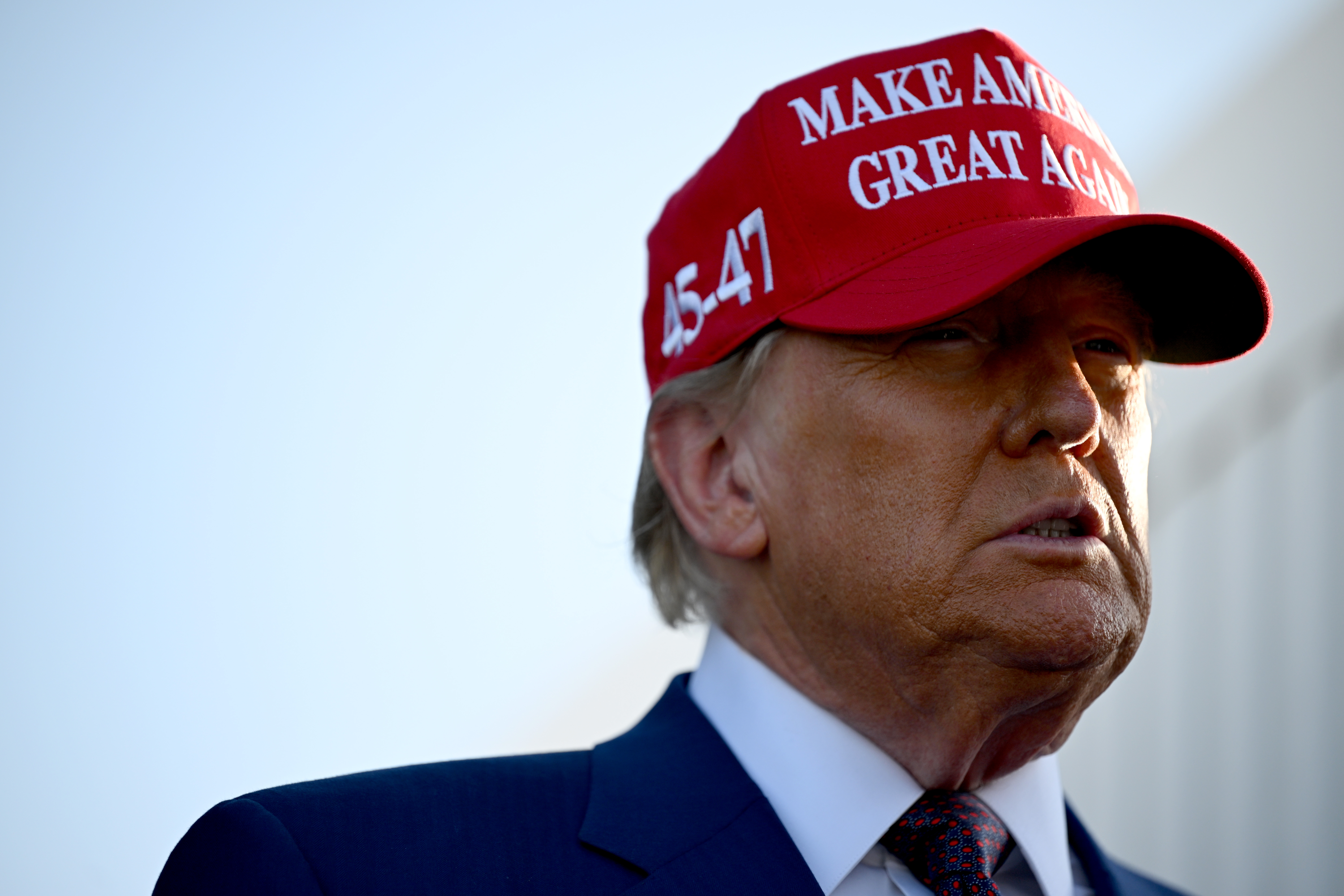
US President-elect Donald Trump has said he will levy tariffs of 25% on all imports from Canada and Mexico, and an extra 10% tariff on Chinese goods, accusing the countries of permitting illegal immigration and drug trafficking.
In a post on his social media site Truth Social, Trump said he would impose the Canada and Mexico tariffs “on ALL products coming into the United States, and its ridiculous open borders”, which would remain in place “until such time as drugs, in particular fentanyl, and all illegal aliens stop this invasion of our country”.
Trump said the tariffs would apply to all imports from China, on top of existing levies, and criticised Beijing for failing to follow through on promises to carry out the death penalty for people dealing fentanyl, a deadly synthetic opioid.
The announcements serve as opening shots in Trump’s confrontational new trade policy, following an election in which he campaigned on broad tariffs and lambasted America’s trading partners. Trump had previously threatened to impose a blanket tariff of more than 60% on all Chinese imports.
“Stiff new tariffs on imports from the US’s three largest trading partners would significantly increase costs and disrupt business across all economies involved,” said Erica York of the Tax Foundation, a Washington-based think-tank. “Even the threat of tariffs can have a chilling effect.”
The US dollar jumped on the news, pressing other currencies. The Canadian dollar fell more than 1% and the Mexican peso was off as much as 2%, adding to a sharp depreciation this year.
The South Korean won and Australian dollar both declined 0.6% against the dollar. The offshore renminbi slipped 0.3% to Rmb7.27 per dollar. The euro weakened 0.4% and the pound edged down 0.3%.
Trump had threatened on the campaign trail to impose “whatever tariffs are required - 100%, 200%, 1,000%” to stop Chinese cars from crossing into the US from Mexico, which is the US’s top trade partner.
He has also warned Mexico’s President Claudia Sheinbaum he would levy tariffs of 25% if she did not crack down on the “onslaught of criminals and drugs” crossing the border.
The levies could be imposed using executive powers that would override the USMCA, the free trade agreement that Trump inked with Canada and Mexico during his first term.
“There’s a lot of integration of North American manufacturing in a lot of sectors, particularly autos, so this would be pretty disruptive for a lot of US companies and industries,” said Warren Maruyama, former general counsel at the Office of the US Trade Representative.
“Tariffs are inflationary and will drive up prices,” he added. “There’s no way to eat a 60% tariff.”
In a joint statement, Canada’s Deputy Prime Minister Chrystia Freeland and Public Safety Minister Dominic LeBlanc hailed the bilateral relationship with the US as “one of the strongest and closest ... particularly when it comes to trade and border security”.
They also noted that Canada “buys more from the United States than China, Japan, France, and the UK combined”.
“Even if this is a negotiating strategy, I don’t see what Canada has to offer that Trump is not already getting,” said Carlo Dade, director, trade and trade Infrastructure at the Canada West Foundation, a think-tank.
While Trump put a promise of tariffs at the centre of his economic pitch to voters, President Joe Biden has also increased tariffs on Chinese imports. In May, Biden’s administration sharply increased levies on a range of imported clean-energy technologies, including boosting tariffs on electric vehicles from China to 100%.
Biden’s administration has also been pressing Beijing for several years to crack down on the production of ingredients for fentanyl, which it estimated claimed the lives of almost 75,000 Americans in 2023. Beijing this year agreed to impose controls on chemicals crucial to manufacturing fentanyl following meetings with senior US officials.
Additional reporting by William Sandlund, Christine Murray, Ilya Gridneff and Alex Rogers.
Written by: Aime Williams
© Financial Times