Did the November 14 earthquake shake Wellingtonians' faith in city apartments?
Thursday, 9 November 2017
When the shaking stopped, Bede Dwyer expected to look down on to a city of felled buildings and mass casualties.
He got up from the popped slats of his bed, walked past his smashed television set and crockery – past the microwave that had been thrown out of the wall – and down the stairwell, with its dandruff of plaster and concrete chips.
'I thought it was going to collapse up there, for sure, it felt that violent … I thought lots of people would have died and buildings and houses would have been completely levelled. So I was really surprised when I went outside – that everything was relatively fine.'

Dwyer, 31, took photos of his trashed flat – on the 13th floor of Soho Apartments, just off Wellington's entertainment strip – so people wouldn't think he was being a drama queen.
**READ MORE:
* Video shows uplift of Kaikōura's coastline
* Megaquake could hit central NZ
* Post-quake safety fears leaves cars trapped - and a fish dinner sitting on the kitchen bench
* Confusion and lack of clarity around assessing quake-damaged buildings**
Morag Hatcher did the same, snapping a pic of the wall crack she could stick her fist inside (and feel cold air) as a ready answer to those asking why she'd moved out of her 9th floor Soho flat.
The timing was lousy – Dwyer was about to be made redundant from his job at the Earthquake Commission, just as the claims came rolling in.
Last November's magnitude 7.8 quake disproportionately battered Wellington's apartment blocks, its frequency perfectly tuned for maximum shaking of mid-height buildings.
A Wellington City Council survey of 803 apartment residents found two-thirds fled within an hour of the quake. While the fear has faded, the insurance nightmares – and questions about the central city's resilience – remain.
Neither Dwyer nor Hatcher stayed the quake night in their apartment. When Dwyer moved back in from his friend's Thorndon couch a couple of days later, front doors were still wide open. Frightened residents had simply walked (or run) out.
'I knew, having worked for the Earthquake Commission, you're supposed to stay in your building – don't go outside. But I had zero confidence in that building, so I got out of there,' Dwyer says.
Both Dwyer and Hatcher now live outside the city, Hatcher in the bottom of a two-storey unit in Melling; Dwyer in a one-storey wooden bungalow in inner suburb Mt Cook. Neither would again make their home in a high-rise city building.
With office towers being declared unsafe, city cordons, evacuations and high-rise damage, the November quake has shaken some urbanites' faith in the safety of Wellington's central city. And while most displaced workers could work from home, or found alternative offices, the quake raised fears that city dwellers could be shut out of both work and home.
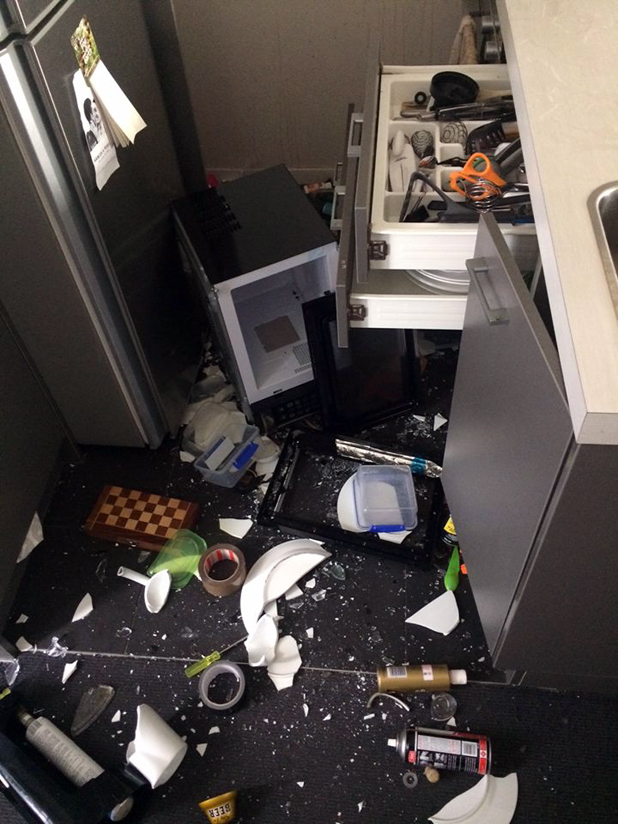
Bede Dwyer took photos of his trashed flat to show to doubters. PHOTO: SUPPLIED
The Courtenay Place cityscape mostly tops out at five or six storeys. But turn toward the waterfront, on to Taranaki St, and lean glassy fingers rise between stubby neighbours, followed by a dress circle of harbour-view apartments.
Up Victoria St, the massive Victoria Street Precinct North tower is slowly shedding its scaffolding – that's another 65 apartments on the brink of completion. Around the corner, in Dixon St, a gap in the city's urban teeth is being prepared for the 19-floor, 114-unit DXN apartment block.
Between 2004 and 2014, Te Aro was Wellington's fastest growing suburb, largely due to new apartment buildings feeding growing demand for a lively, urban lifestyle. That's unlikely to change, with Wellington facing population growth the size of another six Karoris, and about 40 per cent expected to be housed in the city centre.
!function(e,t,s,i){var n='InfogramEmbeds',o=e.getElementsByTagName('script'),d=o[0],r=/^http:/.test(e.location)?'http:':'https:';if(/^\/{2}/.test(i)&&(i=r+i),window[n]&&window[n].initialized)window[n].process&&window[n].process();else if(!e.getElementById(s)){var a=e.createElement('script');a.async=1,a.id=s,a.src=i,d.parentNode.insertBefore(a,d)}}(document,0,'infogram-async','https://e.infogram.com/js/dist/embed-loader-min.js');
!function(e,t,s,i){var n='InfogramEmbeds',o=e.getElementsByTagName('script'),d=o[0],r=/^http:/.test(e.location)?'http:':'https:';if(/^\/{2}/.test(i)&&(i=r+i),window[n]&&window[n].initialized)window[n].process&&window[n].process();else if(!e.getElementById(s)){var a=e.createElement('script');a.async=1,a.id=s,a.src=i,d.parentNode.insertBefore(a,d)}}(document,0,'infogram-async','https://e.infogram.com/js/dist/embed-loader-min.js');
While the November quake left Hatcher and Dwyer scarpering for the suburbs, any dampening of enthusiasm for city living appears mostly short-lived.
Immediately after quake damage led to central city evacuations, and photos emerged of trashed upper-floor flats, a couple of prospective owners pulled out of the DXN development, says architect Mike Cole, of Vicinity Architects, which also designed the Frame Apartments, due to open around April.
Insurers also refused to cover new projects for three months. However, the development remains all go, with 102 out of 120 units pre-sold and works beginning. They've switched from all-concrete to predominantly steel to improve earthquake performance – but the basic design remains.
'The apartment market seems to be pretty resilient,' says Cole.
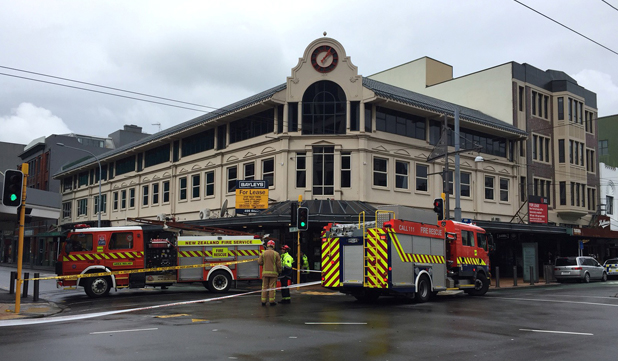
Firefighters set up a cordon on Courtenay Place to evacuate people from the buildings surrounding the unstable Reading Cinema car park. PHOTO: STUFF
Comprende director Grant Foggo, who manages rentals in several apartment buildings, also noticed an initial rush of scared renters wanting out.
Foggo says any earthquake blip is long gone and the new apartments coming onstream, such as the Frame and DXN complexes, probably won't meet demand.
'We're running at 97 per cent plus [occupancy]. We've got clients screaming out for properties.'
The same goes for apartment sales, says Harcourts sales manager Antonia Brown. While nervousness caused an initial sales freeze, that quickly faded.
Her apartment-owning parents are typical – they got a full engineer's report to ensure the building was safe, made a small Earthquake Commission claim for plaster damage, then got on with their lives, reassured the building hadn't collapsed.
However, Brown says buyers now always ask about a building's earthquake rating, and properties below 33 per cent of code – deemed earthquake prone – are harder to sell and finance. She also discloses whether any existing or previous earthquake claims have been lodged with the building's body corporate.
'Now, anything we can get, we sell. So I think we're over it.'
However, New Zealand Society for Earthquake Engineering president Peter Smith believes that as more people live in high rises, legislators need to consider more stringent building codes for apartment buildings in high quake zones. Designing buildings for life safety, rather than to ensure they're usable after a quake, makes cities potentially vulnerable, Smith says.
'It's bad enough when you have an office building having to be emptied, but at least they can get into another open space. To try and rehouse people in apartments is a much more difficult exercise.'
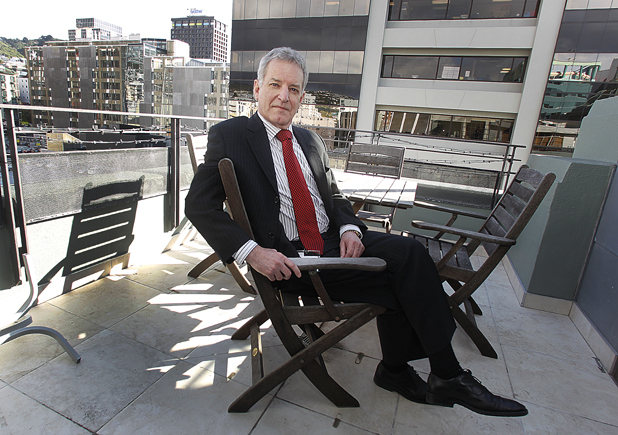
Neil Cooper says the November 14 earthquake was horrendous in his 8th floor apartment, but he still loves living in the city. PHOTO: CRAIG SIMCOX/STUFF
Staring out his city apartment's skylight, Neil Cooper watched the 29 storeys of Wellington's tallest building swing like a pendulum.
'It was horrendous … The top of the Majestic Centre appeared in one side of the skylight, went across to the other side and disappeared, and then came back again as the two buildings moved.'
The Dominion Building – whose body corporate Cooper chairs – came through in good structural condition. But even cracked windows are expensive to replace in a multi-storey building – they've had quotes of $500 for a 30cm square pane.
A year on, Cooper's body corporate has yet to see any money from its insurer, QBE.
'Assessors came through about February/March but we still haven't seen the report. I'm horrified that six months on we still haven't got something back.'
QBE announced it had completed the Dominion Building assessment the same day Stuff asked about it. The assessment had required seven site surveys, and the company had to prioritise 'make-safe actions', a QBE spokesperson said.
!function(e,t,s,i){var n='InfogramEmbeds',o=e.getElementsByTagName('script'),d=o[0],r=/^http:/.test(e.location)?'http:':'https:';if(/^\/{2}/.test(i)&&(i=r+i),window[n]&&window[n].initialized)window[n].process&&window[n].process();else if(!e.getElementById(s)){var a=e.createElement('script');a.async=1,a.id=s,a.src=i,d.parentNode.insertBefore(a,d)}}(document,0,'infogram-async','https://e.infogram.com/js/dist/embed-loader-min.js');
EQC's excess deduction, calculated at $200 per apartment, is also problematic as earthquakes do not treat every apartment the same, Cooper says.
'We have 31 apartments. If you have a minor claim of $10,000, the damage might only have occurred in two apartments, but the excess is calculated at $200 for every apartment, so you lose $6200. So suddenly half your claim is gone in excess.'
But that's only half the financial nightmare. Since the November quake, Cooper's building's insurance premium has skyrocketed from $111,000 to $248,000. His body corporate was able to tap into its long term maintenance fund, rather than asking owners to suddenly find $4400 each. But others might not be so lucky.
Premium increases vary hugely between apartment buildings, with some facing only 10 per cent increases or no increase at all, Cooper says.
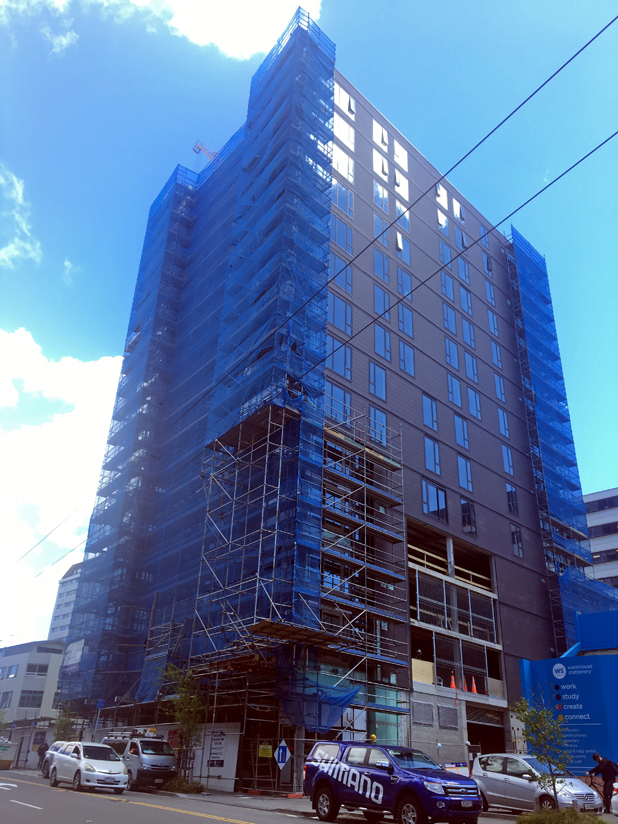
The November 14 quake has done little to dampen enthusiasm for new apartments. Victoria Street Precinct's North Tower is one of several new complexes under construction. PHOTO: NIKKI MACDONALD/STUFF
Insurance Council chief executive Tim Grafton says the new system, with private insurers acting as agents for EQC, is a vast improvement on the Christchurch model, which saw the 'unacceptable, intolerable' situation of 200-300 over-cap claims still being transferred every quarter from EQC to insurers, six years after the event.
While insurers expect to complete three-quarters of body corporate settlements by the end of 2017, apartment buildings are 'far from straight-forward' for insurers, Grafton says. Each apartment must be surveyed for damage and co-ordinating access with multiple owners can be a time-consuming nightmare.
The shining example was a body corporate that paid someone to project manage the assessment process. However, Grafton acknowledges not every body corporate has that kind of ready cash. The new Government could consider funding EQC to pay for that process, to streamline body corporate claims, he says.
Grafton would not comment on whether Cooper's doubled insurance premium would be the new normal. However, insurers surprised at decade-old buildings being written off would be looking more closely at details such as building materials, height and reclaimed land.
Like Peter Smith, Grafton wants legislators to think beyond simply preserving lives when it comes to setting building code requirements.
'How do we engineer for the future, to make those buildings more resilient and functional post an event, rather than a total loss?'
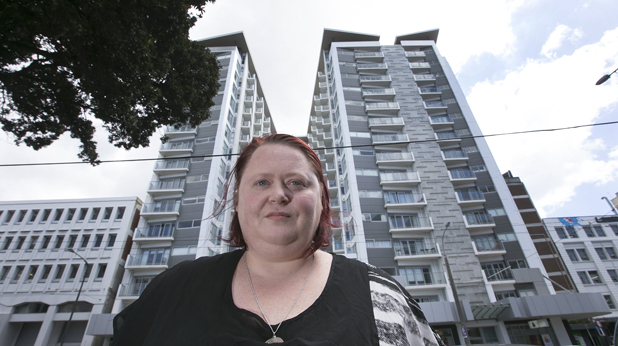
Morag Hatcher left her 9th floor Soho Apartment in December, after the stress of one too many building-swaying aftershocks. PHOTO: KEVIN STENT/STUFF
MORAG HATCHER, Soho Apartments
For six years, Morag Hatcher enjoyed her Soho apartment's good, easy living. She'd weathered the Christchurch earthquakes, but the November shake was something else. She rolled out of bed and watched the plaster cracks forming.
Her pictures were properly secured with 3M hooks – one got wrenched out and thrown from the lounge into the kitchen. Her perfume bottles flew out of the medicine cabinet and smashed on the bathroom floor; the fridge door defied its tight seal and emptied its contents. Other casualties included knick-knacks given to her by family who had since died.
She waited half an hour, before calling a friend in the Hutt. She was out of there, past water raining down from a burst pipe.
When she moved back in a week later, the usually still dream-catcher in her bedroom heralded every aftershock.
'It would sway in high winds, and creak, and you'd be like – is that the wind, or is that an earthquake coming? … For me, for my wellbeing, it was like, the stress. Nah.'
She moved out in December. Finding somewhere to rent was a nightmare – everyone seemed to be moving. She finally settled on the bottom flat in a two-storey unit in the Hutt.
'I would never go into a big high rise like Soho again. Never. It's just not worth it.'
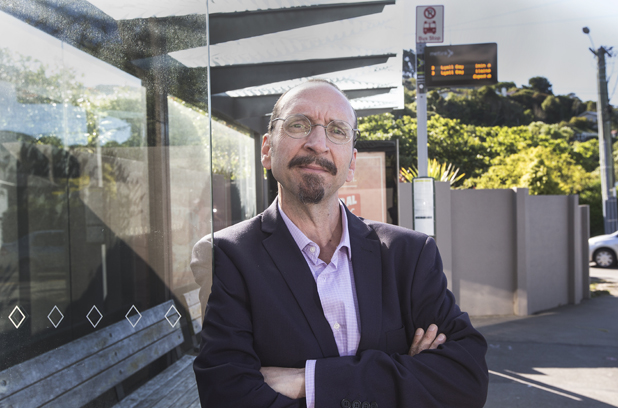
Rob Zorn had to take buses to business meetings after he was evacuated from his Maison Cabriole apartment for four months, and his BMW was trapped in the condemned Reading parking building. PHOTO: KEVIN STENT/STUFF
ROB ZORN, Maison Cabriole Apartments
After two and a half months exiled from his life's contents, Rob Zorn left nothing to chance. Like a supermarket dash winner, he spent hours planning his 10-minute escorted access into his quake-evacuated apartment.
He would gather his business-critical desktop computer, while his friend would grab his $300 in cash, the much-missed Nespresso machine and clothes to supplement his two work jackets.
Zorn was evacuated from his Maison Cabriole apartment four days after the quake, over fears the neighbouring Reading Cinema car park could collapse. Told they would be out for 12-48 hours, he grabbed a couple of T-shirts and his laptop.
Forty-eight hours became four months and it's hard to explain how absolutely awful that was, Zorn says. The dislocation, the stress, the financial hit.
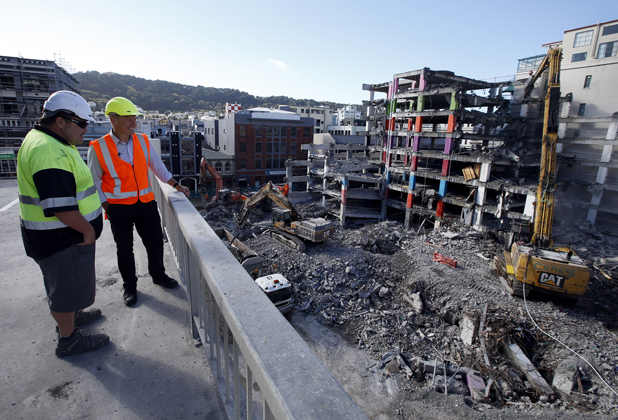
Residents of the Maison Cabriole apartments off Wellington's entertainment strip Courtenay Place were evicted for four months, while the adjacent and unsafe Reading Carpark was demolished. PHOTO: MONIQUE FORD/STUFF
Normally, Zorn runs his communications company from home. Instead, a friend's kitchen table became his office. He was also carless – his BMW was among nine cars trapped in the condemned car park, complete with presents for his grandchildren. Because the car hadn't actually been destroyed, his insurance company initially refused to pay out. After a month of wasting hours catching buses to business meetings, Zorn bought a runabout, before the insurance payout eventually came through.
He found a flat after an American friend saw a Stuff story about his plight, and offered his vacant apartment. But that left Zorn paying rent plus his mortgage and body corporate fees for an apartment he couldn't access. The body corporate insurance covered the rent, but only 75 per cent. Together with lost business, he estimates the four-month exile cost him about $15,000 in business and $5000 in extra expenses.
'It was extremely stressful. I went through a long period where I just couldn't sleep. I just had the worries – the finances, the money I was losing; feeling displaced. It was frustrating, too, that I could see my building was OK.'
Zorn doesn't blame council officials, who were trying their best, but says earlier escorted access would have made a huge difference.
Now, whenever there's a quake, he's terrified there'll be a guy in a yellow jacket at the door. Nonetheless, he has no plans to move.
'It's made me slightly more aware that there is a risk, especially living in a high-rise building. But it's a risk I'm willing to take, simply because of the joy of living in the central city, which I absolutely love.'