NZ Made/Nā Nīu Tīreni: The unsettling truth about the Treaty
Tuesday, 31 July 2018
Helen Clark, one of our longest-serving prime ministers, once declared Poi E her favourite song.
The song, by Pātea Māori Club, is catchy and uplifting. It sounds joyful. It's easy to like.
It was written to try to lift the spirits of the people of Pātea, where the freezing works were closed in 1982, one year short of 100 years in operation.
The music and performance that goes with Poi E sits comfortably in New Zealand's sense of itself. Most people can mumble along some version of the lyrics. Some refer to it as our alternative national anthem.
It's a lot harder to like the wretched parts of the history of the region from which Poi E emerged.
In Taranaki, there was war. Entire villages were destroyed. The Parihaka settlement, north of Pātea, was invaded by 1600 armed troops and volunteers. After being pillaged for taonga such as greenstone, homes were destroyed. Women were raped.
Across New Zealand, Māori land holdings went from covering most of the country to a meagre few pockets of land, mostly in the middle of the North Island.
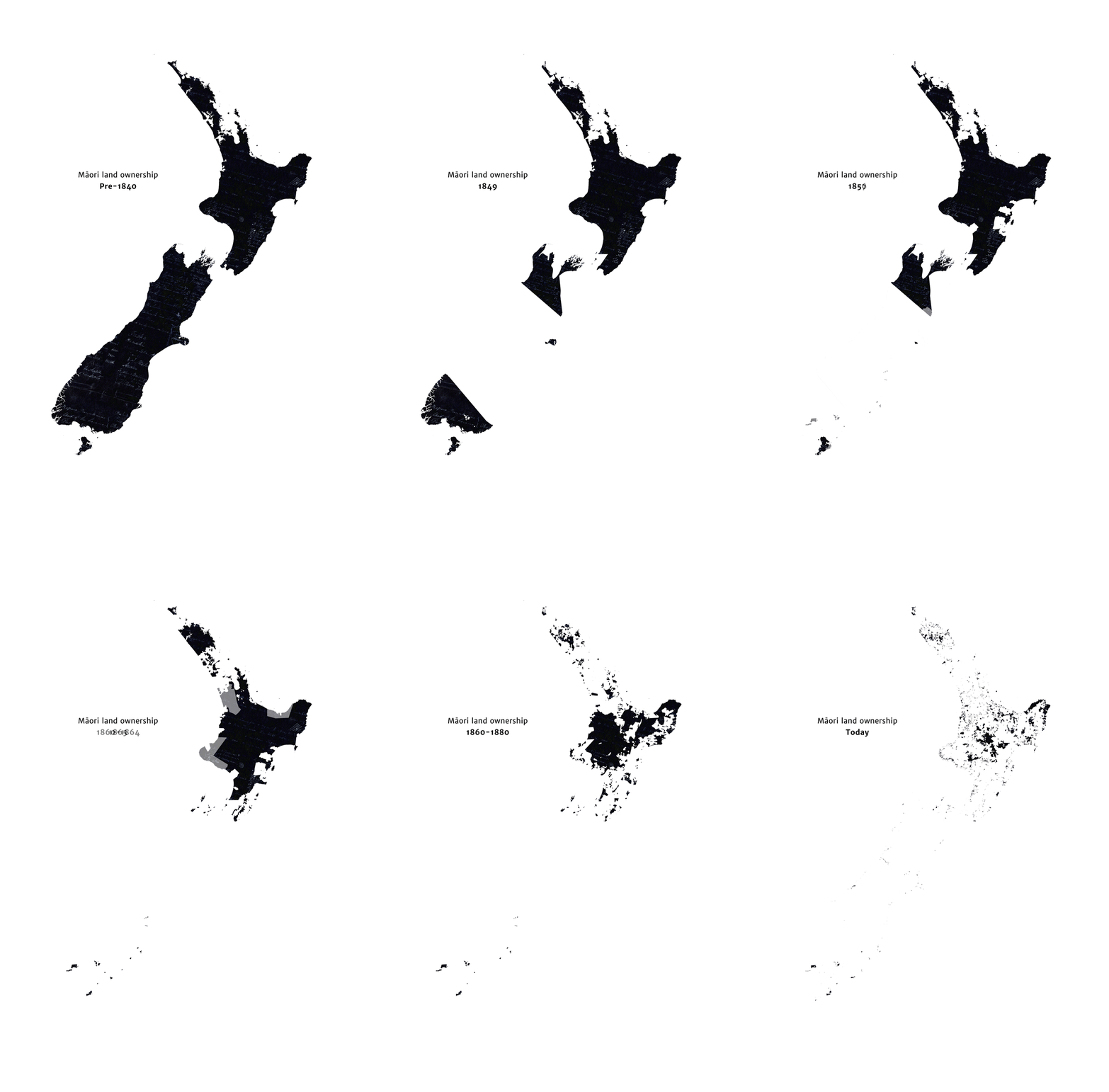
This history is not in dispute. These things happened.
But the history remains largely overlooked. Sometimes, it's excused.
New Zealand has not done well at grappling with its past. The unsettling truth about how this country was made is still not well understood. It has not been adequately taught in our schools. Our popular culture hasn't reflected it well enough. And our media has failed to tell it loudly and clearly.
The Treaty of Waitangi, and its subsequent betrayals, is the heart of how New Zealand was made. We need to reckon with what happened in order to understand the Treaty settlements process that continues today.
NZ Made/Nā Nīu Tīreni, a Stuff project launched today, aims to make this vital connection.
We have assembled a detailed record of every completed Treaty settlement, including summaries of the historical background and maps. For many, Stuff has been able to establish the total area alienated over time.

In addition to this new database, the NZ Made/Nā Nīu Tīreni project includes extensive analysis and reporting over the coming week. We have examined the costs and processes of Treaty settlements from many different angles. We've dug into some of the sharp divisions within Māoridom. And we've given the camera over to a number of New Zealanders to say their piece on the Treaty.
Everyone has an opinion on the Treaty. But, if we engage with our history honestly, there must be some things we can agree on.
This project states, loudly and clearly, that the indigenous people of Aotearoa were treated unfairly and unjustly over many decades at the time New Zealand was made. This is something we, as New Zealanders, should say with one voice.