The Pentagon, sinking billions into Iran war, is quickly running short on cash

With some funds set to dry up within weeks, US Defence Secretary Pete Hegseth is set to press lawmakers to address the increasingly urgent shortfall.
The Pentagon faces an urgent budget shortfall caused largely by the war in Iran, with some critical lines of funding set to run out within weeks even as US President Donald Trump escalates the conflict with Tehran, according to lawmakers and current and former US officials.
The funding crunch is already leading the Pentagon to limit training and maintenance that help maintain military readiness, according to four current and former officials, speaking on the condition of anonymity to candidly describe the budget constraints.
And the collapsed ceasefire with Iran could further strain the military’s budget: after four US service members died during more than a week of intensified fighting, officials in Washington signalled they were preparing for a wider conflict.
The White House has asked Congress for an immediate infusion of $67 billion (about NZ$115b) to help cover the costs of the war, but lawmakers are gridlocked over how to proceed. The House plans to leave Washington on Thursday (Friday NZT) for a month-long recess, leaving any deal on military funding weeks away at the earliest.
“Everybody needs to look at this situation and get rid of the complacency that they have,” Representative Pat Harrigan, a Republican member of the House Armed Services Committee, said in an interview.
The Pentagon did not respond to a request for comment on Monday. On Tuesday, after this article published, press secretary Sean Parnell said in a statement that Defence Secretary Pete Hegseth would “do whatever is necessary” to preserve military readiness and that defence funding is “essential”.
On Tuesday, Hegseth and Joint Chiefs Chairman General Dan Caine went to make their case for the money before the Senate Appropriations Committee – the first public hearing centred on the package. They last appeared on Capitol Hill in May, before a tenuous ceasefire broke down.
White House budget director Russell Vought was also set to address Republican lawmakers on Tuesday. Unless Congress acts, multiple current and former officials said the military will quickly be forced to make even more painful trade-offs.
Trump launched the airstrike campaign in late February, repeatedly saying it would end within weeks. The conflict has instead lasted for months as Iran has closed the Strait of Hormuz – a vital waterway for the oil and fertiliser trade – and caused turmoil in the global economy.
Vought told lawmakers last month that the war had so far cost about $30b, but some independent analysts say the price tag is likely much higher. The White House estimate does not include the cost of rebuilding US bases in the Middle East damaged by Iranian strikes.
The conflict has put unexpected stress on the Navy and Air Force, which have deployed aircraft and warships to the Middle East. Parts of the 2026 budget covering ongoing military operations for both services are on track to run out by the end of this month, according to two congressional aides, speaking on the condition of anonymity to candidly describe a sensitive budget situation.
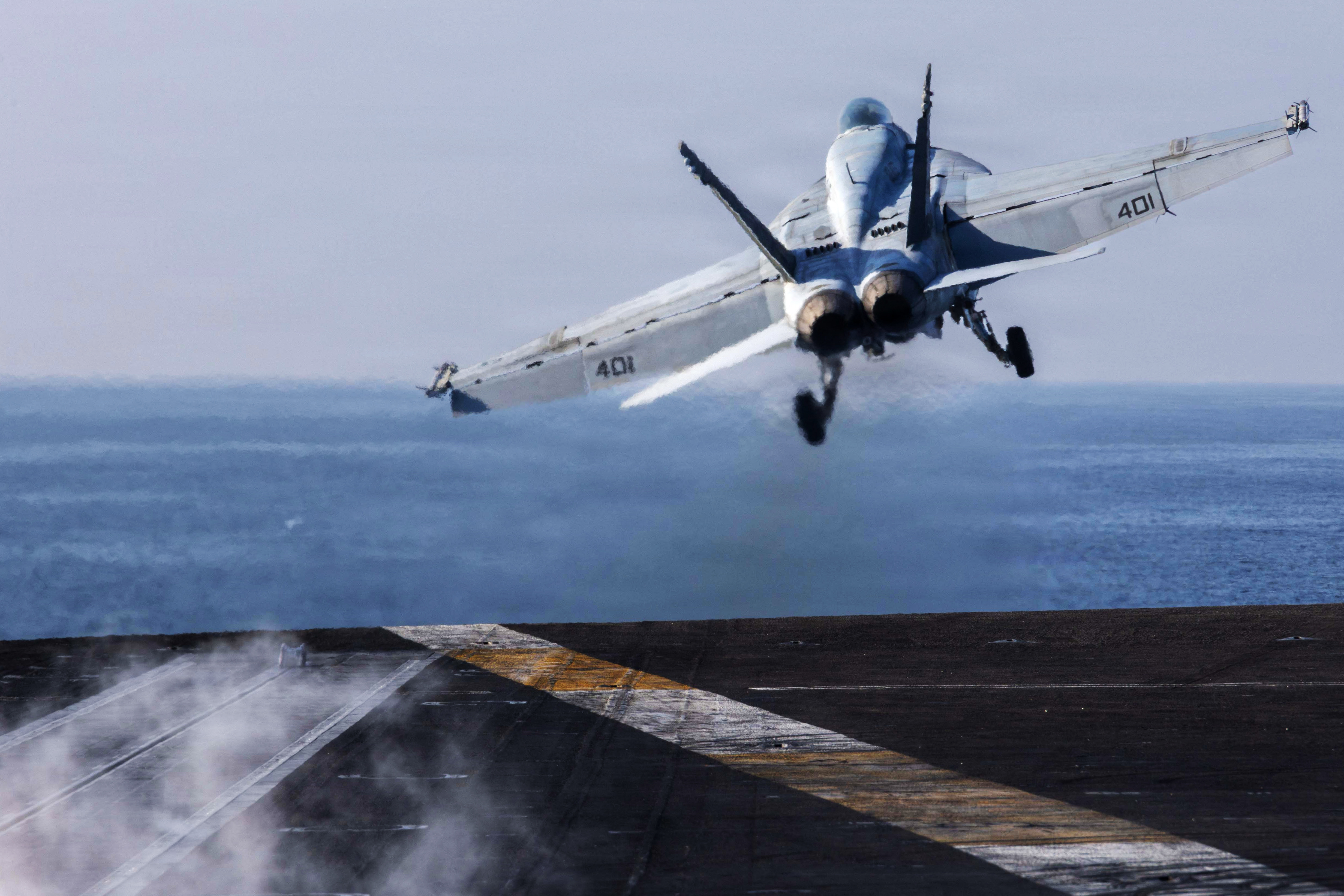
To bridge the gap until the 2027 fiscal year begins on October 1, the Pentagon is already moving money around. Military exercises and trainings that help keep units prepared for combat are being limited or cancelled, the four current and former officials said. The budget for equipment and facility and maintenance is also being drained to cover the shortfalls, the officials said.
In recent weeks, the Pentagon has asked Congress for permission to reallocate $4.3b from trainings and weapons purchases to address more urgent priorities, according to a document reviewed by The Washington Post. Congress has yet to act on that request.
A Trump administration official said the White House budget office was working to move some funding to the Pentagon’s operations and maintenance accounts. Doing so would come at the cost of other key programmes, the person said, without offering further specifics. NBC News previously reported on some of the military’s budget constraints.
Meanwhile, House Republicans are crafting a package using a complicated tool known as reconciliation to try to speed some money through Congress. The House is expected to vote this week on a framework that would authorise $73b in fresh defence spending, slightly more than the White House request.
But that strategy faces significant hurdles in the Senate, where Republican Majority Leader John Thune has cast doubt on its prospects.
Democrats have mostly said they oppose any new funding for the Iran conflict as part of a legislative blockade of major defence bills while the administration pursues a war that has drawn bipartisan objections. Even lawmakers open to additional funding – including some Republicans – have expressed frustration at the Pentagon’s delays in communicating with Congress.
When Hegseth testified before the House panel on defence spending in April, committee leaders urged him to provide information on the war’s costs as soon as possible. The Pentagon later missed the panel’s deadline and has since failed to share requested details for weeks, including the number of precision weapons the military has in its inventories after burning through thousands of munitions in Iran, according to lawmakers and congressional aides.
“We need to know what we’re purchasing and why we’re purchasing it,” Representative Betty McCollum of Minnesota, the top Democrat on the panel, said in an interview.
Hegseth has at times dismissed concerns about munitions shortages, telling CBS News in an interview last month that US stockpiles were “great, and they’re only getting stronger”.
In private, Pentagon officials have expressed far greater anxiety, according to current and former officials, arguing that the military desperately needs more money to restock munitions needed to deter US adversaries like Russia and China.
After receiving a private briefing from top Pentagon officials, McCollum said replenishing these weapons was clearly a top administration priority and that Pentagon officials other than Hegseth were “very concerned” that lawmakers were not receiving the information they needed to make decisions on additional funding.
This year’s defence budget is about $1 trillion, including $150b in one-time funding Congress approved last year for a range of military priorities, from advanced weapons systems to energising the US defence industry. The Trump administration has requested $1.5t for 2027, a massive increase that has sparked a fierce debate on Capitol Hill.
Some lawmakers in both parties have shown discomfort with the total, due to concerns about adding to the $39t national debt and financing an unpopular war. A recent Washington Post-Ipsos poll found that only 28% of Americans say the war has been worth fighting, compared with 68% who say it was not – on par with the worst assessments of the war in Afghanistan.
Work on spending bills has been stalled in the Senate because of a stand-off among appropriators. Democrats have refused to support any fiscal year 2027 funding until a deal is reached on overall spending levels, as they oppose the hike in defence spending put forward by Republicans.
Unexpected absences on the Senate Appropriations Committee have further complicated Republican efforts to begin some work on spending measures. Republican Senator Mitch McConnell, who chairs the panel on defence spending, has missed votes for a month while recovering from an injury. And Republican Senator Lindsey Graham, another member of the panel, died suddenly last week from what a medical examiner preliminarily ruled an aortic dissection.
Harrigan, the North Carolina Republican, mostly faulted Democrats for the broader budget impasse, but acknowledged that his party also deserves some blame.
“There’s no question,” Harrigan said, “that every portion of those responsible for bringing the defence budget across the finish line – to include the Pentagon – are complicit.”