Pager attack on Hezbollah forces Iranian-backed allies to rethink devices
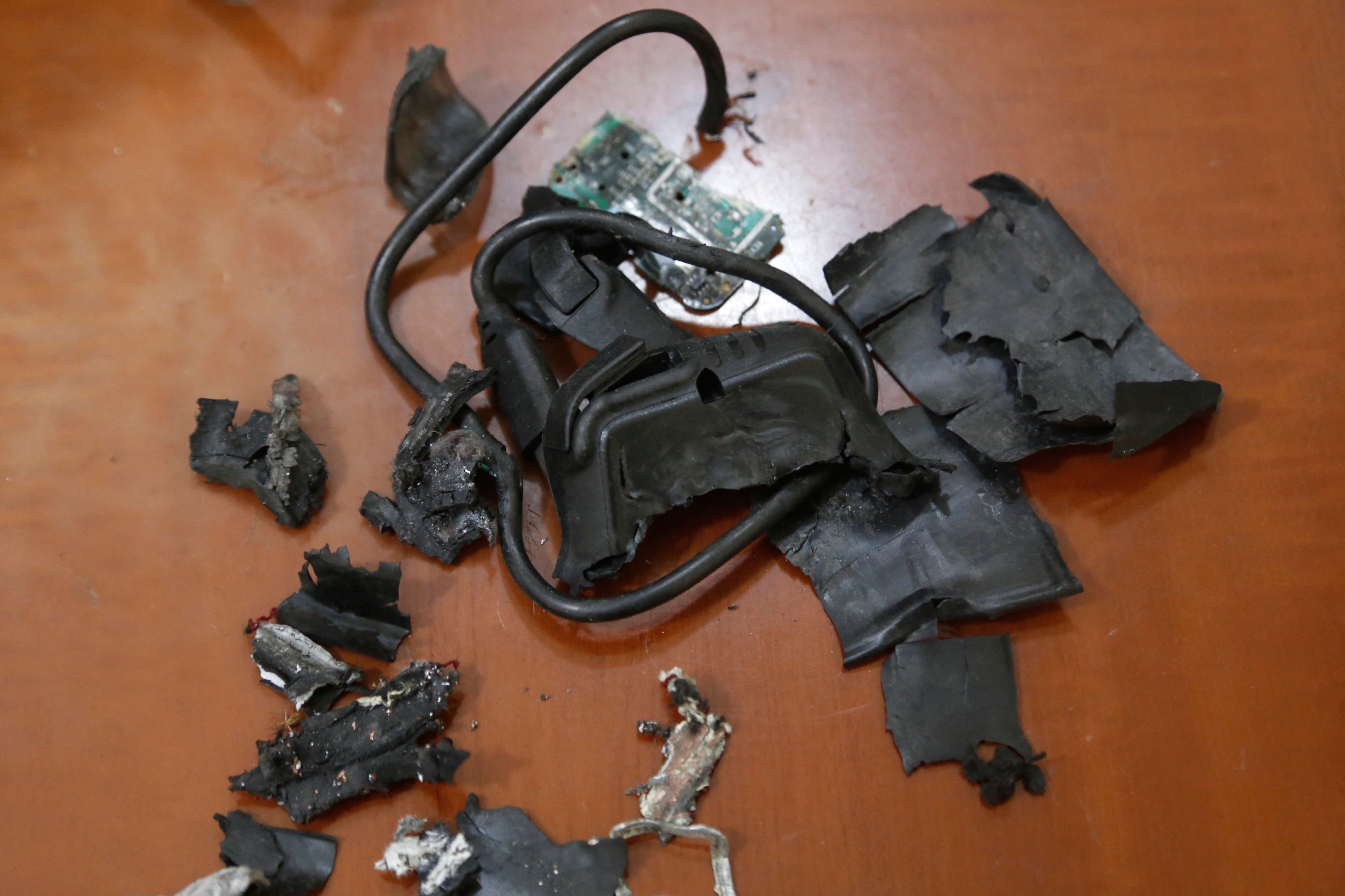
Iranian-backed militants across the Middle East have ordered sweeping inspections of electronic devices, as they rethink how to protect their communications following the devastating attack that caused pagers and walkie-talkies used by their ally, Hezbollah, to explode.
In Iraq and the West Bank, senior militants allied with Iran said they are examining equipment and issuing new rules on the use of personal devices by fighters. Analysts say that other groups’ systems are more secure but that they will probably seek to better protect their supply chains as they take stock of the fallout.
“Extreme precautions will be taken, and we will keep devices away from us,” said a senior commander in the Jenin Battalion, a coalition of West Bank fighters led by Palestinian Islamic Jihad. The commander, who spoke on the condition of anonymity out of concern for his security, said his operatives already avoided cellphones and had recently ditched handheld radios they suspected Israel of hacking.
Israeli authorities rarely discuss operations in other countries and have declined to comment on whether Israel was responsible for the attack on devices in Lebanon. But US officials, who spoke on the condition of anonymity to discuss a sensitive subject, acknowledged that Israel was behind the operation and said it informed Washington afterward through intelligence channels.
The attack was unlike any other in size and scope, turning everyday devices into weapons of war. It began Tuesday last week when thousands of pagers distributed by Hezbollah exploded simultaneously across Lebanon, causing fear and panic on busy streets and in supermarkets, as the injured overwhelmed hospitals. The assault continued Wednesday with the detonation of more devices, including two-way radios. Lebanon’s Health Ministry said 37 people were killed over both days and about 3000 more wounded.
Israel and Hezbollah have fought a low-level conflict for nearly a year, with the militant group linking its attacks to the war in Gaza. But the complex pager and radio operation stunned Hezbollah, which wields significant military and political power in Lebanon and counts Iran as its key benefactor.
Hezbollah leader Hasan Nasrallah said it dealt an “unprecedented blow” to the group, which began handing out the pagers in the northern hemisphere spring. Hezbollah was worried that the intelligence behind Israel’s targeted assassinations of key commanders was based on hacked cellphone data, and in July, Nasrallah ordered his forces to stop using cellphones altogether.
The group has long prided itself on being able to fight Israel’s “tech sophistication with simplicity”, said Amal Saad, a Hezbollah specialist and lecturer at Cardiff University’s School of Law and Politics.
But Israel’s apparent ability to infiltrate supply chains, perhaps years in advance, as well as penetrate the group’s low-tech communications network, has also sent ripples of fear through Iran’s web of armed groups in the region, including in Syria, Iraq, Yemen and the Palestinian territories. Like Hezbollah, some of these groups stepped up attacks on US and Israeli targets to protest Israel’s military campaign in the Gaza Strip.
In Iraq and Syria, militants were already spooked by the precision of recent strikes targeting senior members, including in Baghdad, and they feared that Israel or the United States had attached tracking devices to items the groups imported from abroad, according to Lahib Higel, senior analyst for Iraq at the International Crisis Group.
“Israel has used a key vulnerability in the way Iran and its proxies operate,” said Michael Horowitz, head of intelligence at Le Beck International, a Middle East-based risk consultancy. “They tend to rely in part on dual-use commercially available products and parts,” he said, which “makes their supply chains quite vulnerable to a potential intelligence operation of the likes I think we are seeing”.
“This is a vulnerability that extends beyond Hezbollah to all of Iran’s proxies and Iran itself,” Horowitz added.