Israel planted explosives in pagers sold to Hezbollah, officials say
Small amounts of explosive were implanted in beepers that Hezbollah had ordered from a Taiwanese company, according to American and other officials briefed on the operation.
Israel carried out its operation against Hezbollah on Tuesday by hiding explosive material within a new batch of Taiwanese-made pagers imported into Lebanon, according to American and other officials briefed on the operation.
The pagers, which Hezbollah had ordered from Gold Apollo in Taiwan, had been tampered with before they reached Lebanon, according to some of the officials. Most were the company’s AP924 model, though three other Gold Apollo models were also included in the shipment.
The explosive material, as little as 28 to 56 grams, was implanted next to the battery in each pager, two of the officials said. A switch was also embedded that could be triggered remotely to detonate the explosives.
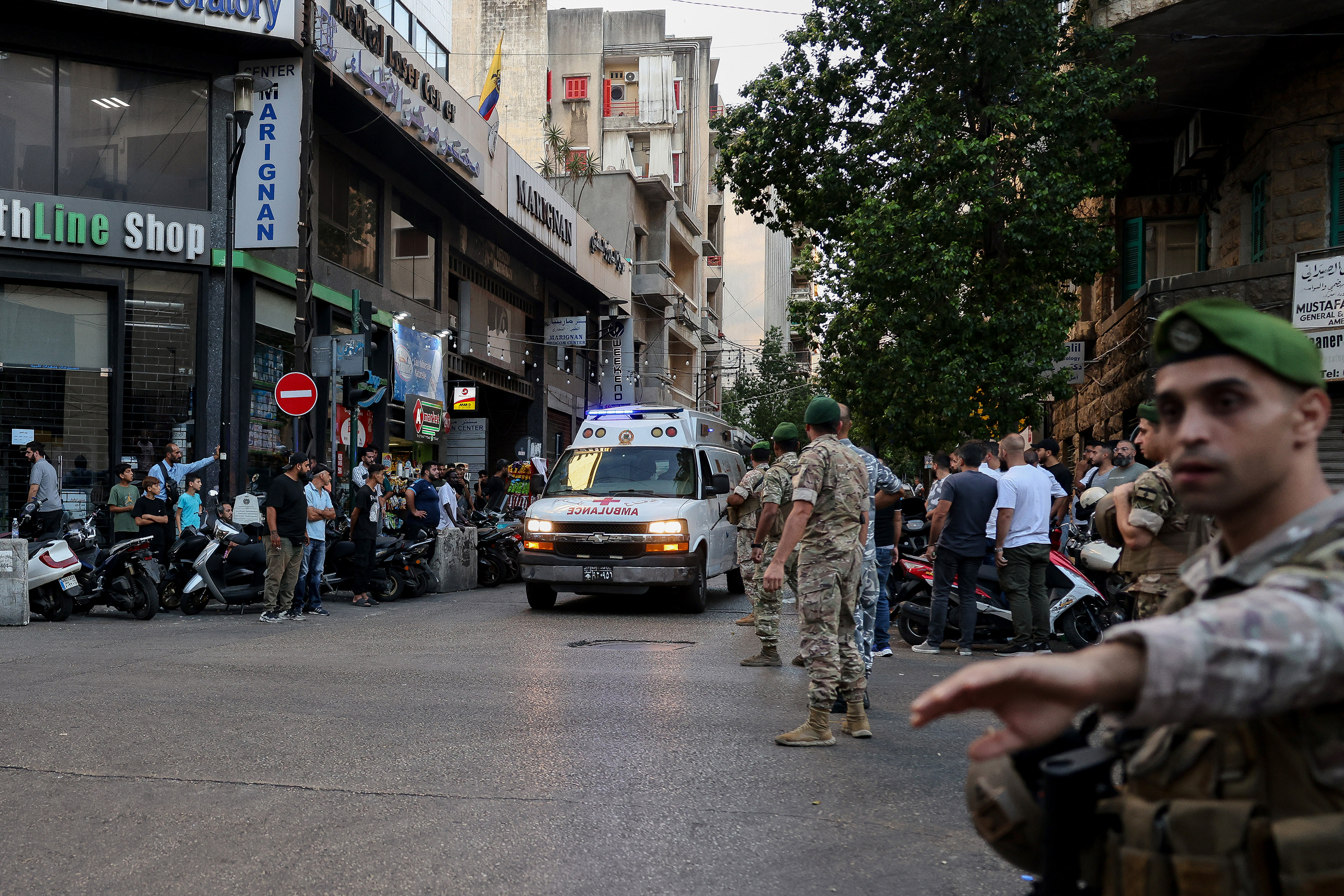
At 3.30pm in Lebanon, the pagers received a message that appeared as though it was coming from Hezbollah’s leadership, two of the officials said. Instead, the message activated the explosives. Lebanon’s Health Minister told state media at least nine people were killed and more than 2800 injured.
The devices were programmed to beep for several seconds before exploding, according to three of the officials.
Hezbollah has accused Israel of orchestrating the attack but has described limited details of its understanding of the operation. Israel has not commented on the attack nor said it was behind it.
The officials spoke on the condition of anonymity given the sensitive nature of the operation.
Independent cybersecurity experts who have studied footage of the attacks said it was clear that the strength and speed of the explosions were caused by a type of explosive material.
“These pagers were likely modified in some way to cause these types of explosions – the size and strength of the explosion indicates it was not just the battery,” said Mikko Hypponen, a research specialist at software company WithSecure and a cybercrime adviser to Europol.
Keren Elazari, an Israeli cybersecurity analyst and researcher at Tel Aviv University, said the attacks had targeted Hezbollah where it was most vulnerable.
Earlier this year, Hezbollah’s leader, Hassan Nasrallah, strictly limited the use of cellphones, which he saw as increasingly vulnerable to Israeli surveillance, according to some of the officials as well as security experts.
“This attack hit them in their Achilles’ heel because they took out a central means of communication,” Elazari said. “We have seen these types of devices, pagers, targeted before but not in an attack this sophisticated.”
More than 3000 pagers were ordered from the Gold Apollo company in Taiwan, several of the officials said. Hezbollah distributed the pagers to its members throughout Lebanon, with some reaching Hezbollah allies in Iran and Syria. Israel’s attack affected the pagers that were switched on and receiving messages.
It remained unclear Tuesday precisely when the pagers were ordered and when they arrived in Lebanon.
This article originally appeared in The New York Times.
Written by: Sheera Frenkel and Ronen Bergman
©2024 THE NEW YORK TIMES