America’s Cup: The five-day rule and how it impacts regatta before sailing begins
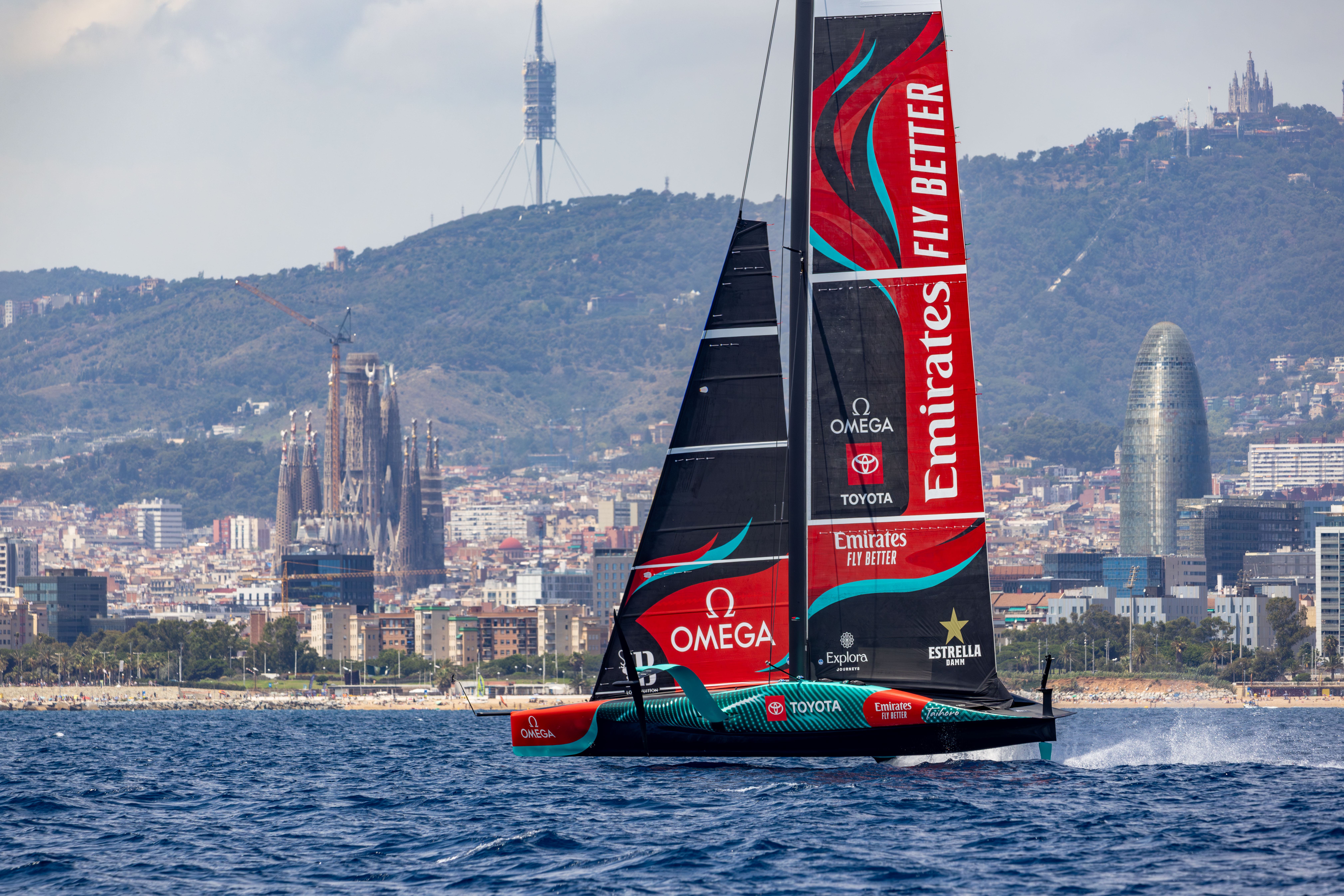
It’s a bit like Scott Robertson being forced to name his All Blacks team two weeks before a test match – that’s the impact of the five-day rule which will be applied on Saturday for the final America’s Cup preliminary regatta and later for the Louis Vuitton Cup.
The final preliminary regatta is the curtain-raiser to the 37th America’s Cup in Barcelona and starts on August 22 (Barcelona time), seven days ahead of the beginning of the challenger series to identify who will meet Emirates Team New Zealand (ETNZ) in the Cup match.
However, things effectively kick off this Saturday because of the five-day rule, which calls on all six teams to declare the racing configuration of their yachts five days ahead of racing in the preliminary regatta and the Louis Vuitton Cup.
It’s why Emirates Team New Zealand (ETNZ) boss Grant Dalton has been saying recently that all decisions to be taken by those racing have already been made – but no one yet knows what they are. That will be at least partly revealed when the new, third-generation AC75s have their first races in the preliminary regatta on August 22 following a couple of days of practice racing, after revealing their configuration choices (in confidence) to race organisers this Saturday.
Decisions include those on key variables like foils – foil arms, wings and flaps – rudders, masts but not sails. Those are the crucial components that will have the new-generation foiling monohulls rocketing around Barcelona courses. Dalton has previously predicted the new boats will be 10% faster than in the 36th America’s Cup in Auckland in 2021.
The five-day rule will also make a telling intervention during the preliminary regatta, which runs until August 25. The Louis Vuitton Cup series round robin, which features the five challengers - France’s Orient Express Racing Team, the US’s American Magic, Italy’s Luna Rossa Prada Pirelli, Switzerland’s Alinghi Red Bull Racing, and Britain’s Ineos Britannia, as well as defender ETNZ - starts on August 29. So teams must declare their challenger series race configuration on Saturday, August 24, while the preliminary regatta is still being contested.
Those vital decisions on key variables of the AC75s must be made well ahead of racing each time. Previously, many were made the day before or on the day of racing, taking into account weather and sea conditions. Shore crews had to take off the foils after a race and, on race morning, had to fit replacements according to sea and wind conditions – a big rush to get ready. Each change by each team had to be certified by an exhausted measurement committee who oversee such things for every team, doing so in time for the racing.
So designers on all teams will likely have been prioritising all-weather solutions this time, unlike the mass of options for different types of foils, for example, in play in Auckland and the 35th Cup in Bermuda. Foils can be heavier, lighter or more canted, with some better for speed, some better for taking off in light airs, manoeuvrability and so on.
The 37th Cup also had to be timetabled after the European football championships and the Paris Olympics – meaning the more predictable winds of a Barcelona summer will be over. The AC75s will have to be able to cope with variable winds because the Cup takes place over two months with the Cup match, scheduled to finish on October 21, in potentially different weather and sea conditions.
While August 17 looms as a red-letter day in terms of decision-making, August 22 is when the public and sailors will get their first sighting of the new AC75s – and their configurations. The preliminary regatta will see France’s Orient Express take on Alinghi in the first of 16 races between all six teams. The second race, also on August 22, will be between ETNZ and Luna Rossa – a repeat of the America’s Cup match in Auckland, won 7-3 by ETNZ.
The regatta will be a round-robin, with all yachts sailing against each other once, with the final (on August 25) between the two AC75s with the most points from the round-robin . This inevitably leads to questions of whether the teams will “sandbag” in the preliminary regatta – deliberately not showing all their paces.
The very nature of the AC75s means sandbagging is difficult; it’s more likely teams won’t fully optimise their yachts for the final preliminary regatta, leaving that until the serious racing starts in the Louis Vuitton Cup. However, they will certainly sail flat out in the final preliminary.
They’ll have to learn any lessons and make changes from that regatta quickly – as they must nominate their challenger series set-up while the preliminary regatta is still taking place. Not easy.
That means there will more than likely still be some surprises when the Cup racing begins as teams upskill themselves and, as we have seen in past America’s Cups, discover how to make their boat go faster.
The five-day rule is also in place for the Louis Vuitton Cup semifinals, final and the Cup match. All declarations are scheduled for a day or two days after racing – but if there are delays, weather or otherwise, and the reserve days are eaten up, the five-day rule could have a significant impact on the 37th America’s Cup.