Philip Polkinghorne murder trial live updates: Retired eye surgeon admits meth charges; faces trial over wife Pauline Hanna’s death
CONTENT WARNING: Some readers might find this story distressing.
A successful eye surgeon. A celebrated DHB boss. An “unexplained death” in an affluent Auckland suburb over a long weekend.
A trial that has been several years in the making has started today.
Paulina Hanna, 63, was found dead at the Remuera home she shared with her husband of 30 years, Philip Polkinghorne, on Easter Monday, 2021.
The Crown has opened its case against Polkinghorne, alleging he strangled his wife and staged her death as a suicide. But evidence showed Hanna was murdered, Crown solicitor Alysha McClintock said.
She said the couple’s marriage was “far from perfect” with the surgeon spending large amounts of money on sex workers and extra-marital affairs. He also had a meth habit.
Story continues after live blog.
First day of murder trial comes to an end
Vera Alves
The judge says he going to end the day's proceedings at this point.
The jury will return tomorrow morning for the second day of the trial.
Defence lawyer cross-examines paramedic
Vera Alves
Asked whether he had lifted the duvet to attach medical equipment to test for signs of life, Bernard Doo said: "I would rather preserve dignity as she appeared to be deceased and there was nothing more I could do."
The paramedic offered his condolences to the husband but didn't recall any further communications.
Defence lawyer Ron Mansfield asked if Doo was aware that Polkinghorne's sister had made a second 111 call asking where the ambulance was. He said he wasn't.
Mansfield also asked Doo about the equipment he used to check Hanna's vital signs.
Doo had described Polkinghorne in an earlier statement as crying.
Asked if he had moved the duvet or clothing to attach medical equipment, he said he had moved clothing to gain access to Hanna's shoulders.
He had also attached the equipment to Hanna's upper thighs.
In his earlier statement, Doo said Polkinghorne said he found the victim hanging and had cut her down. "He did not know how long she'd been there."
Mansfield asked whether Polkinghorne had said he had "put or taken her down". Doo could not recall.
"I thought we were responding to a full hanging," Doo told Mansfield.
Asked if the occupants would be advised to cut the victim down, Doo said he was not aware of this.
Polkinghorne was asked if Hanna was on any medications. He had replied that she was on anti-depressants but couldn't remember which ones.
Doo said the markings around her neck looked to be consistent with a hanging.
His statement says he looked no further than the head or neck "because I was sure she had died from a hanging".
Mansfield has now finished his cross examination of Doo.
'No vital signs of life': Paramedic recalls arriving at the scene
Vera Alves
St John worker Bernard Doo, a paramedic, is taking the witness stand now.
He said he was on the road when the call came in.
His colleague was going to get a Covid test when a purple call came in, meaning a cardiac arrest.
He recalled how they headed to Upland Rd with lights and sirens but the call was downgraded to orange, meaning they could revert to normal road speed and switch off lights and sirens.
They were told a doctor was on the scene saying the patient was deceased.
Upon arrival, they tried the buzzer three times at the gate but did not get a response and couldn't get inside the gate. They then realised the access was off Darwin Lane.
A man in his 60s waved them down.
They grabbed their gear from the ambulance and entered the house.
Doo said a lady in her 60s or 70s also greeted them and followed them inside to a corridor. "As I stepped in... I could see what appeared to a body underneath a duvet at the bottom of the stairs," he told the court, adding that "they seemed unresponsive".
"The husband of the patient was also there.
"My focus was on the patient under the duvet," who wasn't totally covered by the duvet, he said.
"She was unresponsive and her face was ashen and blue. I could see an orange rope dangling from the banister on the stairs."
The paramedics found "no vital signs of life".
"I noticed some marks around the neck which seemed to be consistent with hanging," Doo said.
"I don't recall noticing anything else."
Doo's colleague was talking to the husband and informed him the patient was deceased.
Doo said it was obvious the husband had some sort of laceration or graze on his forehead.
It had stopped bleeding so there was no urgency required.
He said he then radioed back to HQ that the patient was deceased.
Asked about the neck marking, he said he didn't closely examine it.
"We tend not to because sadly we go to quite a few of these."
Doo had attended about 30 such suicides during his career.
Doo is now being asked to look at photos of the property.
'She's cold': Recording of 111 call played to jury
Vera Alves
The judge has now asked anyone who is to give evidence during the trial to leave the public gallery.
Evidence is now being read from St John ambulance worker Sarah Crook.
On April 13, St John received a police request for 111 call data from April 5, 2021 at the couple's Remuera home.
Crook processed the request, uploading audio of the 111 call and event log information.
The Crown's Brian Dickey says the court is about to hear a recording of the 111 call.
"My wife's dead, she's hung herself," a voice says.
"She's cold," he says, before giving the address.
"Have you cut her down?" a voice asks.
"She's dead," he repeats.
"Why do you believe she's dead?" the 111 operator asks.
"Because I can't feel a pulse, she's blue," Polkinghorne replies.
He tells the call operator he is an eye doctor.
"Do you think she's beyond any help?"
"Yeah yeah."
The call-taker then tells him to leave everything as it is and that paramedics are on the way.
"Okay, thank you."
The call ends.
'Perfectly happy' relationship at the time of Hanna's death, defence claims
Vera Alves
"Their relationship at that time was perfectly happy. They were open and honest," defence lawyer Ron Mansfield said.
"Some described her as 'wearing the pants'. Like in any relationship, there will be disagreements.
He added that their relationship had been "good, supportive and open".
The lawyer for Polkinghorne stated that it is "important to understand the open sexual nature of their marriage".
"You will see by way of evidence that they were getting on well. There was no need for an argument or assault," he added.
"Was it a successful suicide attempt by a woman who was prone to depression and had talked about thoughts of taking her own life?"
The defence lawyer states that a "combination of the drugs and alcohol she was taking sadly left her prone to taking her own life".
He said that "after just one hour in the house, police began treating the death as suspicious when it wasn't".
"What you have is a one-eyed investigation focused on that suspicion", he said, saying there was a "desperate need to find a motive".
He added that the eye surgeon "loved his wife" and she loved him.
He asked the jury to keep an open mind about all the evidence and said that Polkinghorne had "not lied at all".
"The very day his wife died, that man co-operated with police in that way," the lawyer said.
"It is not accepted at all during that interview he was anything but honest and frank."
Mansfield closed his opening remarks by reiterating that "the sad reality is Mrs Polkinghorne took her own life".
Defence lawyer says meth use had nothing to do with what happened the night Hanna died
Vera Alves
Defence lawyer Ron Mansfield said that only 16 months after Polkinghorne gave two detailed statements to police about what happened was a murder charge laid.
"Investigations did not stop there. It continued trying to find evidence of some motive he might have for doing such an act."
Mansfield said "people, relationships are very subjective" and couldn't say whether the couple's relationship was "perfect".
"As long as two people love and support each other and know what is going on in... [a] relationship, including sexual experiences, it is not for us to pry or judge.
"They may have lived [a] relationship that is not suitable to you, but that matters not," he added.
The lawyer stated that "casual drug use, sexual behaviour and finances, when you hear all of the evidence, reveals nothing, nor does it reveal motive for why this man may have taken his wife's life".
He said meth had nothing to do with what occurred the night of Hanna's death.
"It will be found to be entirely irrelevant."
"Only evidence of casual use of the drug which is taken by many people across NZ. It played no part in Mrs Polkinghorne's death," he added.
Defence lawyer says couple were in an open relationship
Vera Alves
Defence lawyer Ron Mansfield is now addressing the jury.
He says there is nothing unexplained about Hanna's death.
Mansfield says the evidence will "all add up" and confirm she died by suicide.
He states that the Crown's submissions were "one clearly crafted side of things".
"You will realise there is a lot more to the couple's lives."
"Suggestions they were unhappy or that Polkinghorne led a double life were incorrect," he added.
"Their relationship and sexual lives were open."
He said Hanna knew of Polkinghorne's relationships outside the marriage because she was involved.
"There is no pathology to support a homicide, of an argument, disagreement or assault, let alone a fatal assault.
"The pathology evidence fails to back up the Crown's theory that this was strangulation killing," he said.
"Polkinghorne told the police, twice on the day it happened, a true account.
"That account fits entirely with what you will learn about hangings of this type."
He said the Crown's submissions that the mechanics did not support a suicide are "quite wrong".
"There were 16 months of police investigations which upturned the couple's lives."
The defence lawyer said they were looking for evidence that did not exist.
Defence lawyer Ron Mansfield to open the defence case
Vera Alves
The trial will resume shortly.
Defence lawyer Ron Mansfield will open the defence case after a short adjournment.
We may never know exactly why this happened - Crown
Vera Alves
The Crown says it must prove the elements that make up the charge of murder.
Firstly, that Polkinghorne killed Hanna by an unlawful act (i.e., whether he inflicted the fatal pressure on her neck) and secondly, his state of mind.
A motive may emerge through the evidence but is not a requirement. We may never know exactly why this happened, McClintock said.
The jury must look at all the evidence and ask if it is sure the Crown has proven the elements of murder.
The Crown doesn't have to prove motive or the reason someone killed a person.
"That may surprise you but it is the law."
McClintock said maybe Polkinghorne "lost it and snapped" over his desire to move on, his frustration with his wife and anger at her response to his sexual advances, she stated.
"If you accept that Ms Hanna died by neck compression at the hands of Dr Polkinghorne, intention or recklessness will ultimately follow."
She urged the jury to put aside feelings of sympathy or prejudice for the victim or defendant. All of that must be put to one side, she said. The case must be decided on the evidence and nothing else.
What we know about the night of the death - Crown
Vera Alves
The Crown is now going into what it knows about what Polkinghorne did on the night of the death.
His internet usage shows he was active on his phone overnight, but switched for a period to flight mode, "which is hard to reconcile". He told police he went to bed at 10pm.
The Crown says Polkinghorne deleted his Whatsapp history with sex worker Madison Ashton and asked her to do the same.
Polkinghorne tried to access an encrypted web browsers for "how to delete iCloud storage" and searched "edema after strangulation" before deleting that search.
He told police his wife had hung herself and gave a lengthy video interview later that day, which will be shown to the jury.
In it, the Crown says he and his wife slept in separate rooms that night and had an ordinary evening, had dinner and drinks and talked, before Hanna watched Netflix.
He suggested she drunk much more than him but wasn't drunk. He claimed she didn't seem unhappy and there was no argument.
He said he went to bed around 10pm and woke at 6am the next morning. He went downstairs to make tea and toast and found her slumped in a chair with a belt around her neck, tied to the orange rope fixed above.
To get her down, he undid three or four granny knots.
According to the Crown, he said he took the rope down because it was "hideous". He said the knots tied to the balustrade were down the bottom of the balustrade, and later said he may have moved them.
The photographs reveal the lie, the Crown stated, adding that the treatment of his dead wife by him during the interview was striking. He said she drank too much and got emotional at TV shows. The Crown says he seemed intent on painting her as a pitiful woman.
In that interview with police, Polkinghorne painted his marriage in a positive light and, in five hours, did not mention infidelity or the relationship with Ashton.
Crown details Polkinghorne's 'problematic meth habit'
Vera Alves
The Crown states that Hanna "kept fit and ate well" and had been on medication for depression.
"We can't see into her mind but we can see how she was behaving and communicating with others," McClintock said, adding that Hanna appeared to have also been grappling with Polkinghorne's meth habit.
She searched privately on the internet prior to her death, including searches for terms such as "what sensation does P give you", "what does P pipe look like" and "P pipe". These searches were just three months before her death.
The Crown states there is no evidence that Hanna was in a state of depression that would trigger a suicide attempt, but could be thinking about leaving Polkinghorne.
Her last text was sent around 8pm the night she died, and her last email an hour later. Then her digital footprint stopped forever. There was no suicide note found, no distressed emails, texts or calls.
The Crown will suggest Hanna was not a suicidal woman but one with real problems in her marriage.
The Crown is also outlining evidence that Polkinghorne was not happy and increasingly "living his life through affairs and meth use".
He was nearing retirement from his eye clinic and coming to terms with this looming change.
There will be evidence from another Auckland sex worker he was seeing regularly and a male friend who was engaged in sexual activity with Polkinghorne.
He seems to have been obsessed with sexual activity, the Crown states.
"This was quite a tangled web of lies the doctor was weaving," McClintock said.
According to the Crown, close to 40g of meth was found around the house.
McClintock took a moment to discuss this quantity, saying that is not a small amount that supports a one-off usage and describing it as part of "a problematic meth habit".
DNA testing on drug items identified Polkinghorne, while no drugs were found in Hanna's system, the Crown stated.
Colleagues had become concerned about his behaviour at work and in board meetings.
A meth pipe was found at Auckland Eye in 2020 in an examination room that Polkinghorne used. The Crown says it is the same type as the one found at his home.
Meth traces were found in a toilet adjoining where Hanna slept.
The Crown says Polkinghorne's meth use is directly relevant to the murder charge.
Expert will give evidence about effects of meth on people's behaviour, including increased aggression and impulsive behaviour.
Police found Polkinghorne with Ashton in the South Island about three weeks after Hanna's death.
Infidelity, threesomes and financial control: Details of Polkinghorne's relationship with sex worker revealed in court
Vera Alves
The Crown is now detailing Polkinghorne and Hanna's marriage woes and the infidelity on his part.
At the time of the death, Polkinghorne was in a long-time relationship with sex worker Madison Ashton, the Crown states.
Hanna was not happy about this. She engaged in threesomes with the pair, saying it was something she reluctantly agreed to, but became increasingly concerned about the sexual behaviour and demands of her husband.
Hanna reluctantly agreed to him sleeping with Ashton when he was in Australia. What she didn't know was he was also seeing other sex workers, the Crown told the court.
According to McClintock, this showed that theirs was a marriage in steep decline and Polkinghorne treated his wife with disdain.
He appears to be living an almost fantasy life, including financing Ashton, she stated, adding that he was very concerned about her use of the finances, and yet it is alleged he was using money freely on himself with no advantage to the marriage.
The sexual demands on her were also a growing concern, the court heard.
He had sexual demands made of her daily in the year prior to her death. She was finding this difficult to cope with. This was captured in a covert recording of Hanna and her friends.
In a conversation with friends, Hanna called him a sex fiend who had an extraordinary appetite for sex from her. She said he was angry with the world. She referred at one point to chucking herself off a bridge.
She had joined him in threesomes, but wouldn't do it any more.
She and the people in the recording are clearly drinking alcohol.
At one point, Hanna says she still loves Polkinghorne but is struggling to keep pace with his sexual demands.
He appears to be finding his wife somewhat tiresome and superfluous, the Crown alleges.
She was also concerned about the finances and what he was doing with their money.
The Crown says he held tight control over their finances. She was largely oblivious to what the money was being spent on but as time went by she became suspicious.
Her husband was telling her that money was tight. The Crown says he was transferring large amounts of money to sex workers.
He also used money on his son and a vehicle.
A forensic accountant will give evidence about the flow of money.
The Crown says Hanna contacted a private investigator and spoke to her friends about leaving the marriage, but she expressed concern about being alone and how she would cope.
The trial has now resumed
Vera Alves
After a break for lunch, the trial has now resumed.
The Crown is continuing its opening remarks.
McClintock says she is about halfway through her opening submissions.
'Beastly': Pauline Hanna told friends about previous strangling attempt
Vera Alves
The Crown states that evidence shows Hanna was not suicidal but increasingly concerned about her husband's controlling behaviour, sexual behaviour, aggression and his finances.
Hanna liked to have a few wines and would speak candidly with friends about her relationship with her husband when drinking.
Some of the evidence and reports from family and friends will show a pattern, the Crown states, which will lead to debunking Polkinghorne's claims of a happy marriage.
The Crown says the evidence will show that he was emotionally controlling and had become aggressive. Infidelity had also become an issue, as well as his sexual demands.
In January 2020, Hanna visited friends and told them Polkinghorne had tried to strangle her with hands and said something like "he could do it at any time", the Crown states.
Hanna later tried to brush it off.
A friend of Hanna's told the Crown Polkinghorne had been "beastly", likely in relation to the same incident.
Hanna had described her husband as "off the roof".
She seemed to have been trying to tip-toe around his behaviour, the Crown states.
Repeated physical abuse is not alleged. The incident told to the friend is the only other known case, but is nonetheless significant, according to the Crown.
The Crown also states that both emotional control and aggression were real issues in the marriage in the period leading up to Hanna's death.
The court is now adjourning for lunch and will return at 2pm.
Jury to hear 111 call made by Polkinghorne
Vera Alves
The jury will hear from people who attended the house, searched the house and experts who examined items found inside the property.
They will also hear the 111 call made by Polkinghorne and from people who responded to that call.
They will hear from the officer who looked after Hanna's body and the one who was responsible for the scene examination.
Scientists from ESR would give evidence about testing carried out in the house, such as testing for blood.
The jury will also hear from a forensic rope expert who will give evidence about the lack of tension in the rope and its length not supporting the suicide theory.
Evidence shows Polkinghorne was using meth heavily - Crown
Vera Alves
Polkinghorne told police he got up and used another set of stairs to go down to the kitchen to make her tea and toast that morning when he found his wife's body.
Neither kettle or toaster appeared to be on, however.
According to the Crown, a belt with the same pattern found on her neck was found in the kitchen, though it had been moved by Polkinghorne while police were there.
A sheet and a mattress protector were found in the washing machine.
In the bedroom where Hanna had slept, things were dishevelled: blankets were all over the place and furniture was found on its side.
Meth was found in later testing.
Hanna was found to have been clean of drugs, with her urine clear in a toxicology report.
Evidence shows Polkinghorne was using meth heavily.
His DNA was found on containers holding meth in the house.
Traces of the drug were found in the ensuite toilet that were not traceable to Hanna.
Evidence supports there having been a violent episode between the pair resulting in her death, the Crown states.
The Crown heard they had slept in separate bedrooms.
A pipe and lighter was found in the master bedroom where Polkinghorne had slept.
Police found signs of a struggle
Vera Alves
The Crown says there were signs of a struggle in the house.
Pauline Hanna had injuries to her nose and scalp, bruises on her arm and marks on the left side of her back.
The injuries to her nose was not visible the day before, in CCTV footage from when she went to the tip, for instance. No marks were noticed when she visited friends the night before her death either.
Polkinghorne had an injury to his forehead, a fresh cut that he couldn't explain when spoken to by police.
All of this, the Crown alleges, is supportive of a recent struggle between the two of them.
Polkinghorne moved Hanna's body after calling 111 - Crown
Vera Alves
The rope did not have sufficient tension and it was simply too long, the Crown stated, saying that if you accept that rope set up ultimately doesn't work, then that is evidence the scene had been staged.
The Crown added that the only reason to stage a suicide is because Polkinghorne had killed his wife.
The only evidence she was hanging from that rope at all comes from the defendant.
He told police he had placed her lying where she was found by police and paramedics.
It is what happened before she was placed there at the bottom of the stairs by her husband which is the issue in this case.
Placing her there was contrary to what he was told to do by the 111 operator. He was told to cut her down and leave everything else unchanged.
None of the items key to the suicide narrative were where he later described them as to how he found his wife.
He also could not account for the second piece of orange rope found coiled further down the stairs. The Crown says it makes no sense for there to be two ropes involved.
Crown says Polkinghorne staged suicide scene
Vera Alves
The Crown is going into detail to debunk Polkinghorne's claim that his wife died by suicide.
Hanna did not have a ligature mark. She had a woven pattern consistent with the pattern on a belt found in the house.
That pattern had disappeared by the time her body was formally examined the next day.
If Hanna had hung herself with a belt as the mechanism, then the mark on her neck would not disappear as it did.
It is much more likely to have been through contact with her neck after she died, suggestive of a staged suicide, the Crown says.
The pattern was likely made after she died and the pressure needed to cause death could not have occurred from the set-up discovered by police. The knots were loosely tied and when tension was put on the rope, that rope slipped down to the bottom of the balustrade.
And in any event, that rope was too long, the Crown stated.
Pauline Hanna died 'from pressure to her neck'
Vera Alves
Polkinghorne told police he'd found his wife slumped in a chair somewhere below the stairs with a belt around her neck tied to the balustrade above.
But the rope was too long and too loose to have enabled Hanna to commit suicide in the way Polkinghorne said she had, the Crown stated.
A pathologist will confirm she died from pressure to her neck.
They cannot say whether it was suicide or through pressure exerted from another person.
Crown describes the scene where Pauline Hanna was found
Vera Alves
Paramedics and police headed to the Remuera house after being called at 8.07am.
Philip Polkinghorne made the call to emergency services and said his wife was dead. He said she had hung herself.
Pauline Hanna was found lying under a duvet with her feet facing the entrance door. Her head was on a pillow on the stairs.
The victim had nothing on but a robe loosely around her. She was otherwise naked and dishevelled.
A piece of orange rope was hanging from the stairs. A photo of the rope is being shown to jury.
Crown describes five core categories of evidence
Vera Alves
The Crown is relying on a combination of the five categories of evidence to prove the case.
Firstly, scene evidence from the house. The scene at the house does not make sense from a suicide perspective.
Secondly: evidence from her body and cause of death. A forensic scientist will give evidence on this point.
Category three is evidence about Hanna's life in the 18 months prior to her death, which will be given by friends, colleagues and those who saw her prior to her death. It will include communications and letters between her and her husband which show the deterioration of their relationship. It will also show she was unhappy in the marriage and that there had been prior aggression.
Category four will be evidence of Polkinghorne's life in the previous 18 months, including what he was doing with the couple's finances. Polkinghorne was increasingly unhappy and was increasingly leading a double life in which meth and other women played a key role.
The fifth category of evidence relates to what Polkinghorne told police.
Marriage was 'far from perfect' - Crown
Vera Alves
He described their relationship as "quite good and perfect".
It was far from this, the Crown said.
Once close and loving, it had completely fallen apart.
Polkinghorne was leading a double life, spending large amounts of money on sex workers and extra-marital affairs, McClintock said, and he was also spending money on a meth habit.
The aspects of this double life Polkinghorne was leading were becoming harder and harder to keep from his wife.
Polkinghorne murdered his wife in their home, the Crown stated.
He either strangled her with his hands, his forearm or something soft and smoother around her neck.
He was either angry or just strung out on meth, then staged the scene to make it look like a suicide.
That will sound shocking, like something from a crime novel, McClintock said.
The Crown says the evidence will rule out the possibility of suicide and point to murder.
It says there was no third party involvement in the home that night – there was nobody else that could have harmed her.
This was also not suggested by Polkinghorne.
He plainly explained the death of his wife as suicide, but there should have been signs in the home and in her life if this was a suicide.
The remaining possibility is that Hanna was murdered by the only person who was in the house with her in the evening and morning before she was found dead.
Two people were in the house at the time it happened. One is dead and cannot tell us what happened, McClintock said.
This case must be determined on all the circumstances, on all the pieces of evidence, she said.
It is common for there to be no witnesses to murderous conduct.
It is common for there to be no direct evidence of what happened, no CCTV footage, nothing like that.
McClintock says she will take the jury through what happened in some detail over two hours.
'Significant quantity' of meth found in the Remuera home
Vera Alves
Meth was found in various places in the house – "a significant quantity of it".
Other features found in the home raised red flags.
Injuries were found on her legs and arms.
Polkinghorne also had an injury.
The house underwent forensic examination, looking for signs that she had killed herself, like Polkinghorne said.
Crown begins opening remarks, describes Pauline Hanna's final day alive
Vera Alves
Alysha McClintock is now opening the case for the Crown.
On Easter weekend 2021, Pauline Hanna did normal things.
She trained with her personal trainer, visited friends, went to the tip and did some work at the home that she shared with the defendant.
Hanna was a health administrator. When Covid hit, she had a lead role in PPE and vaccination centres.
Her work was incredibly important to her. She took pride in her work.
Hanna took great pride in her appearance. She was immaculately turned up, McClintock continues.
One aspect of her life was troubling and had been for quite some time.
Her husband was controlling and sexually demanding of her "and in unusual ways".
"At times he had become aggressive towards her."
He was having several extra-marital affairs. She considered leaving her husband and spoke to her friends about the relationship's decline.
"She loved her husband."
That day in April 2021, the defendant called police.
He told the 111 operator "she's hung herself".
"This reported suicide did not add up," McClintock said.
The mechanics of the rope "just did not work".
It did not have enough tension to strangle Hanna, the Crown states. The rope was too long.
Vera Alves
The trial is likely to last at least six weeks but the judge says it all depends on how long the evidence takes.
The jury will be given transcripts of evidence to refer to at the end of the trial.
Justice Graham Lang addresses the jury, outlines trial proceedings
Vera Alves
Justice Lang is now describing how the trial will proceed.
"The Crown bears the onus or burden of proving each and every element of the charge."
He said every person in this country is entitled to a fair trial.
The jury must decide the case "solely on the basis" of evidence it hears during the trial.
Justice Lang stresses that jury members must not talk to anyone about the trial outside the courtroom.
He also asks the jury not to make their own inquiries about the case on the internet.
"It's vital you do not go on Google or Safari and look up the case... If you breach the direction there will be serious consequences," he said.
"I'm sure none of you want that on your conscience."
He also asked the jury to avoid "jumping to conclusions" until the end of the trial.
"Don't go on social media to tell people you're on the jury.
"Don't tell anybody on social media that you are involved in this trial."
The jury foreperson will not be selected until Monday next week, the judge said.
This is because it's a long trial and it will give the jury time to get to know each other.
Vera Alves
The judge says the defence has no obligation to call any witnesses.
He is running through how the trial will proceed.
Vera Alves
Polkinghorne is no longer seated in the dock. He is now seated at a bench behind his lawyer Ron Mansfield, where he is flanked by a court security officer.
About two dozen members of the public are seated in the public gallery.
Vera Alves
Judge Graham Lang is now making some opening remarks to the jury.
Vera Alves
The court is currently taking a short break.
Polkinghorne pleads not guilty
Vera Alves
Polkinghorne stood in the dock as the charge was read by the court registrar. He is wearing a dark suit, white shirt and dark tie.
The murder charge has just been read to Polkinghorne.
Asked how he pleaded he replied: "Not guilty."
Vera Alves
A jury of nine women and three men has now been empanelled to hear the case.
Copies of the charges are now being distributed to the jury.
Vera Alves
Six jury members have been stood aside after speaking to the judge.
The court will now resume empanelling.
Vera Alves
The jury was sent out to the jury room to review the witness list to make sure they do not know any of the witnesses who will give evidence during the trial.
Vera Alves
The witness list included paramedics, police officers, work colleagues of Polkinghorne and friends and family of Hanna.
Jury empanelling begins
Vera Alves
The charge of murder has just been read to the court.
A long list of witness' names is now being read to the jury to ensure potential jury members do not know any of the witnesses who will give evidence during the trial.
Empanelling of the jury is now under way.
Vera Alves
Potential jury members have been brought into court ahead of the empanelling process.
Polkinghorne arrived at Auckland High Court this morning
Vera Alves
🎧 Listen: What to expect from the Polkinghorne trial
Vera Alves
Meth charges suppression lapsed with Polkinghorne's admission of guilt
Vera Alves
Polkinghorne started the trial today with guilty pleas to possession of methamphetamine, which carries a maximum punishment of six months’ imprisonment, and possession of a methamphetamine pipe, which is punishable by up to one year’s imprisonment.
For the past two years, the charges were not allowed to be reported, but suppression lapsed with the admission of guilt.
The guilty pleas leave just one charge remaining for the six-week trial: murder.
Vera Alves
Jury empanelling about to begin.
Polkinghorne pleads guilty to meth charges
Vera Alves
Philip Polkinghorne has just entered guilty pleas to two meth-related charges.
The fact of the charges was previously suppressed but that suppression order has now lapsed.
Polkinghorne trial begins today
Vera Alves
The trial of Philip Polkinghorne, the Auckland eye surgeon accused of murdering his wife Pauline Hanna, begins today at the High Court.
Hanna was found dead in the Remuera home she shared with her husbad on April 5, 2021.
The Herald is in the courtroom and will provide live updates throughout the trial.
Stay with us as we bring you the latest news on this case.
The trial started today with guilty pleas to possession of methamphetamine, which carries a maximum punishment of six months’ imprisonment, and possession of a methamphetamine pipe, which is punishable by up to one year’s imprisonment.
For the past two years, the charges were not allowed to be reported, but suppression lapsed with the admission of guilt. The guilty pleas leave just one charge remaining for the six-week trial: murder.
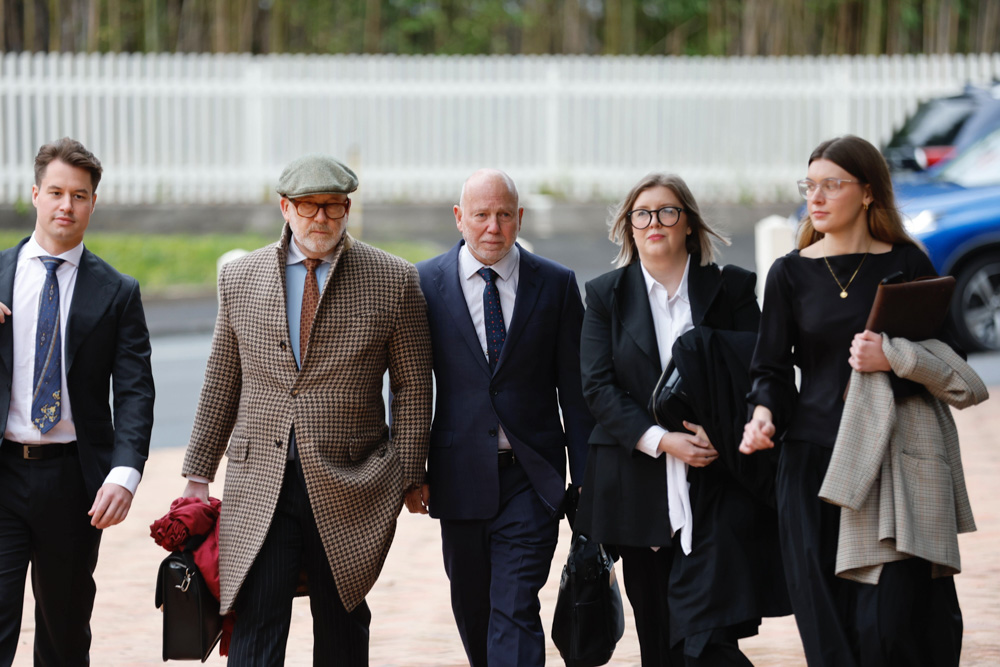
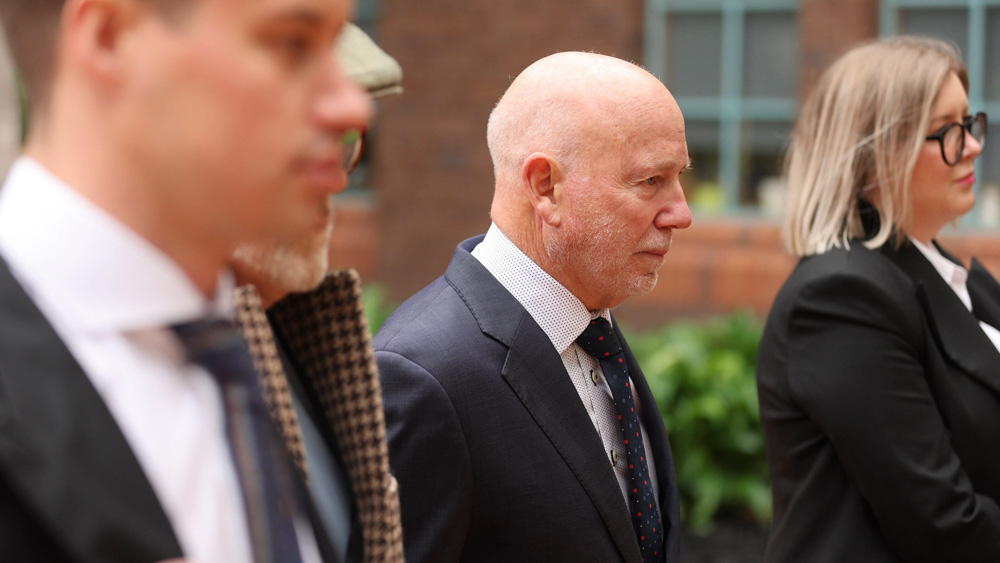
Polkinghorne arrived at court this morning flanked by his lawyer Ron Mansfield and the rest of his legal team wearing a navy suit and tie.
A jury of nine women and three men has now been empanelled to hear the case. Dozens of witnesses will be called including paramedics, police officers, work colleagues of Polkinghorne and friends and family of Hanna.
Arrest after 16 months
Hanna’s body was found inside the $4 million Upland Rd property and for 16 months her death was treated as “unexplained”.
That’s until it emerged Polkinghorne had been charged with murder. He pleaded not guilty in August, 2022.
Police spent 11 days searching the couple’s home after Hanna’s death on April 5, 2021.
In a statement released through his lawyer at the time of his arrest, Polkinghorne expressed his “shock” at being charged.
“I have recorded that I am not guilty immediately. Now that the Police have charged me the matter is before the courts and I am not permitted to comment further,” he said.
“The justice process must now run its course and I trust the truth will be shown. I thank my family and friends for their enduring love and support.”
Polkinghorne, who formerly worked as a doctor at Auckland Eye, retired after his wife’s death.
Hanna had worked in various roles in the public health system, including as an executive project director at Counties Manukau District Health Board and aiding with the Covid-19 vaccine rollout.

The Key Players
The Crown
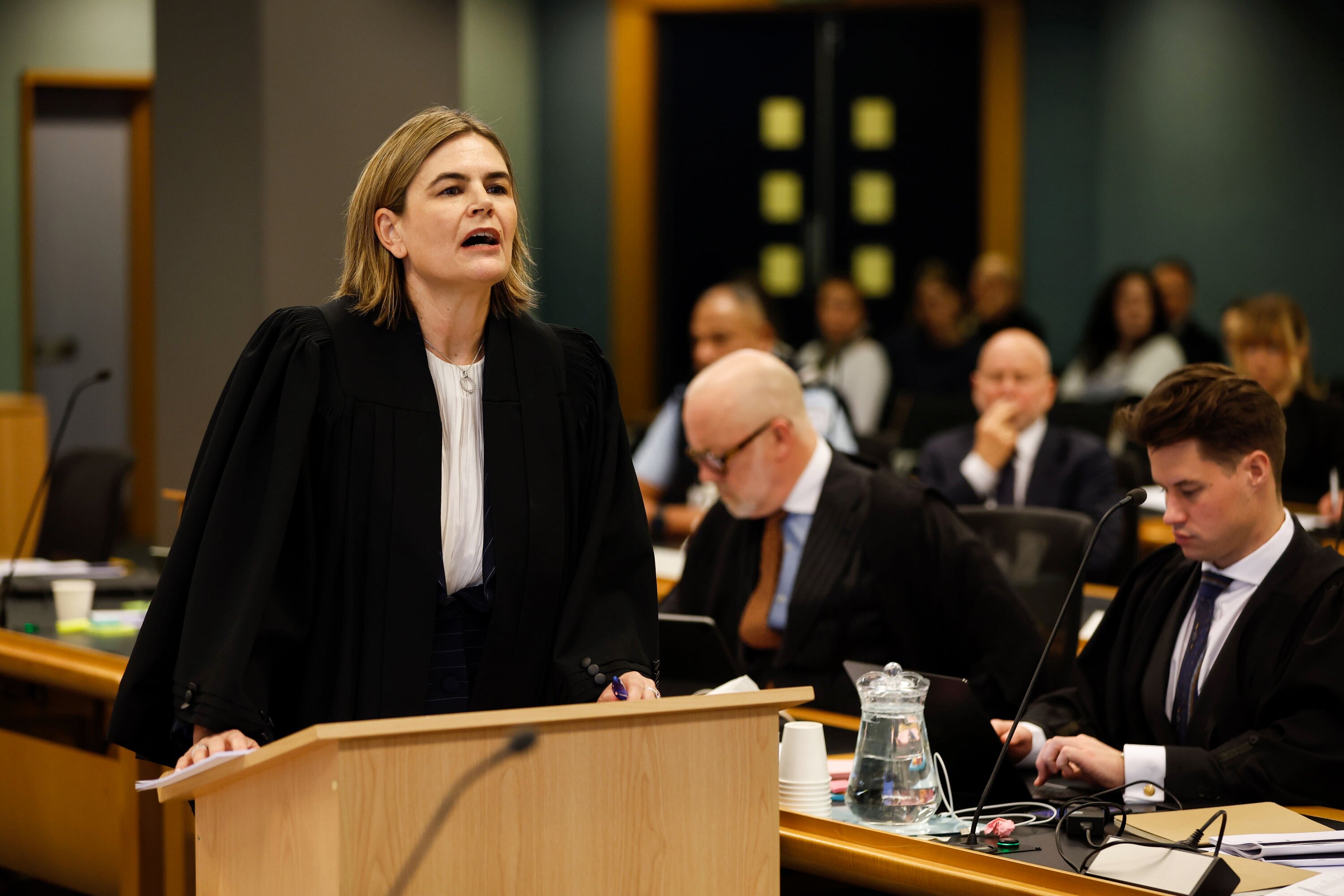
Crown solicitor Alysha McClintock oversees the prosecution of serious crime in the Auckland region. She was appointed to the role at Meredith Connell in 2023.
McClintock has more than 20 years’ experience prosecuting for the Crown.
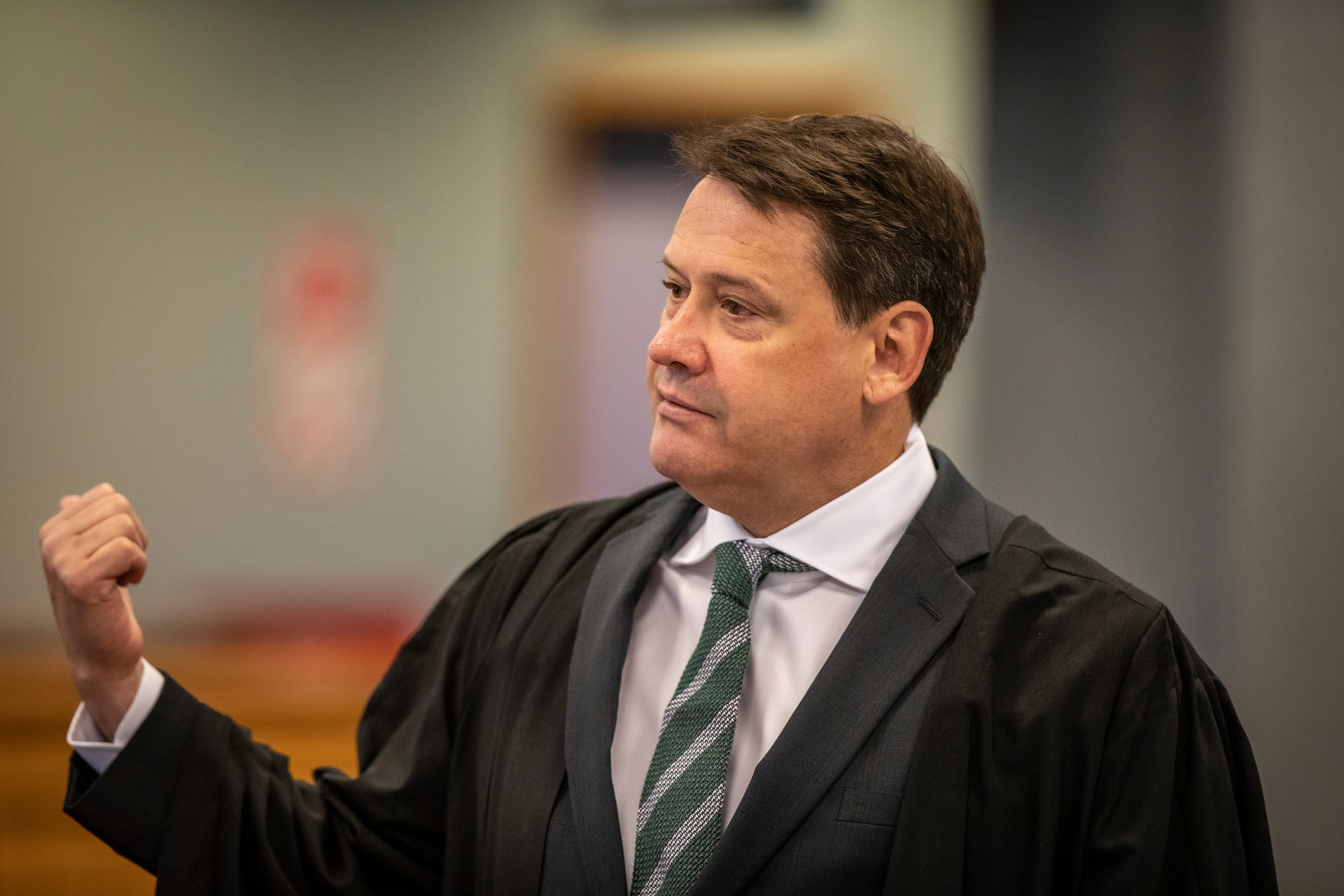
She’ll be joined by Brian Dickey, now a barrister at Bankside Chambers. He led his first High Court trial at the age of 23 and his first murder trial in 2003.
He was appointed Crown solicitor in 2015 and spent several years focused on commercial litigation and white-collar crime, including the run of finance company cases after the Global Financial Crisis.
He has been front and centre of some of the country’s biggest murder trials.
The Defence
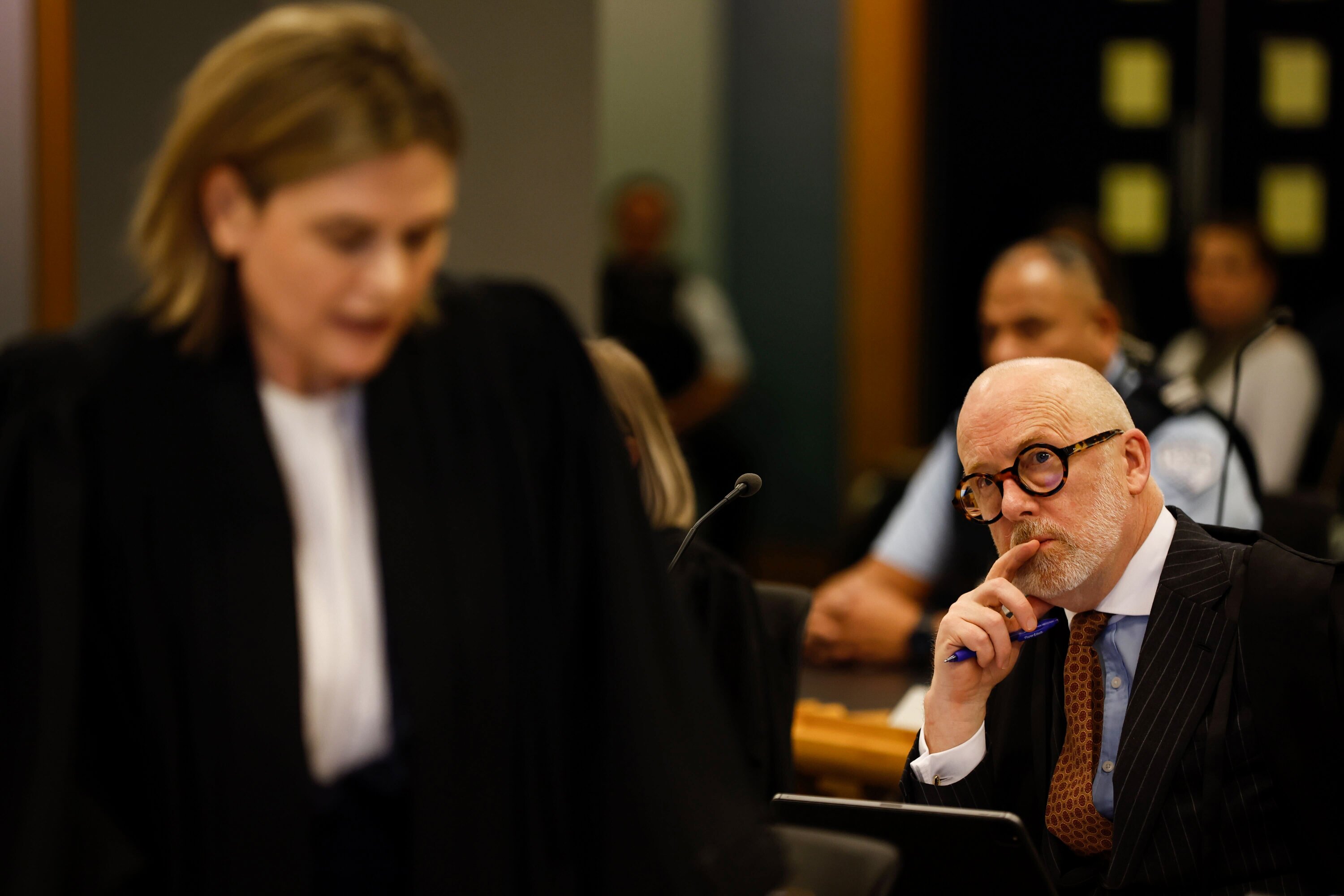
Ron Mansfield KC is a senior criminal lawyer with more than 30 years of experience. He was appointed to the senior rank of Kings Counsel (KC) in 2021.
He has defended clients in serious criminal cases in some of New Zealand’s highest-profile trials.
As well as those charged with criminal offences, Mansfield also has a strong social justice streak. He has represented high-profile activists in cases involving social justice issues.
How does a trial work?
There is never an indication of how long it will take to empanel 12 jury members.
It starts with the court registrar calling people’s names out to be potential jurors, whom a lawyer can “challenge”. They don’t have to explain why they “challenge” people, but it’s a tool that is used to ensure a good cross-section of society on the final jury.
Judges usually make opening remarks at the beginning of the trial and explain the role of the jury. They will explain the law and help jurors understand the evidence that is presented in court.
After a jury is chosen, or “impanelled”, the prosecution will begin outlining its case with an opening statement. It includes what the defendant is charged with and an explanation of the kinds of evidence it will present to the court.
This is where the public learns what the Crown believes happened, and how it intends to prove it. The defence may also make an opening statement.
Witnesses will be called to testify one by one – questioned by the prosecution first, then the defence in what is called a cross-examination.
After the prosecution’s witnesses, the defence has the chance to present its evidence. If it intends to call witnesses, the defence will present an opening statement.
When all the evidence is presented, the prosecution and defence will make closing statements to the jury. The judge then summarises the case and describes how the law applies to it.
The jury then goes out to “deliberate”. This could take hours or days.
The trial, which is being heard in the High Court at Auckland, is set down for six weeks.
The Herald will be covering the case in a daily podcast, Accused: The Polkinghorne Trial. You can listen to the podcast through The Front Page feed.
The Front Page is a daily news podcast from the New Zealand Herald, available to listen to every weekday from 5am. The podcast is presented by Chelsea Daniels, an Auckland-based journalist with a background in world news and crime/justice reporting who joined NZME in 2016.
You can follow the podcast at iHeartRadio, Apple Podcasts, Spotify, or wherever you get your podcasts.