The ‘freeloading’ jab that’s forced NZ into a defence debate – The Front Page
Frigates, freeloading and our nuclear-free identity are all suddenly up for debate.
New Zealand is being called a “freeloader” by the US Secretary of Defence for not increasing our defence spending as much as he’d like.
At the Shangri-La Dialogue security summit in Singapore, Pete Hegseth reiterated his call for countries to commit 3.5% of their gross domestic product (GDP) to defence spending.
University of Waikato international law professor Alexander Gillespie told The Front Page that New Zealand is lifting defence spending relatively quickly compared with its recent history.
" New Zealand was at a historically low figure of just over 1% just over 15 years ago, and now we’re trying to escalate that quickly.
“So we haven’t yet set a target beyond 2%, but we are growing quite fast, especially in relation to recent times. The problem is that other countries are growing quicker, and what you’re seeing is a global arms race right now where military budgets are increasing around the world, and it’s unprecedented in terms of the amount that’s being spent.
“But even for a country like Australia, which is where we kind of tag ourselves, they’re now at 2.2%, and they’ll probably hit 3% early in the next decade.
“Other countries like Japan are going slower as well, but Japan wasn’t called out,” he said.
At the 2025 Nato Summit in The Hague, Allies made a commitment to investing 5% of GDP annually on core defence requirements and defence and security-related spending by 2035.
They will allocate at least 3.5% of GDP annually based on the agreed definition of Nato defence expenditure by 2035.
New Zealand, Australia, and Japan are not members of Nato, but partner countries.
More money for defence would mean some difficult decisions ahead, Gillespie said.
“What we’ve discovered is that it’s becoming increasingly expensive.
“We’ve got two frigates right now. In 1950, we had six. A basic frigate will cost you upwards of $2 billion, and a very good one could cost you close to $5 billion.
“The amount of money required is huge, and it’s not only the amount of money, but it’s the choices, because what you’re seeing right now is a revolution in warfare.
“Underwater technology, drones in the air, cyber, hypersonic, artificial intelligence. It’s a radically different world, and so the Government has to make choices of where it puts its money, hoping it can get the best deal that will protect our military and, hopefully, prevent any conflicts going forward,” he said.
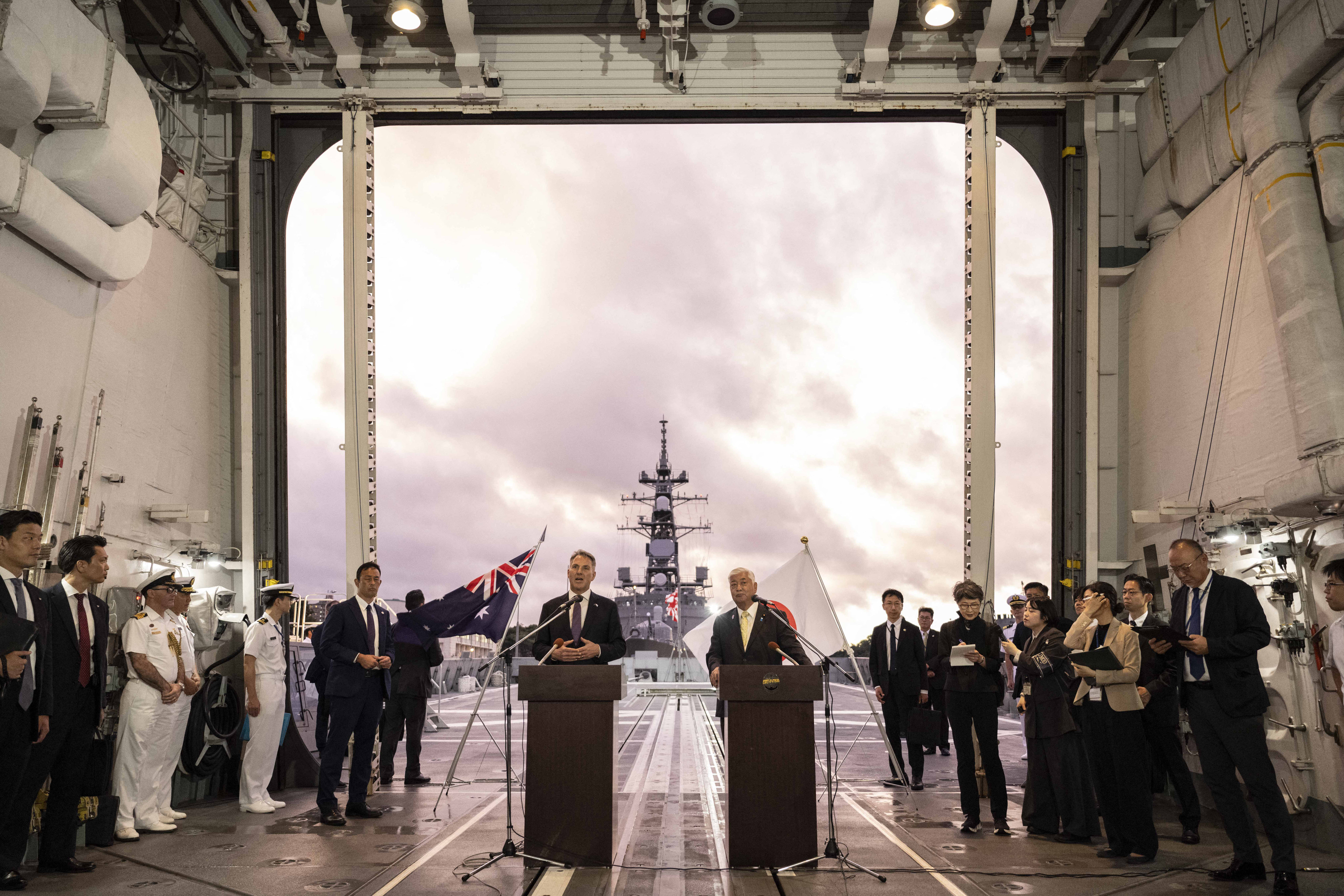
Australia and Japan have signed a multibillion-dollar contract for the production of 11 new warships, with the first expected to be delivered by the end of 2029.
The first three vessels will be built in Japan, with the next eight to be produced in Perth, Western Australia.
Gillespie said New Zealand should look for a similar kind of deal if it chooses to purchase new frigates.
" New Zealand should be part of that programme, and so we need to be leveraging off existing systems rather than doing it just by scratch for ourselves. And if we do try to get into that relationship between Australia and Japan, we should be saying, ‘We want some of this work to be done in New Zealand.’
“And so there, there’s a chance here for us to make sure that we can benefit from the spend at the same time,” he said.
Meanwhile, there’s a suggestion that we should have a “conversation” about our decades-old, nuclear-free policy.
Defence Minister Chris Penk, speaking at the Shangri-La Dialogue, told Bloomberg it would be helpful to have a “conversation” about how nuclear propulsion is different to nuclear weapons for New Zealand’s nuclear-free position.
Currently, nuclear-propelled ships are banned from New Zealand waters.
It’s prompted Prime Minister Christopher Luxon to hose down talk of any such “conversation”, describing the policy as “one of the best things” the country had done.
Listen to the full episode to hear more about:
The Front Page is a daily news podcast from the New Zealand Herald, available to listen to every weekday from 5pm. The podcast is presented by Chelsea Daniels, an Auckland-based journalist with a background in world news and crime/justice reporting who joined NZME in 2016.
You can follow the podcast at iHeartRadio, Apple Podcasts, Spotify or wherever you get your podcasts.