Rotorua landlord Stephen Bhana case: Handwriting expert exposes signature
A renter embroiled in a tenancy dispute with controversial Rotorua landlord Stephen Bhana used a handwriting expert to successfully challenge claims he had signed a document accepting responsibility for property damage.
The expert said the signature and initials were instead consistent with Stephen Bhana’s handwriting – adding weight to the renter’s Tenancy Tribunal case, which he eventually won.
The evidence was presented at a recent hearing in which Stephen Bhana was removed because of his behaviour.
Although he was later allowed to return, he became “disruptive and intimidating”, prompting the adjudicator to end the hearing early.
The Tenancy Tribunal’s order, signed by adjudicator Mikail Steens, was released publicly this week.
Stephen Bhana and his sister, Jasu Bhana, are named in the order as landlords. They are trustees of the property owner, the Ranolf Trust.
The name of the tenant is suppressed.
Steens dismissed the Bhanas’ claims for compensation and instead found them at fault in several areas.
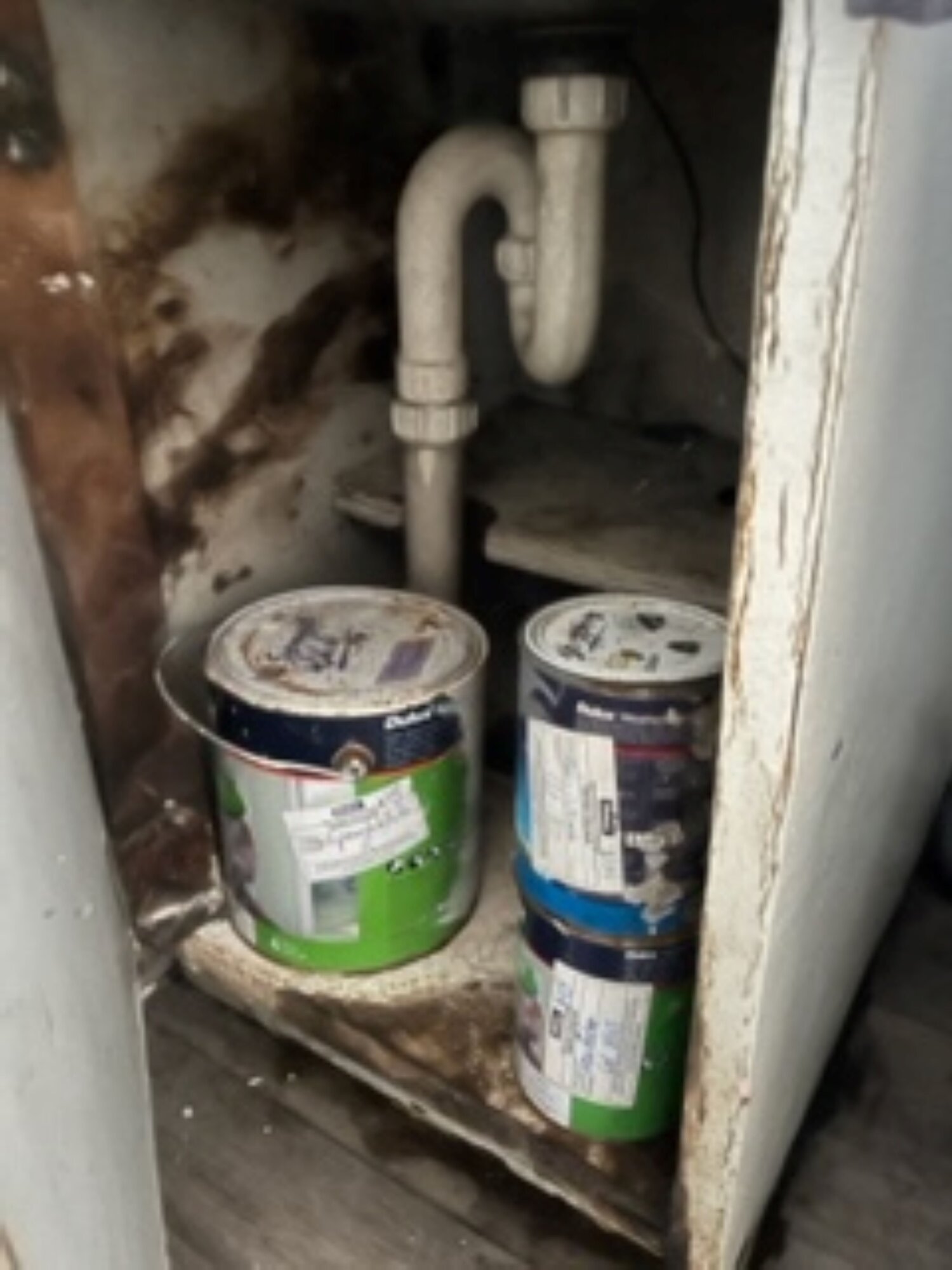
The two-bedroom apartment was found to have significant water damage, mould, broken chattels, draughts and security issues.
The Bhanas have been ordered to pay the tenant $5800 in exemplary damages and have had a six-year restraining order placed on them under the Residential Tenancies Act.
That means the Bhanas cannot commit another unlawful act of a similar kind, and if they breach the restraining order, it can be pursued in the criminal court.
The exemplary damages are made up of $4500 for failure to maintain the premises, $750 for failing to provide a chattels list and $550 for giving false or misleading Healthy Homes information.
Steens said Stephen Bhana was not organised despite the tribunal allowing an earlier adjournment for several weeks’ preparation time.
“Mr Bhana arrived at the hearing with bundles of paperwork, but it soon became apparent that he was not very well organised and was ill-prepared for the hearing.”
Steens said “regretfully” a lot of the hearing time was “consumed” with Stephen Bhana searching for paperwork.
The Bhanas talked over the adjudicator and accused the tenant’s legal representative, lawyer Meredith Herbert from the Rotorua District Community Law Centre, of corruption and overreach. They also accused Steens of bias and argued about points of law.
Steens ordered Stephen Bhana to leave the hearing, and after a short break, allowed him to return.
However, Steens said Stephen Bhana continued to be disruptive.
“At one point, he stood over the tenant’s representative [Herbert] and, pointing his finger at her, and with a raised voice, made serious accusations against her.”
Steens said when he told Bhana his criticisms were unnecessary and unwarranted, “he turned on me”.
“Mr Bhana was disruptive and intimidating. Security was called, and the hearing was brought to an end.”
Steens said it was not the first time there had been heated exchanges with Stephen Bhana in Tenancy Tribunal hearings, but this time he “crossed the line” and his removal was necessary to restore order.
Stephen Bhana applied for compensation for missing or damaged chattels and damage to the premises.
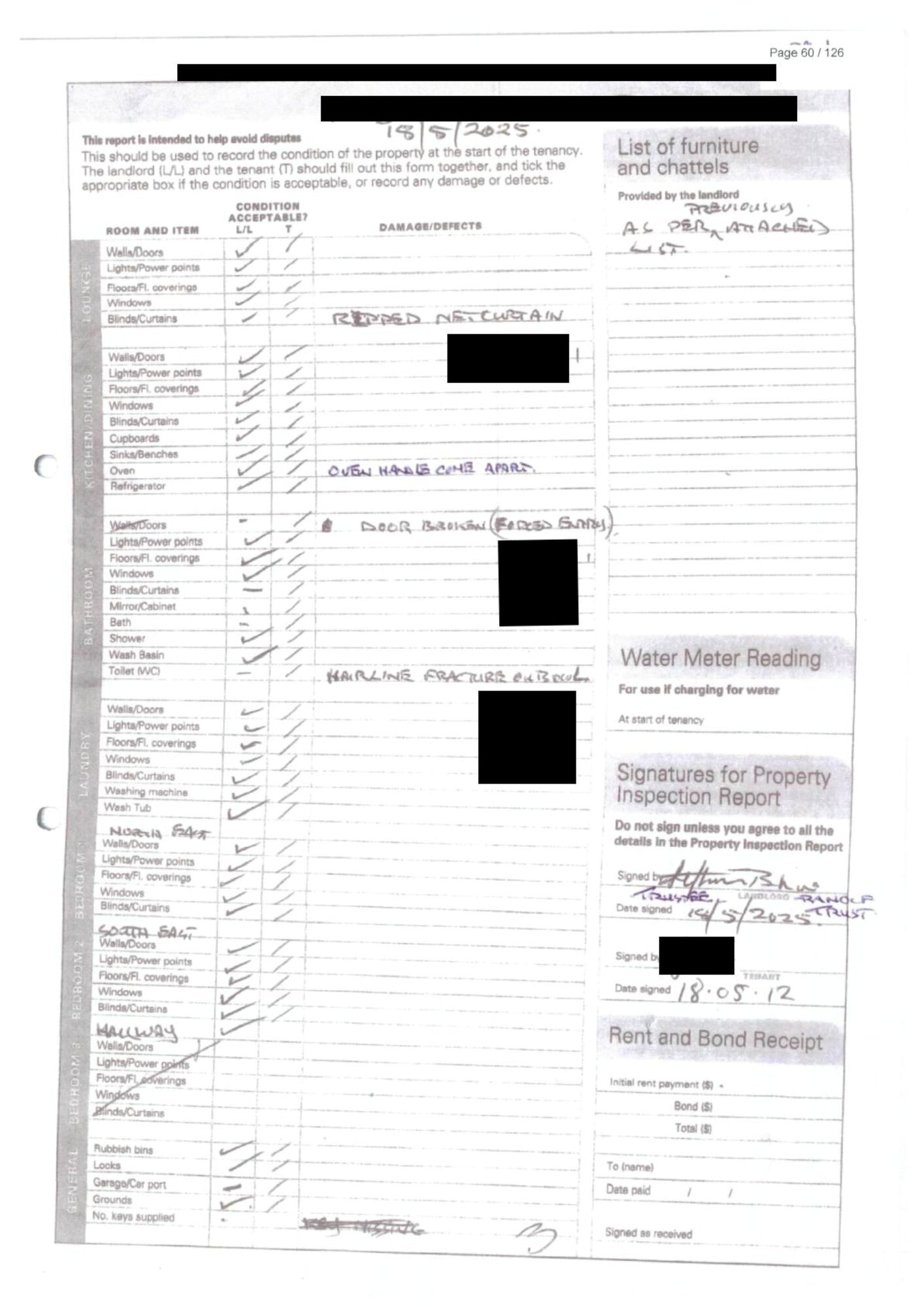
He relied on an inspection report that supposedly showed the tenant had confessed to damaging the oven, toilet and a door.
But Steens said he placed little or no weight on the Bhanas’ evidence, given the forensic report produced by the handwriting expert said the signatures in question were “consistent with the handwriting of the landlord, Stephen Bhana”.
The Bhanas claimed chattels, including a washing machine and fridge freezer, were missing or damaged at the end of the tenancy.
But the tenant produced evidence that he asked Work and Income for help with replacement appliances, given they didn’t work. The tenant said, in evidence, he raised the broken appliances with Stephen Bhana, but was ignored.
The order said the tenant’s evidence of replacing the appliances himself showed there was difficulty with the landlord’s claims and request to recover the cost of removing his own broken fridge.
Given that the Bhanas didn’t produce a chattels list at the start of the tenancy, Steens ruled the tribunal was not satisfied the landlord proved all the items listed in their claim were missing or damaged.
The state of the property
The tenant produced a Healthy Homes report, which summarised the defects.
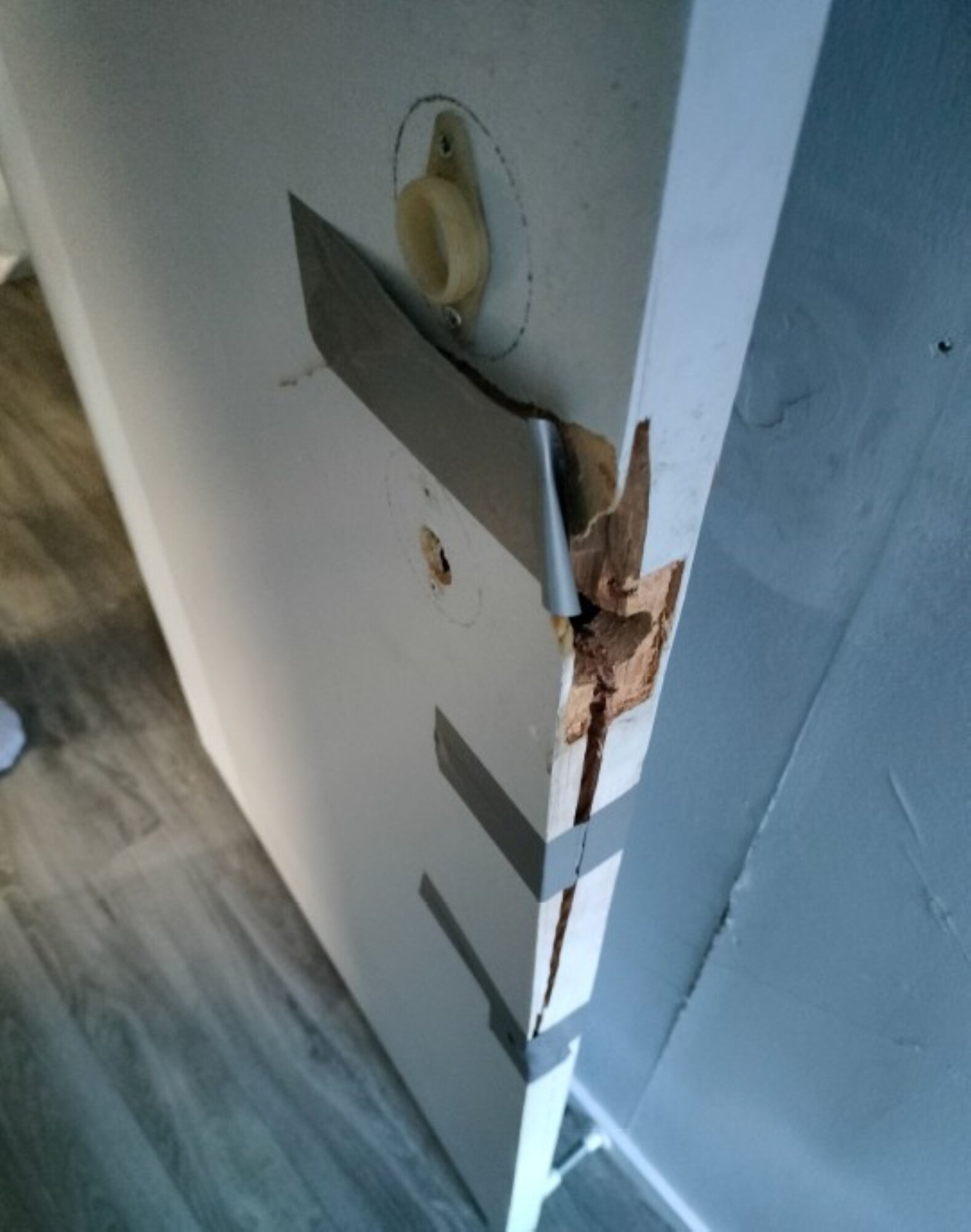
They included water-damaged kitchen and laundry cabinetry, a leaking sink area, a broken back-door lock creating draughts and security issues, mould and water damage in the bathroom, a damaged bathroom door, a non-functioning extractor fan, broken bedroom window, joinery and latch problems and significant dampness and moisture issues.
The tribunal ruled the premises were not maintained in a reasonable state.
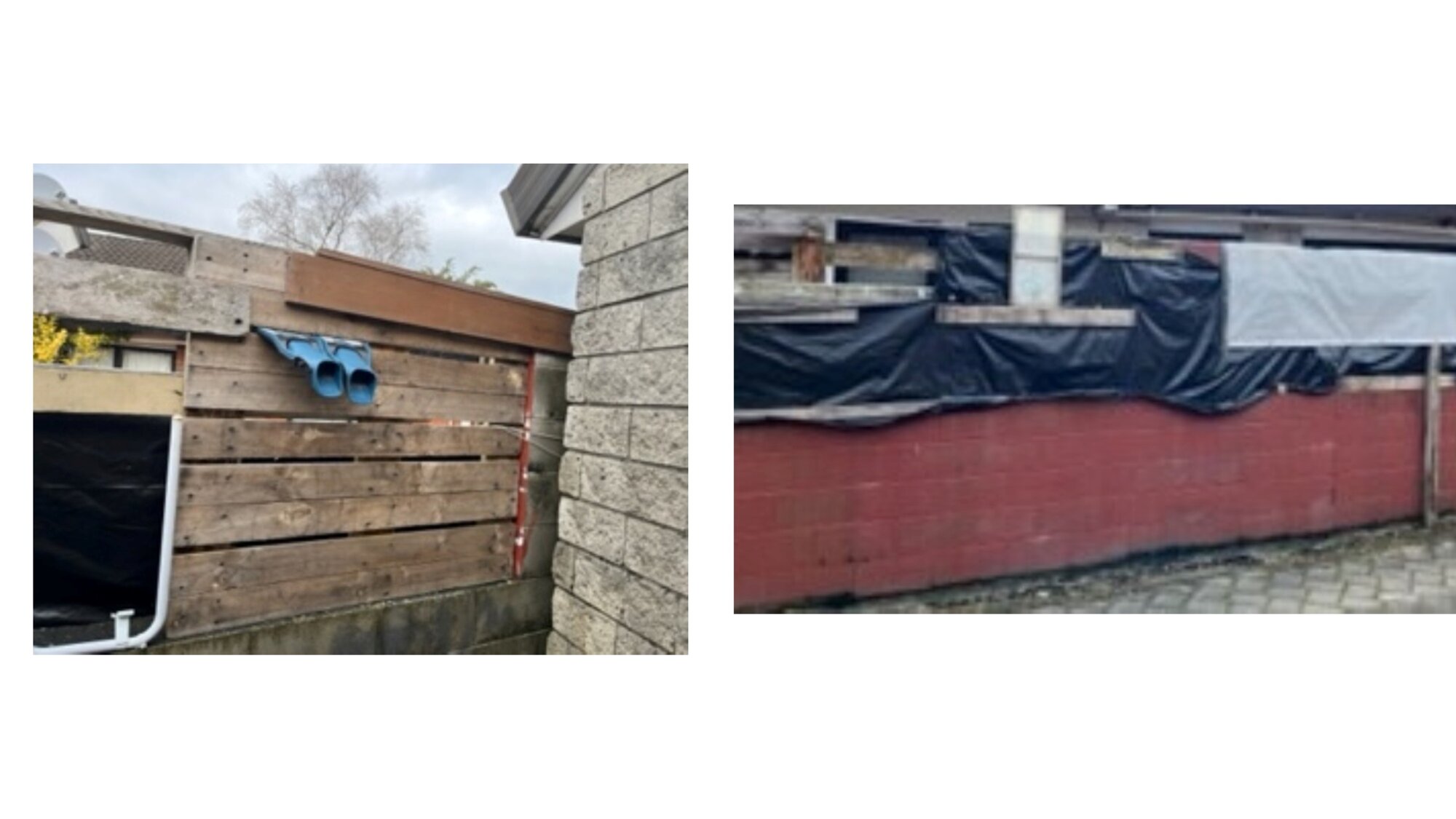
“The defects identified are too numerous, too significant and too persistent to be dismissed as minor inconveniences.”
Steens ruled that many of the defects go directly to “habitability and safety, and basic amenity”.
The Healthy Homes report, provided to the Rotorua Daily Post by the tenant, said the tenant paid $690 a week rent for the property. Market rent for a similar two-bedroom property was $473, the report said.
Breach of Healthy Homes rules
Landlords are required by law to provide signed statements to tenants proving Healthy Homes compliance.
In this case, Steens said the landlord provided a general compliance statement “asserting full Healthy Homes compliance”, which wasn’t the case, given the Healthy Homes report found multiple defects.
Steens ruled that the information provided was, therefore, misleading and inaccurate.
Steens said the property’s condition impacted the tenant.
“The tenant explained how deeply he was affected on an emotional level, living at the premises with all of the issues and how it got him down. He described his feelings of hopelessness, saying: ‘This is it, I have to accept it’.”
In imposing the maximum period of six years for the restraining order, Steens said the Bhanas had been subject to similar failures across multiple tenancies, which demonstrated “broader non-compliance in the landlord’s management of residential tenancies”.
“The pattern matters here ... Future tenants should not be exposed to the same conduct.”
The Rotorua Daily Post has previously reported several tenancy cases involving the Bhanas, where they have been reprimanded for compliance issues under the Residential Tenancies Act.
In one case in 2024, Stephen Bhana was ordered to pay $12,000 in exemplary damages to the Ministry of Business, Innovation and Employment on behalf of two tenancies affected.
In that case, there were several breaches, including rainwater leaking into a bedroom, forcing a mother and her children to sleep on a lounge floor. He tried to fix the leak with a tea towel.
He also charged well above market rent and was ordered to pay $8700.
Kelly Makiha is a senior journalist who has reported for the Rotorua Daily Post for more than 25 years, covering mainly police, court, human interest and social issues.