Waitangi live updates: Christopher Luxon addresses Waitangi protests, David Seymour heckled
Tensions and short-lived protests greeted the leaders of the three Government coalition parties today as they spoke at the marae on the Waitangi Treaty Grounds.
Prime Minister Christopher Luxon was pulled up by media on his reluctance to address issues around the Treaty Principles Bill in his speech or in a press conference afterwards. There was also very little kōrero about his Government’s policies concerning te reo.
But Luxon said there tends to be a focus on the “drama” of Waitangi, and people should “see through the noise” and see that there is a range of views that can be listened to respectfully.
“I came here thinking we’d be challenged and there’d be a range of views - it was pretty much as I expected,” Luxon said.
“At moments there wasn’t full respect.”
The PM also reiterated his view “that despite all the words and rhetoric, outcomes for Māori, and indeed all New Zealanders, went backwards in the past six years.
“We want to partner with Maori, with a range of people, to work on getting things done,” Luxon said.
He talked about being shown water and housing solutions in the Far North that the Government would take heed of, and said his talks with iwi leaders had been “incredibly productive”.
“Every nation’s past is imperfect. But no other country has attempted to right its historical wrongs or dared to undertake such an ambitious national reconciliation project as we have. While the journey continues, all New Zealanders can take pride,” he said.
A foul-mouthed protester was stopped by security after he tried to approach David Seymour during his speech prior to Luxon.
Protesters also tried to drown out the Act leader by singing over him as tensions ran high between members of the Coalition Government and hecklers.
Seymour - the architect of the Treaty Principles Bill which is aimed to redefine the Treaty’s principles - watched on as speakers slammed him over the bill.
STORY CONTINUES AFTER BLOG
Jones: 'Robust response' not unexpected
James Wheeler
New Zealand First's Shane Jones told media that Winston Peters had a long history of coming to Waitangi, and a "robust fiery response" was not unexpected.
"Why would anybody be surprised? I'm not," he said when asked about Peters' combative comments.
"I think both Winston and I know, people have pent up emotions ... people are on edge."
He said there were a lot of views within Ngāpuhi but that they usually came together when there was a common foe, and he hoped that he didn't represent the common foe.
The crowd were "unnecessarily rude" to Act's Nicole McKee, Jones said.
"But hey, young people, I was young once, out in the hot sun you can get carried away."
On being called out by Annette Sykes, he said they had gone to university together and she had made an art form out of calling him out.
Jones also defended Luxon's speech, saying the prime minister was asked to talk about the country in 2040.
"I didn't think it was off colour at all."
He also spoke about Peters' history: "Respect goes two ways and Winston has a long-established history of fighting and delivering [for Māori] ... I think that's what he was responding to."
"There's going to be a lot more political water under this bridge," he said, adding he was going to take up a bigger role in the debate about the Treaty principles.
There were 57 references to treaty principles in legislation, he said.
"Are they all relevant?"
He said nothing the Government was doing was delegitimising "what it means to be Māori".
Opening up a debate on the role of the Waitangi Tribunal and looking at the relevancy of the Treaty principles in a contemporary setting did nothing to imperil what it means to be Māori, he said.
When asked about Luxon reading off cue cards, he said not everyone had the same gifts of oratory.
Helen Clark read off cards, he added, though Sir John Key didn't need to.
However, he added a jibe at Key, saying "then again everything he said was blown away by the wind" and that was why people questioned whether he'd left a legacy.
David Seymour: Small minority booed me
James Wheeler
Act leader David Seymour, speaking after today's speeches, said it was a "small minority" who had booed him, but "overwhelmingly" it was a positive exchange of ideas.
"There were people who said we wanted to take it [Te Tiriti] away, that we wanted to belittle Māori language. That could couldn't be further from the truth," Seymour said.
People will be able to have their say on the Treaty Principles Bill when it is before a select committee, and he suspected that the public might be able to persuade National and NZ First to support the bill further.
"It was pretty fiery and, far out, those guys gave it heaps ... singling me out for special attention and I give as good as I get."
Seymour said Winston Peters "confronted them ... very forcefully", and he joked that Peters' advantage was that he could talk about his [Peters'] own experiences over two centuries.
He said "the great unwashed, as it's been said, the wider New Zealand public" should be able to have a say on what the Treaty principles are, not just the judiciary, the executive, public servants, or the Waitangi Tribunal.
He said there was no sustainable future where some New Zealanders had a certain constitutional status but others did not.
He supported "by Māori for Māori" solutions in health, education, housing and all aspects of life, and it was the previous Government's centralisation policies that were the antithesis of such solutions.
He said it would be much harder to solve the country's infrastructure, health, education and law and order issues if the constitutional issues of the country weren't settled.
'Some progress' but more discussions needed
James Wheeler
Waitangi National Trust Board Chair Pita Tipene told media he thought Winston Peters was "combative" and eventually if you throw an upper cut, "you're going to get one back".
He said he had wanted Luxon to talk more about Te Tiriti and He Whakaputanga - Declaration of Independence - rather than a generic vision of outcomes for all New Zealanders.
"We're talking past each other," he said, adding that he would like Luxon to stop Act's Treaty Principles Bill.
He said the crowd was "unfair" in their treatment of Peters, David Seymour and Act's Nicole McKee.
But he said "there has been some progress today".
"Let's get down and have some earnest discussions."
James Wheeler
Luxon responds to Govt's Waitangi reception
James Wheeler
Asked about one message he had heard today, Luxon said it was wanting to work with the Government in "advancing New Zealand".
"I came here thinking we'd be challenged and there'd be a range of views - it was pretty much as I expected."
"At moments there wasn't full respect," he added.
He said there tended to be a focus on the "drama" of Waitangi, but people should "see through the noise" and see that there is a range of views that can be listened to respectfully.
"We want to partner with Maori, with a range of people, to work on getting things done."
He talked about being shown water and housing solutions in the Far North that the Government would take heed of.
He said his talks with iwi leaders had been "incredibly productive", and "we're getting on with the business".
Luxon said Te Tiriti had caused pain and suffering but New Zealand was a better country because of it.
He repeated that he had "no intention, no commitment" to support the Treaty Principles Bill beyond first reading.
Luxon defends focus of Waitangi speech
James Wheeler
Luxon defended the lack of focus in his speech on Te Tiriti or to directly respond to the challenges that were presented to the Government today, saying again he was responding to the two questions that were meant to be the focus.
"I was tasked with talking about two questions ... and that's what we did."
Asked about Winston Peters' comment to "get an education" to someone in the audience, Luxon said education was a real challenge for the country.
He said how Winston Peters and David Seymour conducted themselves was up to them, but they were aligned around how to improve outcomes for New Zealanders.
Luxon said he wanted Māori to have more control over their own affairs and the Government would support that through localism and devolution.
Te Tiriti played a major part in that, he added.
PM not going to kill Treaty Principles Bill
James Wheeler
Christopher Luxon said he came away "very impressed" that New Zealand could hold an event with a range of people and a range of views in one place.
He said his speech was answering two questions: the vision of New Zealand in 2024, and what needs to happen to make that a reality.
He said he wasn't going to kill the Treaty Principles Bill, saying he had committed to support it to a select committee.
Luxon's media briefing running late
James Wheeler
We have been told the media conference will begin shortly.
Luxon to speak to media soon
James Wheeler
The PM will be fronting media at approximately 2:30pm after his speech at Waitangi. The Herald will have a live stream of this, so if you have been following the blog for a while please refresh the article to watch.
Reaction to Luxon's speech from Herald senior writer Simon Wilson
James Wheeler
Striking that he’s addressed none of the challenges laid down these last days, but attempted to shift the debate onto the core of the Government programme: Economy, education, health. Subtext: Stop worrying about te reo and te tiriti, and get on with building the economy.
Ben Dalton says “We’re not on the same page yet”.
Dalton ended by saying they’ve been busy showing ministers the problems with housing, water etc around the motu.
“Not wasted the time”.
Reaction to Luxon's speech from Herald political reporter Adam Pearse
James Wheeler
Our reporter at Waitangi Adam Pearse:
Luxon’s speech had very little kōrero about his Government’s policies concerning te reo or the Treaty. There was no message regarding the Treaty Principles Bill, nor an explanation of National’s position which is that it would support the bill to select committee, but hadn’t guaranteed support further.
Reaction to Luxon speech: 'We’re not speaking the same language just yet'
James Wheeler
Trust chief executive Ben Dalton is back up at the microphone after the PM's speech.
“In summary, I would say we’ve still got a long way to go,” he said to some laughs.
“We’re not speaking the same language just yet.”
He thanked the Government for showing up and was glad the welcome had ended without violence.
James Wheeler
Luxon's speech finishes
James Wheeler
Christopher Luxon's speech has finished with a waiata, Te Aroha.
Iwi, Crown to talk often “sometimes boisterously…hopefully respectfully”
James Wheeler
Education was a large topic of his speech again after lots of push back from iwi today.
"How can a first-world country have 55% of our kids not attending school regularly and our children not knowing the basics well? It’s a future moral and economic disaster," Luxon said.
"But the most fundamental human aspirations are universal – to watch our whānau and families grow in peace and prosperity, to provide for them, to see them flourish and get ahead, to protect and enjoy the environment, to enjoy the freedom of cultural expression, and to know we have an even better future," Luxon finished with.
Luxon promised to move money from the Government and push it to the frontlines.
He renewed the government’s commitment to provide for all New Zealanders.
Luxon expected iwi and the Crown would talk often “sometimes boisterously…hopefully respectfully”.
Luxon's message to iwi
James Wheeler
He ended with a message to iwi: “I want te ao Māori to thrive.”
“We, like you, believe in localism and devolution.”
Luxon hits out at prior Government
James Wheeler
Luxon has hit out at the previous Labour Government for the high cost of living, saying he hoped to fix that through tax cuts and other measures.
“You earned that money.”
"Over the coming three years, this Government will be relentlessly focused on improving the economy because it underscores the standard of living of every single one of us, every family and hapū, and every community and iwi in this country," Luxon said.
"Under the previous Government, violent crime, retail crime, and youth offending spiralled out of control, causing enormous pain and suffering for too many Kiwis," Luxon said. "That’s not fair and that’s not right."
Christopher Luxon's vision for 2040
James Wheeler
"Imagine a New Zealand where every 5-year-old, walking for the first time through the gates of their kura or school, does so with a similar chance of success when they leave school."
Luxon continued to speak about improvements he wanted to see in law and order, and welfare.
He wanted to allow iwi businesses to invest in their own communities.
"Imagine a New Zealand with less crime and victims of crime where people feel safe in their own homes, businesses or communities,"
Luxon said: "Because at the heart of our society sits the notion that we have both rights and responsibilities to each other and to our country, and people are leading more productive and useful lives."
“I don’t just imagine those things, I’m leading a government that is determined to achieve that vision for 2040.”
Over the next years, the government would be relentlessly focused on improving the economy, Luxon said.
"Imagine a New Zealand where Te Aō Māori is flourishing, where the enduring relationship between the Crown and Iwi improves services and outcomes for tangata whenua, where Treaty settlements have all been completed, and some of New Zealand’s most successful enterprises nationally and internationally are iwi businesses who are using their profits to invest in their people, their rohe, and more business growth," Luxon said.
"Imagine a place where our multi-cultural society is a source of pride for all of us."
James Wheeler
Luxon: No excuses why NZ can’t prosper
James Wheeler
"While the journey continues, all New Zealanders can take pride," Luxon said.
"It has required a generosity of spirit from both Iwi and the Crown to restore mana. "For all the pain that process has sometimes entailed, we are a better, more open-minded and, I think, more tolerant country because of it."
Luxon has reiterated he believed NZ is the best country in the world and has enormous potential.
"We can value our differences, debate them constructively while respecting each other, and still find a pathway to a better future together".
"New Zealand has demonstrated the courage to identify, name and wrestle with its differences and challenges throughout its history."
"And we will, and we must, keep doing that."
There were no excuses NZ couldn’t prosper.
He said by 2040, he hoped NZ had built an economy that made the most of that potential, an improved education system, better infrastructure, more efficient business without too much regulation, and a country that was hustling in the global theatre.
He said by 2040, he wanted New Zealand to be the best place to raise a child.
Luxon's Waitangi speech
James Wheeler
PM Christopher Luxon has given a few sentences of te reo as an introduction to his speech. He is in English now.
"Waitangi Day is an opportunity to reflect on the history of our nation".
He acknowledged the past of people and the country.
He gave a brief history of the signing of the Treaty. He claimed those people at the time were the same as us now, people wanting a prosperous future.
"Our past is also the stories of what happened to our parents, grandparents and great-grandparents, as those have all contributed to where we are today."
Luxon said NZ must aspire to go forward not in two sides but together. That didn’t mean agreeing on everything, he clarified.
The crowd is a lot more calm and respectful as Luxon speaks.
Mere Mangu leads Christopher Luxon by the hand to speak
Vera Alves
A member of the protest group is now addressing the marae. He is the son of Tai Tokerau MP Mariameno Kapa-Kingi, who is from the Māori Party.
He has thanked Ngāpuhi leaders for letting them be there
Mangu has taken Luxon by hand up to the mahau/verandah to the speaking stand.
'Ngāpuhi can never be settled' - former Ngāpuhi chief executive Mere Mangu
Vera Alves
Former Ngāpuhi chief executive Mere Mangu spoke to Sykes’ calling for Luxon to guarantee a settlement, saying she didn’t agree as “Ngāpuhi can never be settled”.
However, she said it was important to have those conversations.
“She is my whanaunga (relation),” Mangu said of McKee, a sign of support for her on a day where she’s been heckled and used to make fun of Seymour.
Mangu said it was only through aroha that unity would be achieved.
Seymour protester intercepted by security
Vera Alves
A foul-mouthed protester has been stopped by security after he tried to approach David Seymour during his speech during today's powhiri.
Swearing, the heckler told Seymour "you don’t know what you’re talking about" before he was intercepted.
Vera Alves
Seymour is now talking about his work with charter schools.
The crowd has clearly had enough of Seymour and has resumed singing.
“You can sing, you’re not going to beat an idea anymore than you’re going to beat an idea with a gun.”
Seymour is continuing to talk through the singing. He said he would continue working to make the country a beautiful country and one where all had equal rights.
"We will fight for the rights of every single person wether they have been here for 1000 years or just got here yesterday," Seymour said.
He has now finished.
“You’ve got to make your mind up, do you want to hear from him or not,” Ben Dalton said.
David Seymour - 'Let’s have respect and let’s have facts'
Vera Alves
Some protesters are singing, trying to drown David Seymour out.
They have now been told to be quiet.
David Seymour said he had heard it was a deficiency for him to rely on a woman to speak - a comment made by Sykes about Act MP Nicole McKee making a speech in te reo.
“Sorry what century is that from?”
He also said he had never said Māori were unwashed, another claim made by Sykes.
“Let’s have respect and let’s have facts.”
“Not even Donald Trump is calling his opponents insects yet,” Seymour said, responding to calls that the Government are spiders and sandflies.
In reference to earlier comments made by Peeni Henare, Seymour said: “You cannot kill off ideas with a gun.”
The tension is high in the crowd, Seymour is certainly not backing down from the opposition he is facing from hecklers.
Seymour said if anybody was up for the fight against excessive taxes and regulation, it was he and Act - linking the mission with self-determination.
Vera Alves
Protestors singing over David Seymour's speech.
Vera Alves
Trust chief executive Ben Dalton is back up to remind the crowd to let Seymour speak and not talk over him.
Ngā Tamatoa allowed onto marae ātea before Winston Peters spoke
Vera Alves
Ngā Tamatoa were let onto marae grounds by Prime Minister before Winston Peters’ speech.
Photo / Ala Vailala
Vera Alves
“No matter what you say, we stand in the light of our ancestors, their wairua (spirit) will keep us going.”
Annette Sykes paid homage to Dalton for allowing the protest movement to be allowed up to the marae, citing how she was often trespassed on the bridge between Paihia and Waitangi.
She warned David Seymour for what he was about to say. “Be careful.”
Deputy Prime Minister Winston Peters leaves the Treaty grounds
Vera Alves
Deputy Prime Minister Winston Peters leaves the Waitangi Treaty Grounds early, making comments on the way about what he considered to be breaches of protocol.
Video / David Fisher
Vera Alves
Annette Sykes is speaking to Seymour directly now, who hasn't spoken yet, asking how he, who didn’t speak te reo, would tinker with the Treaty.
Sykes also looked to make fun of Seymour by saying he had to have a woman - his MP Nicole McKee - make the reo speech.
“You’re not off the hook either Prime Minister. How do you let him do this.”
She accused Luxon of letting the “tail wag the dog”
Sykes was critical of Shane Jones, whom she had a long association with, for trying to limit the Waitangi Tribunal.
“You’ve got to stop it Shane.”
We will stand on the pou of unity and respect and equal rights, if we want them, with Pakeha, she said.
She challenged Luxon to guarantee today that Ngāpuhi would get a settlement, saying the iwi was a fifth of the Māori population.
Lawyer Annette Sykes challenges the Government
Vera Alves
Te Arawa lawyer and activist Annette Sykes said she wanted to challenge the Government to check in their hearts why they were focusing on the Treaty during a time of climate change and disaster.
She claimed Seymour had deemed them “unwashed”.
“I wash every day mate.”
Sykes asked why the Government was not reflecting the kindness that was contained in the Treaty and not guaranteeing the property rights of Māori.
She referenced the amount of money donated to the three coalition parties ahead of the election, millions more than parties on the left.
"Get an education" - Winston Peters tells a person in the crowd
Vera Alves
“If you think separatism and division will take us to 2040, you’ve got another thing coming.”
He said he was raised in a time of respect on the Marae, bemoaning how he wasn’t being shown respect.
“You see, get an education,” he said to one person on the ground.
"I used to go to marae where they had tikanga and respect, not people shouting at the speaker," Peters yelled at his critics.
Winston Peters leaving. Photo / Ala Vailala
It appeared Winston Peters left the marae. He said he had appointments to make.
"So stop the crap, stop the hysteria!" - Winston Peters
Vera Alves
“Whoever said we were getting rid of the Treaty. So stop the crap, stop the hysteria!” Winston Peters declared.
Peters is employing a common strategy of his by asking the crowd where they were at certain points in time when he was around.
People chanting 'e noho' at Peters. Photo / Ala Vailala
Toitū Te Tiriti protesters come onto marae ātea
Vera Alves
A group carrying signs protesting the policies concerning the Treaty have been allowed onto the marae ātea (space in front of meeting house).
It doesn’t appear this was planned as Harawira said: “The Prime Minister said let them through.”
It appears he was speaking to security who weren’t sure whether to allow them through the crowd.
Photo / Denise Piper
“We do want to hear him,” Dalton said, trying to calm the crowd ahead of Seymour’s speech
But Winston has cut the line!
Apparently, he needs to catch a plane so is speaking now.
“This has been one extraordinary day.”
Vera Alves
This type of speech is not unexpected from Hone Harawira, who is known for his colourful language and lack of concern with .
Harawira congratulated Prime Minister Christopher Luxon on not trying to separate himself from his coalition partners and instead coming here to face up.
Russell Norman takes footage of Hone Harawira speaking
Vera Alves
Vera Alves
Harawira spoke of his opposition to the “mining rapists from overseas” - a reference to the Government’s commitment to reopen oil and gas exploration.
“You want to stop te reo? That horse has bolted.”
All the “pakeha greenies” and the iwi won’t let it happen.
Jones earlier today defended the move, saying there were trade-offs that must be made to advance technology and science.
“And the overseas rapists who want to mine our resources?
You gotta know that won’t happen.”
Hone Harawira - 'You buggers want to get rid of it'
Vera Alves
Photo / Ala Vailala
“You buggers want to get rid of it,” Hone Harawira said of the treaty.
David Seymour shook his head.
“You and your sh&@ty arse bill are going down the toilet.”
He said to Seymour.
He accused the Government of stripping Māori of their land and language.
“You’re on your own on this one mate,” Harawira said to Seymour, claiming Shane Jones wouldn’t support Seymour.
The crowd is reacting very positively to Harawira’s confronting language, cheering and clapping at most statements.
Vera Alves
Dalton is laying out the speaking schedule: Harawira is first, then Seymour, then Te Arawa’s Annette Sykes, then Peters and later Luxon.
Photo / Ala Vailala
Waitangi National Trust Board chairman Pita Tipene speaks
Vera Alves
Waitangi National Trust Board chairman Pita Tipene of Ngāti Hine is now speaking.
He is referencing his ancestor Kawiti and his words amid the northern land wars, when he talked of his prophecy about how if sandflies are left to eat away at the founding documents, they will disappear, but that people should look to the high seas, to the future.
Photo / Ala Vailala
Pita Tipene hands the microphone over to Trust chief executive Ben Dalton, who is joined by former politician Hone Harawira.
Photo / Michael Cunningham
Vera Alves
Shane Jones accepted that challenge was normal but he said he was hopeful of finding a solution for each and every whānau.
A group of about 60 are now performing a haka.
Vera Alves
Shane Jones is paying respect to the various iwi, the Kīngitanga and Rātana, acknowledging their journey to Waitangi.
“Remember this, the Treaty of Waitangi is not the Treaty of Wellington, it is not the treaty of kohimarama … it is the treaty of waitangi.”
Photo / Ala Vailala
NZ Firsts's Shane Jones gets up to speak
Vera Alves
A group has gathered onto the marae atea / courtyard as Jones speaks, likely to perform a haka.
Photo / Michael Cunningham
Vera Alves
“What a joke David Seymour, what a joke. You should be ashamed,” one man called out.
One of the matua who stood up during McKee’s speech.
Photo / Ala Vailala
Crowd gets restless as Act MP Nicole McKee speaks
Vera Alves
The crowd is becoming a little bit restless as McKee speaks, in te reo, with some calling out and waving her away.
The slight disruption earlier appears to have unsettled proceedings.
However, McKee has finished and waiata has begun.
“Do your homework,” one woman called out to McKee and the Government. “Tautoko (support),” said another in response.
Photo / Ala Vailala
Act MP Nicole McKee speaks on Governments behalf
Vera Alves
Act MP Nicole McKee is the second speaker on the Government’s behalf, from the mahau (verandah).
“We do not want to trample upon the Treaty however we want to bring everyone as a part of it.”
She’s made the first reference to the Treaty Principles Bill, saying Act wanted to confirm what the principles were “in a humble manner”.
Nicola Willis and Brooke van Velden. Photo / Ala Vailala
Manuhiri sing supporting there first speaker
Vera Alves
The manuhiri tautoko Tama Potaka with the well known song Tutira Mai Nga Iwi.
Photo / Ala Vailala
Vera Alves
Potaka said unity was the main foundation of the Treaty and acknowledged that Māori are “crying out for a debate”.
“There is a knife in my back wherever I go.” (The knife is metaphorical).
Potaka said he wanted to bring forth the “knife of love” so all can enjoy kai together.
Māori Development Minister Tama Potaka speaks
Vera Alves
Tama Potaka, Māori Development Minister, began with acknowledging the mana of Ngāpuhi and honouring the Māori leaders gathered here today.
Potaka said he had come here to clarify talk of spiders and lions from the Beehive - a nod to former Labour MP Kelvin Davis who called the Government on Saturday spiders and a den of lions.
Photo / Ala Vailala
“Is this the face of a lion, or a spider,” he asked with a smile.
He said he was more akin to a feather from the Huia bird.
Vera Alves
Rangatira Hone Sadler encouraged the politicians to engage with the spirit of empowering the hopes and dreams of Māori.
He paid special mention to Peters, Jones and Seymour: “Welcome home.”He said Ngāpuhi wanted to help the Government in its work, acknowledging it was not easy.
“[But in those times], we will not be fearful to speak, we must have discussions together.
“We do not want us to be divided.”He reiterated earlier calls for the Government to honour tino rangatiratanga/self-determination.
Ngāpuhi rangatira - Māori must not react to anger in anger
Vera Alves
Ngāpuhi rangatira Hone Sadler is now speaking, having said over the past two days that Māori must not react to anger in anger, promoting peace but also resilience in the face of perceived threats to the Treaty.
Photo / Ala Vailala
Peeni Henare urges Government to acknowledge the mana of Ngāpuhi
Vera Alves
Photo / Ala Vailala
Ngāti Hine’s Peeni Henare, also a Labour MP and former minister, urged the Government to acknowledge the mana of Ngāpuhi.
“We did not cede our mana to another.”
He paid respect to his Northland whanaunga (relations) Winston Peters and Shane Jones, saying to the latter that his challenge last month at Rātana for all to come to Waitangi to discuss the Treaty had been fulfilled.
Rahui Papa from the Kīngitanga speaks
Vera Alves
Photo / Ala Vailala
Kīngitanga spokesman Rahui Papa, of Tainui, said today was a great day for peace to reign.
To Luxon, Papa said there had been many times Prime Ministers had come to Waitangi to listen to the same kōrero.
The strategy he said was to keep repeating it until it was embedded in the Government’s conscious and subconscious minds.
The kōrero from the national hui would be put to Luxon and his Government.
Papa spoke directly to Luxon and cited Luxon’s previous challenge at the National Iwi Chairs Forum to get Māori kids to school.
Papa said the matter wasn’t just about addressing truancy but looking at the systemic issues that hindered Māori student attendance.
He said we should be making education “sexy” for young people.
Papa repeatedly said it was fantastic to have the Government here to discuss these matters.
To Seymour, he acknowledged his views on the Treaty were his own but joked it was a “bit premature” to start handing out Act Party registration papers to the whanau at the marae.
Vera Alves
Aupito William Sio and far north Mayor Moko Tepania.
Photo / Ala Vailala
Vera Alves
Tangata whenua include Peeni Henare and Rawiri Waititi.
Photo / Ala Vailala
Safety concern as police within metres of politicians
Vera Alves
There is a concern for the safety of the political leaders with more than a dozen police within metres of where they are sitting.
The crowd is boisterous and offers a dignified and unmistakable opposition - but also one that is peaceful.
Photo / Michael Cunningham
On the manuhiri/guest side, Christopher Luxon is seated next to Māori Development Minister Tama Potaka, then NZ First leader Winston Peters, NZF MP Shane Jones, and Act leader David Seymour, followed by various National and Act ministers and MPs.
Julian Wilcox welcomes coalition leaders
Vera Alves
Wilcox welcomed the three coalition leaders individually, saying to Seymour that he was welcome and encouraging him to listen to what Māori ancestors said through the Treaty which was self-determination/tino rangatiratanga.
Photo / Ala Vailala
Kīngi Tūheitia sits with the mana whenua.
Vera Alves
Julian Wilcox speaks to the manuhiri/guests.
Photo / Adam Pearse
Broadcaster Julian Wilcox outlines all iwi present
Vera Alves
Renowned Māori broadcaster Julian Wilcox is outlining all the iwi present to challenge the Government.
Each introduction is welcomed with a brief cheer by the crowd.
The big theme of Julian Wilcox’s welcome: all the iwi have arrived.
And they’ve joined the mana whenua.
“The entire iwi has arrived.”
Photo / Ala Vailala
Custom for females leaders to sit on the marae veranda
Vera Alves
As is custom, female leaders of the three Government parties are sitting on the marae veranda.
They include National deputy leader Nicola Willis, Act deputy leader Brooke van Velden and Act MP Nicole McKee.
Photo / Paridhi Bakshi
Crowd chuckles as Bishop acknowledges David Seymour
Vera Alves
There were a few chuckles from the hundreds crowding the marae when the Bishop acknowledged Seymour as his whanaunga (relation).
It comes after Seymour was given an incredibly confronting challenge by several Ngāpuhi warriors as the Government walked on.
Photo / Michael Cunningham
Christopher Luxon, Winston Peters and David Seymour on the paepae
Vera Alves
Photo / Michael Cunningham
Bishop Te Kitohi Pikaahu begins the kōrero
Vera Alves
Bishop Te Kitohi Pikaahu has begun kōrero from the paepae, saying that aroha and peace should be fundamental aspects of today’s gathering.
Photo / Ala Vailala
Vera Alves
Spectators at the ground have described the challenge as massive.
Ngapuhi formally welcome the Prime Minister and his ministers.
Photo / Paridhi Bakshi
The haka procession on Waitangi is massive
Vera Alves
Many in the large crowd joined in the challenge with conches and trumpets louding resounding above the rousing haka.
The warriors advanced very close, a sustained challenge.
Accepted by David Seymour, who is booed.
Relentless chants to honour the Treaty.
Photo / Adam Pearse
The pōwhiri for Christopher Luxon, David Seymour and Winston Peters
Vera Alves
Video / Denise Piper
Vera Alves
Enormous crowd, many of whom participate in the challenge.
Great blasting of conches and trumpets, haka rolls over them, manuhiri/the guests have moved out from the treaty house onto the lawn in front.
Massive, with the challenge not just from a few, but a large haka ope/group.
Thousands are present for Crown party
Vera Alves
There are thousands of people present for the arrival of the Crown party, pressed close on the path Luxon and others will take to their seats as manuhiri. It seems far more crowded than any recent Waitangi events.
The Crown enters Te Whare Rūnanga on Waitangi
Vera Alves
The Crown has walked onto the Treaty Grounds in front of the marae.
It’s more of an intimate affair than yesterday, with the politicians emerging from beside the Treaty House close to the marae.
Christopher Luxon, David Seymour and Winston Peters about to enter the grounds
Vera Alves
Christopher Luxon alongside David Seymour and Winston Peters under a brilliant blue sky.
Photo / David Fisher
Toitū Te Tiriti activation work by Ōtaki artist The Hori
Vera Alves
An activation of Toitū Te Tiriti - to honour and uphold Te Tiriti o Waitangi - are holding banners representing torn pieces of the treaty for the Government to walk past.
Māori Party co-leader Debbie Ngarewa-Packer said the work has been designed by Ōtaki artist The Hori, with the broken pieces forming the words of Te Tiriti.
Photo / Denise Piper
Shane Jones and Tama Potaka on climate change
Vera Alves
The kōrero then turned to oil and gas exploration, which the Government planned to restart.
Shane Jones, getting more animated, said New Zealand needed rare minerals to advance technology and science - particularly in the fight to prevent climate change - but he was against relying on other countries to import those minerals when they existed in New Zealand.
“If we want to do the climate change journey and we have resources in our own country, we have no option but to agree on what those tradeoffs are.”
He said New Zealand shouldn’t rely on countries that didn’t share its values, like China or Russia.
Jones claimed the only reason the “lights were on” during Christmas was thanks to coal imported from Indonesia.
“If you don’t like it, don’t vote for me.”
His message made some in the crowd uneasy. One called out: “Stop selling us out”.
Potaka copped a bit of flak for saying it wasn’t just Māori who were struggling.
The crowd, which had built to more than 150, moaned and jeered when Potaka said non-Māori were doing it tough also.
Local Darius Davis discusses the amount of sausages cooked so far
Vera Alves
Local Darius Davis is working at the Waitangi grounds feeding the crowds and has cooked over 1000 sausages so far.
Video / Paridhi Bakshi
Large turnout of tangata whenua to meet Prime Minister Christopher Luxon
Vera Alves
There is a huge turnout from tangata whenua/local people preparing to meet Prime Minister Christopher Luxon with easily a thousand people already present and more streaming in.
A tikanga briefing is currently underway with those gathered getting a rundown of the rules governing the welcome.
Photo / David Fisher
'Please read my lips' - Shane Jones at media stand-up
Vera Alves
At an impromptu media stand-up, Shane Jones asked people to “take a bit of steam out of the hangi” when it comes to the bill.
“To the best of my knowledge, it's not going to have enough votes to go any further than where it it,” Jones said.
“Please read my lips that, that's not in our coalition and that is not what we campaigned for.”
Jones said he is unwilling to divert his time from “the practical material advancement challenges facing the average Maori”.
He said without a doubt that David Seymour’s bill would undermine the work done by previous governments for the advancement of Maori.
Jones also said it is a “work in progress” to win over the hearts and minds of those at Waitangi.
Prime Minister Christopher Luxon arrives at Waitangi
Vera Alves
When Prime Minister Christopher Luxon arrived at Waitangi he was asked, "what's the message going to be on the paepae today?" He replied with “looking forward today, going to be a good day, looking forward to it.”
Video / Te Ahikaa Trotman
Act Party leader David Seymour arrives at Waitangi
Vera Alves
Video / Te Ahikaa Trotman
Tāme Iti gets creative with white flags during pōwhiri
Vera Alves
Tāme Iti on the significance of the white flags and mournful sound effects during his group’s pōwhiri: “No real significance. We don’t need to do the same old thing. We need to be creative.”
The group was there to pay tribute to Ngā Tamatoa.
Te Tai Tokerau Border Control to stop any potential mud throwing
Vera Alves
Security run by Te Tai Tokerau Border Control are ensuring only accredited journalists have access to Minister Shane Jones during his media stand-up; thereby stopping any potential mud throwing.
Photo / Denise Piper
Group of 100 people stand vigil under flagpole
Vera Alves
Pre-arrival of the Government, a group of about 100 people standing vigil under the Waitangi flagpole with signs saying 'Toitū Te Tiriti' - honour the Treaty - in the shape of the original Treaty.
Photo / Audrey Young
Vera Alves
Tama Potaka touched on how the Government sought to repeal regulations that hindered business and innovation.
Shane Jones was frank when responding to a question about accusations of conflicts of interest, saying Māori politicians in charge of funding will always face those accusations.
He railed against the “bulls$%t” allegations he’d faced regarding the $3b from the PGF and to what level that funding can be tracked.
“That is the reality of your going to be a change agent and rattle the cage.
“If you want to make a profound impact, you put everything on the line. That’s my approach to politics.”
Vera Alves
Another question said the Government’s policies sent a message to the new generations that they should not speak te reo or that they were not indigenous and it was hurting whānau.
Shane Jones admitted there were “objectionable” views in New Zealand and it was the job of politicians to sift through “obnoxious attitudes” and isolate ideas that enrich everyone.
“When you are agitating, I urge you go beyond the words, what are the results.”
He gave a recent example of how he had changed regulations to allow further harvesting of kina to aid the health of the kaimoana (seafood) stocks and wider coastlines which had been “devastated by kina forests”.
“These are the types of initiatives you can expect us to deliver.”
Vera Alves
Photo / Mark Mitchell
Tama Potaka talked of a significant level of funds within the Ministry of Social Development and encouraged engagement with the ministry and social welfare organisations to help direct funding to improve the “health and well-being of marae”.
Shane Jones said his work to secure $100 million for marae through the Provincial Growth Fund in 2020 would be one of the most profound things he’s done for Māori.
However, he noted that work couldn’t continue as he wasn’t elected following the 2020 election.
“None of you fullas voted for me!“You said don’t vote for that dickhead, don’t vote for that selfish jerk.”
He impressed upon the audience how difficult it was to secure that level of funding from the Government for programmes like upgrading marae.
Vera Alves
The pair are fielding questions in one of the forum tents on the Waitangi Treaty Grounds.
One included fierce challenge over the Government’s actions relating te reo, including cutting the financial incentive given to those in the public service learning te reo if it wasn’t directly related to their job.
Tama Potaka, Māori Development Minister, urged the audience of about 100 to not blindly accept “reports” in the media that the Government is running down the use of te reo.
He said the Government supported its use but reiterated his priority on making sure the public service communicated effectively.
Shane Jones, from Te Tai Tokerau, recalled how his generation, having been born in 1959, were not as committed to te reo as the current generation.
However, he claimed the thousands of people from “war-torn and far-flung places” moving to New Zealand had “no interest” in te reo.
Jones echoed Potaka in calling on people not to let some “wild” comments distract them.
“Please don’t let a few wild remarks during an election campaign diminish our commitment.”
Another question, mainly in te reo, referenced the resources provided to marae.
Shane Jones and Tama Potaka challenged over governments plans
Vera Alves
At the forum tent, Cabinet ministers Shane Jones and Tama Potaka were challenged over the government’s plans seen to impact on Māori.
Jones told a crown of a few hundred to judge the government by what it did rather than the fiery rhetoric of an election campaign.
"I urge you, go beyond the words and go to the results."
Photo / David Fisher
Ngāpuhi man Edward Lakshman writes message on beach
Vera Alves
Edward Lakshman wrote a sign on the beach saying “He Whakaputanga 1835 is the key”.
Lakshman said the 1835 Declaration of Independence is New Zealand’s founding document and everyone should research it.
Photo / Denise Piper
The talks begin for Tāme Iti and hikoi group
Vera Alves
The haukainga kaikorero/Te Whare Rūnanga speaker during the pōwhiri process.
Photo / Michael Cunningham
Photo / Mary Afemata
Tāme Iti’s hikoi heading towards Te Whare Rūnanga
Vera Alves
The hīkoi group make their way onto Te Whare Rūnanga for the pōwhiri.
Video / Jaxin Daniels
STORY CONTINUES
Te Arawa lawyer and activist Annette Sykes has asked how he, who didn’t speak te reo, would tinker with the Treaty. Sykes also looked to make fun of Seymour by saying he had to have a woman - his MP Nicole McKee - make the reo speech.
“You’re not off the hook either Prime Minister. How do you let him do this?”
When it was his turn to speak, Seymour responded with, “Sorry what century is that from?”
“Not even Donald Trump is calling his opponents insects yet,” he added, responding to calls that the Government are spiders and sandflies.
Security stopped a heckler who yelled, “F*** up Seymour, you don’t know what you’re talking about.”
Seymour continued to talk through the singing, saying he would continue working to make the country a beautiful country and one where all had equal rights.
“You can sing, you’re not going to beat an idea anymore than you’re going to beat an idea with a gun,” he said in reference to former minister Peeni Henare’s comments from Saturday.
“We will fight for the rights of every single person whether they have been here for 1000 years or just got here yesterday.”
The crowd was a lot quieter when Prime Minister Christopher Luxon begun his speech around 1.45pm.
Mere Mangu went and fetched Luxon and delivered him hand in hand to the podium on the mahau.
The PM began with a few sentences of te reo as an introduction to his speech and then entered into a brief history of the signing of the Treaty in English.
“Our pasts are also the stories of what happened to our parents, grandparents, and great-grandparents because those events have contributed in some way to who we are today,” Luxon said.
“Part of the history of modern New Zealand has been our struggle to understand the intentions and expectations of those who signed the Treaty, and how we should act as a result. That work is still happening and will keep going.
Much of the PM’s speech looked forward to his “vision for 2040.
“I’ve spoken a lot about education since becoming Leader of the National Party and I will continue to do so, because it is the thing that worries me the most. How can a first-world country have 55 per cent of our kids not attending school regularly and our children not knowing the basics well? It’s a future moral and economic disaster,” Luxon said.
“So, our Government will do its part by backing our Kaupapa Māori education system, reintroducing partnership schools, investing in structured literacy, teaching the basics well, and setting clear targets focussed on attendance and achievement so that our kids can have the futures they all deserve.
“Let me end with a message to iwi: I want Te Aō Māori to thrive. When Māori do well, we all know it, New Zealand does well.”
Waitangi National Trust chief executive Ben Dalton took the podium following Luxon and thanked him for turning up.
“In summary, we still have a long way to go...we’re not speaking the same language yet,” Dalton said to laughter from the crowd.
Luxon’s speech had very little kōrero about his Government’s policies concerning te reo or the Treaty. There was no message regarding the Treaty Principles Bill, nor an explanation of National’s position - that it would support the bill to select committee - but hadn’t guaranteed support further.
‘Stop the crap’
Earlier Deputy Prime Minister Winston Peters asked the crowd: “Whoever said we were getting rid of the treaty?
“So stop the crap, stop the hysteria.
“Some of us have been fighting for land rights for decades and where were you?”
“If you think separatism and division will take us to 2040, you’ve got another thing coming.”
Peters said he was raised in a time of respect on the marae, bemoaning how he wasn’t being shown respect.
”You see, get an education,” he said to one person in the grounds.
“I used to go to marae where they had tikanga and respect, not people shouting at the speaker,” Peters yelled at his critics.
Peters left the Waitangi Treaty Grounds early, making comments on the way about what he considered to be breaches of protocol.
Earlier McKee referenced the bill, saying Act wanted to confirm what the principles were “in a humble manner
“What a joke David Seymour, what a joke. You should be ashamed,” one man called out.
“Do your homework,” one woman called out to McKee and the Government. “Tautoko (support),” said another in response.
Former politician Hone Harawira also spoke saying of the Treaty, “You buggers want to get rid of it.” Seymour shook his head.
“You and your s*****-arse bill are going down the toilet.”
He accused the Government of stripping Māori of their land and language.
”You’re on your own on this one mate,” Harawira said to Seymour, claiming Shane Jones wouldn’t support Seymour.
Harawira spoke of his opposition to the “mining rapists from overseas” - a reference to the Government’s commitment to reopen oil and gas exploration. Jones earlier today defended the move, saying there were tradeoffs that must be made in order to advance technology and science.
“You want to stop te reo? That horse has bolted.
”And the overseas rapists who want to mine our resources? You gotta know that won’t happen.”
All the “Pakeha greenies” and the iwi won’t let it happen, he said.
Earlier NZ First Minister Shane Jones paid respect to the various iwi, the Kīngitanga, and Rātana, acknowledging their journey to Waitangi.
“Remember this, the Treaty of Waitangi is not the Treaty of Wellington, it is not the Treaty of Kohimarama … it is the Treaty of Waitangi.”
He accepted that challenge was normal but he said he was hopeful of finding a solution for each and every whānau.
Treaty approach debated
Te Pāti Māori, Rātana and the Kīngitanga yesterday all rose to the recent challenge laid down by NZ First’s Shane Jones on Sunday by coming to Waitangi marae Te Whare Rūnanga to discuss the Government’s approach to the Treaty of Waitangi.
Members of the three groups, numbering many hundreds, faced an emphatic welcome by Ngāpuhi’s warriors which hundreds came to watch. It completely dwarfed Saturday’s pōwhiri for Labour and the Green Party.
The main kōrero centred around the need for unity, to remain steadfast in the face of challenges to te ao Māori and to continue to oppose some of the new Government’s actions.
However, it was those who weren’t there who got considerable attention, namely Shane Jones and Act leader David Seymour.
At Rātana celebrations last month, Jones - who hails from Te Tai Tokerau (Northland) - responded to those criticising the Government’s policies regarding New Zealand’s founding document by stating talk of the Treaty was most appropriate at its birthplace of Waitangi and implored those in the crowd to attend the February 6 celebrations.
Te Taepa Kameta, a representative of the Rātana leader, gave the large crowd a brief laugh by poking fun at Jones and NZ First leader Winston Peters, who would be at Waitangi tomorrow alongside the rest of the Government.
Kameta cheekily asked: “Shane, where are you?”
Many laughed and some clapped. “I am at your house and you are not here.”
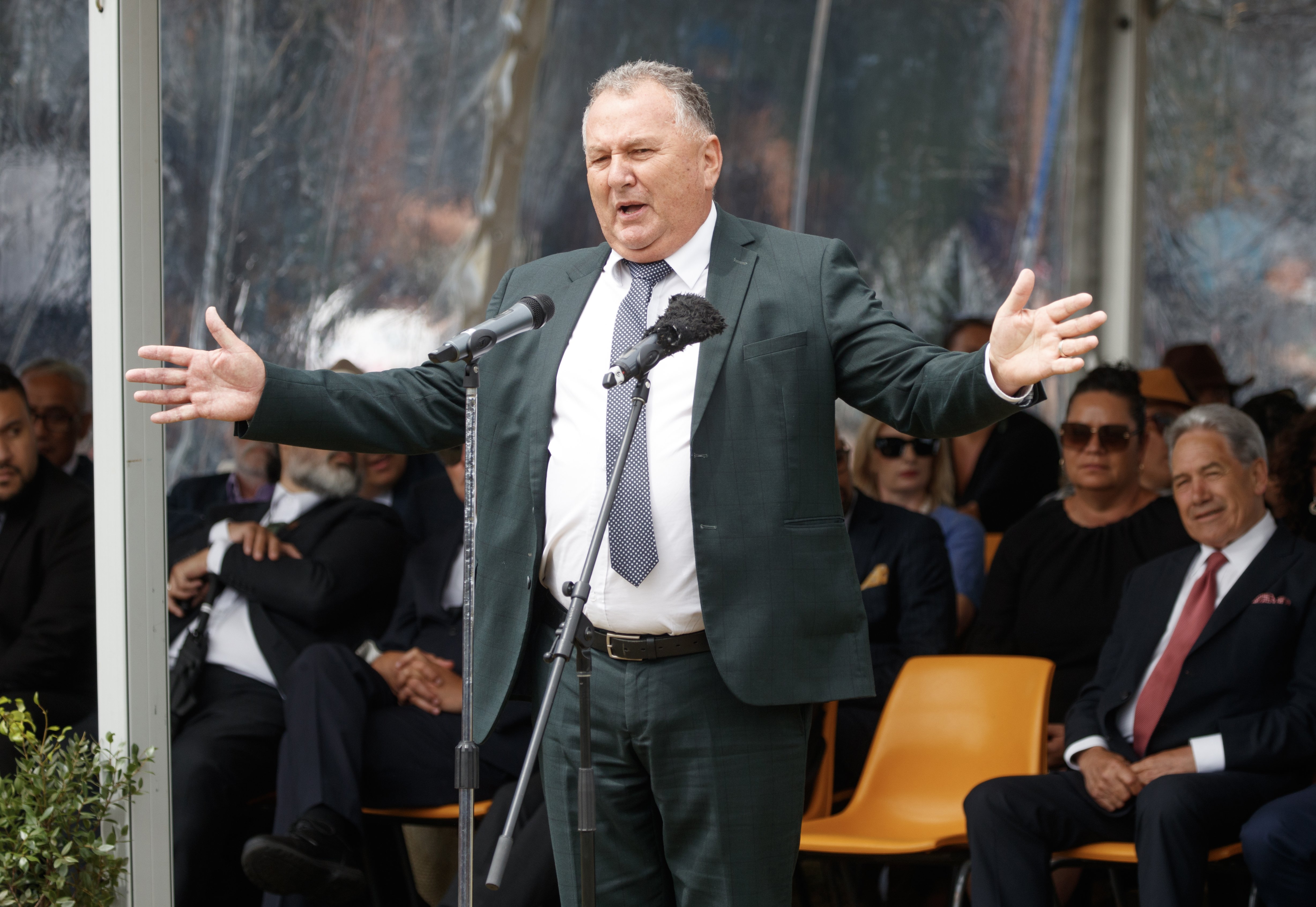
It was clear the comment was meant partially in jest as Kameta added: “Shane and Winston, I still love you.”
Waititi echoed this when he proclaimed his party had answered Jones’ call.
The other absentee who was regularly referenced was Seymour.
Waititi appealed to the leader of Seymour’s hapū Kipa Munro to “fix” his Ngāti Rēhia whanaunga (relative).
“Kipa, I will leave you to fix your person.
“Outside the House you may fix your person, but in the House, leave him for me and Peeni [Henare, Labour MP] to fix him,” he said to laughs.
However, like many other speakers, he did acknowledge Seymour’s Māori whakapapa (ancestry) and noted how it was Seymour who had driven this most recent unity in Māoridom.
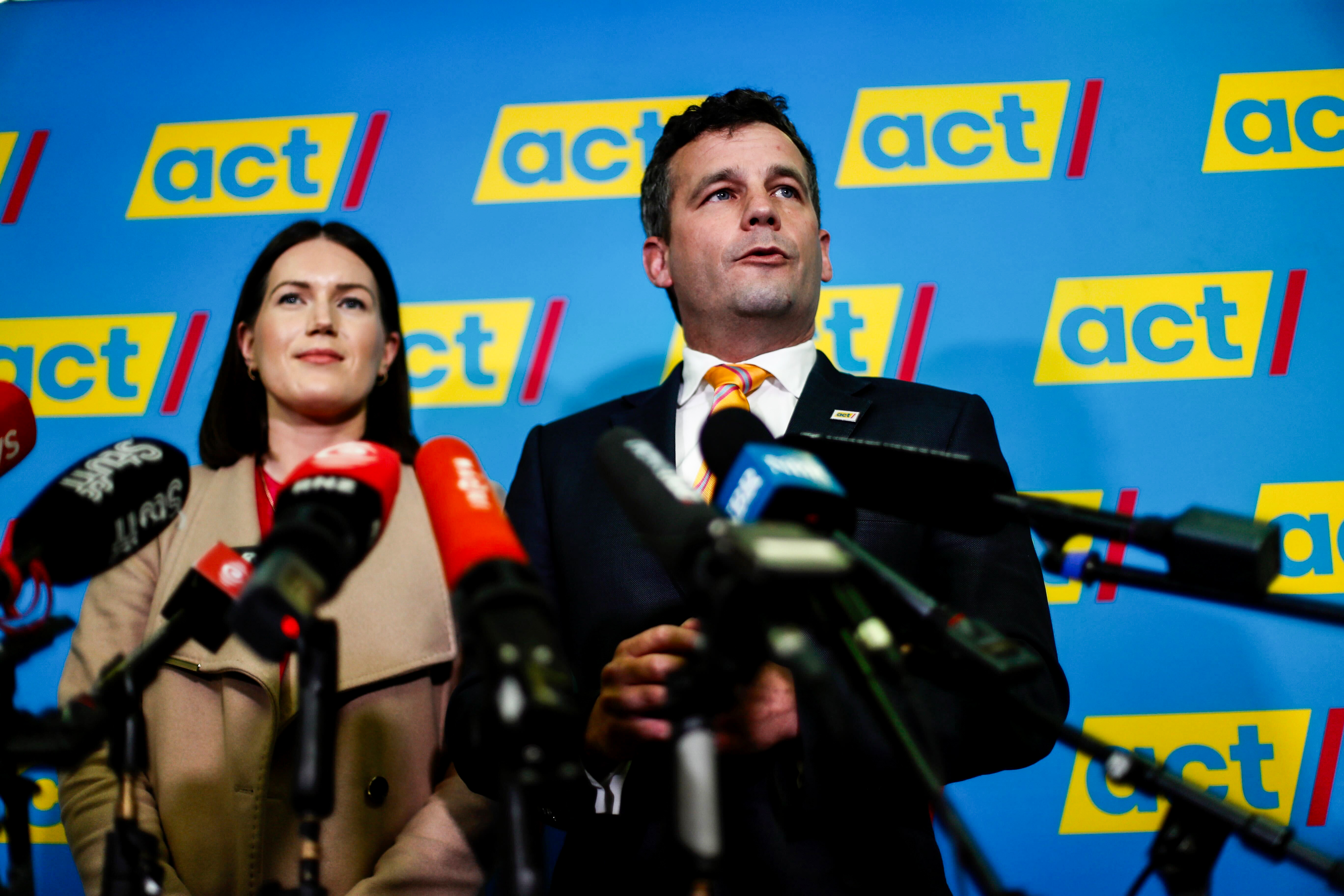
Waititi’s primary message to Ngāpuhi was to advocate for Māori self-governance.
“It is for us to govern ourselves,” Waititi declared.
“What is the greatest gift we can give to our grandchildren, it is unity, therefore we must govern ourselves.”
“Let’s stand up our Māori Parliament.”
During the pōwhiri which lasted almost three hours, representatives of various iwi from across the country had their time to speak on the ātea (marae courtyard) with many reflecting calls for unity and strength in the face of perceived threats to the Treaty.
Ngāti Kahungunu leader Bayden Barber also spoke of the importance of discussing the Treaty at Waitangi.
“We have come here to fight, we have come here to share thoughts and strategies with you Ngāpuhi on how we move forward.
“Unite, unite, for we must be united. Remain steadfast te iwi Māori.”
He said if the Government thought it could push Māori down, it had another thing coming.
Many responded to the kōrero from Ngāpuhi rangatira Hone Sadler who said the Government’s arrival tomorrow should be met with peace paired with resilience.
“Don’t fight the wrongs with the wrongs,” he said.
“Even though we are upset and angry, never meet anger with anger.
“Let us remain peaceful, humble but don’t let us drop our guard.”
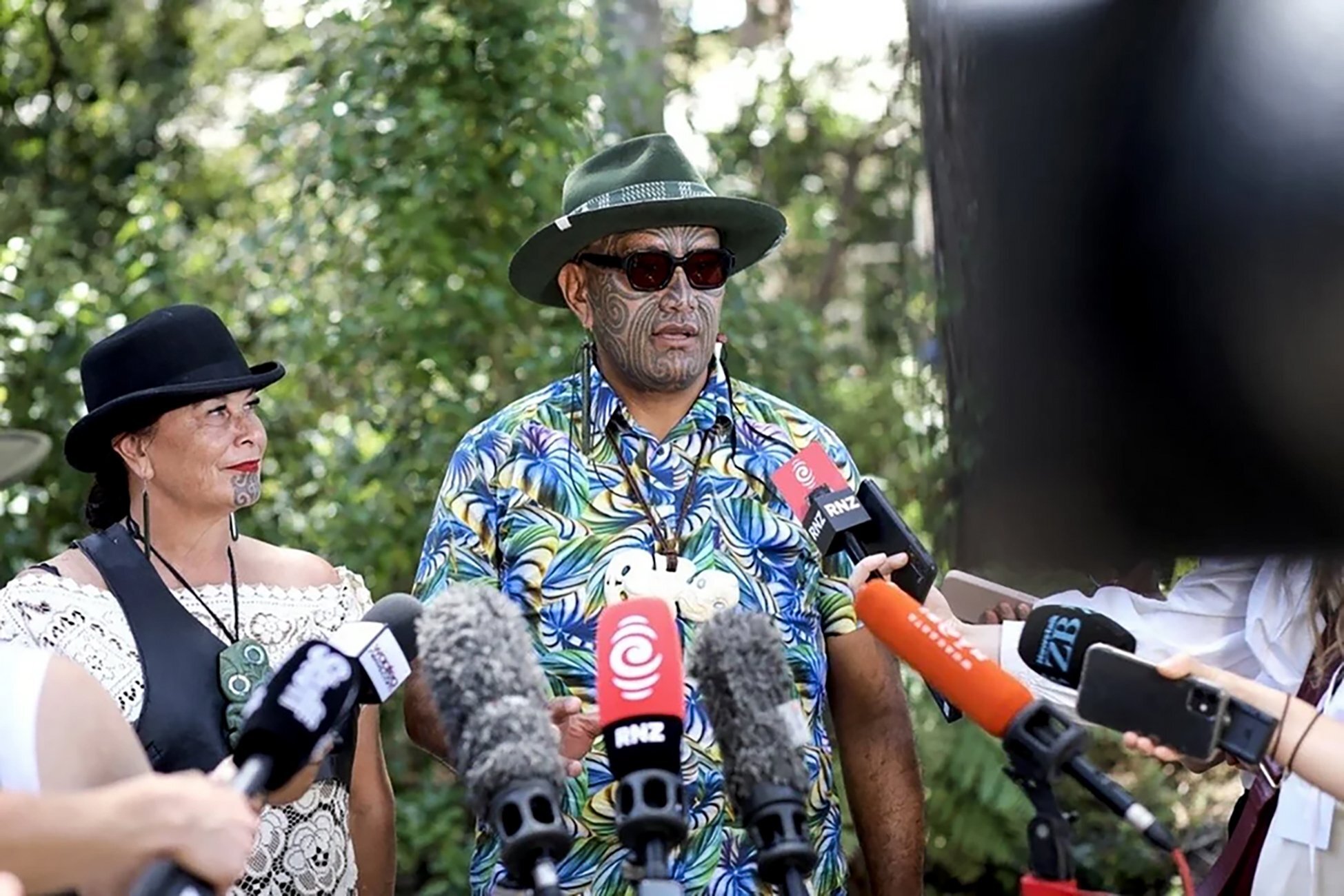
Earlier, co-leader Debbie Ngarewa-Packer arrived with a strong message for the Government calling it a “three-headed taniwha”.
Asked why the party had not joined the other members of the Opposition in the official pōwhiri yesterday, Ngarewa-Packer said her party was fundamentally a part of Mana Motuhake - the united movement of Māori.
“We are not a subset of Labour,” she added.
Waititi added: “Māori have been in opposition since 1840. Not so long ago Labour didn’t want us, we were the party no one wants, so we’re standing with Mana Motuhake so we can just be us.”
Ngarewa-Packer said the key for Te Pāti Māori was that the party “must stand where the call for unity and righteous anger belongs”.
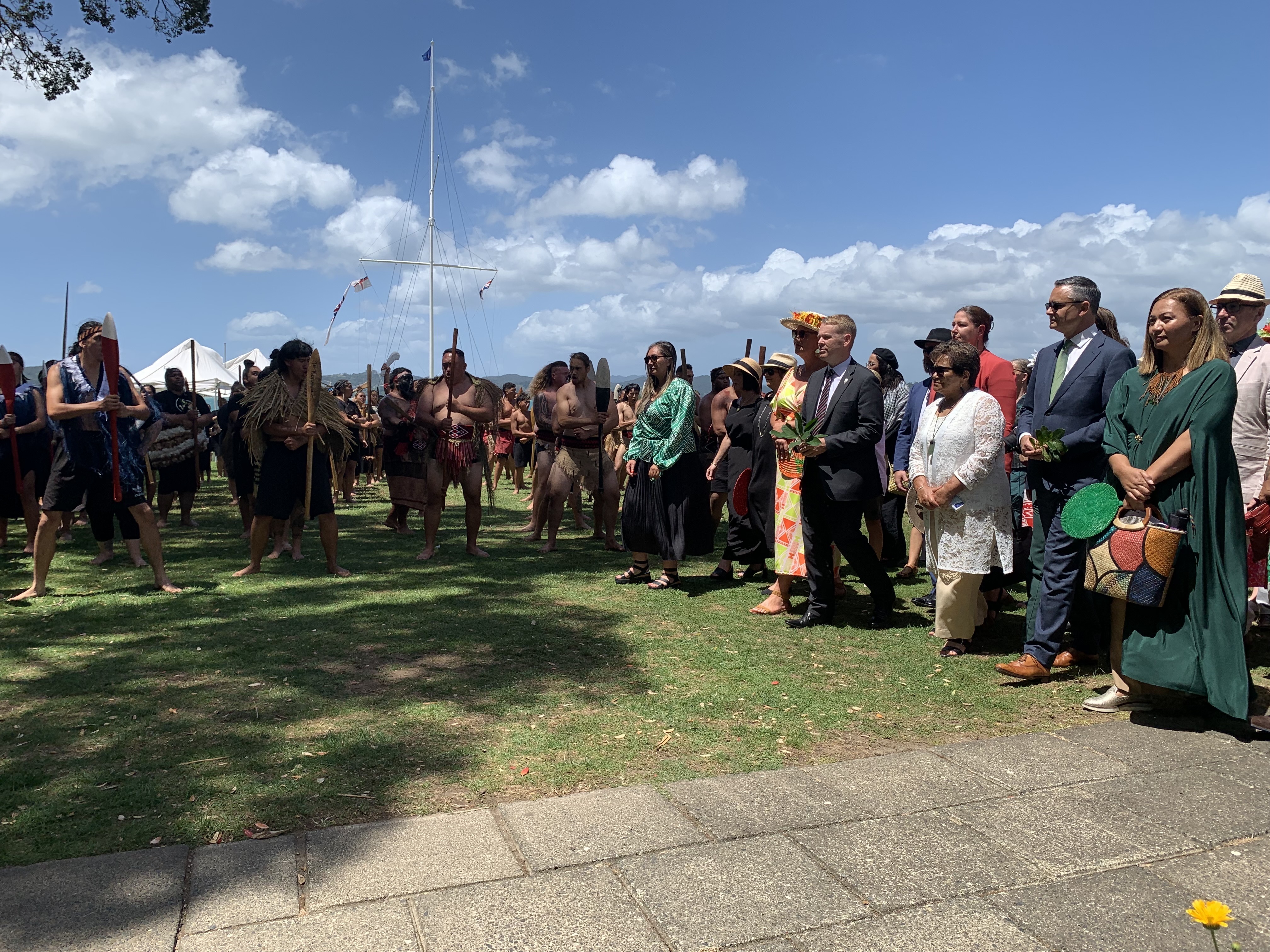
The party’s absence from yesterday’s welcome for the Labour and the Greens was referenced by several speakers including Kelvin Davis who said he was disappointed the full Opposition hadn’t joined together.
Te Pāti Māori argued it was distinct from other political parties and felt it more appropriate to walk onto Te Whare Rūnanga alongside the Māori King, which they did at Rātana last month.
Sunday’s crowd was significantly larger to the one that witnessed Labour leader Chris Hipkins pledge to support Ngāpuhi in its opposition to the Government’s agenda on Māori issues.
Hipkins and his MPs made the commitment alongside warnings of “spiders” and a “den of lions” approaching - a reference to the Government’s scheduled arrival at the marae on Monday.
Adam Pearse is a political reporter in the NZ Herald Press Gallery team, based at Parliament. He has worked for NZME since 2018, covering sport and health for the Northern Advocate in Whangārei before moving to the NZ Herald in Auckland, covering Covid-19 and crime.