Treaty Principles Bill: Parliament votes down controversial policy at second reading
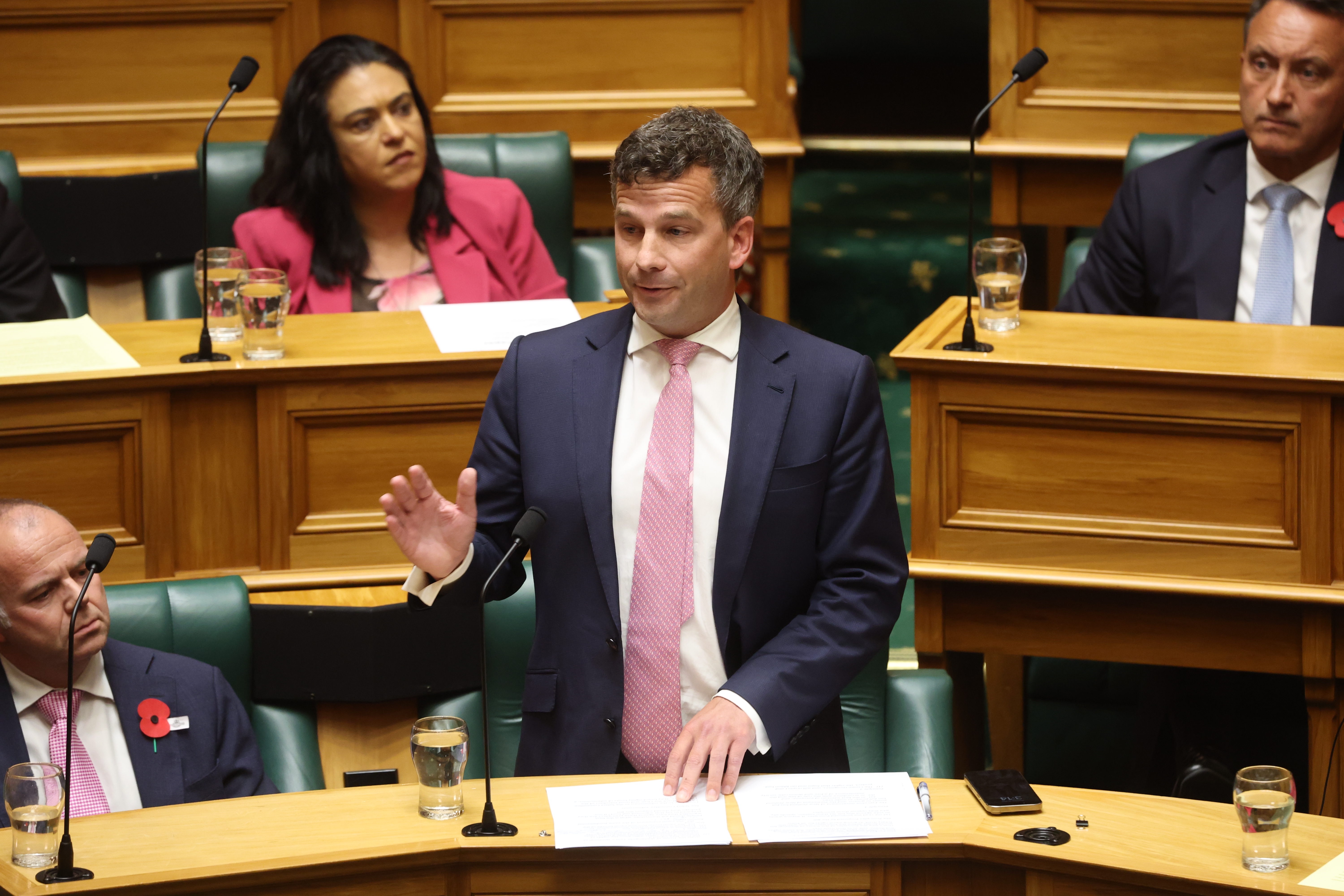
Act leader David Seymour has vowed to reignite the issues in his controversial Treaty Principles Bill, saying his party would reveal next steps before the 2026 election.
“We will never give up on equal rights,” Seymour told reporters after the bill was voted down at its second reading.
“It hasn’t failed ... what it has done is put an uneasy conversation on the table,” Seymour said.
Seymour told Newstalk ZB that a referendum on the topic could be possible.
“Sooner or later the logic of this bill is going to prevail. New Zealanders are equal, the Treaty does give us the provision to be equal.”
“It’s just been hijacked by a whole lot of people, mainly in the courts, the Waitangi Tribunal and the bureaucracy,” he said.
Article continues below liveblog
David Seymour says referendum possible
Scott Palmer
Act Party leader David Seymour told Newstalk ZB's Ryan Bridge none of the speakers talked about any of the three aspects of the Treaty Principles Bill or why they disagreed with it.
"That depresses me somewhat for the future of our country if this is our Parliament," he said.
Seymour said Act's commitment to all Kiwis to equality before the law stays.
"As the election approaches, we will lay out how we will do that tactically.
"We've got a country where a large minority of people genuinely believe we should be ranked by the arrival time of our ancestors."
Seymour said a referendum on the topic could be possible.
"Sooner or later the logic of this bill is going to prevail. New Zealanders are equal, the Treaty does give us the provision to be equal.
"It's just been hijacked by a whole lot of people, mainly in the courts, the Waitangi Tribunal and the bureaucracy."
Seymour speaks after bill's defeat
Scott Palmer
He says he is confident this bill or something like it will inevitably prevail.
Seymour says none of the speakers in the House put up a better argument than Act's argument for the bill. He said there had been an "allergic reaction" to the bill.
He said across the other speakers, no one could point out what was wrong with his bill.
"We will never give up on equal rights," he said, adding the party's "next steps on this journey" would be revealed before the next election.
"Put the same thing right back is a possibility," he said.
"People probably want to focus on a few other things but they will come back to this issue."
Act says Parliament 'chose to look the other way'
Scott Palmer
The Act Party has sent an email to supporters saying it was the “only” party to support equal rights today.
“While New Zealanders have told us loud and clear they are ready to have a mature debate, it seems most of their representatives are not.
“Parliament had an opportunity to push back against the courts and the bureaucracy, and define what the Treaty means itself, but chose to look the other way.“
Waititi speaks after bill defeated
Scott Palmer
"We must be vigilant, this is one battle one. We have to be vigilant about other harmful policies coming out of this Government," Waititi said.
Green Party proud to have voted against bill
Scott Palmer
The Green Party says it is proud to have voted down the coalition Government’s Treaty Principles Bill, an "archaic piece of legislation that sought to attack the nation’s founding agreement".
“The Treaty Principles Bill is dead. Our movement for Te Tiriti o Waitangi justice lives on,” says Green Party co-leader Marama Davidson.
“Instead of dividing and conquering, this bill has backfired and united communities across the motu in solidarity for our founding agreement and what it represents."
Scott Palmer
There is applause in the gallery and in the House.
The Act Party MPs quickly leave the House.
A waiata is now happening in the House alongside the gallery. The Speaker permitted the waiata after the vote.
Treaty Principles Bill voted down
Scott Palmer
The bill has now been voted down with National, Labour, NZ First, Greens and Te Pāti Māori voting against it.
Act voted for the bill.
Scott Palmer
The vote is now happening. A party vote has been called by the Speaker.
Scott Palmer
Willie Jackson has returned to the House. It is not clear whether this is permitted.
National MP Carl Bates gives final speech
Scott Palmer
National MP Carl Bates, giving the final speech on the bill, reiterated comments from his party's other MPs that the bill wouldn't help the country.
He then repeated how National supported equal citizenship.
'The bill is a lie' – Labour MP
Scott Palmer
"The bill is a lie because it says one thing, but the truth is another," Webb says in response to calls from Seymour to address the legislation specifically.
He says the bill's principles didn't reflect the principles of the treaty.
Webb says the 300,000 submitters have stood up and spoke up, but "over there, they stood by and did nothing".
He says the Government presided over legislation that has been "divisive".
Webb says he is proud to stand with his colleagues in the Opposition to oppose a bill based on ideas that are "fundamentally racist".
Scott Palmer
It was "humbling" to read the submissions, Webb says.
There was a diversity of thought, Webb says.
He acknowledges the contributions of new migrants and those who spoke about their whakapapa.
Dr Duncan Webb speaks about 'divisive' bill
Scott Palmer
Labour's Dr Duncan Webb is speaking about what he calls a "divisive" bill.
He says National MP and Justice Select Committee chair James Meager spent his contribution "whining".
Webb takes aim at some of the processes around the select committee.
Webb says it was "disrespectful" for the Prime Minister to allow the legislation to come to the House as it wasted Parliament's time.
National MP Scott Simpson says bill 'too simplistic'
Scott Palmer
National MP Scott Simpson said in his view, New Zealand had grappled with the Treaty and its application for decades.
"It's been a long and continuous, ongoing debate."
"It's just not realistic to suggest nearly two hundred years of debate, discussion, protest sometimes ... should be settled just with the stroke of one legislative pen.
"It's too blunt, too simplistic and risks stoking grievances ... I don't think that's good for our nation."
Labour MP says bill has wasted resources
Scott Palmer
The Labour MP says that people from around the world have stood united against the bill.
She says it has wasted resources in Parliament.
Noting the 300,000 submissions, she says people "organised and marched".
Some "changed their worldview, adding momentum".
Tangaere-Manuel says we do not need to change the Treaty, we need to change this Government. She wants the election to be a referendum on the Government.
Cushla Tangaere-Manuel now speaking
Scott Palmer
Cushla Tangaere-Manuel from the Labour Party is now speaking.
She says the speeches from the Government side are "very hard to swallow" as it was the National-led Government that allowed "this ugly monster" to see the light of day.
National MP Rima Nakhle up next
Scott Palmer
National MP Rima Nakhle thanked the select committee members for their work considering the bill, saying it was "often very testing and emotionally taxing".
She argued New Zealand was a more tolerant country under the Treaty of Waitangi."
"Today we are voting to ensure [the bill] will go no further."
Scott Palmer
When Willie Jackson made that comment, David Seymour was squatting down speaking to Erica Stanford.
Rawiri Waititi protested that Jackson's comment about Seymour being a "liar" was not a reflection on Seymour's character, but the fact he was on the ground.
Jackson ordered to leave House
Scott Palmer
When it comes to the Treaty of Waitangi, you will always be a liar, Jackson says.
The Speaker calls for him to apologise, but Jackson says that would be an insult to the select committee submitters.
The Speaker says he must leave the House.
Jackson says Luxon didn't stand up to Seymour
Scott Palmer
Jackson says Christopher Luxon wanted to be Prime Minister at any cost so he agreed to Seymour's legislation. He says Luxon didn't stand up to Seymour.
Jackson calls Act supporters 'nut jobs'
Scott Palmer
Jackson asks why Act doesn't respect the treaty jurisprudence and legal opinions that have formed over recent decades.
He calls Act supporters "nut jobs".
As Jackson speaks, there is an exchange of words between MPs from Act and Te Pati Māori.
The two parties are sitting on opposite sides of a corridor.
Labour MP Willie Jackson is now speaking
Scott Palmer
Willie Jackson thanks Meager, and even though he didn't agree with his speech, believes he will be the Prime Minister "when the coup takes place".
Jackson refers to the legislation as a "political stunt" and those on the Government side should feel ashamed.
He believes the Treaty is not about racial privilege or superiority, it is about the equal rights Māori have with the Crown.
Jackson says Māori had rights in place before the Treaty was signed. He suggests Act believes property rights are only important if you are Pākehā.
Jackson says this is an "outright assault on our history and our rights".
He also takes issue with Seymour comparing this legislation to the End of Life legislation.
Seymour has done so previously in highlighting that both pieces of legislation are high-profile.
Meager apologises to submitters, criticises MPs' respect
Scott Palmer
Meager decried the disclosure of incomplete information about the select committee process, another nod to Webb.
He traversed the voting history of the Opposition while the bill was at select committee, provoking heckling from Labour MPs in particular.
"I have tried my best to set the record straight."
He finished by expressing his gratitude to those members of the public who made submissions.
Meager claimed some submitters were not shown due respect by MPs and apologised to them.
Scott Palmer
"If you are wanting to make a submission to the Parliament ... do not rely on third-party activists," Meager said.
Many political parties and groups promoted submission templates meaning much of the submissions were the same.
He warned it would allow those third-party organisations to harvest people's data.
Meager disappointed at 'misinformation'
Scott Palmer
Meager said he had been "very disappointed" by "misinformation" that had been made public about the level of access MPs have had to the submissions, a nod to comments made by select committee member and Labour MP Duncan Webb.
On the lessons learned by Parliament through the process, Meager pointed to how the Parliament website had crashed during the immense number of submissions. He was assured that no foreign interference was suspected.
Questions remained about how hard it was to make a submission, Meager said, citing a number of emails he'd received on the topic.
James Meager stands to speak
Scott Palmer
National minister James Meager, who chaired the justice select committee that considered the bill and its submissions, rose for his call and acknowledged the work of the Clerk in processing more than 300,000 public submissions that included quite challenging views.
Meager is discussing the process behind the bill's time with the select committee.
He assured the public that all submissions were read.
Paul attacks Government over Bill
Scott Palmer
"That little man does not represent your views," Paul says pointing across to the Act Party.
The fight is not over despite their crocodile tears, Paul says.
She say's NZ First's desire to remove treaty principles is "disgraceful".
There is a "coordinated plan" to undermine indigenous people, Paul says.
"They may have deep pockets, but we have people power."
Green MP Tamatha Paul up next
Scott Palmer
Green MP Tamatha Paul is now speaking in the House. She says it has been an "emotional rollercoaster" considering this legislation.
The whole process has been difficult as at every junction, she says, and those supporting the legislation have been given an opportunity to change their mind, but those opportunities were turned down.
This was an example of "Parliament sticking the knife in again and again and again," Paul adds.
She acknowledges her Labour and Te Pāti Māori committee colleagues for their support in "hard, methodical, genuine mahi", Paul says.
Scott Palmer
She said hundreds of books could be written on the reasons why people opposed the bill, saying it was evident in the strong protest movement that rose up against the bill.
Maipi-Clarke said the job of politicians was to implement policies that would improve outcomes for Māori in education, the environment and state care.
"Brick-by-brick, we will move from surviving to thriving."
Hana-Rāwhiti Maipi-Clarke begins with a waiata
Scott Palmer
Te Pāti Māori MP Hana-Rawhiti Maipi Clarke began her party's first speech on the bill with a waiata before continuing in te reo.
She said her speech was the most "daunting" she'd had to write, given how many hundreds of thousands of public submissions.
"We're not going to talk about the Treaty Principles Bill ... the whole world knows our view of it," she said, a nod to the millions who have viewed her ripping up the bill during its first reading.
"This bill hasn't been stopped, it's been absolutely annihilated."
NZ First's position there are no Treaty principles
Scott Palmer
In the National-NZ First coalition agreement, there is a promise to remove references to the principles of the treaty from legislation and in some cases replace them with specific provisions.
Costello says it is her party's position there are no principles.
It is time to "put this bill to rest" as there is work to be done and NZ First is up for the challenges ahead, Costello says.
Scott Palmer
There is an obligation for the House not to be censored and there should be nothing feared about challenging ideas or having different positions, Costello says.
New Zealand First may not support this bill being brought to this House, but we support this democracy and we know we can challenge the status quo.
Defining principles is not a debate that takes us forward or brings us together, Costello says.
Scott Palmer
She says point-scoring is distracting from the real work Parliament needs to do.
There have been compromises in the coalition agreements, Costello says.
We can agree to disagree on many aspects.
Even if we agreed, and we don't, and even if it passed, and it won't, a future Government could change the principles, Costello says.
Amid heckling of Costello, the Speaker says the rest of the speech will be heard in silence.
Casey Costello speaking next
Scott Palmer
New Zealand First MP Casey Costello is now speaking on the legislation.
She acknowledges Winston Peters wants to be here, but he is boarding a plane.
Despite what has been suggested by the legislation, it would have taken us back into the courts, the last thing this country would need, Costello says.
National committed to Treaty settlements
Scott Palmer
He referenced another Government policy to review Treaty references in legislation.
Goldsmith restated National's commitment to honouring and progressing Treaty settlements, acknowledging settlements rarely achieved "perfection".
He argued what most Māori people desired aligned with what New Zealanders wanted, such as good healthcare and education.
He pointed to how Māori communities often had worst social outcomes, including a lower life expectancy.
Luxon posts to X
Scott Palmer
As speeches continue on the Treaty Principles Bill, the Prime Minister, whose absence has been noted, has posted on X (formerly Twitter) that he has just spoken with the Malaysian Prime Minister about trade.
Goldsmith says people can't lose sight of modern rights
Scott Palmer
In honouring the Treaty, people shouldn't lose sight of modern rights including having an "equal say" on what happens in the world around them.
He noted a "tension" between that value and the process of honouring the Treaty commitments.
"This is a tension we can't just gloss over and ignore."
"It has to be worked through issue by issue," Goldsmith said when discussing how navigating the Treaty's modern application was complex.
Scott Palmer
Goldsmith said he wouldn't take lectures from Labour about division, recalling how the previous Labour Government advanced co-governance principles.
He clarified National didn't oppose healthy discussions about the Treaty and its place in New Zealand.
Goldsmith is being strongly heckled by opposing MPs during his speech.
"Educate yourself first," Te Pāti Māori co-leader Rawiri Waititi called out to Goldsmith.
Paul Goldsmith says National does not support Bill
Scott Palmer
National Party Justice Minister Paul Goldsmith said his party had consistently said it did not support the Treaty Principles Bill."
"National believes in equal citizenship ... it was clear from the beginning that the Treaty Principles Bill would not pass."
He said the bill had provided a convenient vehicle for political parties to advance their agendas.
"That is politics."
Davidson withdraws and apologises
Scott Palmer
Davidson has to apologise after noting the Prime Minister is not in the House. MPs aren't allowed to comment on the absence of other MPs.
Scott Palmer
She says the Act Party should ignore their myth of Māori privilege.
She implores them to not bring any more "embarrassing" bills to the House.
Davidson says 'people have spoken'
Scott Palmer
The Green Party is proud to have always affirmed the self-determination of iwi and hapu guaranteed by Te Tiriti, Davidson says.
The co-leader says the advocates of the bill did not anticipate such overwhelming power of opposition.
Again she repeats that "the people have spoken".
The people are "not fooled by the Act Party trying to ignore the injustice and inequity".
Scott Palmer
The people were not fooled by this legislation as we have generations of understanding that Te Tiriti was a promise to take the best possible care of each other, she says.
Greens' co-leader Marama Davidson now speaking
Scott Palmer
The Greens' co-leader Marama Davidson is now speaking, saying, "the people have spoken and like them, the Green Party opposes this Treaty Principles Bill".
She adds she had Fomo (fear of missing out) when she couldn't be at Parliament at the end of last year for the hīkoi.
Davidson says she will use her speech to amplify the voices of the submitters.
She notes that 90% of the 300,000 written submissions oppose the legislation.
The people spoke, there was one clear message, toitū Te Tiriti, Davidson says.
Scott Palmer
Let's finally consign this "grubby little bill to the scrapheap of history", Hipkins says.
Let's move forward together and find a more positive, lighter path and not play on prejudice, Hipkins adds.
This debate "has not been helpful for the fabric of Aotearoa New Zealand", Hipkins says, ending his speech.
His caucus stands and applauds.
Seymour interjects while Hipkins speaking
Scott Palmer
As Hipkins is speaking, Seymour is yelling out asking where Hipkins' arguments about the bill are.
This has been a consistent message from Seymour, that his opponents haven't dealt directly with the legislation.
Scott Palmer
When Māori thrive, all of us benefit, Hipkins says.
No one should have anything to fear from Māori getting ahead in New Zealand, he adds.
He questions where in the National Party is the likes of Christopher Finlayson, Sir John Key or Sir Bill English, who were proud of working with Māori.
Hipkins attacks National over Bill
Scott Palmer
Not one National MP can walk out of the chamber with their heads held high, he says.
They lead nothing, they stopped nothing and they stood for nothing, Hipkins says.
The bill is based on a mythology that can be too easily made into outright lies, Hipkins says.
That is the idea that Maori have special privilege. He highlights some poor health outcomes for Maori, like lower life expectancy, which he says is not special privilege.
Maori have been very clear they want partnership and for the Crown to walk alongside them and embrace 'by Maori, for Maori' solutions.
They want the Crown to stop acting as an impediment to that, Hipkins adds.
Bill a 'stain on our country' - Hipkins
Scott Palmer
The legislation has had a colossal impact and will forever "be a stain on our country".
He is proud of New Zealanders opposing it, saying "this is not us".
For 185 years, Māori and non-Māori have worked together to make progress and we stand on the shoulders of those who have worked before us.
He celebrates the work of Labour, the Greens and Te Pāti Māori in opposing the Bill.
He says National and NZ First can "have no credit for starting to fight the fire they helped to ignite" when they vote against the legislation today.
Labour leader Chris Hipkins is now speaking
Scott Palmer
He says it is not a great privilege to speak on this "grubby little bill".
As he says this, the gallery claps, leading the Speaker to interrupt.
Scott Palmer
Seymour says a fair society takes hard work and uneasy conversations.
He says his party is proud to put forward these conversations and it will continue to fight on with the truth that all Kiwis are equal.
Scott Palmer
We need to remove the idea that some people have special rights and are ranked by their ancestry.
Addressing concerns this legislation will take away people's mana, he says that is not true and empowers people.
We don't need to divide people as a partnership of races, Seymour says.
Submissions not representative of public - Seymour
Scott Palmer
Seymour thanks the chair of the Justice Select Committee for considering the submissions on this legislation.
However, he says that the submissions are not representative of the public, highlighting previous high-profile legislation that were opposed at select committee but turned out to be overwhelmingly popular with the public at referendum.
He believes the submission process has been "very helpful".
He says those who oppose the bill don't trust the New Zealand people to have their say on this legislation at a referendum.
Seymour says bill would give 'all Kiwis equal rights'
Scott Palmer
Seymour says this bill would define the principles in line with the Treaty itself "giving all Kiwis equal rights".
He reads out the principles, saying each person who votes against the legislation should explain why they aren't in favour of these principles.
Seymour attacks 'partnership of races'
Scott Palmer
He says that the country has seen a separate health authority for Māori and resource management decisions made in consideration of "this so-called partnership of races".
Some will say the Government could change these policies case by case, Seymour says, but another government could bring them back until the "bad ideas" behind these processes are sorted out.
He highlights the criticism of his colleague Parmjeet Parmar by the dean of a law school. That is how low our country has sunk, Seymour says.
Scott Palmer
"This is not a matter to be excited about .... everyone has a right to speak and be heard, and they will be today," Brownlee said.
Seymour heckled during speech
Scott Palmer
Seymour begins speaking again. He says that MPs can send the bill onwards.
He says that Parliament has been silent on the principles of the Treaty despite them being mentioned in law.
As Seymour speaks, there is constant heckling from the Opposition.
The Speaker yells out "stop" and calls for MPs to be quiet as MPs give their speeches.
Haka breaks out in gallery.
Scott Palmer
Question Time has concluded in Parliament and MPs are preparing for speeches to begin in the second reading of the Treaty Principles Bill.
The Speaker asks for the noise to be kept "down to nothing".
David Seymour has risen to move the bill be read a second time.
A haka has begun in the gallery.
"Where are the police helping us with this?" the Speaker yells out.
The Speaker says if anyone does anything similar, it "will be treated harshly" by law authorities.
"Completely unacceptable," Brownlee said.
Treaty Principles Bill faces second reading
Scott Palmer
The controversial Treaty Principles Bill is expected to be voted down by all parties except Act in Parliament today.
Māori Development Minister Tama Potaka has referred to the occasion as “cremation day” and expressed his celebration over the impending defeat of the bill.
Prime Minister Christopher Luxon and Deputy Prime Minister Winston Peters, who are both coalition partners with Act, are not expected to be present for the second reading of the legislation.
The bill, which aims to replace multiple Treaty principles with three new ones determined by Cabinet, has been a source of tension and has faced criticism for being anti-Māori and potentially undermining Māori rights.
In November, a large hīkoi to Parliament was held in protest against the bill, and it also received a record-breaking 300,000 written submissions, with 90% opposing it.
The reading is scheduled to begin at 3pm and will be livestreamed.
Article continues
The reading will begin around 3pm. It will be live-streamed at the top of this article.
MPs from all parties will speak on the bill, which has been the subject of many debates and oral questions in the House over the past yea
Māori Development Minister Tama Potaka has celebrated the impending defeat of the bill, telling a room full of Māori business leaders recently: “Thank goodness that is coming to cremation day.”
“Nehu [burial] day is coming, folks. Nehu day is coming for the Treaty Principles Bill. Can’t wait to see that nehu day.”
David Seymour’s two coalition partners – Prime Minister Christopher Luxon and Deputy PM Winston Peters – are not expected to be in the House for the second reading this afternoon.
Luxon, who is keen to move on from the lengthy debates that have surrounded the contentious legislation in the past, says he is not avoiding the second reading but is unable to attend because of his schedule.
He says he needs to “get on and run this country”.
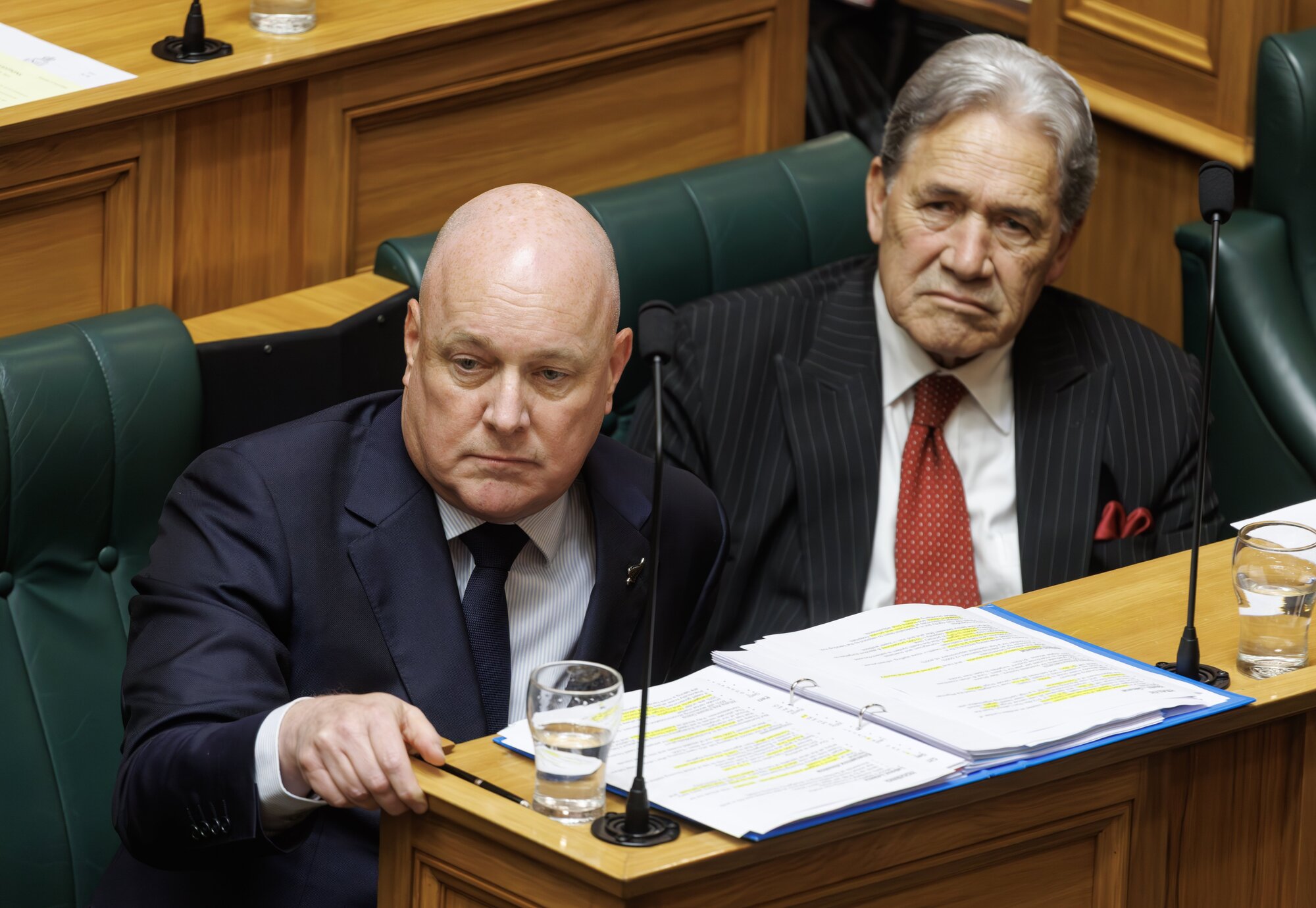
“It’s just a function of schedule,” Luxon told reporters at his weekly post-Cabinet press conference.
“Frankly, it’s more important that it comes to the House and is voted down than me having to be there or not.”
Peters, the NZ First Leader, is unlikely to make it due to overseas travel plans. Labour, the Greens, Te Pāti Māori and Act have confirmed their leaders will attend.
Act’s bill has been a source of major tension during its time on Parliament’s books as critics consider it to be anti-Māori and fear it will degrade the Treaty of Waitangi and weaken Māori rights.
Seymour’s proposal to replace the many Treaty principles developed over decades with three new ones determined by Cabinet partly fuelled the massive hīkoi to Parliament in November, attended by tens of thousands of people.
Around the same time, the bill’s fiery first reading ended with several MPs going against Parliament’s rules and performing an impassioned haka on the floor of the House in front of Seymour as MPs tried to vote on the bill.
The bill also received an unprecedented 300,000 written submissions (the previous record was just over 100,000). Of these, 90% opposed the legislation, 8% supported it and 2% had not clearly stated their position.
The bill is expected to be voted down by an enormous majority this afternoon. Act is the only party in Parliament that supports the proposed legislation. National and NZ First supported it at the first reading as per their coalition agreements with Act.
But Seymour has defended the policy throughout. Responding to the vast majority of submissions being opposed, he argued that high-profile bills like this often resulted in “spam” and responses that are disproportionate to genuine public opinion.
He said the bill was needed because although the Treaty principles were mentioned in legislation, Parliament has never defined what those principles are. Doing so would provide clarity, he said.
“Parliament’s silence has been filled by court findings, Waitangi Tribunal reports and government departments attempting to define the principles.
“The resulting principles afford Māori different rights from other New Zealanders.”
Julia Gabel is a Wellington-based political reporter. She joined the Herald in 2020 and has most recently focused on data journalism.