Reserve Bank funding cut? Finance Minister Nicola Willis says ‘there is room for savings’
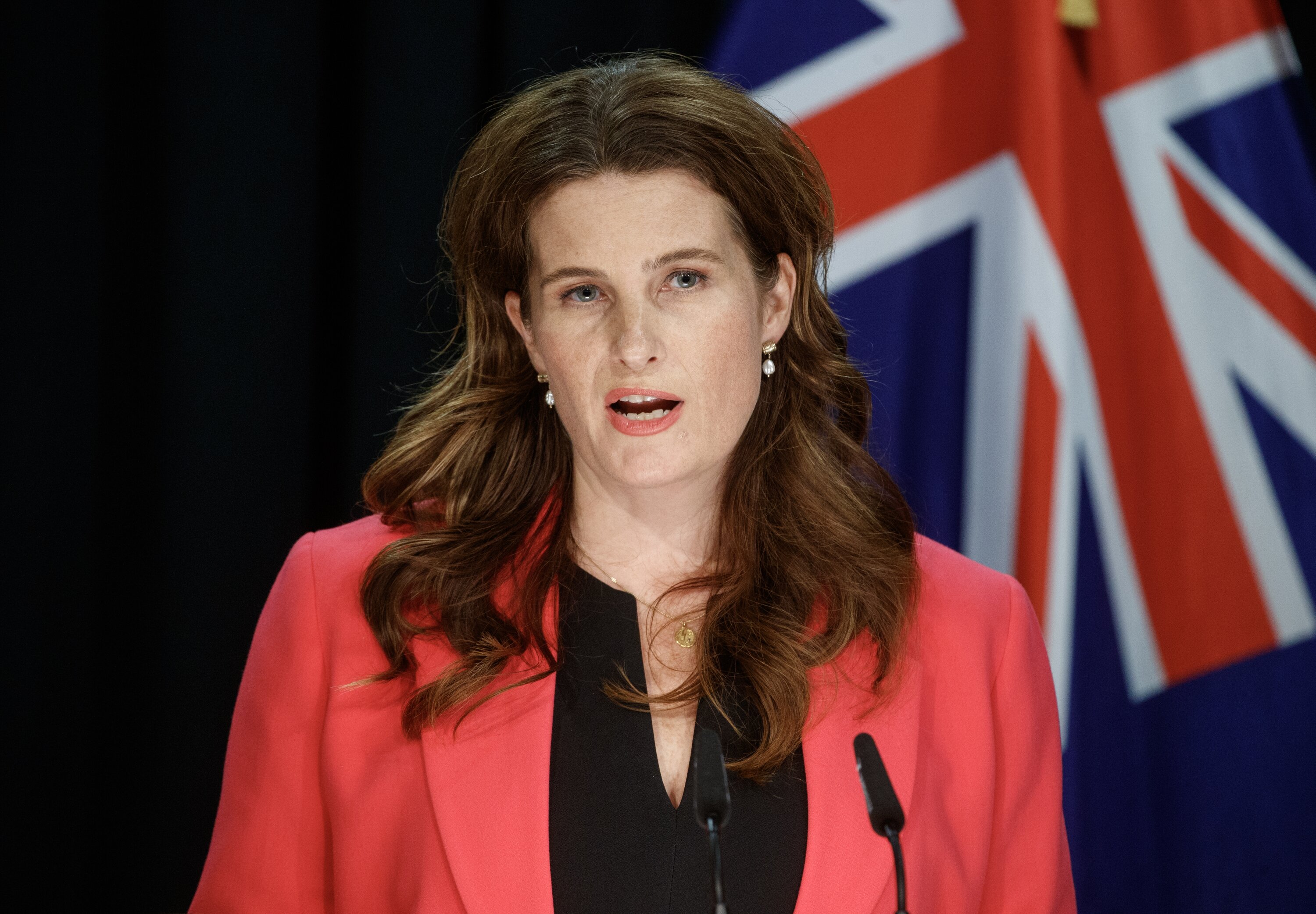
Finance Minister Nicola Willis has suggested the Reserve Bank (RBNZ) may need to trim its expectations as she continues to negotiate a long-term funding agreement with the bank, which may see its funding decrease.
On an annual basis, RBNZ funding has more than doubled in recent years and has come at a time when it struggled to contain an inflation spike — a spike some observers believe it was partly responsible for thanks to its pandemic monetary policy that included ultra-low interest rates and money printing.
Willis said RBNZ spending, which had risen from $62 million in 2017/18 to $158m in the current year, by one measure, had “gone beyond what [she was] comfortable with”.
She said it was “very important that the RBNZ is resourced to carry out its functions and to do those well” however this did not “mean the RBNZ should get funding levels that they are able to pursue any number of other pet projects”.
The RBNZ may even have its funding reduced, Willis confirmed, like other agencies who, since mid-2023, have had their baselines trimmed as part of a savings drive begun by Labour and extended by the coalition.
Unlike most other departments, which are funded annually through the Budget process, the RBNZ’s board negotiates five-year funding agreements with the Finance Minister, who receives advice from Treasury. The structure of these deals is to help the RBNZ maintain its independence from the Government of the day.
An RBNZ spokesman said its Statement of Intent and Statement of Performance Expectations detailed how it was “working to meet our expanded responsibilities, including those detailed in our updated Financial Policy Remit and Letter of Expectations from the Minister of Finance”.
“The Reserve Bank remains focused on renewing ageing infrastructure and uplifting our physical and cyber security resilience,” the spokesman said.
Willis said advice from Treasury “suggests that there is room to trim the Reserve Bank’s expenditure without sacrificing their core functions”.
“There is room for savings and it would be appropriate for the Reserve Bank to deliver them,” she said.
Willis suggested the RBNZ, like other Government agencies, might need to adjust its expectations around spending, much like many households around the country who have had to trim costs in response to the recent inflation spike.
“My view is that there shouldn’t be any Government agency that considers itself beyond reproach. All Government agencies should be expected to demonstrate value for money in their use of taxpayer money and that would mean they are not able to have all the resources they would wish for,” Willis said.
“There are a lot of households around the country right now who, when they watched inflation soar to 7.3%, would have quite liked it if they could turn around to the Government and ask for funding increases, but that option was not available to them.
“Government agencies in general and the Reserve Bank more specifically have been in a privileged position in which their funding has increased significantly at a time when many New Zealanders have experienced tough times,” Willis said.
The bank had, in recent years, taken on greater functions, including a deposit guarantee scheme, which has required extra funding, but Willis does not believe this justifies the RBNZ’s spending growth, which she agreed was excessive, even given those new jobs.
Willis said she was getting advice from Treasury on adequate funding levels for the RBNZ to fulfil its statutory functions including maintaining price stability and maintaining the stability of the financial system.
The bank has come under pressure in recent years for what some commentators argued was going beyond its narrow remit.
Its pandemic-era monetary policy took some heat for the fact that it saw rapid house price inflation and contributed to a wave of inflation well above its target range of 1-3%. The response to that high inflation has been to hike the Official Cash Rate, squeezing households with high mortgage costs, off demand and triggering a recession.
This came at the same time as the RBNZ copped flak for taking a fairly broad view of its remit, expounding on things such as climate change and adopting a Te Ao Māori view. The fact that the bank explored these avenues at the same size as the largest and most persistent bout of excessive inflation in three decades led to some criticism that the bank had taken its eye off the ball.
One of the sharpest critics, Oliver Hartwich of the New Zealand Initiative, a free market think tank, wrote in 2021 that the RBNZ had “burdened taxpayers with billions of losses from its quantitative easing programme” and was “dangerously overheated the economy with its ultra-loose monetary policy”
“‘By claiming that his Reserve Bank follows Te Ao Māori principles, the Governor implicitly holds Māori responsible for these outcomes,” he wrote.
Thomas Coughlan is Deputy Political Editor and covers politics from Parliament. He has worked for the Herald since 2021 and has worked in the press gallery since 2018.