New Zealand breaks with Five Eyes partners to back UN resolution calling Israel to withdraw from occupied Palestine
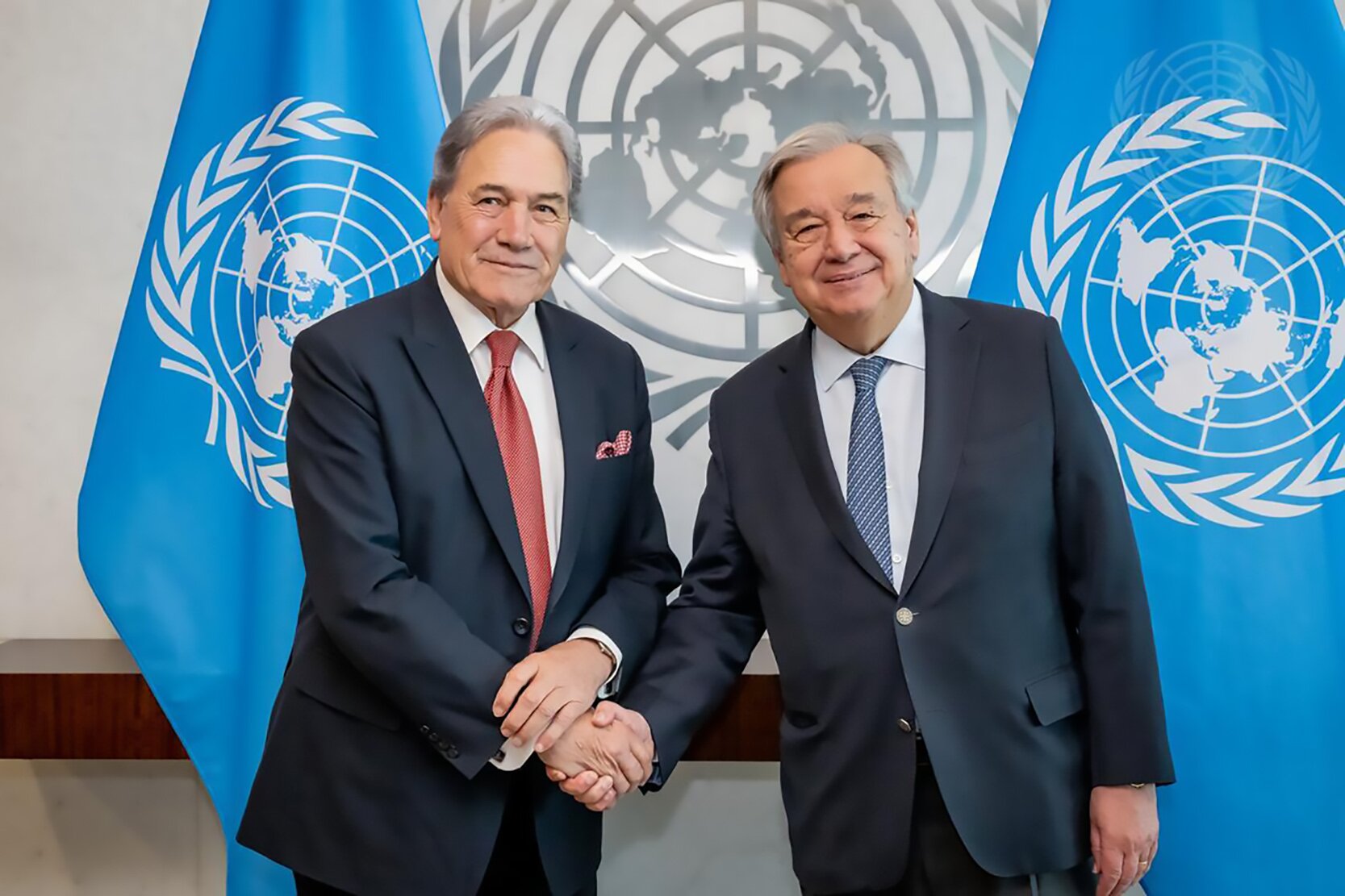
New Zealand has voted for a United Nations resolution calling on Israel to end its “unlawful” presence in occupied Palestinian territory.
The vote was overwhelmingly carried by the UN General Assembly with 124 nations voting in favour, 14 voting against, and 43 abstaining. Despite the large number of nations voting in favour of the resolution, many countries New Zealand associates itself with internationally, including the Five Eyes nations of the United Kingdom, Canada and Australia abstained from supporting the resolution. The United States voted against.
It represents a hardening of position for New Zealand and a willingness to diverge from these partners. An earlier resolution on a pause in the conflict saw Canada and Australia join New Zealand in voting in the affirmative.
Foreign Minister Winston Peters said the “yes” vote was “fundamentally a signal of our strong support for international law and the need for a two-state solution”.
Peters said the vote affirmed a recent International Court of Justice’s advisory opinion on Israel’s unlawful presence in the occupied Palestinian territory.
“The Israel-Palestine conflict has gone on for far too long and the suffering it has caused on both sides is immense. We have consistently said that a two-state solution is the only durable and just solution for Israelis and Palestinians,” Peters said.
“That advisory opinion aligns with New Zealand’s long-standing view that Israel’s presence in the occupied Palestinian Territory is unlawful,” he said.
Despite ultimately supporting the resolution, Peters said New Zealand had some reservations with how it was worded.
Peters took particular issue with the resolution’s 12-month timeframe for Israeli withdrawal from the occupied Palestinian territory, which he described as “frankly unrealistic”.
“We are also disappointed that the resolution goes beyond what was envisaged in the advisory opinion in some respects,” Peters said.
New Zealand’s Permanent Representative Carolyn Schwalger’s explanation of New Zealand’s vote called for both parties to return to negotiations for a two-state solution.
However, she said “aspirations need to be tempered by realism”.
She called on Israel to “take meaningful steps towards compliance with international law, particularly through withdrawal from the occupied Palestinian territory” in the next 12 months.
Schwalger also called on the Palestinian Authority to “take meaningful steps to assume political and security control of the occupied territory”.
“Although the resolution does not impose obligations on New Zealand beyond any already existing under international law, New Zealand stands ready to implement any measures adopted by the UN Security Council.
“New Zealand will continue to impose travel bans against extremist settlers and others involved in violations of international humanitarian law, as we deem appropriate,” she said.
* An earlier version of this article incorrectly stated that the US abstained from supporting the resolution. The US voted against it.
Thomas Coughlan is deputy political editor and covers politics from Parliament. He has worked for the Herald since 2021 and has worked in the Press Gallery since 2018.