Labour’s free GP visit policy: Doctors sceptical but party confident there is enough capacity to meet demand
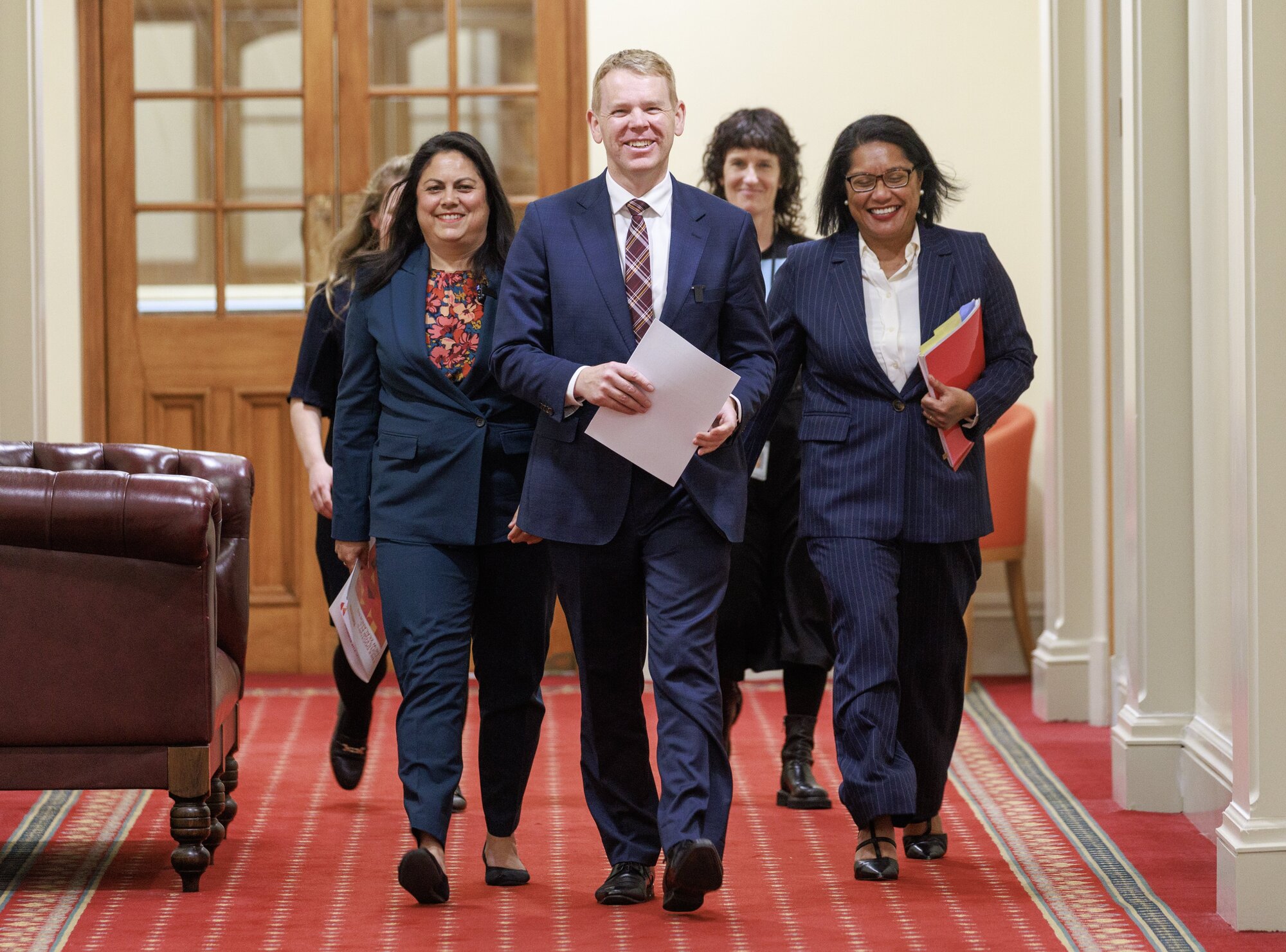
Labour is promising three free doctor’s visits a year if it wins the election, funded by a 28% capital gains tax on commercial and residential properties excluding the family home.
The policies, officially unveiled today, were leaked to media, prompting the party to bring forward the announcement and leader Chris Hipkins to issue a stern warning to the leaker that, if they came from his party, they would be ousted.
GPs have questioned how the plan is going to work, raising questions about whether there are enough doctors to meet the increase in demand.
But Labour’s health spokeswoman, Dr Ayesha Verrall, is confident the capacity is there, saying the party had a “credible plan” to increase productivity and free up millions of appointment spaces.
Labour would introduce a “Medicard” loaded with a patient’s medical information and three free GP visits annually at the practice the patient was enrolled in. The card would also be available as an app and accessible to every New Zealander.
“We’ve worked with general practice providers to come up with a credible plan for releasing five million more visits, many of which would be able to be implemented in rural areas,” Verrall said.
This would be done in part by introducing an artificial intelligence tool that can transcribe a patient’s notes, giving GPs time to see more patients, she said.
Clinics would also be encouraged to shift from the traditional “first-come first-served” approach – where patients book the next available appointment via receptionists – to doctors briefly triaging a patient’s issue over the phone.
“[The doctor] will hear a little bit of your concern and be able to say ‘Oh, you don’t need to come in – we will send a prescription to your pharmacy’; or ‘You need to go to the physio’; or ‘Actually, you need to come in right now’,” Verrall said.
“The package, and specifically the fact that we’re funding capitation and making GPs less reliant on fees is what enables them to make good clinical decisions about prioritisation.”
Labour’s end goal is to free up staff and space at hospitals by treating people at general practices before they get so sick they need to go to the emergency department. GPs the Herald spoke to supported a move to reduce barriers to healthcare but were sceptical whether there was enough capacity in the workforce.
Tauranga-based GP and president of the College of GPs, Dr Luke Bradford, said there were not enough GPs to meet what was expected to be a big jump in demand for appointments, particularly as the scheme was being offered universally.
“It’s really pleasing to see any policy that reduces barriers for people being able to access their GP and we welcome the acknowledgement that the best means of keeping Kiwis healthy is seeing their GP regularly.
“We do have some concerns around what this will mean for demand and how we will meet that demand.”
Bradford said general practices had been under-funded for years and the sector was struggling to recruit enough doctors from medical schools, particularly in hard-to-reach places.
“We need to increase GP numbers, we need to increase medical school rotations.”
Dr Angus Chambers, chairman of the General Practice Owners Association, “cautiously welcomed” the policy to introduce a new independent pricing model for GPs, but suggested other ways for removing barriers such as increasing community service card thresholds.
“We’ve got a workforce shortage, and we actually need to retain people into our profession and attract people. I don’t necessarily see how [this policy] will address that issue.
“But [if] they do believe they’re going to create capacity, we’re certainly interested in seeing how that would be done, but I definitely think there’s a big question mark about whether we’ve got the capacity.”
Julia Gabel is a Wellington-based political reporter. She joined the Herald in 2020 and has most recently focused on data journalism.