Christopher Luxon to ask councils to make savings before asking Government for handouts
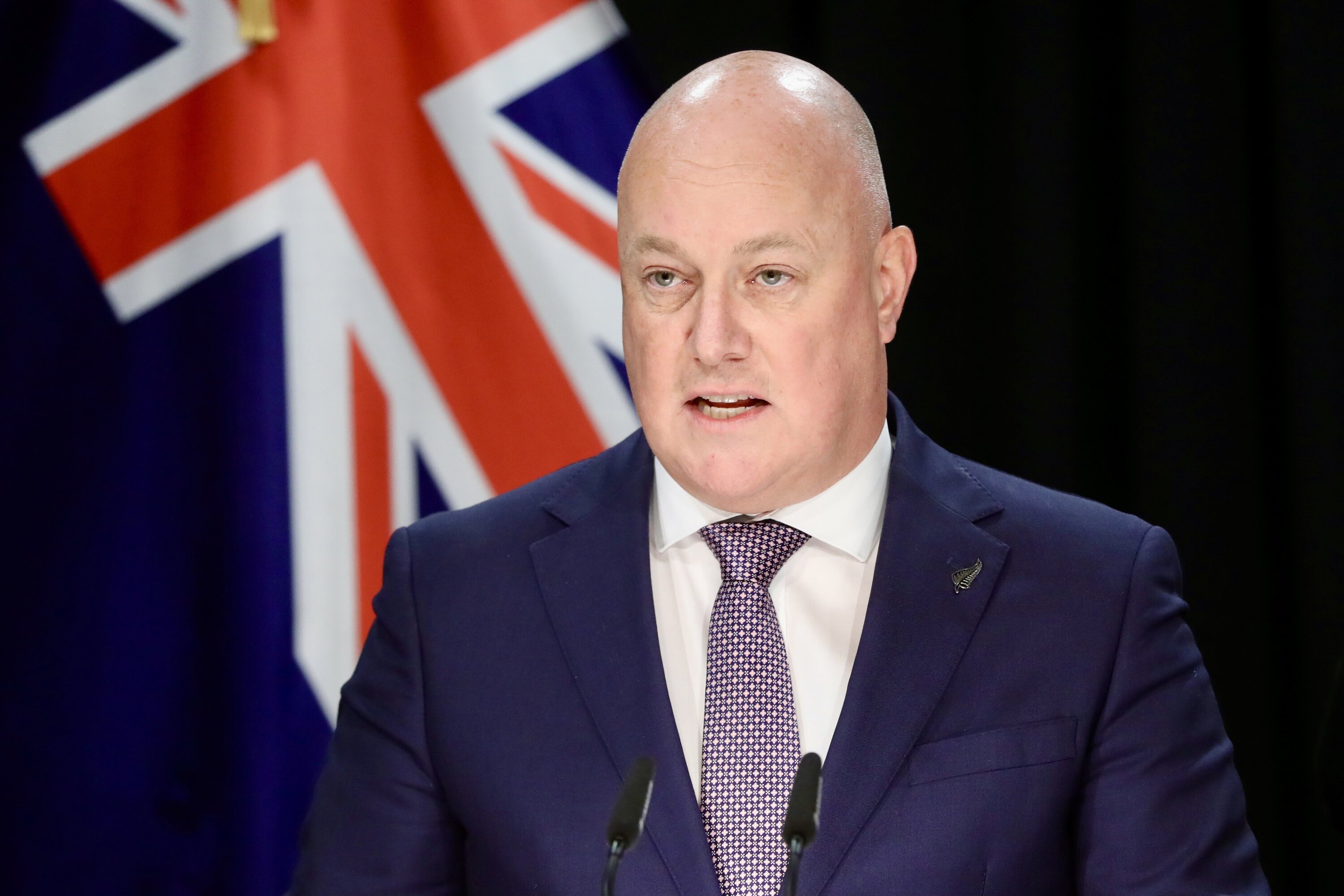
Prime Minister Christopher Luxon will deliver a stern message for councillors and mayors gathered in Wellington for the annual Local Government NZ (LGNZ) conference today: tighten your own belt before asking central government for help.
Homeowners across the country face an average rates increase of more than 14% this year. Many councils are planning further large rates increases in the coming years.
Luxon will hit back at councils who demand more funding and support from central government while avoiding tightening their own belts. He will urge councils to get back to basics like picking up rubbish, fixing pipes and filling potholes.
The Government believes councils have at times been distracted by expensive boondoggle infrastructure when they should have been investing in core services. Luxon will use the conference’s location, Wellington’s $180 million Tākina convention centre, as an example of this spending.
Tākina was funded at a time when the Wellington City Council was arguably not investing appropriately in water infrastructure the city needed to avert the pipes crisis in which it currently finds itself. The convention centre is not performing as well as was hoped, partly due to a decline in government events in the capital. Tākina’s net position is currently down $1.2m compared with the budget.
It is not the first time councillors will have heard this message from the Government. Local Government Minister Simeon Brown said earlier this year that councils should be doing a “line-by-line look through their expenditure to keep costs under control”. He said ratepayers would be “concerned” at continued high rates increases.
Luxon will come with some carrots for councils in the form of the Government’s water reforms, which will help councils shift water infrastructure costs off their balance sheets, although the extent to which this policy will actually help councils reduce rates as much as the previous Government’s Three Waters reforms which it replaced is hotly debated.
He will also announce a commitment to take the four wellbeings out of the Local Government Act. These were included in the Local Government Act 2002, which tasked councils with looking after the “social, economic, environmental, and cultural well-being of their communities”.
The last National Government replaced this text in 2012, telling councils instead to “play a broad role in meeting the current and future needs of their communities for good-quality local infrastructure, local public services, and performance of regulatory functions”.
Detractors argue the provisions are distracting for councils.
Luxon’s appearance comes the day after the Deputy Auditor-General Andrew McConnell’s insights on Local Government performance for 2023 was tabled in Parliament. The report noted that councils’ 2022/23 annual reports showed “many councils are finding it difficult to balance what they and their communities can afford against the various complex challenges they face”.
The report warned that councils were not replacing ageing infrastructure to the extent they should be.
“For the first time in several years, councils’ investment in infrastructure renewals as a percentage of depreciation declined. Councils are not replacing infrastructure at the same rate as it is being ‘run down’, and many councils are not fully funding depreciation,” the report said.
“In 2022/23, councils as a whole invested $7 billion in infrastructure – the highest level of investment in 11 years. Councils are generally funding this investment through debt. As a result, council debt increased by 26% during the past two years. However, debt is still less than the amount councils budgeted. This indicates that councils are not fully delivering on their infrastructure programmes,” it said.
Water was of particular concern, with councils going backwards in their performance against water quality measures.
Councils achieved 48.3% of safe drinking water measures in 2021/22 but this went backwards in 2022/23, when only 33% of the measures were achieved.
“This is an area of significant concern,” McConnell said.
The report noted that under the last Government, councils received significant grant funding from central government, such as “better off” grants under the Three Waters programme and cyclone recovery funding.
Despite the fact this funding had “almost doubled” since 2018/19, it was “not always clear from councils’ annual reports what they have achieved” with it.
McConnell urged councils to “consider explicitly reporting on the funding received”.
Thomas Coughlan is Deputy Political Editor and covers politics from Parliament. He has worked for the Herald since 2021 and has worked in the press gallery since 2018.