Chris Hipkins hoses down discussion on Labour tolerating higher inflation after Barbara Edmonds’ interest in discussing idea with economists
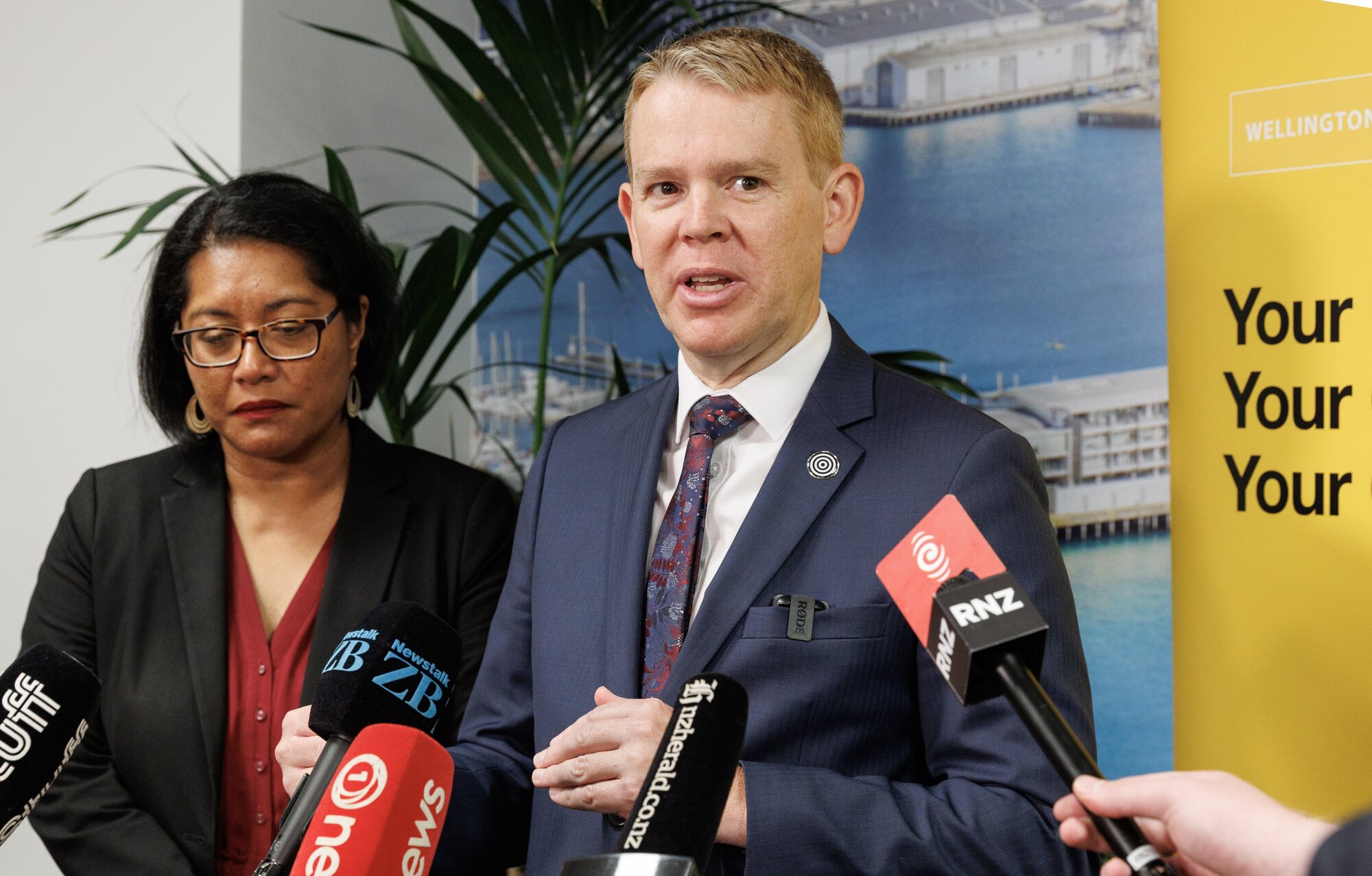
Labour leader Chris Hipkins has hosed down a discussion, begun by his Finance Minister Barbara Edmonds, about a Labour Government allowing the Reserve Bank a higher inflation target, which would probably have the effect of allowing inflation to run hotter for longer.
He said that despite Edmonds saying she wanted to hear from economists on the issue, describing it as a “discussion that does need to be had“, Labour was not planning to change the current 2% midpoint target.
Heading into her Tuesday morning caucus meeting, Edmonds was asked what she thought of Westpac chief economist Kelly Eckhold proposing lifting the midpoint of the Reserve Bank’s inflation target to 2.5% from 2% where it is currently.
Eckhold noted that the Reserve Bank of Australia was targeting an inflation range of 2%-3%. New Zealand has progressively shifted its inflation target upwards from 0%-2% to 1%-3% where it is currently.
Asked about Eckhold’s idea of a 2.5% target, Edmonds said, she had seen Eckhold’s comments and the reaction to it from other economists.
“It’s a debate and a discussion that does need to be had,” Edmonds said.
“I’d be open to hearing from other economists as to what they think,” she said.
“There is going to be different parts of the argument that different economists bring up... ultimately the discussion is going to happen and I am going to be listening intently as to where people think we should fall and balancing that up.”
Hours later, on his way into the House, Hipkins was asked whether Labour was opening the door to a higher inflation target. He said that was a “massive misrepresentation of what Barb has said”.
“She said that she was open to having a discussion about what would be the correct inflation target for the Reserve Bank.
“A finance spokesperson saying that they’re interested in hearing from economists is a finance spokesperson being a good finance spokesperson,” Hipkins said.
“We certainly haven’t indicated that the Labour Party is reviewing this particular part of our policies.”
Asked about ruling out a higher inflation target, Hipkins said, “that is not something that we are considering”.
The discussion was begun after Eckhold published a report saying a new target “might better match NZ’s historical capacity to deliver price stability and bring expectations closer to reality”.
“Raising the mid-point of the inflation target would need to be matched with increased focus on the MPC to ensure the future average inflation rate doesn’t drift higher with the target midpoint,” he said.
Arthur Grimes, a former Reserve Bank chair and chief economist who is credited as one of the main architects of the inflation targeting model, told TVNZ’s Q+A with Jack Tame lifting the target to 2.5% was a “ludicrous point of view”.
Grimes said it was “rubbish” to say that hitting a 2% mid-point was difficult for the Bank to achieve.
“In the last five years the Reserve Bank has obviously inflated a lot under the previous governor, but before that inflation averaged 1.6% for over a decade.
“The idea [the target] needs to be raised is ludicrous,” he said.
Independent economist Cameron Bagrie, in a column for BusinessDesk (owned by Herald publisher NZME) pondered both sides of the debate.
“Some say we need stricter inflation targets. Inflation robs purchasing power.
“It creates price dispersion, tax system distortions, and distributional impacts. Society does not like inflation now that it has recently experienced it.
“More recent literature has focused on whether the inflation targets need to be higher. Arguments include downward nominal wage rigidity; inflation can help the economy’s adjustment process through real wage movements, but workers may not appreciate this,” Bagrie said.