Auckland schooling: Is it cheaper to buy in the Double Grammar zone, or live elsewhere and pay for a private school?
The Herald has analysed the cost of buying a home “in-zone” and getting access to free education versus living “out-of-zone” and paying for private school - and we show you how to calculate the costs yourself.
For decades, parents have been willing to pay a premium to buy houses in Auckland’s “Double Grammar” zone.
That allows them to live close to the CBD, while also sending their kids to esteemed state schools Auckland Grammar and Epsom Girls’ Grammar for free.
But if a quality education is a key consideration for your family, can you get more bang for your buck by paying less for a house elsewhere and redirecting your money into private school fees?
This analysis reveals it’s almost $60,000 cheaper in some cases to buy a home in a suburb such as Papatoetoe and pay for a private school.
However purchasing in the Double Grammar zone makes more financial sense the more children you have.
What would you do to secure your child’s best head start in life - see below to do the calculations yourself.
You’ll see these three magic words in every applicable house for sale: “Double Grammar zone”.
But parents considering moving into Auckland’s Double Grammar zone solely for their child’s high schooling may want to consider living somewhere more affordable - and paying for private school instead.
The inner Auckland zone has long had an almost magical reputation because families within its catchment (Epsom, Parnell, Remuera, Mt Eden) can get free education at two of the nation’s most prestigious public schools: Auckland Grammar and Epsom Girls’ Grammar.
But a new Herald analysis suggests if you’re cashed up (and your tastes are not too high-brow) you can potentially save money and still ensure your child has a sought-after education by buying in outer suburbs, such as Papatoetoe or Henderson, and paying for private schooling instead.
One model suggests buying elsewhere could save a family almost $60,000 over the coming five years.
This comes after a Herald analysis last month showed Auckland has high-performing private schools right across the city.
Buying a house in the “Grammar zone” becomes more attractive as you have more children (and consequently save more money on state education) and in periods when home loan interest rates are lower.
Still, the analysis suggests the financial differences may not be as striking as parents think.
Father-of-three Nigel Fisher lives 100 metres outside the Double Grammar zone in Benson St in Remuera. He has no regrets buying in the suburb.
He believes private schools have an advantage in that class sizes tend to be smaller and he advises families to start saving money for their kids’ education even before they are born.
“Whatever it is, $200 or $300 a month, put it into an account and buy the house wherever you want to and then when you’re ready send them to private school,” he says.
CoreLogic data shows Double Grammar homes tend to be older than homes in a newer suburb such as Henderson, meaning you might be able to pick up a nicer house for less outside the school zone.
That means it could be more important to choose your new home based on whether it is good quality or not and whether you prefer to live close to family or work, says Nick Goodall, CoreLogic’s head of research.
“It may mean you’re financially not much worse off by paying for school fees and you’ve got a nicer house as well.”
That may surprise some parents given the Double Grammar zone’s reputation.
However what is saved by zero or low fees at state schools can be lost in higher house prices.
A typical three-bedroom home in the zone cost $2.1 million in 2023, according to CoreLogic.
And tales are often told about “zone” houses selling for hundreds of thousands of dollars more than similar houses just down the road that are outside the zone.
To test whether it’s worth buying in the Double Grammar zone, the Herald analysed house prices and mortgage payments within the zone.
This was compared to house prices, mortgage payments and private school fees in four other Auckland locations: Henderson and Papatoetoe in the outer suburbs and inner suburbs Onehunga and Mt Albert.
In other words, two suburbs that are a long way from the zone and two that aren’t far.
We had to make a lot of assumptions to run our models. You can read about them in more detail at the bottom of this story under the “How to do your own calculations” headline.
That’s where we take you step-by-step through the numbers so you can potentially do your own, personalised calculations.
Scenario One: Buying a home in 2023 and selling in 2027
Using the table above, we can calculate how much you would pay on school fees and your mortgage and how much you would get back in capital gains if you sold in 2027.
Surprise - Papatoetoe came out as the cheapest way to buy a three-bedroom home and give one child a sought-after education.
This model suggests it would leave you about $120,000 out of pocket to live in Papatoetoe for five years and send one child to private school.
That involves paying five years of private school fees and buying a median-priced, three-bedroom Papatoetoe home in 2023 and then selling it in 2027.
By contrast, you would be about $177,000 out of pocket after buying a median-priced, three-bedroom Double Grammar zone home in 2023 and selling it in 2027.
The other issue to note is how expensive it is for families.
Families that don’t sell their house would need to spend at least $700,000 across five years on their deposit, mortgage payments and school fees, no matter which suburb they lived in.
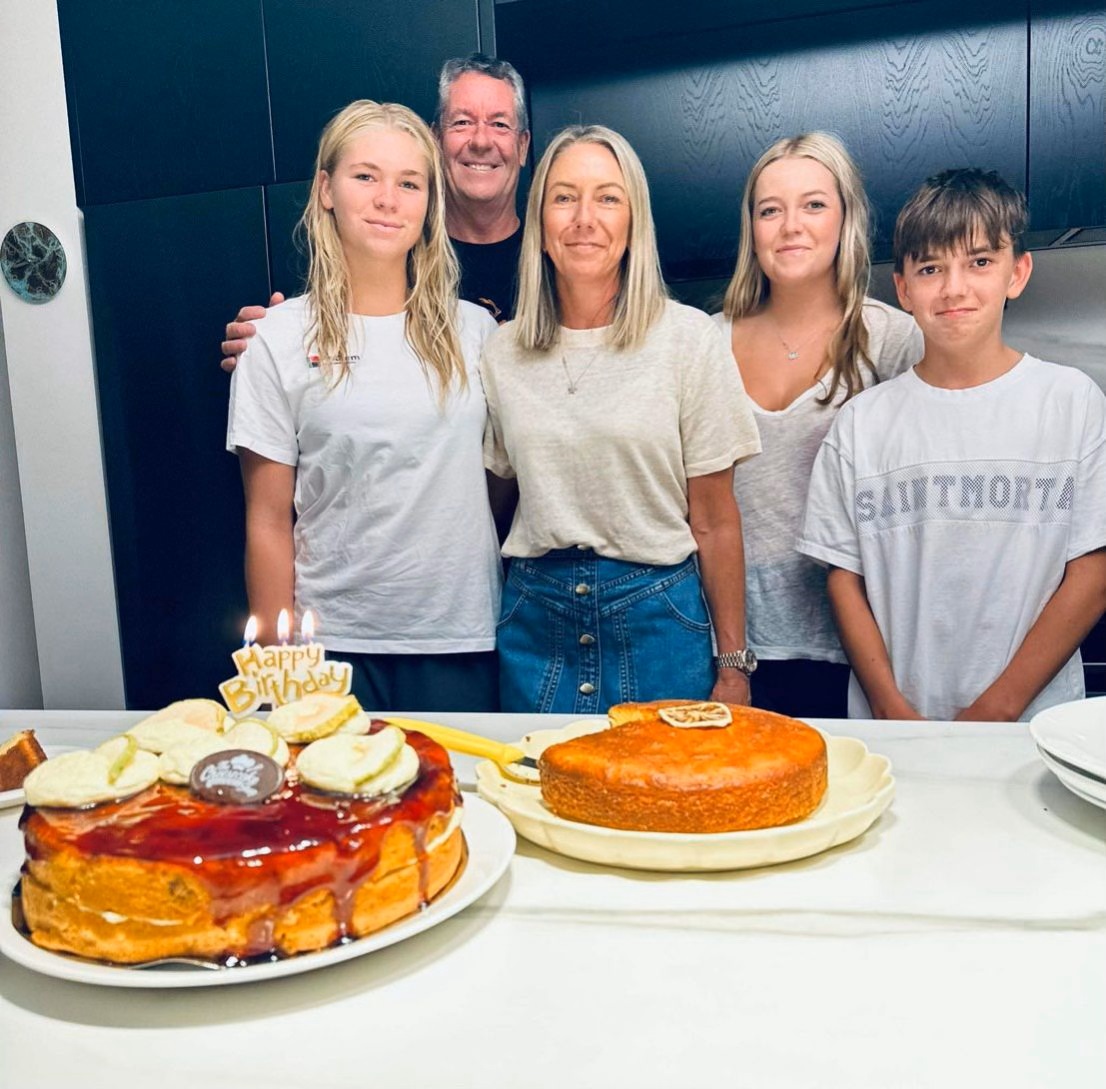
Remuera resident Nigel Fisher said he pays about $26,000 per year for his 12-year-old son’s education at Saint Kentigern College in Pakuranga.
He also pays about $6000 each for his daughters, aged 16 and 17, to attend Baradene College of the Sacred Heart in Remuera.
Like some other Catholic schools, Baradene’s official fees are more expensive than the no-cost fees at public schools, but it is cheaper than fully private schools.
Still, Fisher says he ends up paying about the same for his girls to attend Baradene as he does for his son to attend Saint Kentigern.
That’s because he has to pay extra at Baradene for the sports his daughters take part in, like water polo, rowing and cycling.
By contrast, most of the sporting costs are included in Saint Kentigern’s fees.
Fisher says his son will soon pass from intermediate school into secondary college. Luckily the family is blessed with choices.
His family has the means to buy within the Double Grammar zone and qualify for Auckland Grammar.
As a former student at Sacred Heart College Auckland in Remuera he can also send his son there, where the fees are about $5500 per year.
Or he can also afford to keep sending his son to Saint Kentigern.
Auckland Grammar and Epsom Girls’ Grammar are “amazing” schools with a “vibe” that suits certain children, Fisher says.
But speaking about state schools in general, he believes they are growing too fast because more and more people are living within their zones and the schools have to accept these students.
That means schools may have to build more classrooms at the expense of having facilities such as sports grounds, he says.
Fisher has decided to let his son choose where he wants to go for secondary college. At the moment it looks like he will choose Saint Kentigern so he can continue being with his friends.
And Fisher says his family is not alone. He has friends living within the Double Grammar zone who are also sending their children to private schools.
He believes the Double Grammar zone’s magical reputation among home buyers is “almost sort of disappearing”.
Scenario Two : What would be different if instead you bought in 2019 and sold in 2023?
Double Grammar zone clearly comes out on top in this scenario.
Families who bought a median-value, three-bedroom Grammar zone home in 2019 and sold it again in 2023 would have made a $129,368 capital gain, according to this model.
The reason for this is we assumed families would’ve paid a lower interest rate of 4 per cent each year and because house prices grew faster between 2019 and 2023.
Under this scenario, Papatoetoe performed the worst.
That shows how the Grammar zone appears to become a more attractive place to buy when interest rates are low and when house prices grow faster.
Scenario Three: Two children and 10 years of school fees
Another win for the Double Grammar zone.
We mixed it up this time by attempting to model what it would be like to buy a home and then sell it 10 years later, while also sending two children to high school.
So this scenario assumes families buy their home in 2019 and sell in 2027.
It also assumes families pay 10 years of school fees (in other words, it mimics having one child at high school for five years and then the second child starting high school and finishing five years later).
Scenario Four: Buying your home with smaller deposits
Clearly not every family can afford the $429,800 deposit required to buy the typical three-bedroom Double Grammar zone home.
So the final scenario is identical to Scenario One, except the size of the deposits are changed.
We use a 20 per cent deposit for each suburb based on the median three-bedroom house price in 2023.
As you can see, the Papatoetoe deposit is smaller than the Grammar zone deposit.
Using these lower deposits, this scenario shows what would happen if families bought in 2023 and then sold in 2027.
And once again Double Grammar zone comes out on top.
This scenario reflects a more affordable way for families to buy a home and pay for private school.
It shows a Papatoetoe family would only pay $555,975 on their mortgage and school fees over five years - that’s considerably less than the $718,875 they would pay in Scenario One when they put down a bigger deposit.
Ironically however, while it may be more manageable, it ultimately leaves the family more out of pocket when they sell.
That’s because they will have paid off less of their home loan after five years and so will get a much smaller capital gain back.
As you can see, the Papatoetoe family would be $203,622 out of pocket in this scenario compared to $120,887 in Scenario One.