Inside the military unit where sexual assaults weren’t reported, drinking was out of hand and soldiers were bullied
One of our premiere infantry units faced close scrutiny over 28 months after a whistleblower revealed an unhealthy “boys club” culture, hard drinking, sex assaults and bullying. David Fisher investigates.
In every way, the whistleblower skipped the chain of command.
An infantry officer, newly posted to one of the country’s premier infantry units, found himself rocked by the abuse, bullying and harassment that seemed to pervade 2/1st Battalion, Royal New Zealand Infantry Regiment.
Frustrated, the officer took his concerns right to the top of the command chain, warning leaders of the collapsing discipline – which included physical and sexual violence.
The officer has since left the Army.
“I knew good – and I came back to bad,” he told the Herald about arriving at the Burnham base of 2/1 in 2022, after other postings.
He emailed Sergeant Major of the Army Warrant Officer Class One Wiremu Moffitt and later then-Chief of Army Major General John Boswell.
He told Moffitt: “If this is happening in one unit, what does it look like Army-wide?”
The Court of Inquiry later reported there was substance to his claims that:
These events played out between 2020 and 2022.
Land Component Commander Brigadier Jason Dyhrberg launched the internal Defence Force inquiry in August 2022 and signed off on it an exhaustive 28 months later in December 2024.
The inquiry report said the investigation took that extraordinary length of time, in part, because the evidence was so traumatising that investigators limited it to two interviews per day.
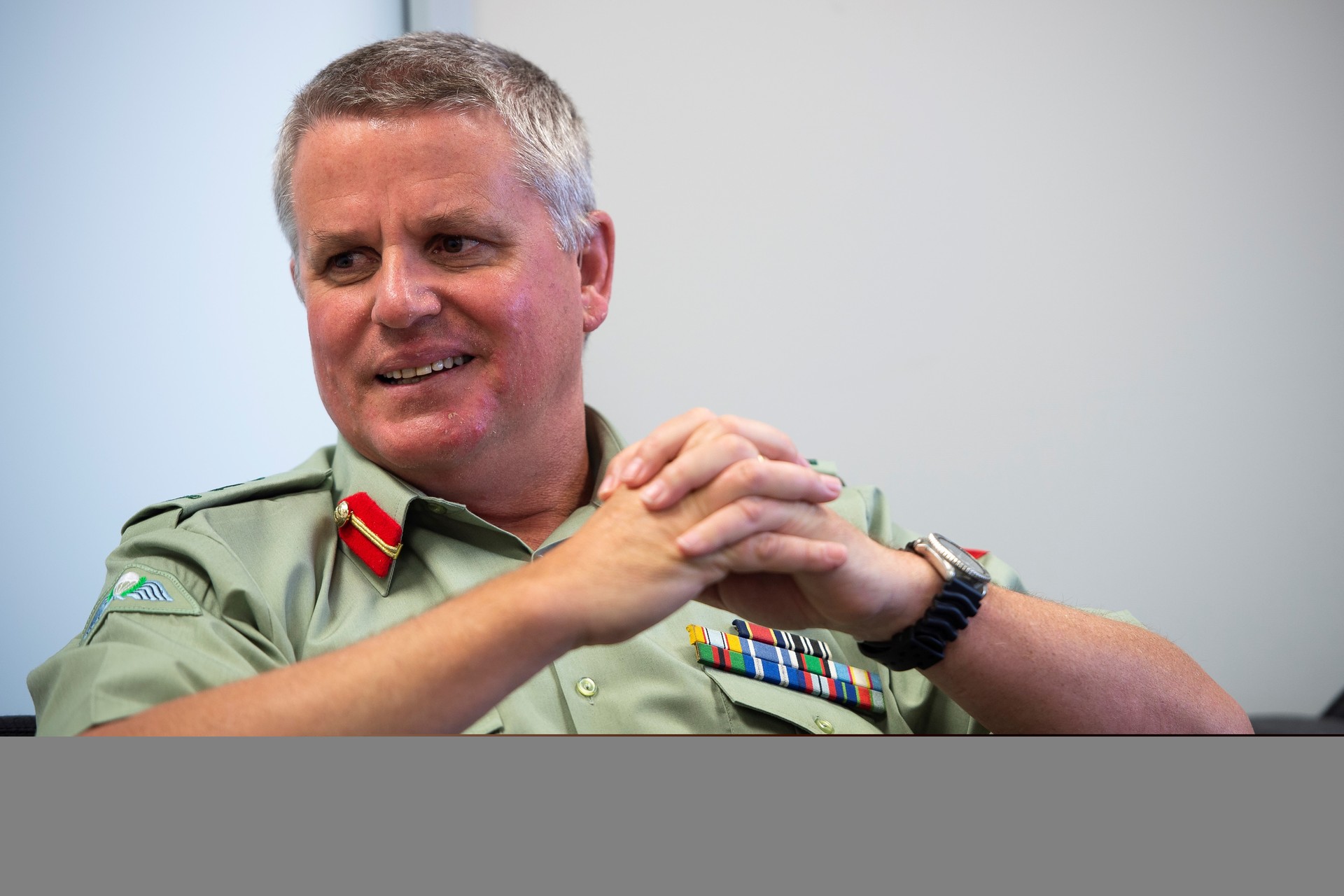
The Herald has obtained the inquiry documents through the Official Information Act.
They provide a detailed study of a critical part of the New Zealand Defence Force (NZDF) grappling with issues facing our entire military at the time. The inquiry report describes the end of overseas deployments as Covid-19 arrived, the relentless demands on troops guarding quarantine facilities, and the rising cost of living against poor pay.
At 2/1, people were leaving the force. Worse, the ones leaving were mainly the experienced non-commissioned officers who helped keep discipline in the ranks.
By the time the inquiry was completed in December 2024, the wider military was getting depleted. In the Army alone, attrition peaked at 16.6% in 2022, then 14.5% in 2023 and 9.6% in 2024.
The Herald was the first to tell the whistleblower the outcome of his bold move to circumvent the chain of command.
The Court of Inquiry could not track him down – the Herald found him working for a private security company in the tropical heat of a country we will not name.
The former soldier, who asked to remain anonymous, told the Herald: “My whole aim of this was improvements across NZDF.”
Unit probed after claims
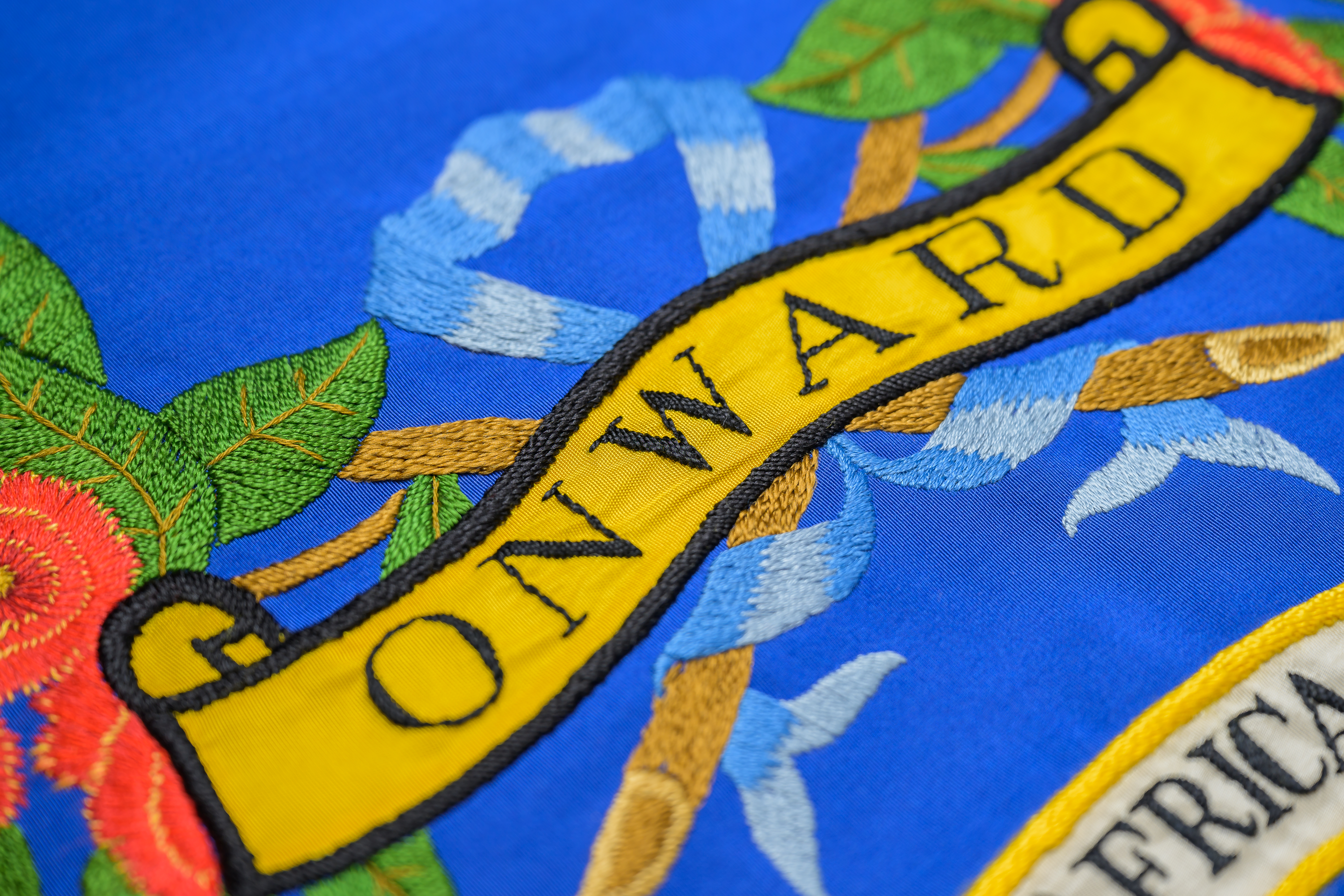
The battalion 2/1 is known for its motto “Onward” and battle honours include Gallipoli’s Hill 60 (Anzac), Delville Wood on the Somme, then in World War II, Crete, El Alamein, and Cassino, among others.
It has more recently served with distinction in Bosnia, East Timor (Timor-Leste), the Solomon Islands, Afghanistan, and Iraq.
By the time the whistleblower took action in mid-2022, 2/1 was suffering significant culture challenges. The court found three factors contributed to the degradation of standards:
Those three factors cut deeply into NZDF ranks, with the court finding “hollowness and shallowness at the junior leader level” – too few people to fill roles, and those who did were lacking the necessary experience.
Those interviewed for the inquiry spoke of 2/1 as a good place to work, and the Court of Inquiry found it largely had a good culture.
But as the inquiry delved deeper, it also learned of evidence supporting the whistleblower’s claims – and how unhealthy subcultures had developed.
It reviewed the 64 investigations carried out in 2/1 from January 2020 through to July 2022, including four reported cases of bullying or harassment, four sexual assaults, 12 assaults, nine cases of drug use and three alcohol-related instances.
And as the inquiry team began interviewing people, they learned much more. A common thread was alcohol – ahead of assaults and bullying.
Another was the lack of willingness of those who had suffered to raise a complaint.
Among the worst instances was when a female soldier had endured – but not reported – four separate incidents of alleged sexual assault by male soldiers.
Two other female soldiers also claimed they had been sexually assaulted. Only one of those instances went to court martial.
The inquiry team was also told of the unreported alleged rape of a senior non-commissioned officer in 2017 – outside its inquiry range of 2020-2022 – while in a different unit.
It also found constant bullying of an openly gay soldier – and that 2/1 was aware of the bullying but the soldier had said he didn’t want it taken further.
But the inquiry’s investigation found the bullying was more extensive than understood and included the soldier being sent a text message telling him to take his life. The anonymous text could not be conclusively tied to 2/1.
There were also incidents of assault – including officer-on-officer during an evening’s drinking – which appeared to have been handled informally.
The inquiry found that 2/1 had drifted from the NZDF guidance manual on how to operate. When incidents occurred that required intervention – bullying, alleged sexual assault – those were “dealt with to the best of the ability of the unit”.
It found there was a lack of awareness around how bullying and harassment policies could support commanders managing such situations.
And there was another factor. NZDF’s legal and privacy rules limited what could be communicated to the rank-and-file. So even when command had taken action, there could be a perception of inaction, which became corrosive.
Commander’s desperate effort
When Lieutenant Colonel Cory Neale took command in August 2020, he recognised the culture and behaviour issues and took action.
The inquiry report said that almost two years before the inquiry started, Neale raised his concerns with the Chief of Army, briefing Boswell when he visited Burnham in November 2020.
Neale later also updated the Deputy Chief of Army in February 2021 and Boswell again in person in June 2021.
The inquiry reported that Neale developed a “robust” plan almost immediately on arriving at 2/1, issuing formal orders on behaviour and culture expectations, and launching a “Culture Campaign” in 2021, beginning with a series of speeches to his troops.
The inquiry report described how those efforts never fully took hold. It said communication down the ranks was weak, and junior leaders – those meant to set the daily tone – often struggled to understand and communicate the new expectations.
Neale’s efforts were confounded by the same issues that were putting the entire Defence Force under strain – attrition leaving too few experienced sergeants and corporals, too little continuity, and not enough training in welfare and complaint handling.
When problems arose, commanders didn’t behave according to procedure – the critical NZDF document required to report bullying often went unused. These were not wilful lapses, said the court, but they showed staff didn’t know the system well enough to apply it.
Two incidents underlined the difficulty. In the first, an officer was accused of assaulting another officer during a mess-function dispute. The matter was handled informally and considered closed, but the decision not to record or examine it left others convinced the command team was protecting its own.
Neale accepted he should have looked into it further.
A second incident – a fight between two senior NCOs during the Battalion Birthday – was also handled informally. In the court’s view, it warranted formal disciplinary action.
Across both examples, the court saw good intentions eroded by gaps in communication and process.
The inquiry did not find deliberate cover-ups or breaches of law. It said the unit’s problems reflected a mismatch between what NZDF policy demanded and what an overstretched battalion could realistically deliver.
Leaders faced increasing stress dealing with “significant” amounts of administration, which cost time intended for command duties and interacting with troops. When interviewing commanders, the court said several showed “obvious signs of stress and fatigue due to overwork”.
The mechanisms were there: forms, advisers, protocols and directives. What was missing was the ability to apply them consistently, especially when the same handful of leaders were also managing operations, welfare, and attrition.
And there was the “boys’ club” undercurrent – an environment where alcohol, peer pressure and uneven accountability appeared to blur lines for those who needed to know exactly where the line was.
‘Why I blew the whistle’
The whistleblower joined the Army in 2014 and worked his way up through the ranks, pushing himself into parts of the military that required maximum effort and excellence. This attitude was among the reasons he was tapped for Officer Training School.
Another factor was a management paper he wrote on how to better manage soldiers with injuries – he had experienced a period of convalescing from an injury of his own. “When I first got injured, telling guys with a herniated disc they are pussies wasn’t really helping.”
He was commissioned in 2020 and was wrestling with the new responsibilities of being an officer while having a former NCO’s insight into the ranks.
Then he arrived in Burnham and was shocked; he said he “realised there was a lot going on at the unit that wasn’t healthy”.
The incident involving the two officers in a punch-up – and the informal handling of it – crystallised for the whistleblower issues he had seen and had heard from others.
And the reason for that? The whistleblower himself landed in trouble the same evening.
On that night in 2022, he was drinking at the same function where the officers came to blows. He was still serving but had given notice that he was leaving.
Later in the evening, he encouraged the driver of a bus to take him and a couple of mates into Christchurch, against Defence Force rules.
They got a fair way there before the bus was ordered back. The whistleblower was charged with “doing an act likely to prejudice service discipline” and paid a hefty fine.
In contrast, the informal approach to the officers’ fight left him reflecting on what appeared to be the unequal application of military justice. One incident was dealt with informally, and the other one formally.
Even though his path out of the Army was set, he was determined it would be a better place for those who followed. The report noted the soldier’s motives for stepping forward were to improve conditions for other soldiers.
He’s not convinced the inquiry report will lead to that.
When the Herald provided him with a copy of the report, he pointed to the confirmation of the issues he had raised three years ago.
“This took such a long time. It took three months to work out how the Manawanui was sunk. It took them three years to work out that soldiers wanted to kill themselves.”
The whistleblower said he had balanced his concerns against the Army’s necessity to forge individual soldiers into a tight infantry unit.
“This is an Army. There is a level of controlled bastardisation that needs to happen. To a degree, you do need to get over words you are going to be called. One day you might be getting shot at.
“Outside the training environment, I didn’t think there was a need for it.”
The whistleblower, who had come through the ranks as a young soldier, said the composition of the Court of Inquiry was “bizarre” – “[it] was composed of senior officers when it was about the welfare of junior staff”.
“The word ‘bullying’ annoys me. It captures everything from name-calling to a young man having [someone] messaging for him to kill himself.”
He said the finding on alcohol was particularly telling, and hoped the Army got to grips with drinking – and drug taking – among troops.
His concerns extended to whether the NZDF’s core values – courage, commitment, comradeship – had become warped. “If the values are in an environment where there is drinking, then commitment might look like sticking to the bar until the end.”
And while not surprised that no steps – other than developing alcohol-free social opportunities – were taken on alcohol, he said it was a missed opportunity.
“You’ve got these bars on camp. The whole narrative is, as soldiers you need a place to let your hair down. There will be a lot of leaders who say that the soldiers’ club is good for containing it within the walls [of the camp].
“Alcohol is a big beast, like at Anzac Day. It’s a day of remembrance, and I can’t really remember any of the Anzac Days I had in the Army.”
NZDF: 2/1 issue, not an Army issue
Most of the court’s 27 recommendations have been implemented.
These include formalising 2/1 Battalion’s internal codes of conduct, improving transparency and welfare meetings, and strengthening pastoral support. Army-wide changes have aligned training standards, mentoring, health services, and disciplinary guidance.
The remaining recommendations are tied to broader, structural reform across the Army and NZDF.
These include reporting of “hollowness” and personnel risk into a specific safety system, better mentoring and support for junior leaders, and consideration of consolidating units to reduce the strain caused by attrition and under-manning.
The court urged the Army to ensure these steps were matched by clear communication plans, warning that poor messaging around change had already limited the impact of earlier cultural reforms.
While the unfinished recommendations point to systemic issues rather than local failings, Dyhrberg told the Herald it was not believed the issues at 2/1 “were reflected across the wider Army”.
“However, it is acknowledged there were several contributing factors, such as high attrition amongst experienced junior leaders, that were not unique to the 2nd/1st Battalion.”
Dyhrberg – Land Component Commander – said “there is never a place for bullying, harassment or assault of any kind in the New Zealand Army”.
He said no one should be “harassed, bullied or discriminated against” and he believed NZDF had strong processes in place to support personnel.
“What the Court of Inquiry clearly shows is that the command team at 2nd/1st Battalion consistently acted in good faith and tried with the tools they had available to do right by all complainants.”
Dyhrberg said the allegations were taken seriously by the command team and acted on in a timely and appropriate manner.
But, he said, “inconsistency of policies” and the “lack of understanding and knowledge around the support available to units” led to outcomes that didn’t meet complainants’ expectations or the standards expected by the command team or superiors.
Dyhrberg said the “overall culture” was “professional and aligned to broader organisational expectations” although “this was not always the case at the lower levels”. He said this was made worse by a high work tempo and attrition, costing the Army experienced people who would normally help maintain discipline and order.
Regardless, it was – he said – “still incredibly disappointing and upsetting that such incidents occurred”.
Dyhrberg said he did not believe there was an issue with alcohol in the unit or across the Army. He said the Army had introduced policies and training over the years that had improved its approach to drinking.
The comment contrasts with the inquiry report, which stated: “The court determined the poor culture surrounding the use of alcohol to be an Army-wide factor, not confined solely to 2/1RNZIR.”
Also remaining is an NZDF-wide recommendation directed to the Chief People Officer, currently Jacinda Funnell. That instruction is to finish the ongoing work on discrimination, harassment and bullying.
This improvement is closely tied to Operation Stand – addressing substance abuse – and Operation Respect, a culture change strategy to eliminate harmful behaviour such as bullying, harassment, and sexual misconduct.
Last year, the Office of the Auditor-General reviewed Operation Respect – launched in 2016 – and said it was incomplete and inconsistent across services, without a clear strategy or measurable outcomes.
An attempted reset of Operation Respect in 2020 had been limited by weak governance, poor data, and unclear accountability, the Auditor-General found. As with 2/1, it found trust in complaints systems low and personnel – especially junior women – reporting sexual harm, bullying, and harassment at persistently high rates.
Funnell said Operation Respect continued to support leaders throughout the organisation to help “eliminate bullying, harassment, discrimination, and harmful sexual behaviours”.
“Preventing harmful behaviour remains a focus for the organisation.”
David Fisher is based in Northland and has worked as a journalist for more than 30 years, winning multiple journalism awards including being twice named Reporter of the Year and being selected as one of a small number of Wolfson Press Fellows to Wolfson College, Cambridge. He first joined the Herald in 2004.
Sign up to The Daily H, a free newsletter curated by our editors and delivered straight to your inbox every weekday.