Editorial: Problems piling up as Israel pushes on
OPINION
As the Israel-Hamas conflict enters in its second week, attention internationally has already become focused on the heavy price being paid by civilians in Gaza.
Israel’s stated plan to destroy Hamas has quickly hit a wall of criticism over the treatment of millions of ordinary people, and concern over where this war is headed and the danger of a wider conflict.
Sympathy following the horrendous attack by Hamas on Israelis, and even the desperate fate of hostages taken to Gaza, appears to have faded.
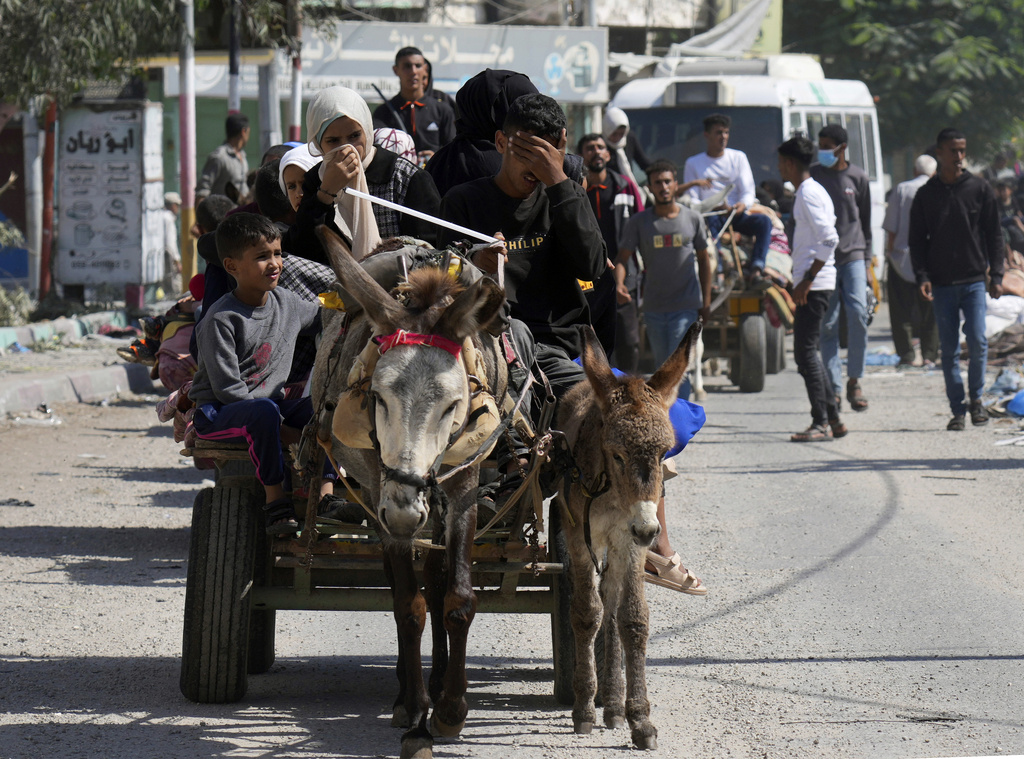
In the aftermath Israel has launched intense airstrikes, cut off food, fuel and water, and told about a million people to evacuate northern Gaza as some form of ground operation appears near. Health supplies are running out.
Countries supportive of Israel after the Hamas attack want more military restraint amid the suffering and the risks.
United States President Joe Biden has expanded his comments on the crisis from initial fierce condemnation of the Hamas attack, to statements on helping Palestinian civilians and keeping the crisis contained. On Monday, he said any Israeli occupation of Gaza would “be a big mistake” and that Hamas “don’t represent all the Palestinian people”.
US Secretary of State Antony Blinken has been on shuttle diplomacy in the Middle East and the US has moved two aircraft carrier strike groups closer “to deter hostile actions against Israel or any efforts toward widening this war following Hamas’ attack”.
Nations and agencies have pushed for a “humanitarian corridor” of aid to Palestinians and questioned whether Israel’s military-focused approach abides by international humanitarian law. There have been attempts to arrange “safe passage” for foreigners out of Gaza through the Rafah crossing from Egypt.
The Palestinian death toll has gone past 2700, according to the Gaza Health Ministry, making this already the worst of five Gaza wars for locals. The toll has also been unusually high for Israelis with 1400 killed, meaning this is the deadliest conflict for the nation since a 1973 war with Egypt and Syria.
Israel’s military has mobilised 360,000 reservists and amassed tanks near Gaza. That could mean an extended time in the Gaza Strip and risky street battles.
Any occupation could attract counter-violence while removing Hamas would create a void that others may try to fill. The Iranian-backed Hizbollah could choose to stretch Israel’s military with cross-border action from Lebanon.
There has been public speculation over whether Gazans might be allowed into Egypt through the Rafah crossing. Arab leaders are wary of a permanent relocation, adding to Palestinian refugees in nearby countries.
Egypt’s president said last week: “It is important that the [Palestinian] people remain steadfast and present on their land”. Jordan’s king warned “against any attempt to forcibly displace Palestinians from all Palestinian territories”.
Military solutions, on their own, have no way of effectively sorting out complex problems of how to deal with a paramilitary group with a political wing in charge of a tiny territory of 2.3 million civilians.
Military force creates problems that then require political solutions — displacement, lack of safety for civilians, infrastructure destruction, basic needs, healthcare. They can fuel cycles of violence and draw outside interest from friends and foes alike.
There’s been pain for both Israeli and Palestinian civilians. Sympathy for both is not contradictory. But people generally don’t see the sense in creating more suffering in response to suffering.
Israel will probably have a hard job extracting itself from this campaign it’s digging into.