Cyclone Gabrielle: Auckland’s Muriwai and Piha west coast communities face aftermath of killer storm
They were in bed when they heard the earth move.
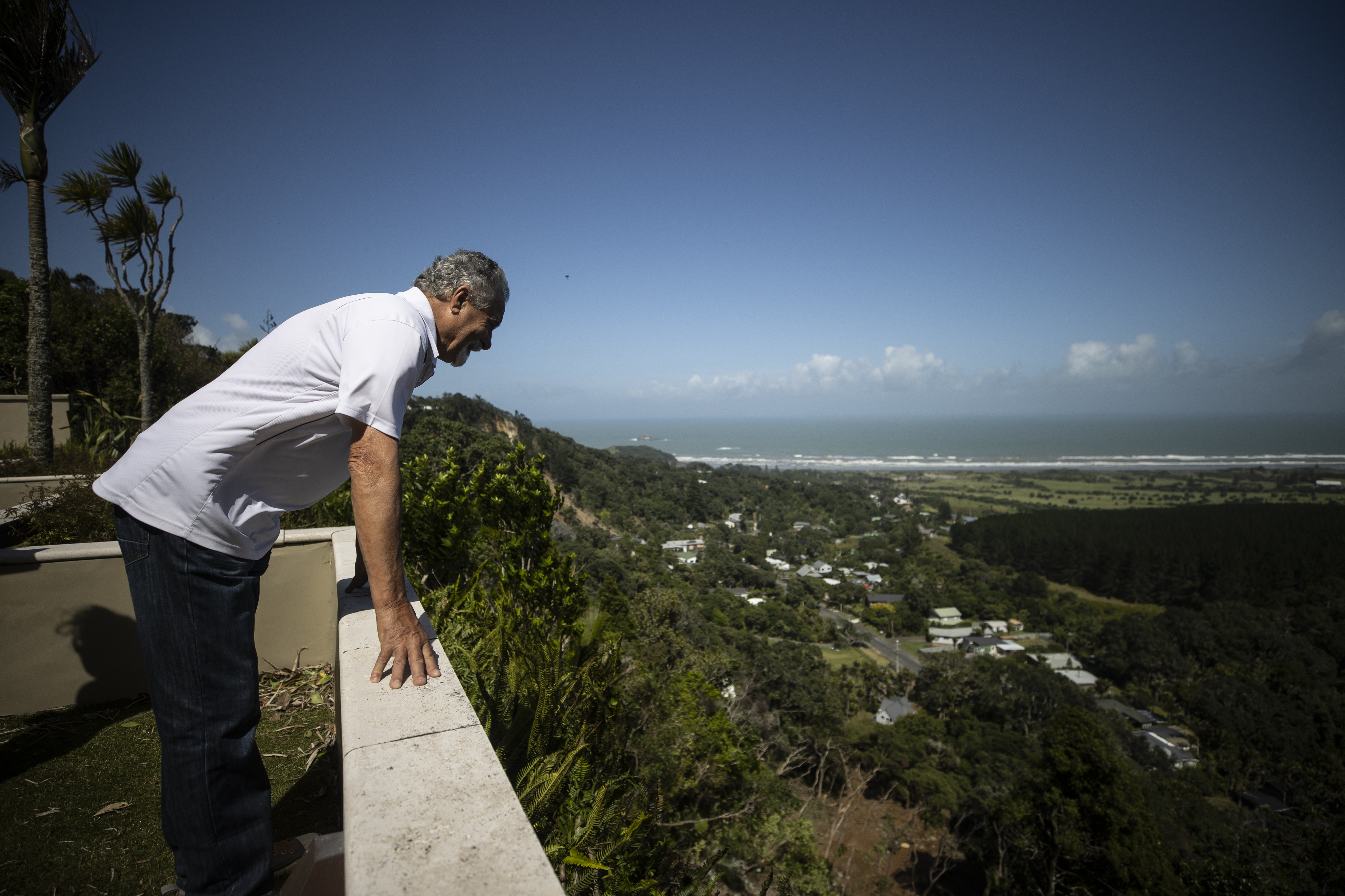
Perched on a cliff edge high above the Muriwai coastline on Auckland’s West Coast, the couple heard the groan of the slip and cracking of trees.
Next came the sound of emergency workers with loud hailers calling for residents below to “get out”.
It was late Monday night as Cyclone Gabrielle intensified, smashing the quiet seaside settlement with powerful winds and torrential rain.
Mike Glamuzina and Karen Eppingstall have lived through some fierce storms during their 30 years in the township, but this was something more terrifying and unprecedented.
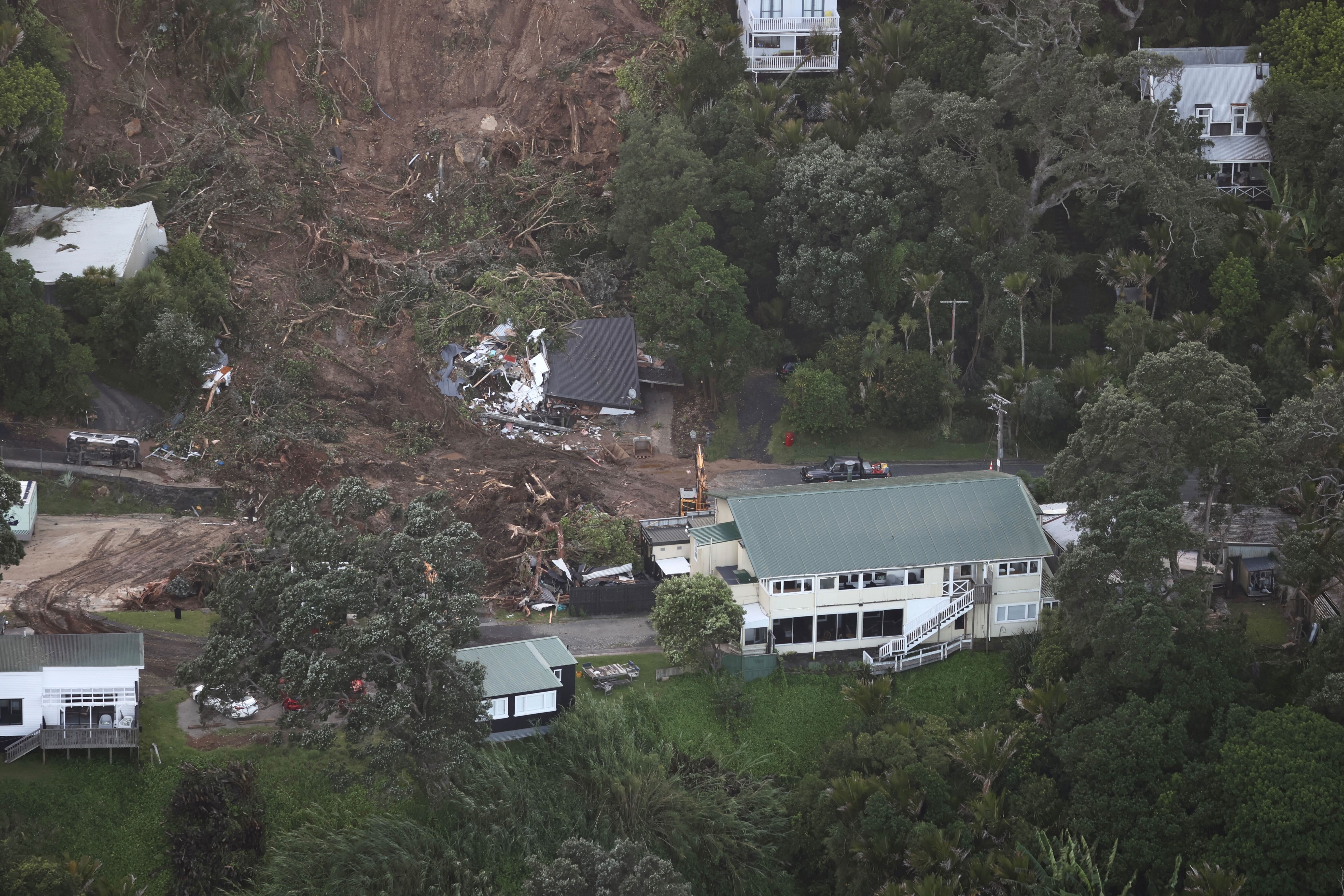
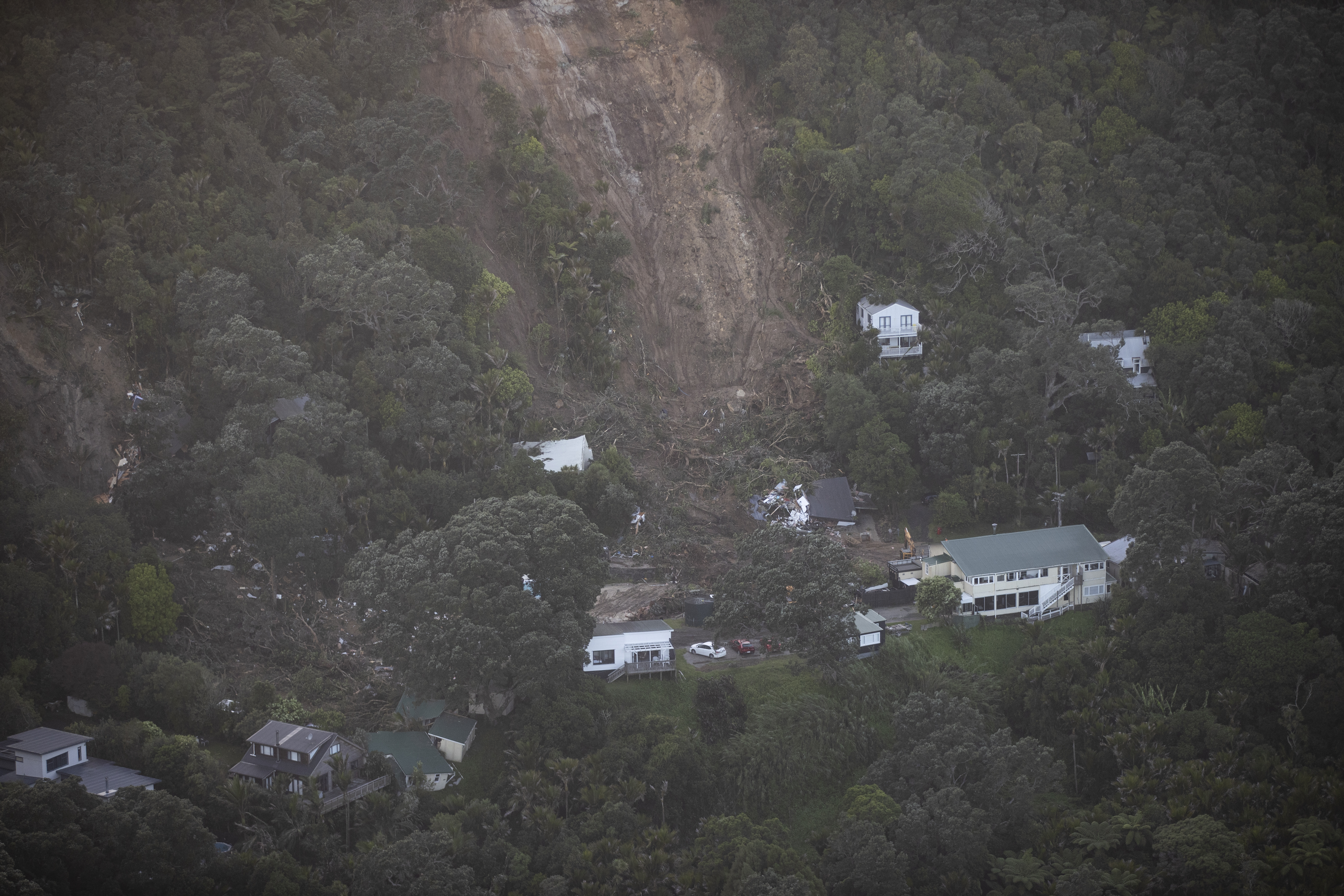
Little did they know the sodden land beneath their beautiful Oaia Rd home, with its breathtaking views of the wild Tasman sea, had given way in at least four massive slips.
Thousands of tonnes of mud, rock and foliage had slid down the cliff face, destroying a house below and trapping two volunteer firefighters. One would be found dead beneath the wreckage two days later. The other is still fighting for his life.
Glamuzina will never forget that noise.
“They were telling everyone to get out and then we could hear the trees cracking and rumbling. When you hear that sound it’s impossible to describe. It was bone-chilling,” he told the Herald.
They tried to go outside to assess the damage but it was pitch black with fierce winds and “horrendous” rain, so decided to wait until morning.
“We could just see lots of lights down there and we thought, ‘What’s going on?’” Eppingstall said.
A friend from St John called just after midnight and told them to be careful and to consider evacuating, warning that “‘persons were trapped and people were injured’ - so I knew it was pretty serious”.
They would later learn one of those men was local vet Dave van Zwanenberg, who had visited the couple’s house just two weeks earlier for a party with his partner and two young kids, but had to leave early to attend to a foaling horse.
As the winds continued to strengthen, Glamuzina’s son and daughter-in-law phoned to say they had been forced to evacuate their nearby home and were coming over with their two kids.
They arrived shortly before 12.30am but the daughter-in-law had to leave immediately. She was good friends with van Zwanenberg’s partner and had been asked to comfort her while colleagues searched for his remains.
There was no power or cellphone coverage, and little information about the unfolding disaster.
They eventually retired to bed but got little sleep as Gabrielle lashed the property.
At 5am, Glamuzina rose to inspect the carnage. Walking to his home’s rear boundary, he could not believe his eyes.
The landscape had been violently transformed. Where once stood mature pōhutukawa and native bush, there were now giant smudges of broken earth yarning eerily over enormous piles of debris.
“We just didn’t know what had happened,” Glamuzina said. “When we saw that we thought, ‘Holy shit, what do we do now?’
“At that point we didn’t know the extent of it. I thought we were the only ones.”
But pointing to another huge slip just north of his property, Glamuzina told the Herald: “That’s the one I believe that’s taken out the firefighter.”
The couple’s home has been yellow-stickered. They were evacuated on Tuesday but returned today and planned to spend the night. They are awaiting an engineer’s report but are confident their property is stable.
Other homeowners are not so lucky, with properties being lost across the close-knit community. Muriwai remains cordoned off due to instability and many people are still in shock.
Glamuzina said locals were coping “okay” but there was a lot of sadness.
“Everybody’s trying to do everything possible to help each other.”
Glamuzina said van Zwanenberg was a salt of the earth guy and very much respected. His loss would be felt throughout the community.
“It’s just the most frightful situation.”
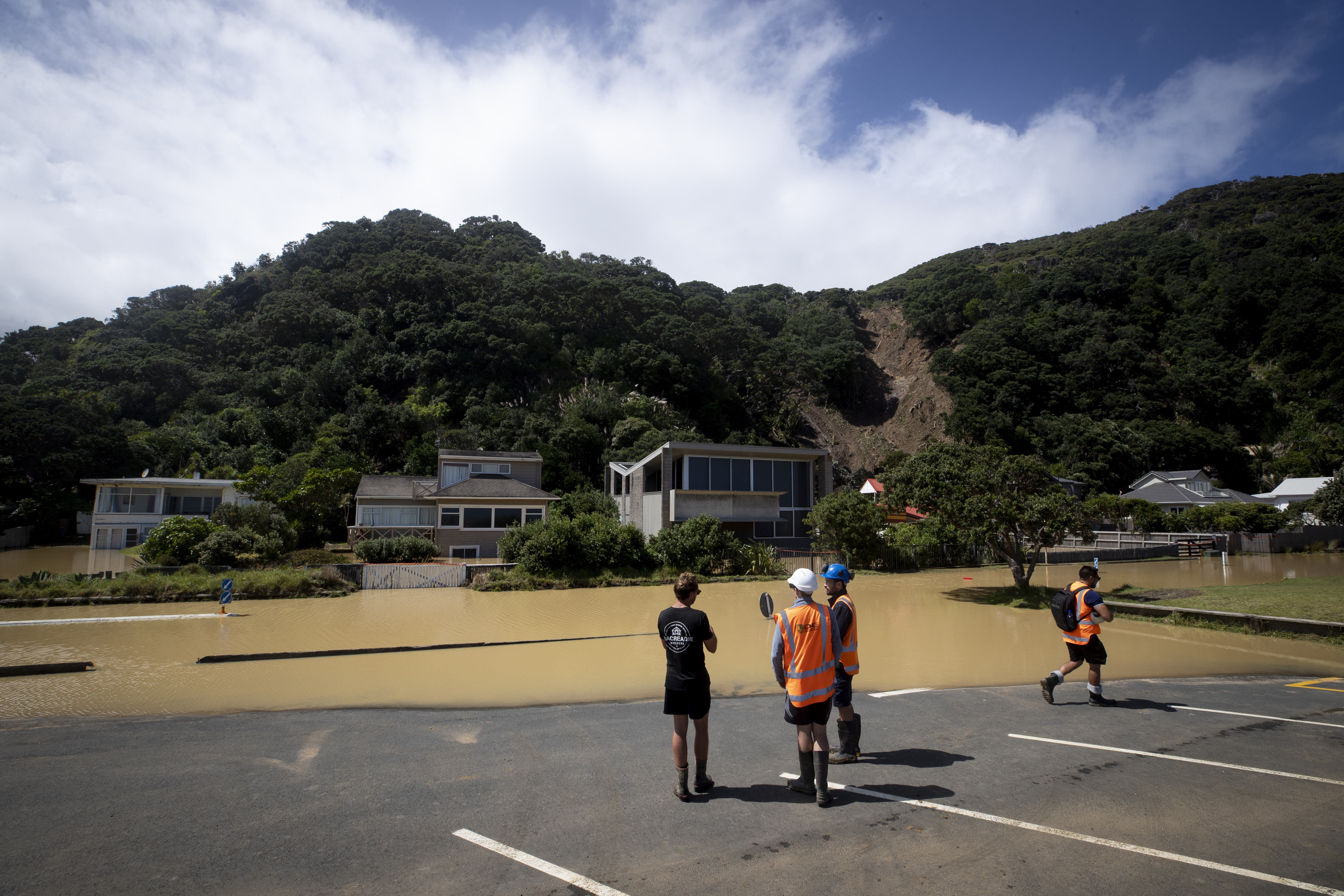
Further south at Piha, the Herald managed to get through a cordon and speak to locals whose lives have also been turned upside down.
Bush-covered slopes have given way behind luxury homes and seaside baches on Marine Parade, with at least seven properties at the most southern end uninhabitable.
In the northern part, the road is still heavily flooded with some homes inaccessible.
Local resident Deb Fabrin said she was unsure how badly her home had been affected but the place next door had been destroyed by a landslide.
Her partner was assessing the damage when the Herald arrived, wading through floodwaters with a bin of food.
The couple were at home about 6pm on Monday when a neighbour told them rocks and mud had fallen behind their property and they needed to leave.
They grabbed a few important papers, blankets and clothing and headed for the RSA.
In the rush, Fabrin forgot her glasses.
“I grabbed a head of broccoli. I mean what the heck.”
They sheltered with other storm refugees inside the building, which had its own generator. She said the noise outside was like a 747 aircraft.
“I thought an extra tornado had come through.”
About 12.30am a drenched couple arrived at the RSA with their son after escaping a slip-hit house.
The trio had been in their own home when a neighbour directly above their property suggested they relocate there as it was more “sturdy”.
But hours later a slip tumbled down the bank, hitting the property where they were sheltering.
“Just before midnight the house started coming in. He said he saw beams twisting and they just got out.”
The fleeing trio had no time to grab anything and were saturated, so Fabrin gave them dry clothes.
Other evacuees were staying at the Piha Surf Life Saving Club, which was cooking residents’ food before it perished, and feeding those in need.
A Fire and Emergency urban search and rescue team were on the ground this afternoon, preparing to enter badly damaged homes.
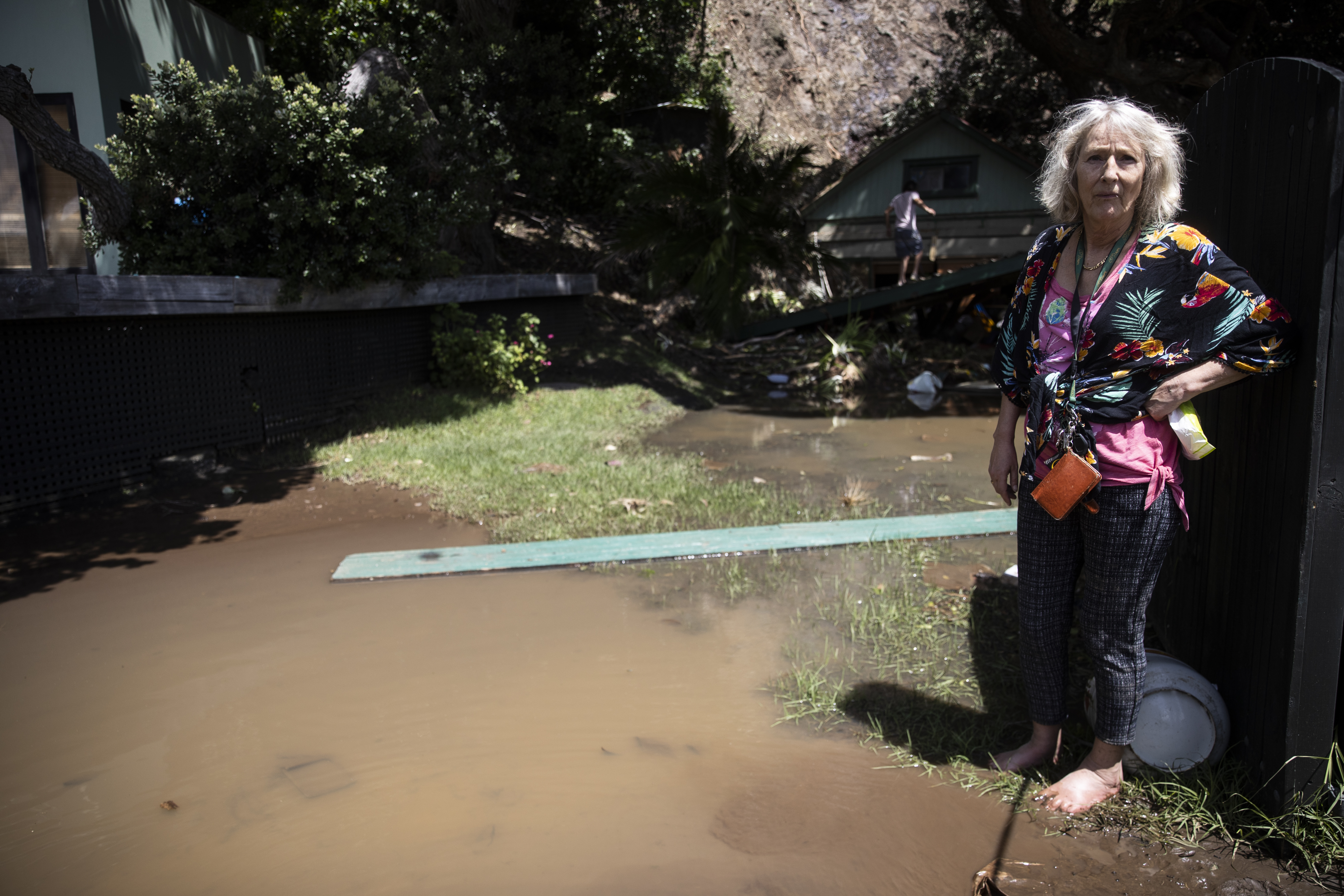
At Piha’s southern end, Vicki Pomeroy said she would have been dead if she hadn’t evacuated to the surf life saving club about 7pm on Monday.
During the storm, a large branch crushed her boathouse home and a slip inundated her neighbouring property, which she rents out as an Airbnb.
A torrent of mud and debris smashed through the rear wall and filled the living room with tonnes of sodden material, smashing everything in its path.
It had been booked that night but fortunately the customers opted to stay in town.
“They wouldn’t have been alive,” Pomeroy said.
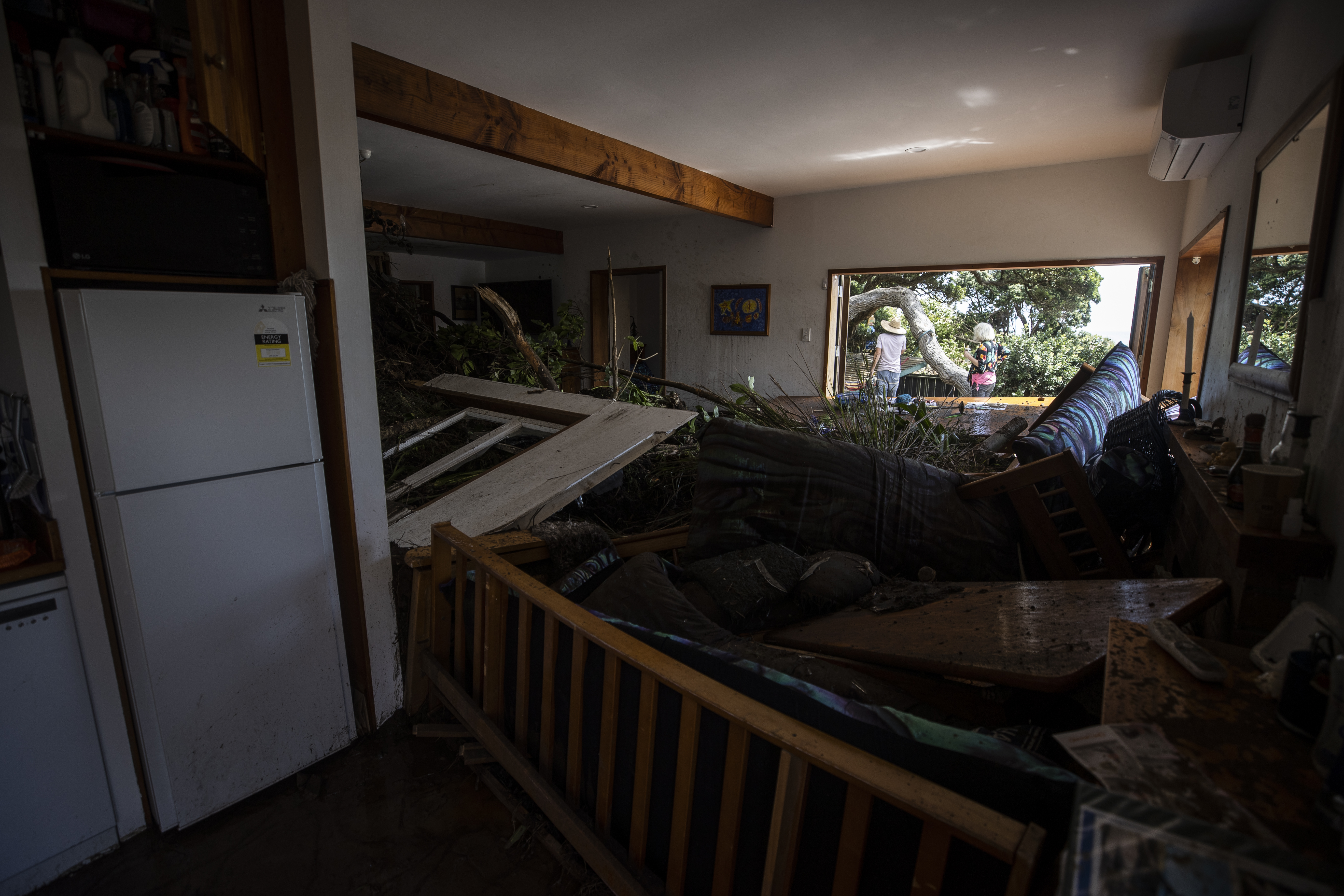
She is now awaiting assessments on the two properties and hopes they can be salvaged.
Pomeroy is tonight facing her third night at the surf life saving club with other displaced locals.
“Everyone was pretty much in shock and exchanging stories. Nobody was crying. Everybody was just trying to work out what to do. Crying comes later.”
Meanwhile, another local resident is pleading with sightseers to stay away from the devastated community as people try to rebuild their lives.
There were fears more traffic could destroy the badly-damaged road into Piha.
“We’ve got people who have lost their homes and they’re kind of being gawked at. The best way to support Piha is not to come.”
The woman said there was still no power and only intermittent cellphone coverage but people were looking out for each other.
A defence force Hercules flew over the settlement on a reconnaissance mission today and helicopters landed on a grass verge.
“We need fresh water, we need the road back on and we need phone reception,” the woman said.
“This is not a tourist spot.”