Polkinghorne murder trial: rope expert and detective’s evidence of bedroom in disarray dominate day four
WARNING: DISTRESSING CONTENT
The trial of Philip Polkinghorne, accused of killing his wife at their Remuera home and staging the scene to look like a suicide by hanging, has heard evidence from a Canadian rope expert who supports the police contention that the rope could not have handled the weight of a person.
But Polkinghorne’s lawyer, Ron Mansfield, KC, gained several concessions from forensic rope expert Robert Chisnall, with the Canadian agreeing the shape of the rope indicated it could have been partially untied by the distressed ophthalmologist after what he says was her suicide by hanging.
Polkinghorne, 71, is accused by prosecutors of having strangled Pauline Hanna, 63, inside their Remuera home – possibly while high on methamphetamine and during a heated confrontation over finances or his expensive extra-marital affairs with prostitutes – before staging the scene to look like a suicide.
The Crown has acknowledged the case against Polkinghorne is circumstantial, meaning there are numerous small pieces of evidence that they have predicted will fit together like a jigsaw puzzle to form a complete picture of what occurred.
The defence, meanwhile, has said police had a fundamental misconception about what had occurred from the get-go, leading to a biased investigation that resulted in a murder charge 16 months later despite no solid evidence to support it.
Chisnall, who appeared via a visual link from his home in Ontario, was the main event of day four of the murder trial on Thursday and a key expert witness for the Crown.
The day before, the jury heard of a “tension test” conducted by a detective on the morning of April 5, 2021, after Polkinghorne had called 111 to report what he said was his wife’s suicide.
Sergeant Christian Iogha told the jury the test, which he had conducted several times before at suicides, to assess whether the rope could support Hanna’s weight to the degree required for suicide by hanging.
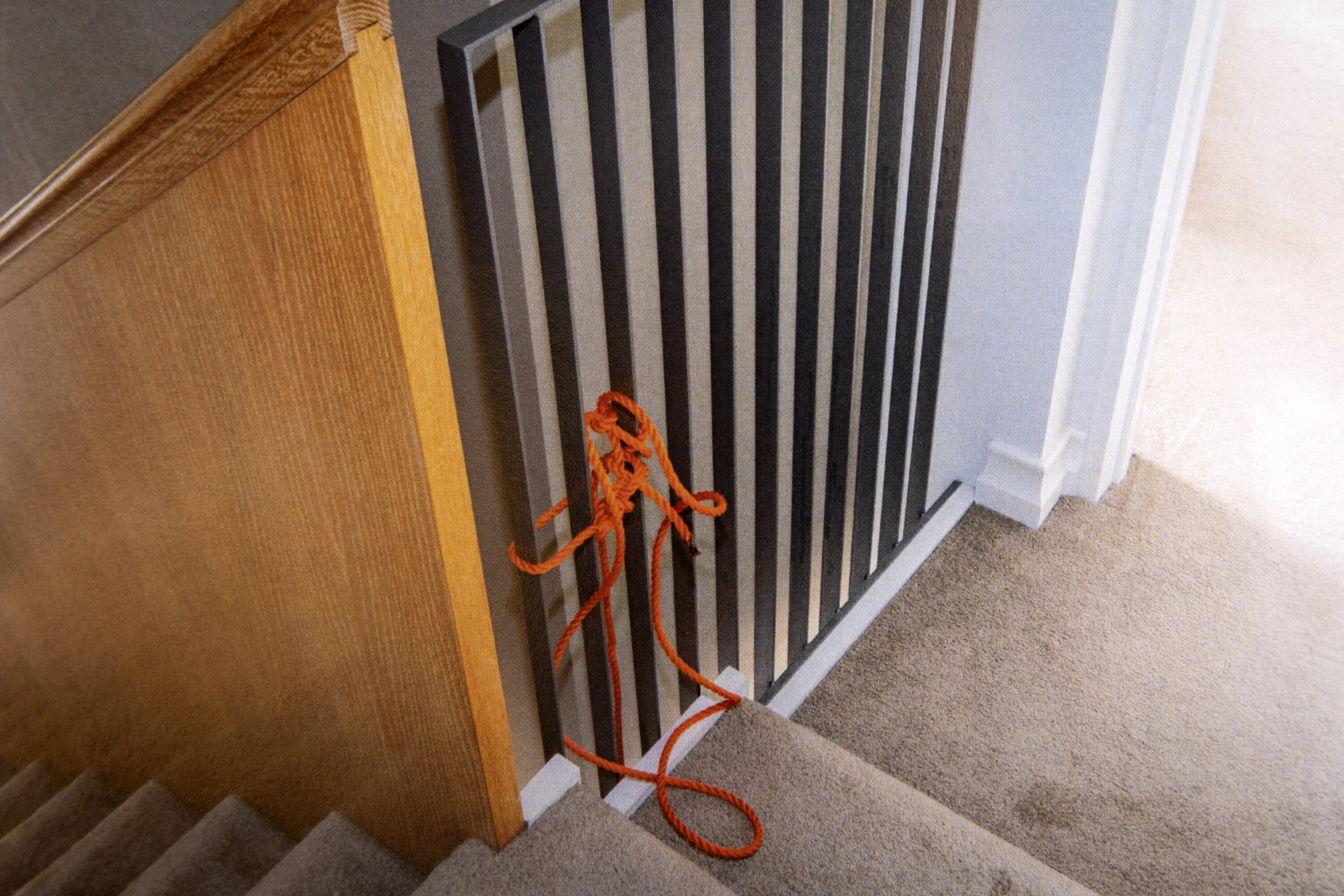
As a result, he and other detectives became suspicious about the explanation offered by Polkinghorne and began treating the death as suspicious.
Chisnall said he did not have the precise rope but reconstructed its shape using a similar rope and photos police took at the scene.
He said he used the ropes and his back porch to try to reconstruct how the rope was tied.
”I wanted to verify how insecure the knots were,” he said.
”Multiple times I pulled on the rope ... the results were the same all the time.”
Polkinghorne told police he undid the “granny knots” upstairs after getting his wife down and undoing the belt and rope from around her neck.
He said he undid the rope upstairs because it looked “hideous” hanging above the landing.
Mansfield, in his cross-examination of Chisnall, questioned if the rope expert had asked to examine the actual rope and balustrade, which the Institute of Environmental Science and Research (ESR) and police secured and removed from the scene. He said he did not.
The KC also questioned Chisnall’s qualifications.
He conceded he did not have an engineering degree, instead holding a Master’s degree in education and a BSc, but said he had extensive experience with rope from teaching rock climbing and rope access and had authored a text on the subject.
Chisnall said he assessed a slippage in the knot to be at least 6cm.
The unknotted end of the rope appeared to have “knot memory” or residuals twists indicating it had been unknotted, he said, appearing to support Mansfield’s contention that his client at least partly undid the rope at the top of the stairs.
Later on Thursday, Sergeant Iogha returned to the witness box, where Mansfield cross-examined him on the state of the scene in the bedroom where Pauline Hanna slept.
An ottoman was tipped over and the room appeared dishevelled, which the Crown suggests shows signs of a struggle before Hanna’s death.
A brown stain on a fitted sheet was identified as likely to be blood, and the bed was missing a top sheet. In a dryer, police found a top sheet.
Polkinghorne also had a small fresh wound on his forehead when police arrived.
Iogha agreed with the KC that if Hanna had been killed in a struggle in the bedroom, she would have needed to be dragged across the bedroom and down the stairs to the landing where her body lay when paramedics and police arrived.
”And as I understand it from the very careful examination of this room,” Mansfield said, “... there were no indications other than what you have told us of any blood being identified in that room either by way of a visual examination or a luminol testing that was considered to be relevant?”
Sergeant Iogha confirmed there was nothing of that nature beyond the brown stain on the fitted sheet.
Nor were there any signs of Hanna having been dragged across the carpet, Iogha said in response to Mansfield’s questioning.
The KC continued to press Iogha on the lack of evidence for how Hanna might have been moved from the bedroom, where the Crown says there were signs of a struggle, down the stairs to the landing where she was found.
”There was no evidence seen on examination or forensically to tell us how that might have occurred?” Mansfield asked.
”Yes that’s correct,” Iogha said.
The sergeant also agreed that beyond the brown stain on the fitted sheet that tested positive for blood, there was no evidence of an assault by way of blood or bodily fluid.
While there was no damage in the bedroom, its state of disarray was strange, Iogha said.
”No damage as such but, it’s just very odd to see a room in that state after someone has just taken their own life,” he said.
The trial will resume on Friday morning at the slightly later time of 10.30am, with more cross-examination of Sergeant Iogha.
Then the Crown is expected to call several expert witnesses including ESR forensic scientists.
THE ROPE IN THE LANDING
“When I got her down it looked too hideous to me. I undid the granny knot upstairs. It looked awful just hanging there. It was just horrible, the rope.”
That was the explanation eye surgeon Philip Polkinghorne gave to police on April 5, 2021 – just hours after the reported suicide of his wife started to be instead treated as a suspicious death – about why the bright orange rope found dangling near her body was unexpectedly loose when investigators arrived.
The statement, from a yet unplayed three-hour police interview, was read aloud by Polkinghorne’s lawyer today as the Crown continued to call evidence on the fourth day of Polkinghorne’s six-week murder trial. It was intended to rebut the findings of a Canadian knot expert who spent the entire first half of the day testifying via audio-video feed from overseas.
STORY CONTINUES AFTER LIVE BLOG
Trial concludes for the day
Vera Alves
The trial has now concluded for the day.
It will resume tomorrow at the slightly later time of 10.30am, with a little more cross-examination of Sergeant Christian Iogha.
The Crown is also expected to call several expert witnesses, including ESR forensic scientists.
Rope tension test back in question
Vera Alves
Defence lawyer Ron Mansfield is questioning Sergeant Christian Iogha on the "tension test" he conducted of the orange rope that was the source of much controversy, claim and counter-claim yesterday.
Iogha said he pulled the rope lightly and it quickly unravelled, showing it could not have supported a body. Mansfield said it unravelled because Polkinghorne had already untied the rope at the top of the balustrade. He had told police he wanted to cut the rope down because it looked "hideous" hanging above the landing.
"How many times have you done such a tension check?" Mansfield asked.
"On all the suicides that were conducted by hanging," Iogha said.
Mansfield has repeatedly criticised the fact police did not record this tension test, either by photographing or videoing their procedure.
Vera Alves
Defence lawyer Ron Mansfield is now questioning Sergeant Christian Iogha about the contents of the dryer and washing machine.
A slightly damp top sheet was found in a dryer – the guest bedroom where Hanna slept was missing a top sheet, the trial heard earlier.
Iogha said under cross-examination that he does most of the washing at home and noticed the load did not smell, indicating, he believed, the dryer and washing machine had just been run.
Mansfield said some people like their bedding to not be completely dry so it is easier to iron.
“I like my bedsheets dry,” Iogha replied.
“Do you iron them?"
“No."
Trial resumes after short adjournment
Vera Alves
The trial has resumed with defence lawyer Ron Mansfield continuing his cross-examination of Sergeant Christian Iogha about various items found in the Polkinghorne home during the 11-day police scene examination, from the mundane – such as cellphones and bedding – to methamphetamine.
After attracting strong interest from the public all week, people have begun to filter from the gallery in the Auckland High Court as the evidence gets into the weeds.
Fingernail photos shown to jury
Vera Alves
A photo of a fingernail police found in a bed was shown to the jury.
A nail was also found in a washing machine.
"From the record that we've reviewed, that appears to be the fingernail that's found in that bedding that appears to be acrylic," Mansfield said.
The trial then heard that Hanna had all her acrylic fingernails attached when her body was examined.
Vera Alves
Defence lawyer Ron Mansfield is now taking Sergeant Christian Iogha on a sort of tour around the Polkinghorne home, questioning him about various exhibits he catalogued including a cellphone, the ottoman in the bedroom where Hanna slept that was tipped over, and several bottles of lubricant. It is unclear where the cross-examination is headed.
Mansfield is once again questioning Iogha about some meth police found in a red container.
"Can you age methamphetamine by looking at it or analysing it?"
"I'm not an expert."
"We might ask someone else about it this week."
Justice Lang has had enough and has called the afternoon adjournment.
'Very odd': No evidence of body being dragged but state of bedroom 'strange' – police
Vera Alves
Defence lawyer Ron Mansfield is continuing to press Sergeant Christian Iogha on the lack of evidence over how Hanna might have been moved from the bedroom, where the Crown says there was signs of a struggle, down the stairs to the landing where she was found.
"There was no evidence seen on examination or forensically to tell us how that might have occurred?" Mansfield asked.
"Yes, that’s correct," Iogha said.
Iogha also agreed that beyond the brown stain on the fitted sheet that tested positive for blood, there was no evidence of an assault by way of blood or bodily fluid.
While there was no damage in Polkinghorne's bedroom, its state of disarray was strange, Iogha said.
"No damage as such but it’s just very odd to see a room in that state after someone has just taken their own life," the sergeant said.
"And the person who found them has told us that the place that they last stayed was in that room."
Detective quizzed about evidence of struggle in bedroom
Vera Alves
Defence lawyer Ron Mansfield is asking Sergeant Christian Iogha about the scene in the master bedroom.
An ottoman was tipped over and the room appeared dishevelled, which the Crown is suggesting shows signs of a struggle before Hanna's death. A brown stain on a fitted sheet was identified as likely to be blood, and the bed was missing a top sheet. Police found a top sheet in the dryer. Polkinghorne also had a small fresh wound on his forehead when police arrived.
Iogha agreed with Mansfield that if Hanna had been killed in a struggle in the bedroom, she would have needed to be dragged across the bedroom and down the stairs to the landing where her body lay when paramedics and police arrived.
"And as I understand it from the very careful examination of this room... there were no indications other than what you have told us of any blood being identified in that room, either by way of a visual examination or a luminol testing that was considered to be relevant?"
In response to Mansfield's questioning, Iogha confirmed that there was nothing of that nature beyond the brown stain on the fitted sheet. Nor were there any signs of Hanna having been dragged across the carpet.
Iogha, who was then a detective, said police were looking for evidence she had been moved after she died.
Trial resumes with cross-examination of officer in charge of the scene
Vera Alves
The trial has resumed, with Sergeant Christian Iogha back in the witness box for more cross-examination by Ron Mansfield KC.
Iogha was the officer in charge of the scene from late on the morning of April 5 to April 13, 2021.
Mansfield said his records indicate police remained at the scene until April 16, when they finished their 11-day scene examination.
Mansfield is asking whether Polkinghorne was charged at the time the meth and the glass pipe was found at his home. More than 30g of meth was found in the home.
Iogha confirmed he was not charged with the methamphetamine offences until some time later.
Polkinghorne was charged with murder 16 months after calling emergency services to what he said was his wife's death in a suicide early on April 5.
Mansfield is questioning Iogha about the visit by the then Crown solicitor of Auckland, Brian Dickey, to Polkinghorne's home on April 15.
"Can we agree that at least by 15 April, the New Zealand Police were contemplating charging Mr Polkinghrone with the death of his wife and hence the involvement of the Auckland Crown solicitor?" Mansfield asked.
"I can't comment on that," Iogha said.
Iogha agreed with Mansfield's assertion it would be unusual for the Crown solicitor for Auckland to visit if police were merely contemplating meth charges.
Vera Alves
Crown prosecutor Brian Dickey is asking forensic rope analyst Robert Chisnall if it is possible to determine whether the orange rope tied in four half-hitch knots to the top of the balustrade appeared to have been loosened.
"It doesn’t appear to have been," Chisnall said.
"Because the half hitches are snug."
Mansfield said his client had loosened the knots and later suggested he had undone a couple of knots. Polkinghorne told police he found the appearance of the rope hanging over the landing "hideous", as his wife lay dead in the landing.
Chisnall's evidence has concluded.
The trial is taking the lunch adjournment and will resume about 2.15pm.
It is expected a detective who gave evidence yesterday, Sergeant Christian Iogha, will return to the witness box this afternoon.
Vera Alves
Defence lawyer Ron Mansfield is ramping up his cross-examination of forensic rope expert Robert Chisnall.
He has repeatedly had Chisnall concede that the rope, if tied back up at the balustrade with half hitches and jammed against the carpet edge, could have feasibly held as a knot.
Crown prosecutor Brian Dickey now has some questions in reply.
Dickey is going over Chisnall's credentials, after they were targeted by Mansfield in cross-examination.
Chisnall told Dickey he was the author of a text, published in 2000, titled "The forensic analysis of knots and ligatures".
He has also had articles published in the American Journal of Forensic Science and in other journals around the world.
Rope had signs of 'knot memory'
Vera Alves
Defence lawyer Ron Mansfield is quizzing rope expert Robert Chisnall about the shape of the coil of orange rope placed on the stairs.
Key to the defence version of events is that Polkinghorne undid the rope at the top of the bannister before police arrived. The eye surgeon told detectives the rope looked "hideous" hanging down to the landing above his dead wife.
Chisnall agreed with Mansfield the strand of rope appeared to have been knotted previously and had signs of "knot memory", where a rope retains kinks and deformations after it's been tied and untied.
"Were you able to see bends and kinks that showed it had been secured around the upstairs balustrade?" Mansfield asked.
"That's a possibility," Chisnall said.
Cross-examination of rope expert continues, focused on complexity of the knots
Vera Alves
Mansfield is asking Chisnall about the bowline knot, a more advanced knot than a half hitch. It is commonly used by sailors.
Chisnall said it is not as secure as people think and has but since been superceded in rock climbing.
He is playing an animation of someone tying a bowline.
The lawyer is referring to the piece of cut orange rope found on the stairs in Polkinghorne's house.
It was tied in an "overhand loop", Chisnall said.
"That again is a pretty unsophisticated type of knot?" Mansfield asked.
"That's correct," Chisnall replied.
Chisnall agreed with Mansfield that both the knot types found on the orange rope were not very sophisticated and able to be tied by most people.
The point of Mansfield's cross-examination is to suggest his client, an experienced eye surgeon, would have been adept at knots and not tied the clumsy cluster of knots found on the orange rope.
Mansfield is referring to a 111 call in which the call-taker told Polkinghorne to loosen the noose around his wife's neck and cut her down.
He is now reading a statement Polkinghorne made to police on the morning of April 5, soon after he called 111.
He said he couldn't remember what order he did the following things in.
"I undid the belt and rope from around Pauline’s neck," he said.
"Then went upstairs to undo the knot from the cord."
Mansfield relied heavily on these comments during his cross-examination of the detectives yesterday when attempting to show the jury why the investigators found the orange rope was slack.
Mansfield is referring to Polkinghorne’s interview at the police station with Detective Ilona Walton on April 5, 2021.
He said he undid the “granny knots” upstairs after getting his wife down and undoing the belt and rope from around her neck.
He said he undid the rope upstairs because it looked “hideous”.
“It looked awful just hanging there.”
He told the detective he placed her dressing gown around her and removed the belt from her neck.
"I just felt she needed some dignity."
Polkinghorne, who is on bail and sitting in a bench behind Mansfield rather than in the dock, is placing his head in his hands and rubbing his face during the interview.
Complexity of the rope knots discussed in cross-examination
Vera Alves
The trial has resumed after a short break. Defence lawyer Ron Mansfield KC will continue to cross-examine Canadian forensic rope expert Robert Chisnall.
Philip Polkinghorne's lawyer Ron Mansfield KC is questioning Chisnall about the sophistication or lack thereof of the four knots, called half hitches, by which the rope was secured to the balustrade railing.
"Is a half hitch a particularly sophisticated type of knot?" Mansfield asked.
"No, it's not," Chisnall replied.
Mansfield is honing in on the basic nature of the knot, similar to a shoelace tie.
He then showed the jury a video of someone tying a half hitch.
"It can be sufficient to hold weight, correct?" Mansfield asked.
"If you tie enough of them," Chisnall replied.
Mansfield has asked if he was given the occupation of the person on trial. Polkinghorne was a prominent ophthalmologist in Auckland until his recent retirement following his wife's death.
Chisnall said he believed the defendant was an eye surgeon.
"You would know that a surgeon is well taught in relation to knot tying," Mansfield asked.
"Yes," Chisnall said.
"And for an experienced surgeon wouldn't it just become second nature..."
Justice Lang has interjected and Mansfield is moving on.
Chisnall said he had looked at about 100 different knots used by surgeons over the years.
Now, Mansfield is showing the jury an animation of a complex and precise knot used by surgeons.
"There were no surgical knots used, were there?" Mansfield asked, referring to how the orange rope was secured to the balustrade.
Chisnall said there were not.
Vera Alves
Jurors were also shown a photo of the knotted rope at the scene of Pauline Hanna's death before detectives tugged on it, causing the slack end of the rope to fall to the floor below.
Jury shown photos of Chisnall's attempts at recreating the knots
Vera Alves
Jurors in the Philip Polkinghorne murder trial were shown photos of knots created by expert Robert Chisnall attempting to recreate the scene of Pauline Hanna's death.
Chisnall said his recreations involved rope he already had in storage. Some of the experiments were conducted using a balustrade on his back porch in Canada.
Tests show rope would likely slide down the balustrade - expert
Vera Alves
Defence lawyer Ron Mansfield continues the cross-examination of Canadian forensic rope analyst Robert Chisnall.
"Would it surprise you that ESR were actually able to identify the rope or the closest thing to it?" Mansfield asked Chisnall.
“No."
"They went and purchased the rope themselves, did you know that?"
Chisnall said he was not aware of that.
"They went to a retail outlet as I understand it, called Super Cheap Auto here in New Zealand, have you heard of that?"
"I’ve never heard of it."
Chisnall earlier admitted using some old ropes he had lying around, leading to this line of questioning from Mansfield.
"The item that they got from Super Cheap Auto could have been couriered or sent to you quite easily, did you know that?" Mansfield said.
Chisnall said his tests and reconstructions showed the rope would likely slide down the balustrade if pressure was applied to it.
The trial has adjourned for the morning break, following over an hour of evidence from Chisnall.
The technical and sometimes plodding evidence has failed to provide a definitive view or smoking-gun soundbite on exactly whether the orange rope was tied by Polkinghorne to stage the scene, as the Crown alleges, or whether it could have held her body in what the defence says was her suicide by hanging.
What it has shown is that Chisnall supports the police contention that the rope and four knots, tied as it was to the balustrade with a lot of slack, could not have supported much weight. However, Mansfield has said his client loosened the knot to free his wife before police arrived.
🎧 LISTEN | Accused: The Polkinghorne Trial
Vera Alves
Defence lawyer questions expert's credentials
Vera Alves
Defence lawyer Ron Mansfield KC is now beginning his cross-examination of the rope expert.
Mansfield immediately began chipping away at the rope expert's credentials.
He is listed as "Dr Robert Chisnall" on the witness list but the expert said this was incorrect, and he did not have a doctorate, and was a "Mr".
Chisnall is based in Kingston, Ontario, Canada.
He used the back-deck balustrade at his home for a rope test, Chisnall said in response to Mansfield's questioning.
Mansfield asked if the demonstration "out on your back porch" used a different type of balustrade to that found in Polkinghorne's home in Upland Rd, Remuera.
"Correct," replied the rope expert.
The yellow rope he used was a half-inch polypropylene multi-strand from an unknown manufacturer, he said responding to Mansfield's questions.
It was a half-inch diameter, so 10 or 11mm.
He has a back storage room where he keeps ropes of various sizes for his tests, he told Mansfield.
Police and ESR preserved the balustrade from Polkinghorne's home with the rope still attached.
Mansfield is showing the jury photos of ESR forensic scientists wrapping up the balustrade in cardboard to remove it from the house and preserve it as evidence.
"So you had seen these images?" Mansfield asked.
"Yes," Chisnall said.
"When you saw these images, did you ask whether you could have access to the actual balustrade and rope?"
"No I did not."
"Were you offered the opportunity to examine the balustrade and the rope by ESR?"
Chisnall said he was not.
Mansfield asked whether he thinks it would have been helpful to have the actual balustrade and the rope.
Chisnall said no, because he could have reconstructed the rope and balustrade with any rope and balustrade he had to hand.
"What is your primary qualification?" Mansfield asked.
"Masters of education," the Crown's rope expert replied.
"You've got a Masters in education, what form of education?"
"My main concentration was curriculum design and it was also looking at risk and crisis management."
"So you don't have an engineering qualification?" Mansfield asked.
"No I do not," Chisnall said, but he added he did have a BSC in biology with a minor in maths.
Chisnall is admitting he had not formally studied anything to do with ropes, but he does have an interest in knots.
Chisnall said he had taught rock climbing and rope access and they use of knots in both fields.
Under cross-examination from Mansfield, he said he can sometimes work out if someone had tied a knot themselves or if someone else had tied them up.
Mansfield is again suggesting he should have asked to examine the actual balustrade and rope from the scene.
'Very little force' required to collapse the knots - expert
Vera Alves
Forensic rope analyst Robert Chisnall said he did not have the precise rope but reconstructed its shape using a similar rope and photos police took at the scene.
Chisnall said he used balustrades at his home and elsewhere to try to reconstruct how the rope was tied.
"I wanted to verify how insecure the knots were," the Canadian said.
"Multiple times I pulled on the rope... the results were the same all the time."
An electronic hand gauge used for weighing luggage showed "very little force" was required to collapse the knots down the balustrade.
Crown prosecutor Brian Dickey and Chisnall are bogged down in details of the various tests and reconstructions undertaken by the expert.
Chisnall said the results of the contentious "tension test" undertaken by a detective at the scene on the morning Hanna was found dead were consistent with his independent tests from reconstructions.
What forensic rope analyst Robert Chisnall found when he examined the rope
Vera Alves
Forensic rope analyst Robert Chisnall's highly technical evidence continues.
He is reading from the analysis section of his report into the rope.
The rope was about 9mm in diameter and knotted with four "S" half hitches, common knots requiring little skill, he said.
Initially there was excess slack in the rope draped around the bannister, Chisnall said.
“The slack part of the rope was insecure and unknotted.”
“When an attending officer made contact... the draped tangles collapsed,” he said.
The unknotted end of the loop then slipped down to the floor.
Chisnall said one of the attending officers pulled the rope down to the floor until the loop tightened around the railing at the top of the stairs.
Quite a lot of rope was initially lying on the floor below, about 1m worth, he said.
The expert witness for the Crown said he assessed a slippage in the knot of at least 6cm.
The unknotted end of the rope appeared to have "knot memory" or residual twists indicating it had been unknotted.
This appears to support Ron Mansfield KC's contention that his client at least partly undid the rope at the top of the stairs.
The "knot memory" apparent in the rope indicates it had previously held two half hitches, the type of knot used to secure the other part of the rope to the balustrade railing.
Another part of the rope was found on the lower part of the stairs. There was one knotted loop. One end was melted – the trial earlier heard Polkinghorne had previously signed the rope to stop it fraying – while the other end was cut. Polkinghorne has said he cut the rope from Hanna's neck.
The loop was just over 30cm in circumference, Chisnall said.
'Knot reconstruction was not possible' - forensic rope expert
Vera Alves
The rope was tied to the upstairs balustrade of the stairs leading to the master bedroom. Hanna's body was found on the floor in the landing below the staircase. Polkinghorne said he cut her down.
"It was an insecure grouping of tangles," Robert Chisnall, forensic rope analyst from Canada, said of the knot at the top of the stairs on the balustrade.
"It was too long and too insecure to suspend any weight."
Polkinghorne's lawyer Ron Mansfield KC has said the slippage was because his client loosened the rope after cutting her down and removing the noose from his wife's neck.
Chisnall said his analysis showed the rope "may have been previously knotted with two half hitches".
"Knot reconstruction was not possible."
Court hearing from Robert Chisnall, forensic rope analyst from Canada
Vera Alves
Robert Chisnall, forensic rope analyst from Canada, is speaking via video link.
Chisnall is an older, smartly dressed man appearing via video link. He is set to shed light on the use of rope in murders and suicides, a subject on which he has given evidence in numerous trials internationally.
Crown prosecutor Brian Dickey is leading Chisnall's evidence. He said he wrote a manual in 2000 on forensic analysis of knots and ligatures. He has given evidence in hundreds of cases. Half of his appearances as a witness are paid and the other half are pro bono.
He has a recreational and professional background, in rescue and access via ropes along with rock climbing, the trial is hearing.
Chisnall said he was originally contacted by forensic science service ESR as part of the Polkinghorne investigation on April 12, 2021.
He has written a report relating to the orange rope Polkinghorne says his wife used to kill herself.
The report is being presented to the jury.
Vera Alves
The public gallery in Courtroom 11 is again set to be full almost to capacity for the keenly watched trial.
There is a small delay in the start of proceedings, originally scheduled to start at 10am with the expert witness form Canada. It appears there may be some technical problems.
Polkinghorne trial to hear from Canadian expert
Vera Alves
The fourth day of evidence is set to begin in the trial of Philip Polkinghorne at the Auckland High Court, accused of murdering his wife Pauline Hanna more than three years ago. The jury is expected to hear from an expert in Canada regarding the rope Polkinghorne says his wife use to kill herself, but that the Crown claims is the centrepiece of his attempt to stage the scene of her killing as a suicide.
Yesterday's evidence centred on the orange rope prosecutors say Polkinghorne used to stage the scene as a suicide. The retired ophthalmologist's defence says Hanna used the rope to hang herself.
The crux of yesterday's cross examination was a contentious "tension test" used by a detective to assess whether the rope could support Hanna's weight to the degree required for suicide by hanging. Sergeant Christian Iogha said the orange rope came away easily at a light pull, unravelling for 30 seconds. As a result, he and other detectives became suspicious at the explanation offered by Polkinghorne, and began treating the death as suspicious.
Polkinghorne's Ron Mansfield KC took aim at the tension test in his lengthy cross examination of Iogha and Detective Ilona Walton.
He said his client had loosened the noose around his wife's neck as instructed by a 111 call-taker and also loosened the knot at the balustrade before police arrived, giving the line some slack, so it was only natural the rope came away when pulled.
Mansfield also had the detectives admit they did not photograph or video the "tension test" and possibly should have done so. At 10am, an expert witness is set to appear via video-link from Canada. He is expected to give evidence relating to the rope that became a focal point of yesterday's proceedings.
Day 4 of the trial of Philip Polkinghorne set to begin
Vera Alves
Kia ora and welcome to the fourth day of the trial of Philip Polkinghorne, the Auckland eye surgeon accused of the murder of his wife, health worker Pauline Hanna.
The trial will resume at 10am with an expert witness from Canada, who will give evidence via video link.
Stay with us as we bring you the latest updates from the High Court in Auckland.
STORY CONTINUES
Robert Chisnall, who has published papers and authorised a manual on knot-tying for forensic investigators, came up with a simple conclusion: the rope, as police found it tied, could not have been used in a suicide by hanging.
“It was an insecure grouping of tangles with additional slack on the floor,” he said. “It was too long and too insecure to suspend any weight.”
A series of “granny knots” were tied across three balustrades at the top of the stairs. The knot had not slid down to the base of the railing and could easily be moved up and down when given a slight push, the investigators testified.
The knot expert drew detailed sketches of the knot and recreated it at his home in Canada using multiple varieties of rope he had in storage. He used two different balustrades – one on his back deck – then conducted more than 20 tests to see how the rope and the knot reacted.
“Very little force was required to cause it to collapse,” Chisnall testified, explaining that he yanked on the ropes while using a luggage-weighing device to calculate the amount of force needed to make the knot slide down the balustrade. “The force didn’t even register on the gauge. It was under 1 kilogram.”
The witness disagreed, under cross-examination by Mansfield, that having the actual balustrade and rope for his experiment would have changed the outcomes. He could have tied any rope to any balustrade and, given the way the knot was tied, it would have reacted the same way, Chisnall insisted.
But Mansfield also suggested during cross-examination that the expert didn’t have all the evidence necessary to reach a conclusion. He noted that Polkinghorne told police and the 111 operator on the day of his wife’s death that he had loosened or undone the knot shortly after finding his wife and cutting the other end of the rope.
It made sense that someone trying to undo a knot would lift it up the balustrade for easier access if it had slid down during a hanging, Mansfield suggested.
He also noted that the knots used to secure the rope were relatively simple, while Polkinghorne’s knowledge of complex knots would have been second nature. The defence played animated videos of surgical and simple knots to show jurors the difference.
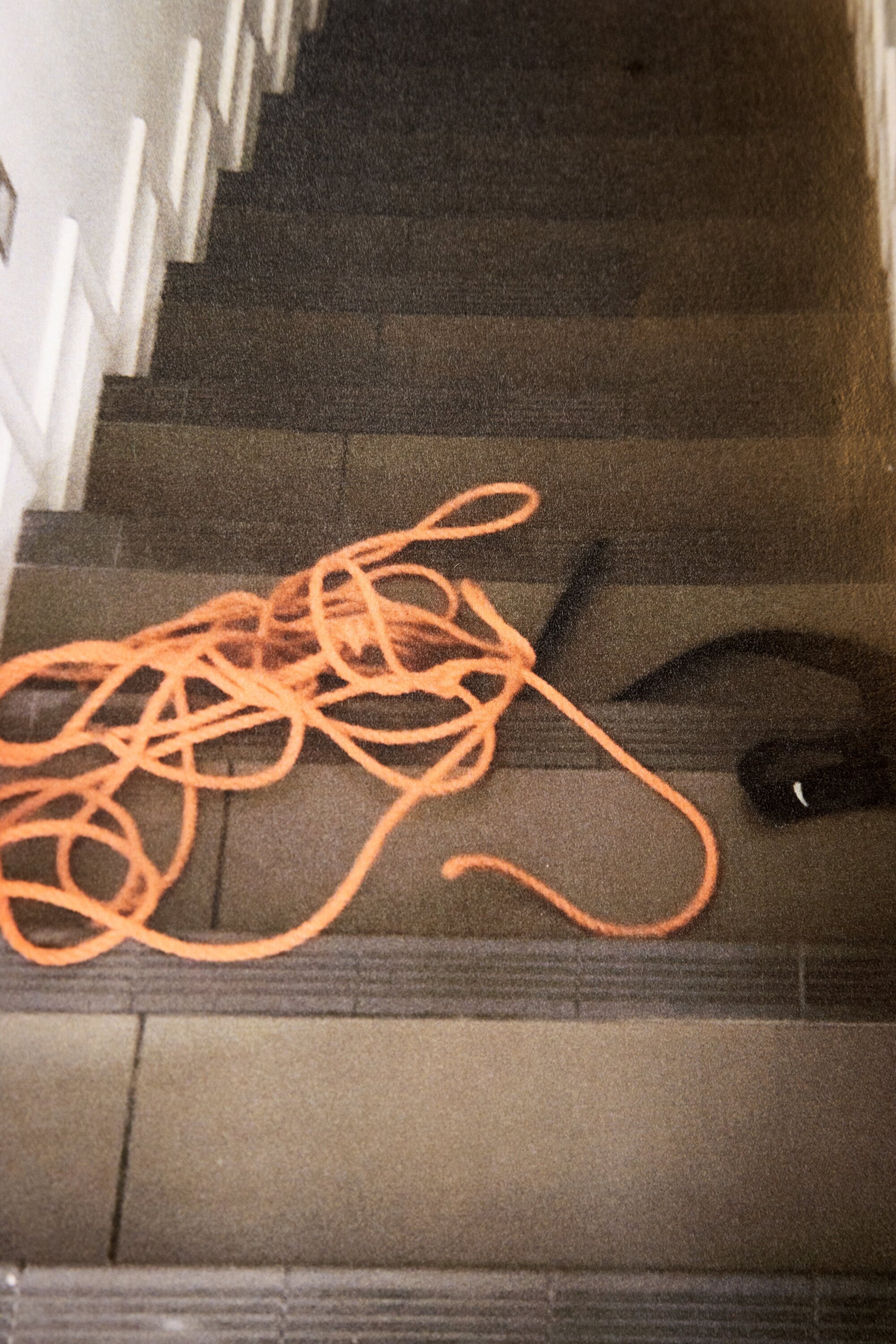
Adding confusion to the matter, two ropes were found at the scene – another one was left in a jumbled mess on the stairs next to Hanna’s body. That might have been the actual rope Hanna used to hang herself before her husband cut it down, Mansfield suggested.
The lawyer noted that, although it was not in the expert’s report, Chisnall had sent an email to authorities early on noting that the rope on the stairs had some kinks in it that might possibly match the three bannisters upstairs. Chisnall said there wasn’t enough evidence to know for sure, which is why it wasn’t included in his final assessment.
“I thought it was the only piece of rope,” Polkinghorne told police, according to a transcript read aloud by his lawyer. “I didn’t see the other one [still tied at the top of the stairs]. I thought I undid that.”
But everything was flustered as he reacted fast, he continued.
“I’ve never seen that [knot] up at the top, unless I lifted it up to undo it,” he continued to police. “I thought I undid it. I thought I got rid of it. I’m sorry, I can’t help you any more.”
Craig Kapitan is an Auckland-based journalist covering courts and justice. He joined the Herald in 2021 and has reported on courts since 2002 in three newsrooms in the United States and New Zealand.
The Herald will be covering the case in a daily podcast, Accused: The Polkinghorne Trial. You can follow the podcast at iHeartRadio, Apple Podcasts, Spotify, through The Front Page feed, or wherever you get your podcasts.