Coroner finds Green MP Efeso Collins died from ‘silent’ heart disease
Efeso Collins was doing what he had always done – showing up for his community – when his life was suddenly cut short.
What the Green MP didn’t know was that he was experiencing “silent” coronary artery disease and the cardiac arrest that caused his death on February 21, 2024, “could have occurred at any time”, a coroner has found.
Collins, also known as Fa’anānā Efeso Collins, was 49 when he collapsed and died after competing in ChildFund’s Water Run event in Auckland’s Britomart precinct, where he was helping raise funds for local Pacific communities.
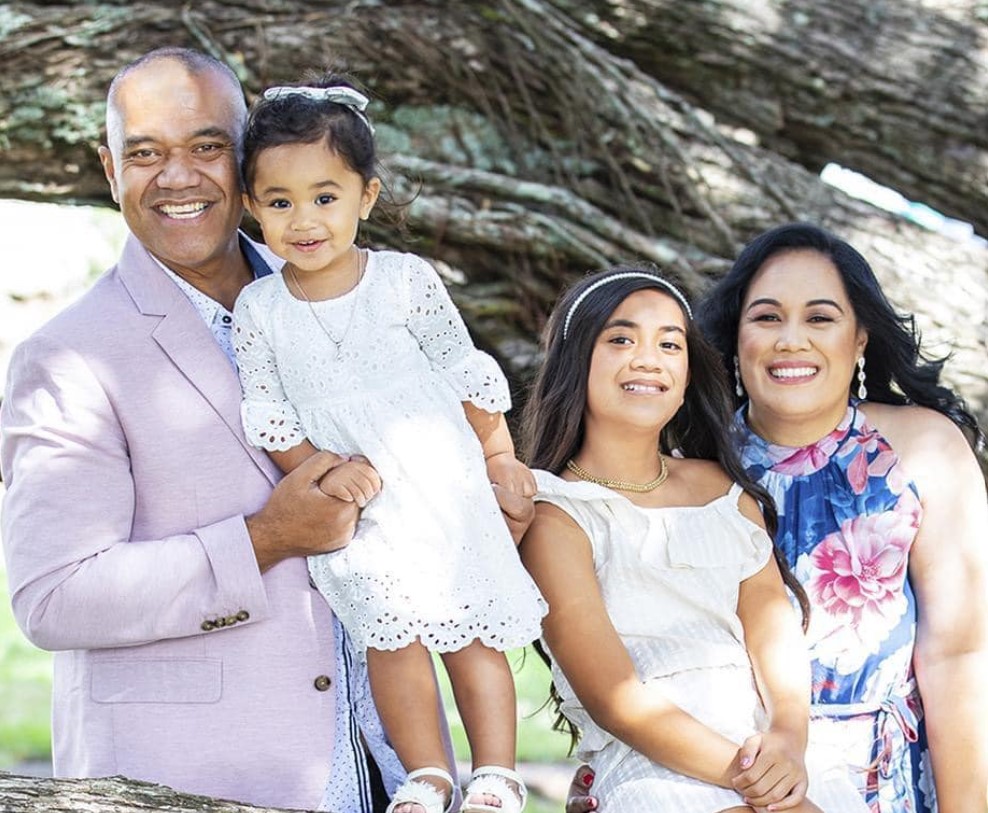
Collins was the loved husband of Vasa Fia Collins, the father of two young daughters, a highly respected Samoan matai and someone who worked tirelessly advocating for causes he was passionate about.
Vasa Fia Collins had numerous concerns around how the event was managed that day and unsuccessfully pushed for an inquest into her husband’s death.
In findings released today, Coroner Janet Anderson, who decided against holding an inquest, was not critical of the management of the event.
However, she made recommendations stressing the importance of rapid access to Automated External Defibrillators (AEDs) and early resuscitation efforts when cardiac arrest occurs in the community.
“Being aware of the exact location of nearby AEDs and identifying a specific person to obtain one in the event of an emergency may increase the ability to respond quickly to an unexpected cardiac event,” the coroner said.
Given that cardiovascular disease was the leading cause of death in New Zealand, the coroner pushed for more education and public awareness campaigns, and to ensure the availability of AEDs in Pacific, Māori and socio-economically challenged communities where rates were higher.
She said Collins’ death was felt throughout Aotearoa.
“It is natural to feel robbed when someone so special is taken too soon, and there are many people in this country who share the sense of grief and shock that followed his passing.”
‘Smiling and interacting’ before collapse
“Characteristically”, on the morning he died, Collins was helping others by taking part in the event organised by ChildFund and marketing agency, Campbell+Co, the findings said.
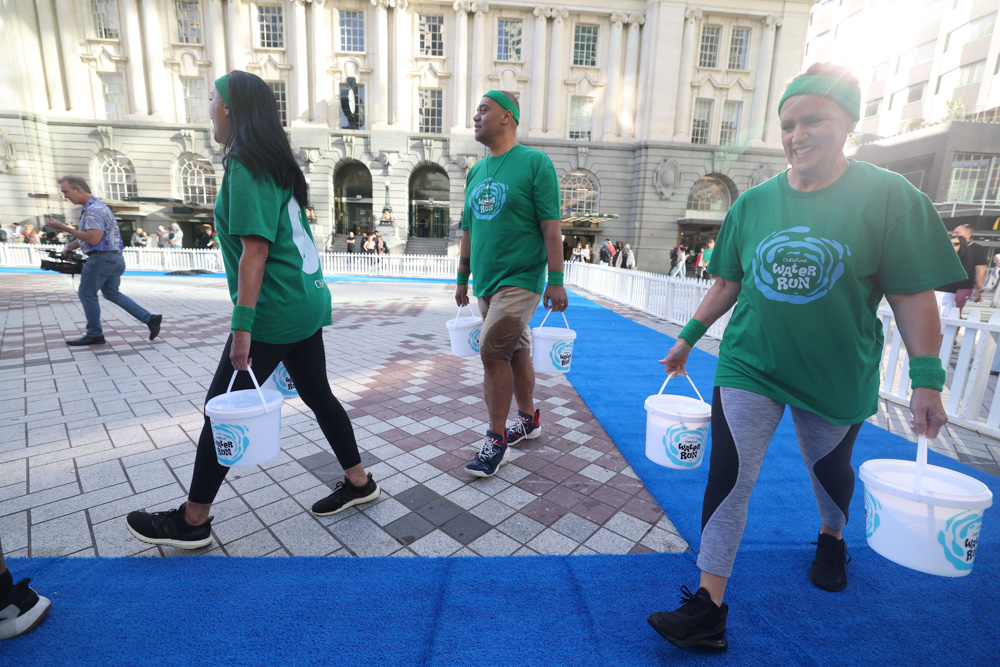
The event involved six high-profile participants, including Hilary Barry, who completed a 1km course carrying a 5-litre bucket of water in each hand.
The aim was to complete it quickly while spilling as little water as possible.
Participants were given an event handbook before the event, race kits and a training schedule outlining seven challenges they could do beforehand.
A health and safety plan was prepared by the WaterRun organisers, which included a “Medical Team and First Aid Procedure” section and pointed out the nearest AEDs.
A trained first aider, a competitive surf lifesaver of more than 10 years, was also on hand.
The event, which took about 10 minutes, garnered significant media interest and was broadcast live on TVNZ’s Breakfast show.
Video and CCTV footage showed Collins chatting and joking with other competitors, and he appeared to be “relaxed and happy before, during, and after completing the event”, the coroner found.
“There are no indications that he is experiencing any physical symptoms or health concerns.”
Shortly afterwards, during the prizegiving, Collins was standing to the side of the stage by himself.
“He was smiling and interacting with the event MC during this period.”
Collins suddenly collapsed, “without any warning, falling heavily to the ground on his right side”.
A number of people rushed to his aid, CPR was commenced, and 111 was called at 8.59am.
At 9.04am, the first AED shock was given, and CPR was carried out until an intensive care paramedic arrived two minutes later.
He could not be revived and was pronounced dead at 9.38am.
Community’s ‘simmering concern’
Vasa Fia Collins, through her lawyer, Max Harris, pushed for an inquest into her husband’s death, to address issues that included whether greater consideration should have been given to participants’ medical history and their risks.
She also had concerns about health and safety, and whether there was an “avoidable delay” in sourcing the defibrillator, and the “assigning, and dividing, of responsibility in the event of a health emergency”.
There had also been “simmering concern” in the Pacific community about whether everything possible was done for Collins that day.
Harris submitted that an inquest would lift tapu, restore mana and restore vātāpu’ia (sacred relational space), while showing respect to his family and the wider community.
He argued that the circumstances of Collins’ death couldn’t be “properly established without an inquest, and the cultural and spiritual needs of the family cannot be properly recognised if a hearing is confined to a hearing on the papers”.
But Coroner Anderson decided against it, stating it wasn’t a reflection on the importance of the issues involved or the mana of Collins, but rather about “fulfilling her statutory responsibilities to determine his death, and to make recommendations to help reduce the chance of similar deaths occurring in the future”.
‘Intermediate risk’ of cardiovascular event
Her findings revealed Collins had a long-standing history of type 2 diabetes, high cholesterol, gout and hypertension, and in 2015 had weight-loss surgery.
He then lost a significant amount of weight and got his diabetes under control.
A cardiovascular risk assessment was completed in November 2022, putting him in the “intermediate risk” category of suffering an event in the next five years.
During a consultation on March 20, 2023, Collins told his doctor he was exercising regularly, going to the gym three to four times a week.
He denied having any chest pains, shortness of breath or other cardiac symptoms.
Harris provided a written statement from one of the event security guards, who expressed concern that there was no Event Medical Team (EMT) that day.
She stated there was confusion about where to obtain an AED, who was going to get it and that Collins would have received better urgent care if an EMT had been on site.
She said she did not think the event organisers knew what they were doing.
A statement from one of the event participants, Marina Fagaiava, described some confusion regarding the obtaining of a defibrillator.
He was surprised no ambulance was present and described an “overwhelming sense of panic and concern” at the time of Collins’ collapse.
His view was that it was unclear who was taking charge.
His health was being well-managed
Coroner Anderson engaged several medical experts to help assess Collins’ health risks.
They found that even though Collins’ family history had “complex genetic and environmental factors”, they were “very well managed”.
“There was not much more that could have been done to identify the ‘silent’ coronary artery disease that was found during the post-mortem,” Coroner Anderson wrote.
Collins had already reduced his risk of cardiovascular disease by having the weight-loss surgery.
She then put the experts’ views to Vasa Fia Collins.
Coroner Anderson then engaged a further expert, Dr Tony Scott, who concurred with the earlier experts and suggested that Collins experienced “an acute cardiac event”.
“This was most likely a [heart attack] resulting in a cardiac arrest.
“Dr Scott thought it likely that the preceding exercise was the immediate trigger.”
While there was “good evidence” that habitual exercise significantly reduced the risk, Scott said there appeared to be a “paradoxical transient increase in risk during and shortly after physical exercise”.
The best survival rates were around 50%.
For Collins, CPR began after 90 seconds, and the first shock was delivered at four to five minutes.
“Coupled with Fa’anānā’s underlying good level of health, Dr Scott thought his chance of survival would be expected to be in the 40-45 per cent range.”
Paramedics arrived nearly nine minutes after his collapse, and assessing medical data, it suggested to Scott that the preceding resuscitation attempts “had been of very good quality and a good cardiac output was being achieved”.
“Dr Scott informed me that this, in itself, suggested a good prognosis, all other things being equal.”
However, he told the coroner that if an ambulance had been on site, it was possible that the first shock from the AED may have occurred one to two minutes earlier.
Asked by the coroner if Collins should have been participating in the WaterRun, Scott said it appeared he was managing his health well and wouldn’t have had a problem with it.
Belinda Feek is an Open Justice reporter based in Waikato. She has worked at NZME for 11 years and has been a journalist for 22.