Auckland Transport’s plan for raised crossings ditched for new approach after criticism
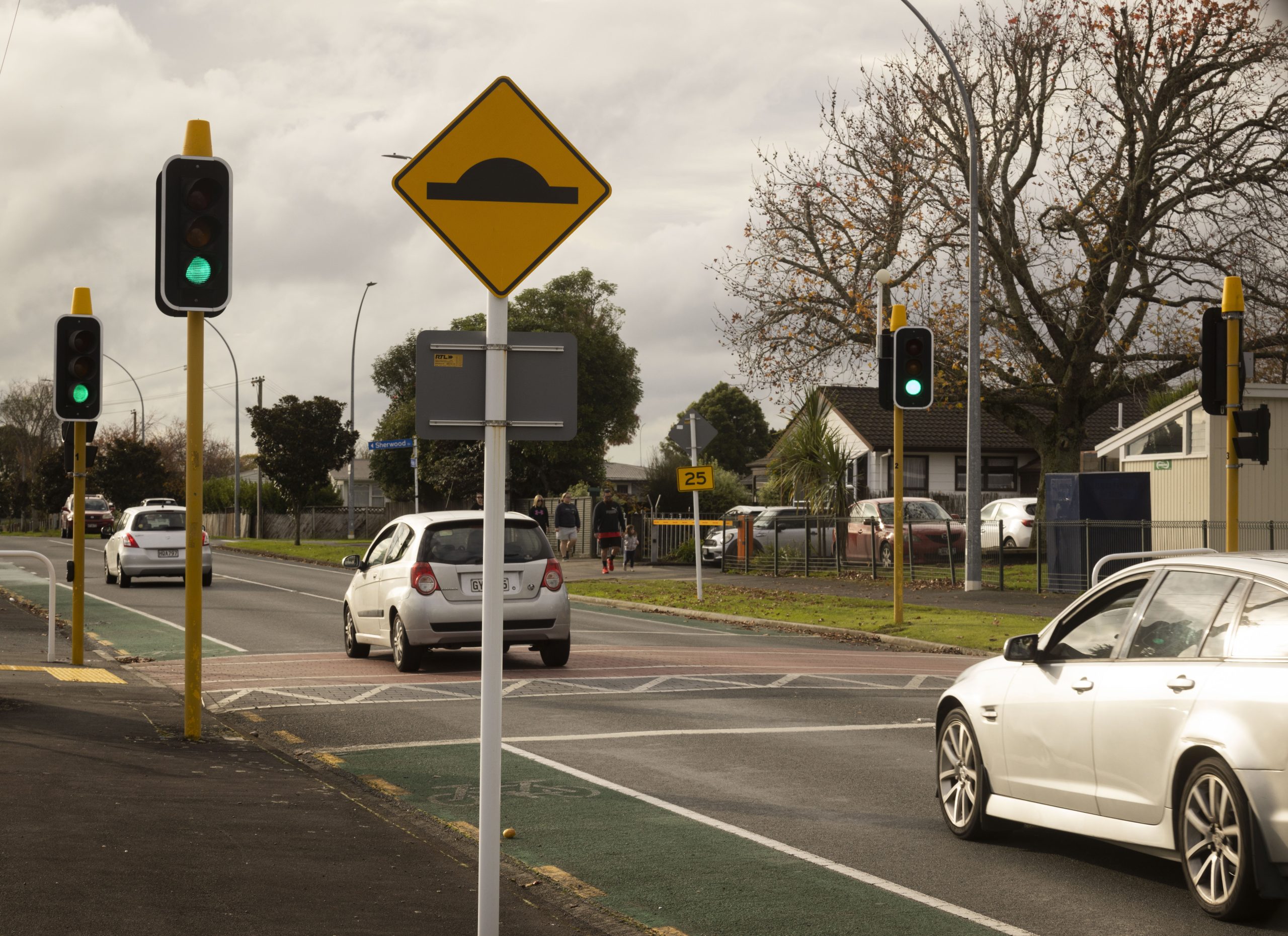
Auckland pedestrians will get flashing ground lights, traffic islands and other road safety measures to replace the heavily criticised raised pedestrian crossings on roads.
Auckland Transport (AT) came under fire for its one-size-fits all approach with the installation of raised pedestrian crossings costing ratepayers too much.
This was despite having a range of affordable solutions available.
Both Mayor Wayne Brown and Transport Minister Simeon Brown honed in on the costly safety upgrades.
AT customer care engagement manager Phil Wratt said depending on the situation, it would now use intelligent traffic systems such as flashing in-ground lights activated by pedestrians.
Driver feedback signs, high-friction surfacing, kerb build-out or a central island would also be options.
“If the residual risks of the crossing facility are still not being managed at an acceptable level, then speed management devices will be considered,” Wratt said.
He said it had chosen raised devices since 2020 because they slowed motorists down and increased awareness on pedestrian crossings.
“While survivability rates will vary based on the exact street or road, Auckland Transport elected to take a preventative approach to protecting vulnerable users.”
Wratt said vulnerable users were protected from crashes with vehicles because there was a 10 per cent chance of death, or 25 per cent chance of serious injury at 30km/h, compared with 80 per cent chance of death and 3 per cent chance of serious injury at 50km/h.
Raised devices were the most effective intervention that could be implemented, he said.
“However, in some cases, peak vulnerable road user activity can occur at the same time as peak congestion when the network is already moving at speeds considered to be safe and survivable (eg 30km/h).
“And in these cases a raised device may not have been necessary.”
AT estimated a 30 per cent reduction in the number of raised pedestrian crossings required compared with the present pipeline of projects.
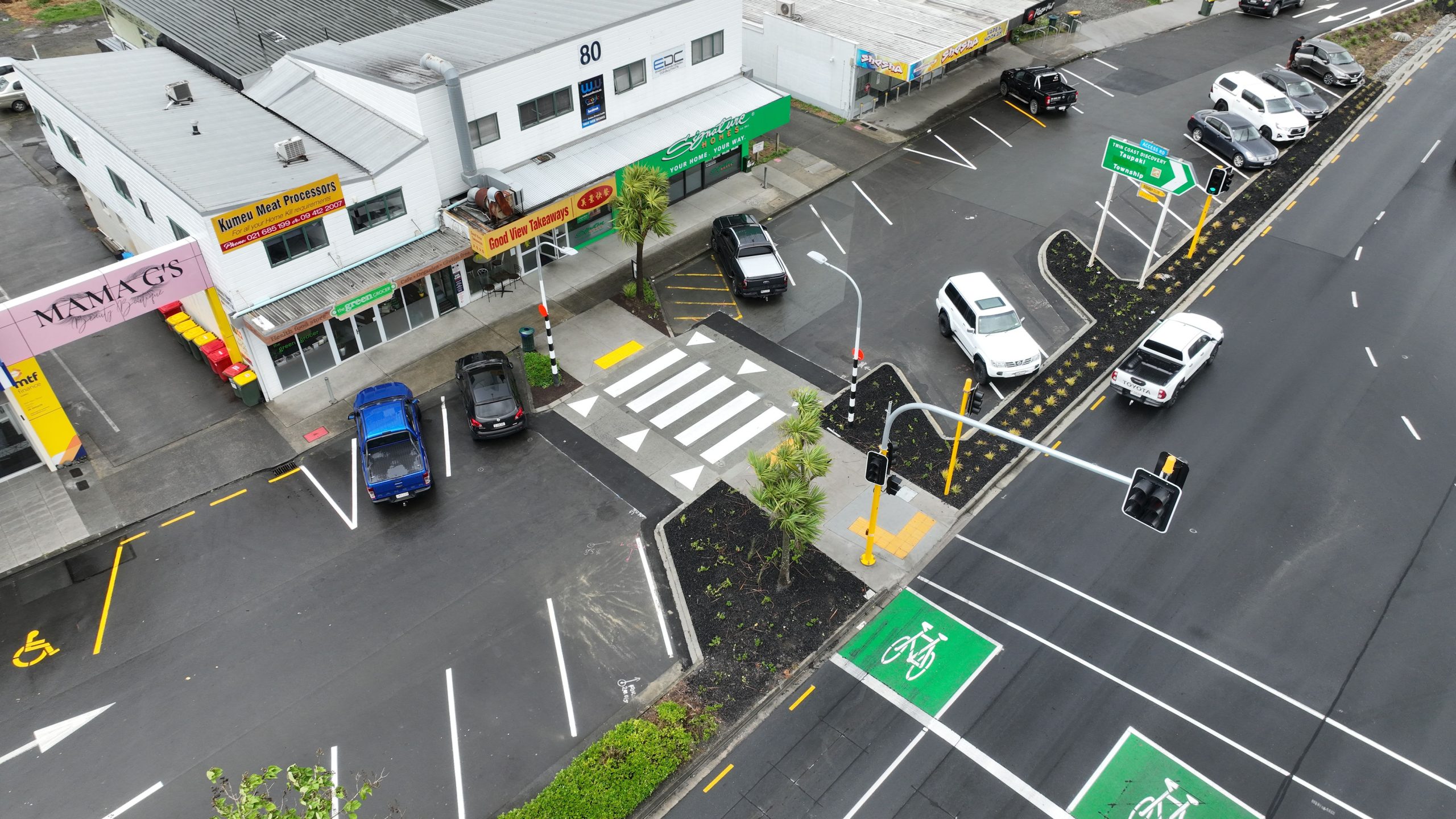
A recent project at Kumeū, where pre-cast units were used, cost ratepayers $35,000 — about 10 per cent cheaper than the old way.
The crossing was part of the State Highway 16 access road upgrade project, at the carpark of the Main Rd shops. The pre-cast unit was installed in one night rather than over several days.
About 22 other crossings have been identified as suitable for the same approach.
AT infrastructure and place director Murray Burt said its priority was to keep people safe as they moved across Auckland, balanced against the cost of work to do so.
“Over the past five years, 2035 pedestrians have been killed or seriously injured trying to cross the road or walking on footpaths.
“We know that raised crossing facilities reduce the likelihood of a death or serious injury.”
AT couldn’t provide a figure when asked how many raised pedestrian crossings had been installed since 2020, and their costs.
LDR is local body journalism co-funded by RNZ and NZ On Air.