NZ traders face ‘frightening honour’ as Trump vows huge new China tariffs, Asian markets nosedive
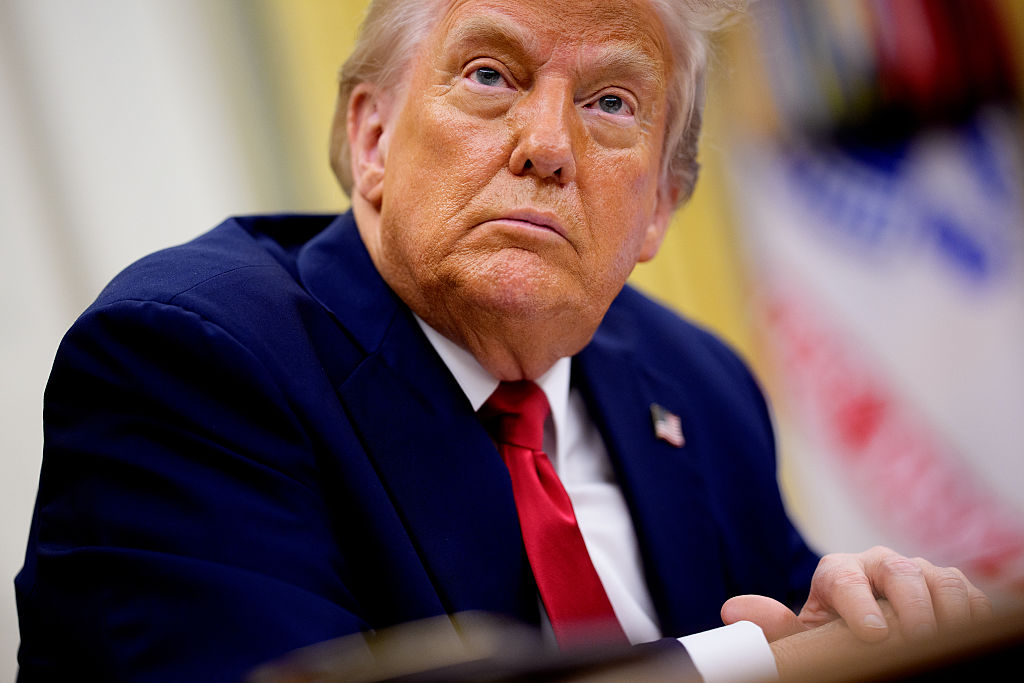
US President Donald Trump on Monday (Tuesday NZT) threatened new tariffs of 50% on China, ratcheting up a trade war even as a dramatic selloff in global markets gathered pace.
Finance Minister Nicola Willis has issued a briefing this morning on the impact of the US tariffs on the New Zealand economy, attempting to reassure Kiwis that while “unwelcome” the impacts are likely to be “modest” compared to those felt by other countries.
The New Zealand dollar sank to its lowest point for the year when it hit US55.07c overnight as world markets continued to balk at the introduction of high tariffs from the United States.
Trump has urged Americans not to panic despite trillions of dollars being wiped from global markets.
The New Zealand sharemarket was flat in its first hour of trading after falling 3.68% yesterday – its largest drop since March 2020.
ARTICLE CONTINUES AFTER LIVEBLOG
Pinned Tom Dillane
Pinned Tom Dillane
- Donald Trump’s new US trade policy is causing global economic uncertainty and market volatility.
- Economists warn of potential recession risks, but the direct impact on New Zealand exports is manageable.
- Stock markets and oil prices slumped further on a black Monday for markets.
- The New Zealand dollar sank to its lowest point for 2025 overnight.
Cameron Smith
These live updates are now over.
Cameron Smith
Asian markets open mostly higher, NZ rises
Cameron Smith
Hong Kong stocks opened 1.66% higher after falling 13.2% yesterday.
Tokyo’s benchmark Nikkei 225 index was also up 5.81% in early trade.
Seoul’s Kospi index was up 2%.
New Zealand’s sharemarket had also rebounded. By early afternoon the NZX50 was up 1.08% or 126.668 points to 11,902.550.
Meanwhile, Taiwan stocks fell 3% in early trade.
China vows to fight US tariffs 'to the end'
Cameron Smith
China's Commerce Ministry on Tuesday vowed to fight US tariffs "to the end", after US President Donald Trump threatened fresh levies of 50% on imports from the world's second-largest economy, the AFP reported.
"The US threat to escalate tariffs against China is a mistake on top of a mistake, which once again exposes the US's blackmailing nature. China will never accept this. If the US insists on going its own way, China will fight it to the end," the ministry said in a statement.
Cameron Smith
NZ, Aussie markets rebound
Cameron Smith
The NZX 50 is now up 0.47% or 55.418 points to 11,860.570.
The Australian sharemarket also rebounded on opening. The S&P/ASX 200 Index lifted 0.8%, or 57.7 points, to 7401.7 in the first few minutes of trade.
Cameron Smith
On trade with China, Willis said it remains a very important trading partner and we can be grateful we have access to that market virtually tariff-free for a range of products.
That relationship "is important to us", she said.
But we are yet to see how the Chinese Government responds to what is unfolding. This underscores how important it is to diversify our trading relationships.
"You don't necessarily know what's coming around the corner."
Cameron Smith
Willis says "we would prefer not to have these tariffs". New Zealand believes trade should flow freely, but Willis says her focus is on what she can control at home.
Cameron Smith
"In an unstable world, we are a safe haven," the Finance Minister said.
We have access to a "diverse range" of markets due to our extensive network of trade agreements and partnerships, she says.
"This is not a time to dramatically change direction, it is the time to stay the course.
"We are aware, we are prepared, we have got this."
Cameron Smith
"The Government cannot control global developments, but we can control how we respond," Willis says, acknowledging there are "choppy waters" ahead.
She says, "despite wider global economic uncertainty, New Zealand remains well-placed."
Cameron Smith
Willis said forecasts are being finalised ahead of the Budget that will be delivered in May.
But some forecasts show global growth will be lower and global inflation could be slightly higher, she said.
"It is too soon to say what this means for your mortgage", Willis says, highlighting the Reserve Bank will provide an update tomorrow.
The overall impact on Government books will be communicated at the Budget.
It is the Government's intention to stick to its fiscal strategy.
"We do not intend to extend the operating allowances forecast at the half-yearly update."
Cameron Smith
Willis said the ultimate effects remain uncertain and there could be a comparative advantage.
There may be falling prices for some products New Zealand imports. All of these factors create risk, just as New Zealand has been creating positive momentum, she said.
Cameron Smith
Willis says the most significant impact will be the effect on the global economy.
When there are big international impacts, it hits New Zealand, she says.
Willis calls it a historic global economic event.
The Asian region, including Australia, accounts for 70% of international trade for New Zealand and there could be impacts if there is a slowdown in the region and if reciprocal tariffs are applied.
Cameron Smith
Willis acknowledges some New Zealanders will see their KiwiSavers get knocked around, but reminds New Zealanders it is a long-term investment.
Cameron Smith
Finance Minister Nicola Willis, speaking to reporters about economic developments post Trump's tariff move, said while there are risks, there are reasons to feel confident we have the right settings to get through this period of uncertainty.
While "unwelcome", the impacts are likely to be "modest" compared to those felt by other countries, Willis says.
PM Christopher Luxon: NZ entering 'choppy waters'
Cameron Smith
Prime Minister Christopher Luxon says New Zealand is “entering choppy waters” but was “well positioned”.
Speaking on X, Luxon said he was concerned about the risk of “backsliding into a global trade war”.
A trade war is in nobody’s interests, he said.
“It will slow global growth, hurt jobs, and reduce the amount of money we have in our wallets,” he said.
“This week we’ve seen a profound shift in the global economic landscape, and the way countries respond to these events has the potential to have significant impacts on New Zealand.”
Cameron Smith
NZ sharemarket opens lower
Cameron Smith
The benchmark S&P/NZX 50 index was down 0.28% or 32.542 points to 11,743.340 at opening.
The fall is less than yesterday when the NZX 50 opened down around 2% with the market closing down 3.68% in the worst day of trading since the March 2020 Covid pandemic hit.
NZ dollar hits low for 2025
Cameron Smith
The New Zealand dollar sank to its lowest point for the year when it hit US55.07c overnight as world markets continued to balk at the introduction of high tariffs from the United States.
By early morning, the currency had bounced back up to US55.5c.
Local wholesale interest rates also jumped after concerns about US inflation and America’s fiscal situation drove benchmark US 10-year yields to 4.18% from 3.87% yesterday.
New Zealand’s key two-year swap rate jumped to 3.24%, up 14 basis points from Monday.
ANZ senior strategist David Croy said markets overnight had been “incredibly volatile”.
“We’ve seen a 31-basis-point trading range in 10-year government bond yields in the US overnight, driven by shifting expectations for what the US Federal Reserve might actually do,” he said.
“There's concern around what tariffs might do to inflation expectations. There are also fiscal policy concerns about what it means for government borrowing.”
Black Monday for markets
Cameron Smith
Stock markets and oil prices slumped further on a black Monday for markets as US President Donald Trump stood firm over his tariffs despite recession fears, AFP reported.
Trading floors across the globe experienced waves of further selling after last week's sharp losses.
Both the Dow (down 0.9%) and S&P 500 (down 0.2%) finished volatile sessions lower while the Nasdaq (up 0.1%) mustered a modest gain.
Several 'circuit-breakers' possible as global markets tumble
Cameron Smith
Harbour Asset Management portfolio manager Shane Solly said there were several circuit-breakers which investors were watching out for.
"Weak capital markets will be putting pressure on policymakers but a couple of circuit breakers that we think capital markets will respond to are trade deals and central bank rate cuts."
He said the US tariff announcements had been positioned as a basis for negotiation. "So maybe there is potential for some better outcomes."
Solly said news that Vietnam had offered to remove all tariffs on US imports had provided a glimmer of light for investors.
"But China and the European Union have shown they are more willing to respond to US tariffs with tariffs."
Solly said central banks also had the potential to cut interest rates but were unlikely to be in a hurry to do so given concerns about inflation.
Trump backer says President being 'poorly advised'
Cameron Smith
Ken Langone, the co-founder of Home Depot and long time Republican donor, has lambasted President Donald Trump’s wide-ranging tariffs for being set too high and implemented too quickly, the Financial Times reports.
Langone told the FT the US President was being “poorly advised”, the 46% tariff on Vietnam was “bullshit” and the additional 34% tariff on China was “too aggressive, too soon” and did not give “serious negotiations a chance to work”
Billionaire warns of ‘economic nuclear winter’
Cameron Smith
American billionaire hedge fund manager Bill Ackman has warned the US is heading for an “economic nuclear war”.
Posting on social media platform X, the founder and chief executive officer of Pershing Square Capital Management said: “By placing massive and disproportionate tariffs on our friends and our enemies alike and thereby launching a global economic war against the whole world at once, we are in the process of destroying confidence in our country as a trading partner, as a place to do business, and as a market to invest capital.
“If ... on April 9th we launch economic nuclear war on every country in the world, business investment will grind to a halt, consumers will close their wallets and pocket books, and we will severely damage our reputation with the rest of the world that will take years and potentially decades to rehabilitate.”
Tom Dillane
The Wall Street Journal has reported that Elon Musk: “one of President Trump’s most visible and influential advisers, is leveling veiled critiques at the White House’s trade agenda, exposing tensions within the administration over the president’s far-reaching tariffs”.
Earlier today, the Doge head posted a video of economist Milton Friedman touting free trade by explaining how the seemingly simple component parts of a pencil require complex supply chains.
That followed a weekend where Musk took aim at Trump’s top trade adviser, Peter Navarro, suggesting that his push for steep and broad-based trade barriers is wrongheaded.
“A PhD in Econ from Harvard is a bad thing, not a good thing,” Musk posted in response to a user on X who lauded Navarro’s education.
Musk, who leads Tesla (whose shares have been falling since "Liberation Day"), SpaceX and several other companies, also implied that Navarro lacked hands-on experience in the economy. “He ain’t built s***,” Musk wrote.
Tom Dillane
Donald Trump has urged Americans not to panic despite trillions of dollars being wiped from global markets by his tariff onslaught, the Telegraph has reported.
In an apparent reference to his own Republican Party, the US President told critics not to be “a Panican” – coining a new phrase which he described as “a new party based on weak and stupid people”.
Roughly US$10 trillion has now been wiped off global stock markets since April 2 when Trump announced sweeping import taxes of up to 50% on “liberation day”.
Writing on Truth Social, Trump said: “The United States has a chance to do something that should have been done DECADES AGO. Don’t be Weak! Don’t be Stupid! Don’t be a PANICAN (A new party based on Weak and Stupid people!). “Be Strong, Courageous, and Patient, and GREATNESS will be the result!”
Tom Dillane
JMI Wealth Director Andrew Kelleher told Newstalk ZB’s Mike Hosking this time of market volatility would be etched into financial market history.
“If we take a wander through the last 24 hours, we came into work yesterday with the rather frightening honour of being the first market to trade after the weekend, the weekend that we saw the news that China would place reciprocal tariffs against the reciprocal tariffs,” Kelleher said.
He described Trump as having “channelled his inner Nero”, playing golf while the markets “burned”.
Kelleher said New Zealand and Australia “were playing catch up” and the local index went through a “chunky move” back from levels seen in January last year.
Kelleher said the NZX50 fell 3.68% similar to ASX at 4.2%.
He said Fletcher Buildings and Sky City both fell 6% and Mainfreight edged down just under 7%.
The Kiwi dollar was sitting at 0.5549 against the US dollar, 0.9247 against the Australian dollar, 0.5070 against the Euro, 0.4347 against the pound, 82.1% against the Japanese yen.
Kelleher said “truly remarkable price action” was happening in the Asian market.
Gold was sitting at $2972 and Brent Crude tipped back up to $65.06.
Kelleher said the Hang Seng index fell 13.2%, exacerbated by a long weekend in Hong Kong.
Other standouts were Japan's Nikkei falling 7.8%, the SSE Composite Index falling 7.3% and the SZSE Component Index falling over 10%.
“I've been doing this for 40 years, and these were eye-opening yesterday.”
ARTICLE CONTINUES
Salt Funds Management managing director Matt Goodson said the market is as volatile as anything.
”It’s sort of interesting because when our market closed yesterday, US futures were fluctuating in a range of 3.5 to 4% down, whereas the market actually was closed relatively flat.
”The market had a huge interest trading range, and their futures for tomorrow have just opened up by 50 points. So it’s all over the show and that’s something that investors hate, that volatility.”
Goodson said the biggest change overnight was a very sharp sell-off in US bond yields. US 10 year bonds sold off about 22 points, and our 10 years have followed that to a degree.
Trump upends world economy - AFP
Trump upended the world economy last week with sweeping tariffs that have raised fears of an international recession and triggered criticism even from within his own Republican Party.
In response to Trump’s tariffs, Beijing – Washington’s major economic rival – unveiled its own 34% duties on US goods to come into effect on Thursday.
The US President on Monday chastised China for not heeding “my warning for abusing countries not to retaliate”.
He said on social media that if China did not immediately back down “the United States will impose ADDITIONAL Tariffs on China of 50%, effective April 9th”.
With the incoming 34% rate and new 50% threat, the total additional tariffs this year could hit 104%, the White House told AFP.
Hong Kong collapses
Stock markets and oil prices collapsed further, as trading floors across the world were overcome by waves of selling after last week’s sharp losses.
Hong Kong’s Hang Seng Index fell 13.2% in its worst day in nearly three decades.
Tokyo’s Nikkei 225 fell 7.8% and the Shanghai Composite was down 7.3%.
London’s FTSE 100 finished 4.4% lower.
New York stock markets opened to drops of over 3%. The Dow finished down 0.9% and the S&P 500 fell 0.2%. The tech-heavy Nasdaq mustered a modest gain of 0.1%.
‘Don’t be weak’
“Don’t be Weak! Don’t be Stupid!” Trump urged Americans minutes before Wall Street opened.
“Be Strong, Courageous, and Patient, and GREATNESS will be the result!”
Trump scrapped any meetings with China over its retaliation, but said the United States was ready to open talks with all countries willing to negotiate.
A 10% “baseline” tariff on US imports from around the world took effect on Saturday but a slew of countries will be hit by higher duties from Wednesday, with levies of 34% for Chinese goods and 20% for EU products.
Chinese Vice Commerce Minister Ling Ji said its tit-for-tat duties “are aimed at bringing the United States back on to the right track of the multilateral trade system”.
“The root cause of the tariff issue lies in the United States,” Ling told representatives of US companies on Sunday.
EU trade ministers gathered in Luxembourg on Monday to discuss the bloc’s response, with Germany and France having advocated a tax targeting US tech giants.
“We must not exclude any option on goods, on services,” said French Trade Minister Laurent Saint-Martin.
The 27-nation bloc should “open the European toolbox, which is very comprehensive and can also be extremely aggressive,” he said.
But signs of divergence emerged from Ireland, whose low corporate tax rate has attracted US tech and pharmaceutical companies.
Targeting services “would be an extraordinary escalation,” said Irish Trade Minister Simon Harris.
Inflation? Recession?
Bitcoin tumbled, while the dollar rebounded after sharp losses last week.
The 78-year-old Republican believes that the tariffs will revive America’s lost manufacturing base by forcing foreign companies to relocate to US soil, rather than making goods abroad.
But most economists question his theory and say his tariff figures on importing countries are arbitrary.
JPMorgan Chase CEO Jamie Dimon warned the tariffs “will likely increase inflation”, in a letter to shareholders.
“Whether or not the menu of tariffs causes a recession remains in question, but it will slow down growth,” he said.
“The market’s telling you in plain language: global demand is vanishing, and a global recession is on the cards and coming on fast,” said Stephen Innes at SPI Asset Management.
US Senator Ted Cruz – a staunch Trump loyalist – warned of a jobs crunch and rising inflation that would threaten the Republican hold on Congress.
Benjamin Netanyahu, Prime Minister of Israel – hit with 17% tariffs despite being one of Washington’s closest allies – was due on Monday to become the first leader to meet Trump since last week’s announcement.
- Agence France-Presse