InterCity to launch electric bus in Auckland, says buses better than airlines on some routes
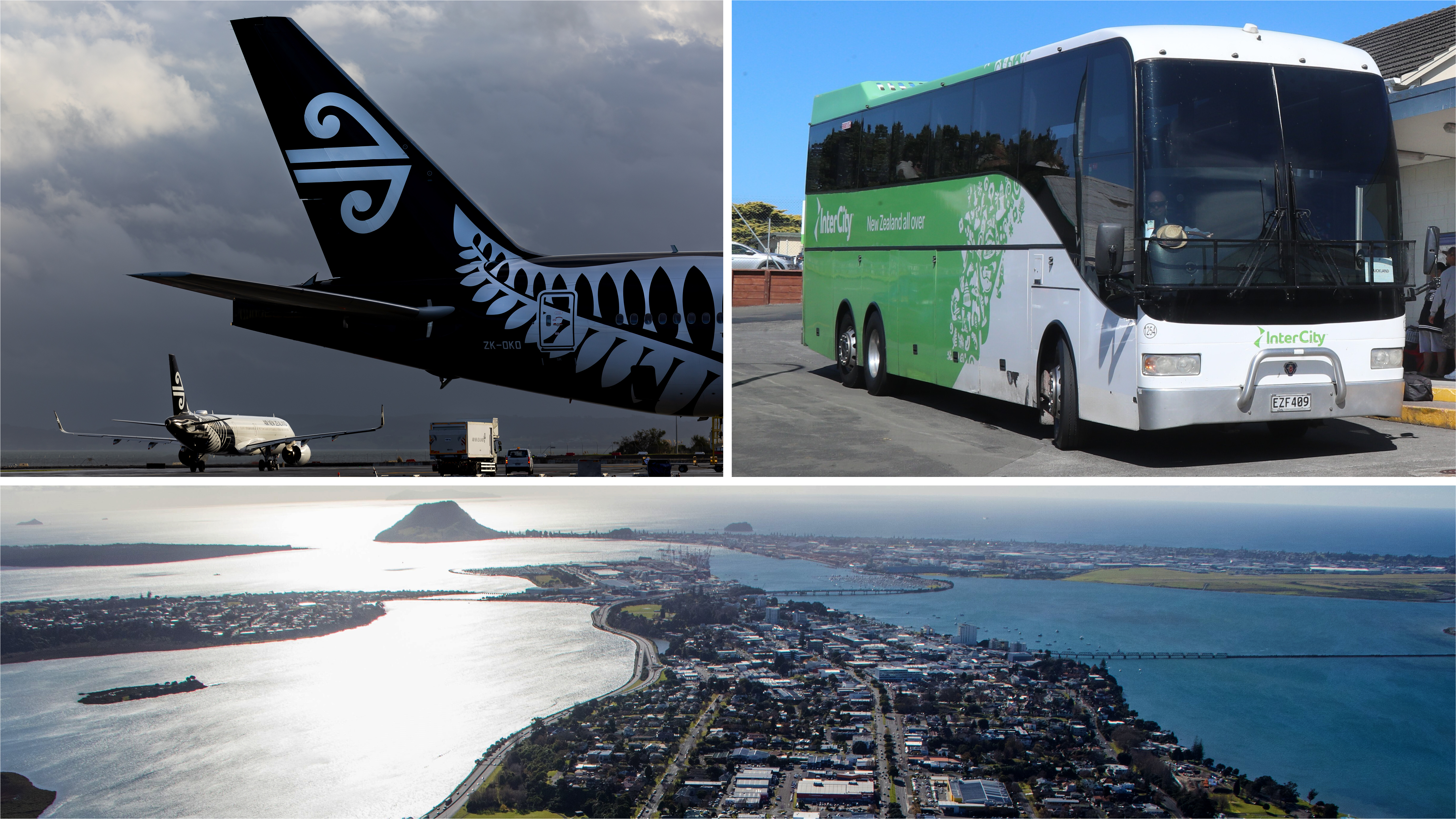
New Zealand bus operator InterCity says recent debates around some pricey domestic airfares show travellers should try a bus instead.
And the company will launch an electric sightseeing bus in Auckland and said longer-haul electric bus routes could be viable in the next year or so.
InterCity owner Entrada Travel Group’s chief operating officer Sam Peate told the Herald bus trips could be a cheaper, practical alternative for travellers.
“From our perspective, the average price to get from Auckland to Tauranga is going to be significantly cheaper than an airfare.”
The company said adult fares on the bus this week with up to two 20kg bags included were $44 one-way, a fraction of airfares for the same route.
And Peate said on some routes, by the time a person reached an airport, checked in and cleared security, a bus trip might be just as quick.
Consumer NZ chief executive Jon Duffy told the Herald he was watching local airfare developments closely.
“We are concerned that the current status quo is unsustainable, especially as more and more regional New Zealanders are finding it difficult to travel due to high prices and lack of competition.”
Last week, Commerce Commission chairman Dr John Small cited rising flying costs for airlines and Air New Zealand’s engine maintenance issues among reasons for high airfares on regional routes.
Writing in The Post, he said a market study into the domestic airline sector would not be helpful.
Electric buses
Meanwhile, Peate said InterCity would launch an electric Auckland Explorer sightseeing bus later this year.
The hop-on, hop-off bus will take in the inner city, Auckland Domain and Mission Bay.
He said electric buses on longer cross-country trips were not yet viable.
“Because our services can be up to 650 kilometres in length, we don’t have the technology yet.”
But he said technology was improving rapidly and in one year’s time may be advanced enough to make a net-zero, long-haul bus feasible.
Other operators were making advances on shorter routes.
Auckland Transport (AT) last week said it was adding 31 electric buses to its fleet by the end of June.
AT’s infrastructure and fleet specification manager Edward Wright said by August next year, a third of AT’s 1350 buses would be electric.
Business-class bus, new West Coast line
Bus companies sometimes make headlines for ignominious reasons, such as when an 83-year-old was left behind after suffering a fall on a bus trip last August.
Peate said the company had a network of depots and a 24-seven support centre in Auckland to try to address any problems.
And while the buses may not have the equivalent of flight attendants, they do have their own version of business class travel.
“We have a gold seat option ... You get more leg room so we only have three seats per row instead of four seats.”
Those seats are at the front of the coach, which Peate said allowed for some excellent views.
He said these seats were often the first to sell out.
Peat said InterCity this week would also announce a new Christchurch to Greymouth daily service.
He said the new service across the South Island would complement the bus company’s extensive network up and down the west and east coasts.
New long-haul buses
Peate said the company had different bus makes and models.
“The basic options that we have are either single-decker or double-decker coaches.”
Double-deckers could seat up to 70 passengers and single-deckers about 50.
The company was expecting to get four new buses in the next 12 months to replace older models.
Peate said the fleet’s average age was about 7-and-a-half years.
A bus company, broadly, had less complex operational needs than an airline, with vehicles less complex than most aircraft.
Some aviation firms have been battling with supply chain issues or sourcing spare parts from abroad.
Peate said InterCity faced some challenges during Covid with imports and exports, as companies in many different sectors did, but was not having such issues now.
The bus operator also had a less complex fee landscape to navigate but paid road user charges.
Airlines have to pay landing charges, Aviation Security levies and air traffic control fees, among other fees.
Some airlines and airports have been at odds in recent weeks about ticket prices and regulation.
Entrada had some relationships with airports, but those relations were fairly straightforward, Peate said.
He said some operating costs had risen in the past year or so.
“If we can sell more seats on our buses, that’s a way of increasing our revenue.”
A big-enough bump in sales could compensate for rising operating costs and keep ticket prices down, he said.
He said InterCity advertised at bus stops, in print media and on social media overseas and at home.
Tariff watch
Peate said InterCity had noticed an increase in sales over recent months, possibly due to increased foreign visitor numbers.
Stats NZ said in the year to February, overall visitor numbers were up to 3.35 million, an increase of 240,000 from the prior year.
Peate said it was too soon to say what impact Trump administration tariffs would have on the business.
“We’re watching that very closely to see if there’s going to be any change in demand.
“You may find, for example, the US market may be a bit softer.”
In that case, he said non-US visitors might pick up the slack.
John Weekes is a business journalist covering aviation. His previous jobs included Herald on Sunday consumer affairs and court reporter, Dominion Post crime reporter, NewsRegional court reporter and Herald online business editor.