Renewable energy boom: Where the solar, wind and battery farms are being built in NZ’s race to 100% clean power
Work on New Zealand renewable energy projects is going at a faster pace now than in the Think Big projects of the 1980s, industry sources say.
Billions of dollars are being spent on building new wind, solar and battery projects to the extent that a 100% renewable power grid is not far off.
Think Big, which covered projects ranging from the Motunui Synthetic Fuels Plant in Taranaki to the controversial and expensive Clyde Dam, was prompted by the global oil crises of the 1970s.
In a similar vein, the August 2024 power price spike, combined with the impact on energy markets of the Iran war this year, has added urgency to dozens of renewable energy projects being built across the country.
Genesis Energy chief executive Malcolm Johns said there are more suppliers for new power projects available now than there were three or four years ago.
He said New Zealand needed to combine with Australia, which is also making a big push into renewables, to be relevant in global supply chains for new projects.
“So even though we’re building faster now than we did during the Think Big era, New Zealand is still a very small part of the global market,” he said.
Renewable projects require specialised skills, so there has been a lot of “fly in and fly out”, mainly between Australia and New Zealand.
Meridian Energy general manager of development Guy Waipara said that if current trends continue, New Zealand’s electricity system will be fully renewable by 2030, assuming normal conditions.
We are almost there already.
This week, Transpower data showed the system was running at 95% renewable – mostly reflecting well-stocked hydro storage lakes.
“There’s just so much investment happening,” Waipara said.
“We are going to get to 100% plus or minus half a per cent.
“That puts New Zealand in a pretty close to unique position with its electricity system.”
Waipara said New Zealand’s renewables “ecosystem” had been built up around dozens of projects that are on the go.
He has a team of 70 to 80 people working on new projects and he expects to see 100 on the job by 2027.
“It’s kind of going counter to the economy in general.
“We’re growing and hiring, doing a lot of work in the communities and creating a lot of jobs, so it feels good that we can do that.
“In Wellington, a lot of companies or government departments are downsizing, so we feel pretty fortunate to be in that position.”
Waipara’s staff undertake planning and engineering assessments to assess feasibility and the kind of yield that can come off each potential project.
New projects often involve doing roadwork and the civil works for wind farms are quite often challenging.
Then there are the specialised firms to transport the equipment – blades for wind turbines, grid-scale batteries and replacement turbines for the hydro fleet.
Meridian, New Zealand’s biggest power company, and its competitors are all stepping up their efforts on the renewables front.
After the winter 2024 price spike, and this year’s Iran war-driven oil price hike, the industry is under no illusions about the need for renewables.
But players are also aware that too much construction can generate too much power, depress prices and make new projects uneconomic.
As it stands, New Zealand electricity futures trading on the ASX, an important driver of long-term hedge contracts, show a downtrend over the next three years, reflecting extra supply coming on stream.
The quicker-than-expected rundown of New Zealand’s gas reserves, combined with unusually dry and calm weather, drove wholesale power prices as high as $820 per megawatt hour in August 2024.
Today, electricity trades at about $50-60/MWh.
Waipara said the rundown of domestic gas reserves had driven a “get things done faster” attitude for the industry.
In real terms, building renewables, aside from a period of hyperinflation during the Covid period, had become cheaper and China-manufactured solar panels have become a smaller part of the overall cost.
He said lower prices have enabled solar farms to be built earlier than was anticipated five to 10 years ago.
“If you look at what we’re doing and what our competitors are doing, by 2030, New Zealand will be at 100% renewable in an average hydro year.”
In future, hydro is expected to play a bigger role in “peaking” – supplying power when there is a peak in demand because dam turbines can respond in seconds.
Waipara says hydro is the backbone of the system, and still more power can be wrung from it.
“They [hydro dams] are all over the country and they all catch different types of weather so I think there’s a lot we all need to do to push hard in the hydro space to see what we can unlock.”
Genesis Energy’s Johns said New Zealand needed to lower the total cost of power and to increase energy security.
“Electricity needs to produce around 60% of New Zealand’s total energy [from 30% today].
“So if you were at 60%, electricity and 40% fossil, the average saving cost per household in total average energy costs would be $2500 a year and New Zealand would save $10 billion a year in importing foreign fuel.”
Electrifying transport and light to medium process heat is the critical pathway to lowering total energy costs for New Zealanders, he said.
Johns believes the long-term average of renewable electricity generation in New Zealand will be between 95% and 97%.
“That means you’ll have periods with a 100% renewable electricity generation, and periods where 5-7% might still have to come from thermal.
“During low rain periods or evening peaks, or when the wind drops out, you’re still going to need back-up.
“And, so New Zealand is well on the way with what we’re building at the moment to, you know, probably averaging 97% renewability.
“But there will be large periods of time when we’re at a 100% renewable electricity generation so that’s a fantastic outcome.”
Genesis will be spending $2.2b between now and 2032 on new renewables.
The others are spending billions as well.
“We have 36,000 rooftop solar customers in New Zealand and some months they produce up to 5% of the company’s total electricity so we’re buying it back off the rooftops of our customers.”
A number of factors had combined to drive up the pace of new builds.
The New Zealand Aluminium Smelters’ signing up to take power up to 2044 had added certainty to the outlook for energy planners.
Johns said the Government’s “Fast Track” consenting process, and a proactive approach from Transpower in connecting new projects to the grid, and the large investment programme were adding to the momentum.
“We have to accept that we are in the messy middle of an energy transition at the moment,” he said.
“There’ll be some bumps along the way, but the momentum has definitely swung in behind building renewables.”
A significant shift in the equation had been last year’s deal between Genesis and the other big power companies to support the gas and coal-burning Huntly Power Station.
The deal means there will always be a guaranteed 600,000 tonnes of coal ready to go at Huntly if there is a problem in the system or with the weather.
Johns also noted the Government’s commitment to have 90 million litres of diesel in reserve at Marsden Point.
New Zealand has two diesel-powered peaking power plants – Contact’s Whirinaki Power Station and Genesis Energy’s Unit 6 at Huntly.
He said arrangements for extra coal and diesel were not in place during the winter price spike of 2024.
“And so it’s important that we have sufficient fuel in reserve in the country to ensure that we can ride through whatever bump comes along – a major gas well failure, major plant fault in a generator somewhere, earthquakes, international supply chain disruptions.
“We’ve got to start understanding that energy security is not just about a dry year – it’s about having sufficient fuel in reserve in New Zealand,” Johns said.
“I just take a lot of heart in the fact that electricity will be a growth sector probably for the next 25 years because it makes economic security and environmental sense.”
The industry expects 2% per annum growth in electricity demand out to about 2030.
If growth comes in less than that, there is a chance the equation tips in favour of too much supply.
“But if demand comes in stronger than that, you know, we might, we might be building at the right level, or we might need to build some more stuff.
“It is a challenge because you’re building assets that will be around for up to 50 years, and they take between three and seven years lead time to build.”
Transpower chief executive James Kilty said the company had picked up the pace to connect new projects to the grid at a time of increased generation and load.
In the “delivery” phase – either in detailed design or under construction – Transpower had about 2900 megawatts of renewables in the works.
“We’ve seen the amount of work we’ve had to get on top of to grow very rapidly.
“For a while there, I think everyone got taken by surprise at the rate of acceleration, which was also a bit in response to the rate of decline in gas.”
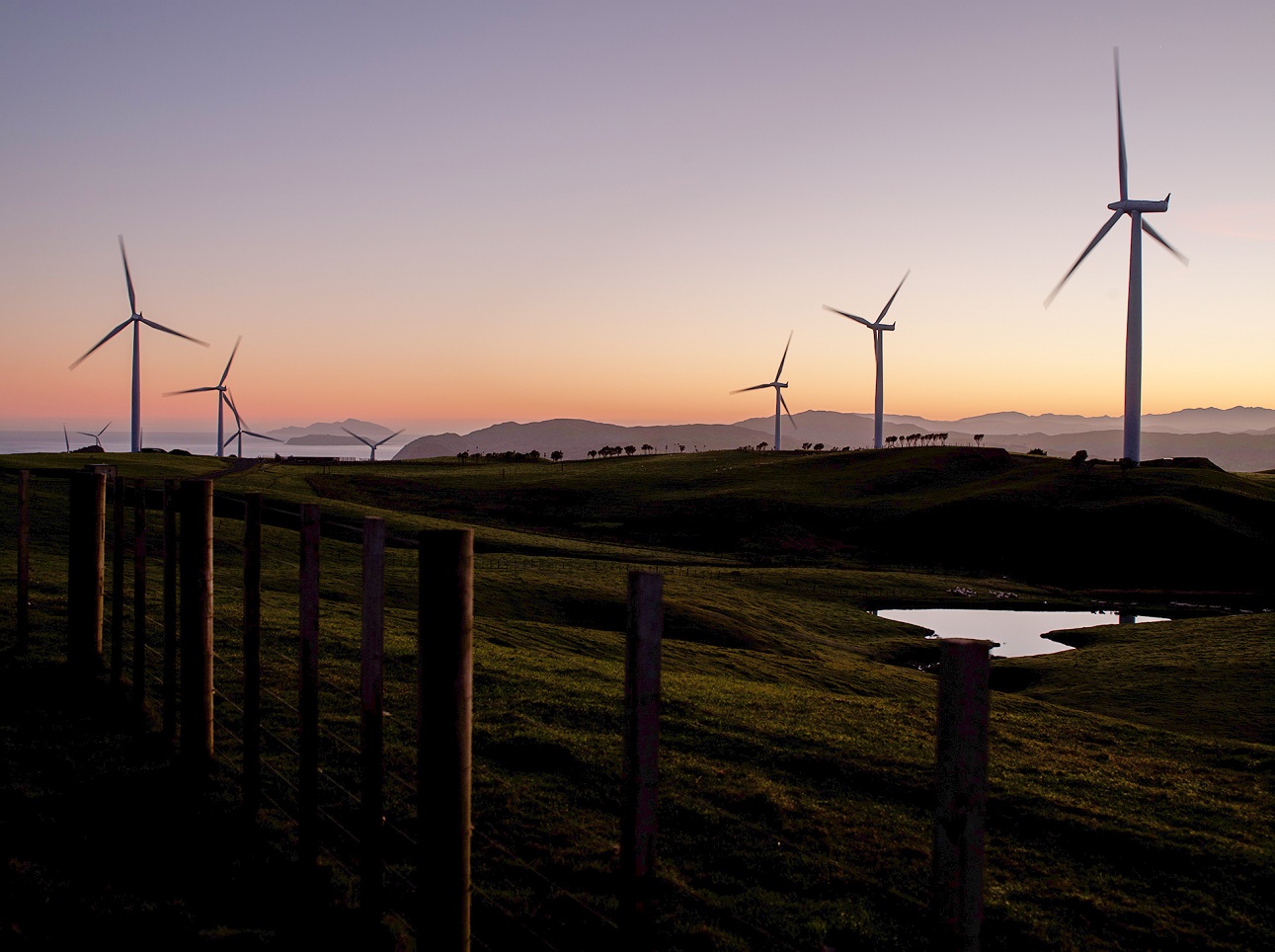
Kilty said the system is changing rapidly to accommodate wind and solar.
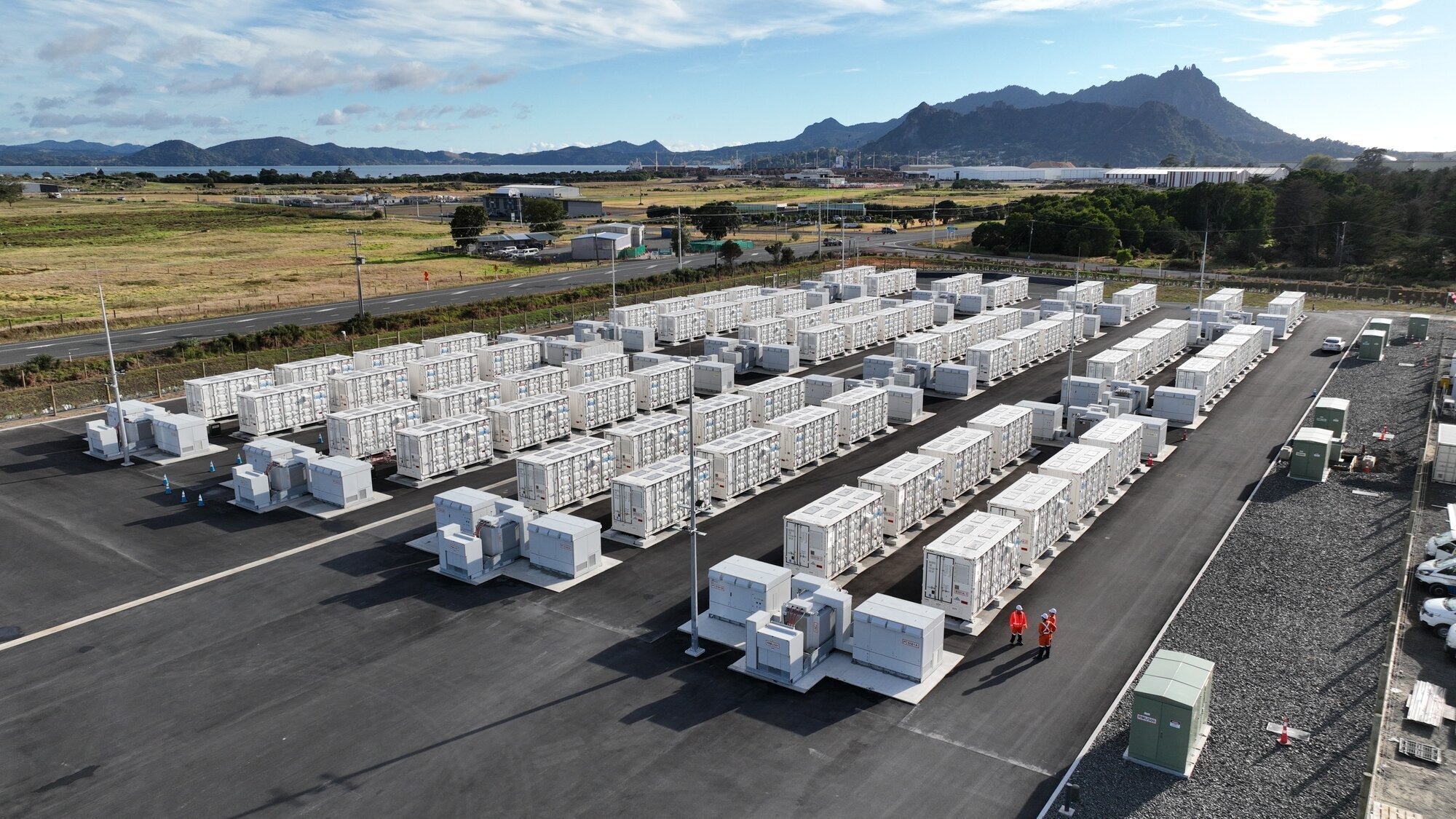
There are about 330 megawatts of batteries on the system, and another 300 megawatts in construction to be commissioned in the next 18 months.
“Batteries shift the likes of solar or wind generation by storing the energy at a time when there’s too much of it, because solar and wind, of course, you can’t control when those resources come.”
Rooftop solar and distributed energy – power generated close to where it is used – feature in a number of scenarios Transpower develops for planning.
In terms of the energy transition, Kilty expects to see more growth in power demand as more people switch to electric vehicles and businesses opt out of thermal.
“There’s a lot of energy that has to transition off fossil fuels and on to our endowment of clean renewable energy.”
Meridian’s Waipara said as the power system gets bigger, the hydro power generated on a percentage basis will get smaller.
“So the problem gets smaller and smaller, and it’s also helped by the fact that there’s a lot of renewables getting done,” he said.
And how will the system, with its new solar and wind farms, and batteries, evolve from here?
“All we can say is that the future will not look like the past.”
Who is doing what
Meridian
Under construction
Te Rāhu Solar Farm (a joint venture with Nova)
Ruakākā Solar Farm
Coming up
Mt Munro Wind Farm
Te Rere Hau Wind Farm repowering (replacing old turbines)
Bunnythorpe Energy Park – solar farm and battery.
Lake Pūkaki contingent storage (a draft decision).
Mercury
Under construction
Kaiwaikawe Wind Farm, Northland (77MW)
Kaiwera Downs Wind Farm, Stage 2, Southland
$75m to geothermal appraisal drilling Ngā Tamariki and Rotokawa geothermal sites near Taupō.
Waikato Hydro System Refurbishment Maraetai I, Ōhākurī and Ātiamuri
Coming up
Mahinerangi Wind Farm, Stage 2, Otago
Whakamaru Battery Energy Storage System (Bess).
Contact Energy
Kowhai Park Solar
Te Mihi Stage 2 Geothermal
Glenbrook-Ohuroa Battery2
Glorit Solar (with Lightsource bp)
Genesis Energy
Huntly Bess 1
Huntly Bess 2
Coming up
Leeston Solar Farm (consented)
Rangiriri Solar Farm (consented)
Jamie Gray is an Auckland-based journalist, covering the financial markets, the primary sector and energy. He joined the Herald in 2011.