Inside $300m 56-level abandoned Seascape: Weekly inspections for Auckland Council check safety
What’s it like inside Auckland’s $300 million-plus 56-level abandoned Seascape apartment tower? How fast are elements deteriorating as winter approaches? Does the mainly unenclosed apartment tower still comply with New Zealand site safety, regulations and consents, despite seven months of exposure to the weather?
An Auckland Council spokeswoman released four reports to the Herald to show the state of the building.
A representative from China State Construction Engineering Corporation (CSCEC) sends weekly reports to the council.
Those have a checklist of 24 aspects spanning elements from fire protection to lighting, perimeter surveillance to chemical storage.
The reports have CSCEC’s logo at the top and the name of the person reviewing the reports, with a final audit score. Unresolved issues are marked red, and those “closed” or compliant are marked green.
China Construction NZ (CCNZ) is the contractor for the development, incorporated in 2015 and a wholly owned subsidiary of China Construction Eighth Engineering Division Corp (CCEED), which is registered in Shanghai.
CCNZ and CCEED are part of a group headed by China State Construction Engineering Corp, hence the letterhead from that entity is on the reports about the state of Seascape sent to the council.
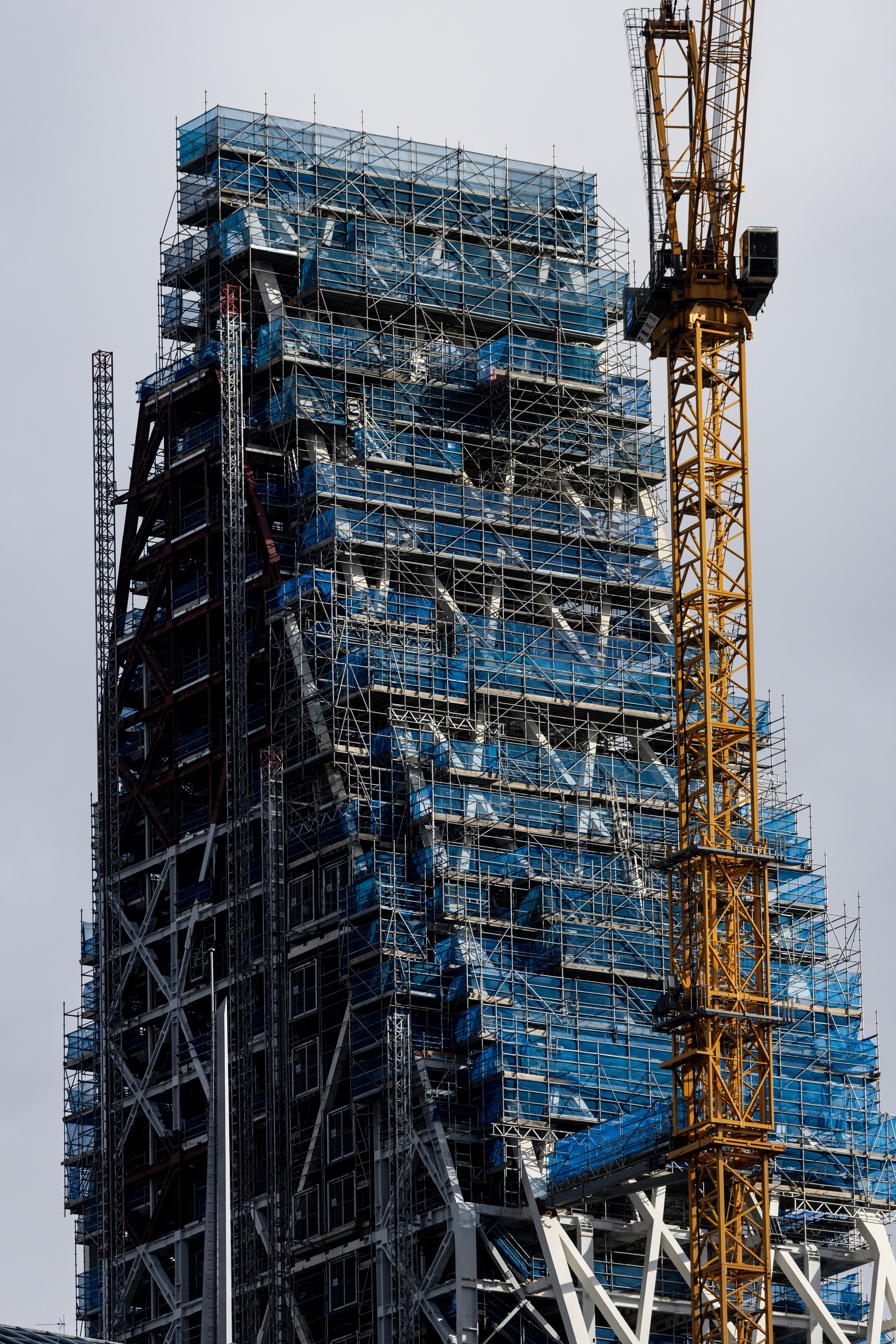
The block remains open to the elements on its upper levels, its tower crane scaled in January one night by a daredevil who filmed himself.
On August 22, China Construction New Zealand wrote to tower owner Shundi Customs, saying it was suspending all works under the head contract according to provisions in the Construction Contracts Act, due to non-payment of $33 million, awarded to the builder.
A subsequent court case in November said China Construction had so far been paid $300m to build the tower, but also that it had sought about 150 extensions of time, meaning it had not met deadlines.
The parties are now in disagreement.
Since then, no work has advanced on building the structure.
But the council needs to ensure the site remains safe, so it is not a danger to people or buildings around it.
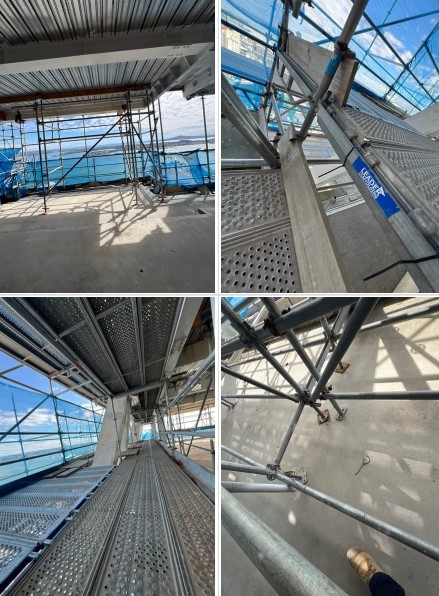
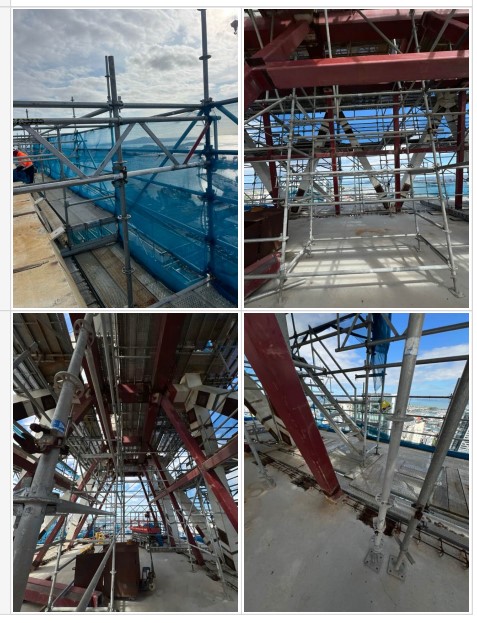
Building and scaffolding experts visit the tower regularly to check that the construction site complies with regulations and is not a danger.
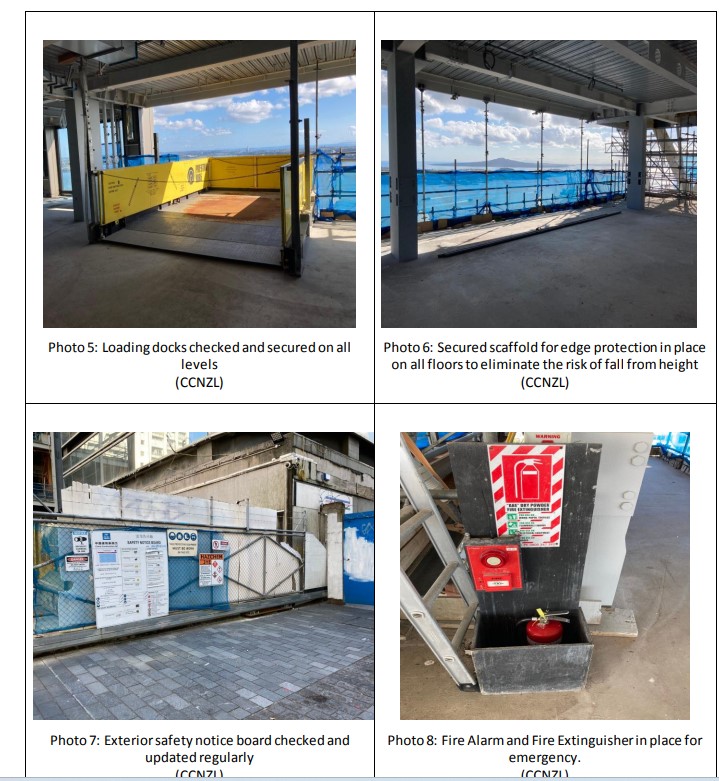
They then send reports to the council that include many pictures proving what the reports state in writing.
A council spokeswoman said it was the owner’s representative, not council staff, who carried out regular inspections.

Cleanliness of toilets, clearance of emergency exits, signage, ventilation and elevated work platforms are examined to ensure compliance by the tower, partly clad only on its lower levels up to about floor 30.
Weekly inspection checklists were provided via the council.
Most of those result in a 100% score for the tower’s compliance.
The February 17-21 report showed mostly no required action.
But an audit score of 95% was ascribed instead of 100% because one aspect didn’t meet the standard. This was marked “housekeeping scaffold dismantle parts on floor”, but it also noted “tidy-up in progress”.
This aspect of the inspection examined the general condition on the top floor and was shown in photos within the report.
The status of this remained “open” while all other aspects of the building were marked closed and no further action was needed.
The February 10-14 report showed an electrical aspect remained open. This was to check all extension leads were tagged and in good condition.
Permits remain in place for work to continue, the site facilities were declared clean, harnesses would be used as required and cranes and lifting equipment were found safe for use. A horn would be sounded when lifting took place via cranes and equipment, the report said.
The 24 aspects CSCEC covers in the reports examine electrical, personal protective equipment, working at heights/protecting against falls, ladders, penetrations cover, permits for penetrations, mobile scaffold, housekeeping, petrol containers, ventilation, site facilities such as offices, elevated work platforms, pre-start checks, cranes and lifting, lifting gear tested, chemicals, basement air quality, perimeter check, defects management, grinding swarf, main switchboard and transformer room, signs and barricades, fire protection and lighting.
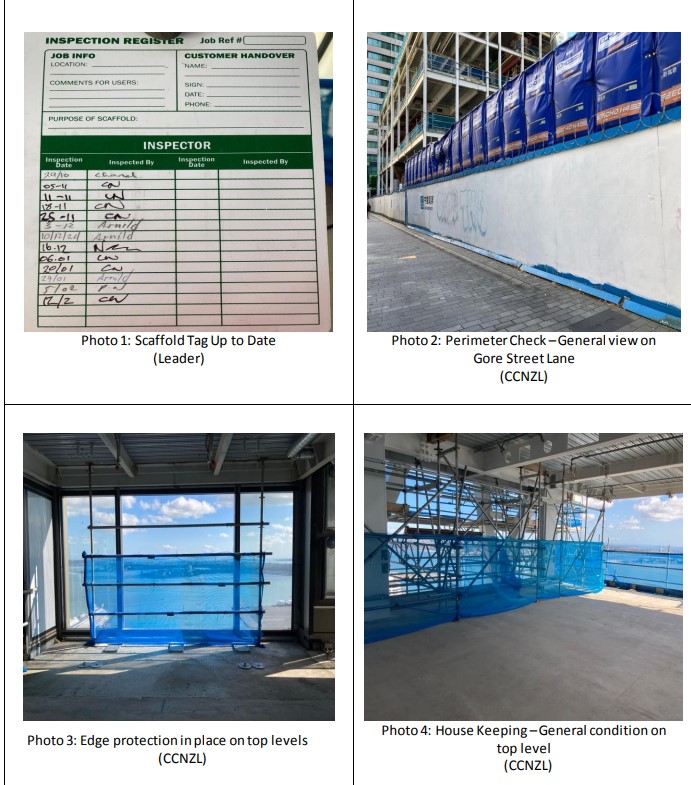
On February 26, a scaffold inspection was carried out by Chanel Nansen and Peter Nansen, according to a report supplied to the council that the Herald received. LinkedIn says Chanel Nansen is a construction supervisor at Leader Scaffolding, which operates in Auckland, Waikato and the Bay of Plenty.
That February 26 report examined aspects like guardrails on stairs and landing platforms. But it also noted “multiple areas” where plywood had been placed to fill gaps. The plywood had been removed due to damage. Areas have been isolated.
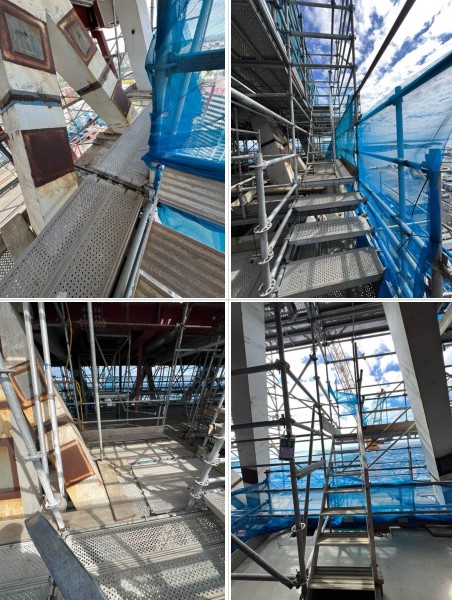
Whether plywood has rotted due to being left in the weather is uncertain. The Herald sought to talk to the inspectors, but Leader Scaffolding referred the Herald to China Construction.
The Leader Scaffolding report said scrim had been reinstated in many areas. On platform and edge protection, all ladders had been secured top and bottom.
Where wood has deteriorated or rotted, steel rails are being recommended as replacement protection.
“Plywood has been removed in multiple areas and has been isolated using rails,” the scaffolding report said.
The February 19 scaffolding report from Peter and Chanel Nansen of Leader Scaffolding also noted elements deteriorating.
“Lift shaft scaffolds are under dismantle. Scrim required around lift shaft handrails. Scrim repair required on cantilever scaffolds. Structure of hanging scaffolds are compliant. Note: plywood in a few areas are damaged. I have talked to the team to get it removed,” that report said.
Paul Culf, the council’s principal specialist building surveyor, said the weekly inspections detailed in the reports were conducted by Seascape’s contractors, who are reputable entities engaged to perform these assessments.
These contractors are bound by legally enforceable documentation, ensuring their submissions meet contractual and regulatory standards.
The council also conducted its own independent inspections every three months to verify compliance and maintain oversight of the conditions on site, Culf said.
Seascape tower
Timeline:
Anne Gibson has been the Herald’s property editor for 25 years, written books and covered property extensively here and overseas.