Iran war impacting airfare prices and jet fuel in ‘peaky’ crisis
There’s no need for airlines and travellers to panic about fuel costs right now, but a plan is needed in case the war drags on.
That’s the view of an airline group after jet fuel prices soared and carriers increased some ticket prices.
“New Zealand domestic carriers are absolutely not alone in that response,” said Cath O’Brien, Board of Airline Representatives (Barnz) executive director.
Raising ticket prices might provide small help with immediate financial challenges but many people flying now probably bought their tickets well before the current crisis, she said.
If fuel was expensive, those tickets might not cover an aircraft’s current running costs, she added.
“We’ve seen the fuel price move around quite a bit.”
She said New Zealand’s fuel reserves were fairly robust, with jet fuel stored across the system at airports and Marsden Pt terminal.
Finance Minister Nicola Willis on Monday said the country had 28 days of petrol, diesel and jet fuel on hand, with a further 29 days on ships en route.
New Zealand’s Minimum Stockholding Obligation, in force since January 2025, required importers to hold 28 days of petrol, 24 days of jet fuel and 21 days of diesel on-shore or in transit.
But O’Brien said airlines had to raise prices because jet fuel had already become more expensive.
Airlines did not own the fuel in those reserves.
She said energy companies applied “near-immediate” price changes to airline customers.
“That means BP or whoever, they are increasing prices.”
Another fuel price crisis emerged about four years ago when Russia invaded Ukraine but that was “not nearly so peaky” as the current reality, she said.
Jet fuel prices have been volatile, at one point late last week around US$85 ($143) a barrel more than Brent crude.
O’Brien said that margin was “freakish”.
The Herald asked if airlines were angry at energy firms when premiums were that extreme.
“It’s just part of business. And running an aviation business is a volatile, high-risk thing to do,” she said.
As to what the Government could or should do, O’Brien said that depended on how long the disruption lasted.
“If we’re still here in three weeks or six weeks facing significant volatility, that will present some really serious challenges.
“We’ve got some time right now to think about what the appropriate policy response could be for these businesses if the situation does continue.”
An AXA analyst overseas was reported as describing the aviation sector as being in “permanent polycrisis”.
O’Brien said the unique challenge now related to extreme volatility.
Yesterday, Air New Zealand ditched earnings guidance, citing “unprecedented” volatility in jet fuel prices and warning it would need to cut costs.
The airline said for someone flying one-way in economy, domestic flight prices were up by $10, short-haul flights by $20 and long-haul flights by $90.
Fuel was the airline’s second-biggest expense after labour in the last financial year, at $1.48 billion.
Foreign Affairs Minister and New Zealand First leader Winston Peters said the Government’s Air New Zealand shares should never be sold.
He said the airline was a critical utility for the country.
“It’s our face abroad,” Peters told Ryan Bridge this morning.
He said selling the Government’s 51% stake in the airline would be an example of “stupid neoliberal thinking”.
Air Chathams chief executive Dwayne Emeny told Newstalk ZB the airline would be increasing standard fares by $20 in response to volatile fuel prices.
That would only provide “a little bit” of relief to cover the increases, he said.
Barrier Air chief executive Grant Bacon also said fare increases would not cover costs.
ASB economists this morning said the outlook was highly uncertain.
“More expensive fuel, travel and freight costs and disruptions on global transport represent a negative hit to NZ and global economic activity by disrupting trade flows and acting as a tax on the purchasing power of firms, households and government.”
They said oil futures suggested the spike could be brief, but that too was uncertain.
“The impacts will not be evenly distributed across the economy, with New Zealand transport services, primary, manufacturing and discretionary services sectors the most impacted.”
There were also localised impacts in the Arabian Gulf that could be consequential for New Zealand, ASB said.
“Air travel in the Gulf region has been significantly disrupted, and this could reduce the allure of a long flight to New Zealand for would-be tourists.”
They added: “We also consider the vulnerability of the tourism channel given higher airfare prices from costlier jet fuel, and a higher demand elasticity given travel is a luxury.”
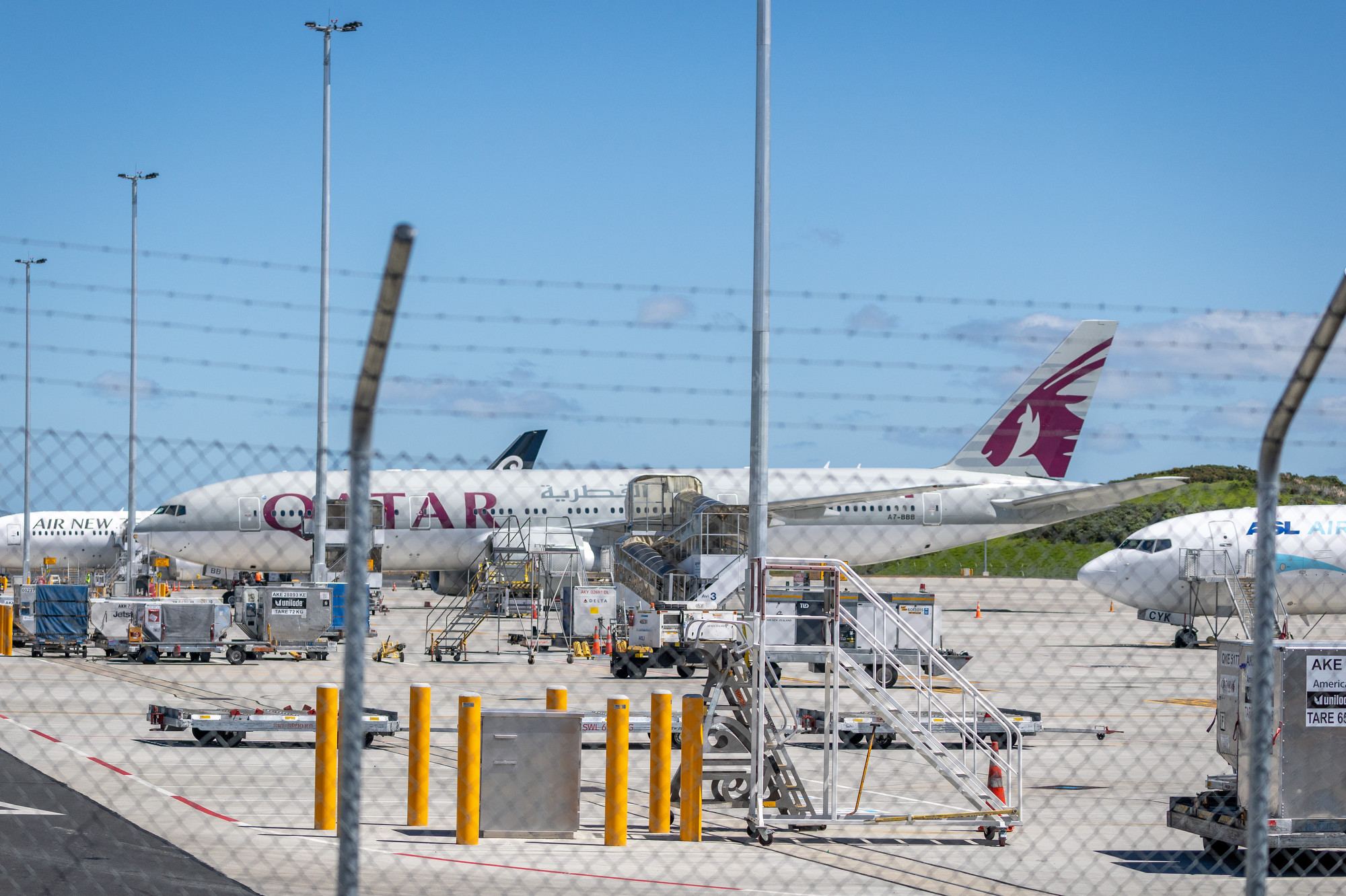
Overseas, Qatar Airways this morning said it planned to operate some flights in the coming days, but Auckland was not on the list.
A Qatar Airways Boeing 777 has been parked at Auckland Airport for more than a week.
Qantas and Scandinavia’s SAS have also raised some ticket prices.
Oil prices on Monday went past US$100 a barrel but have since fallen, and this morning Brent crude was at US$91.60 and early this afternoon was US$87.80.
Even before Monday’s crude price spike, jet fuel prices were up.
The International Air Transport Association said the global average jet fuel price last week rose 58.4% compared with the week before.
John Weekes is a business journalist covering aviation and court. He has previously covered consumer affairs, crime, politics and courts.