Air New Zealand opens huge timber hangar at Auckland Airport
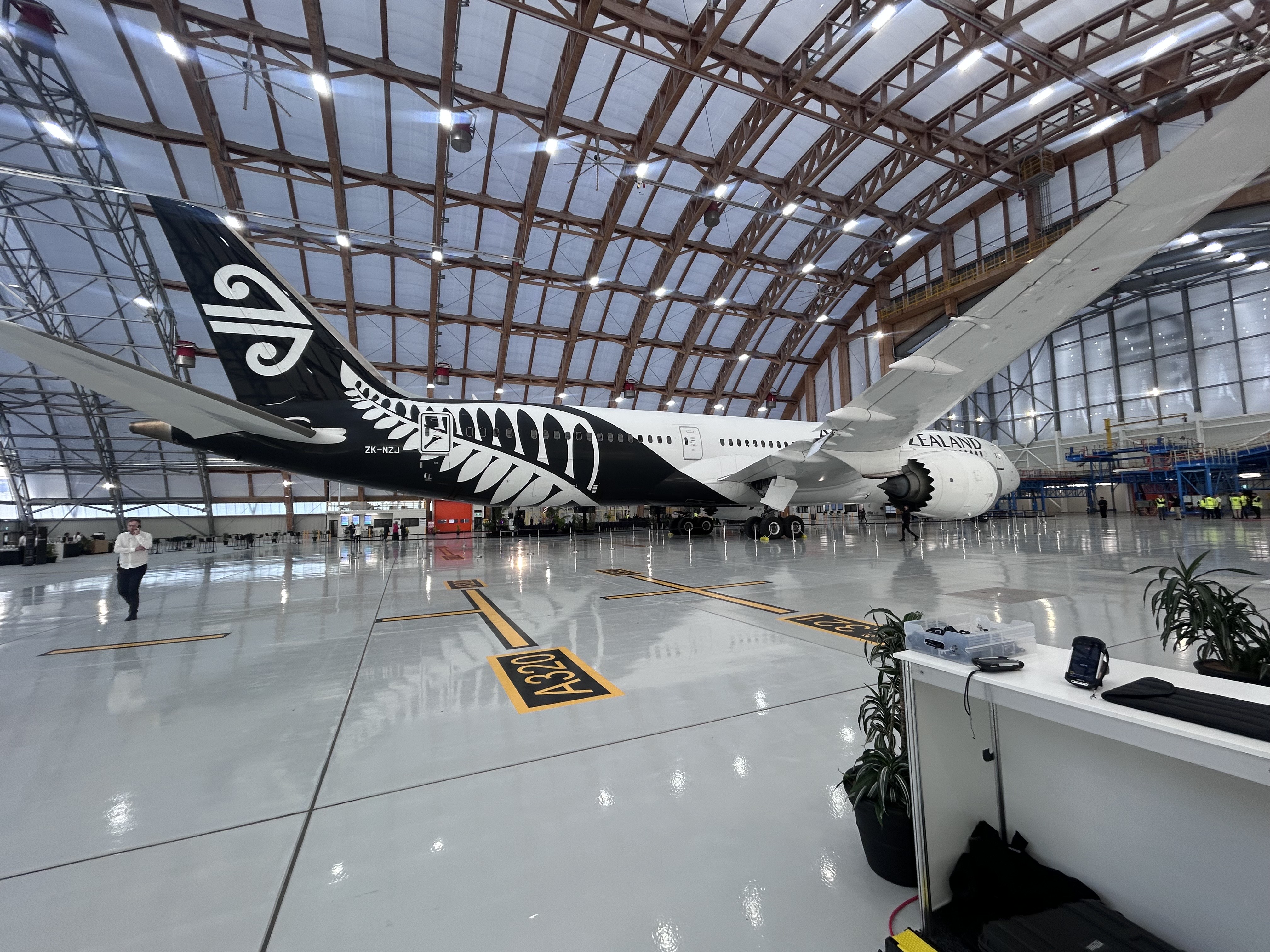
Air New Zealand is this morning unveiling Hangar 4, one of its biggest construction projects.
Hundreds of guests have arrived and a Boeing 787-9 Dreamliner is inside the hangar now.
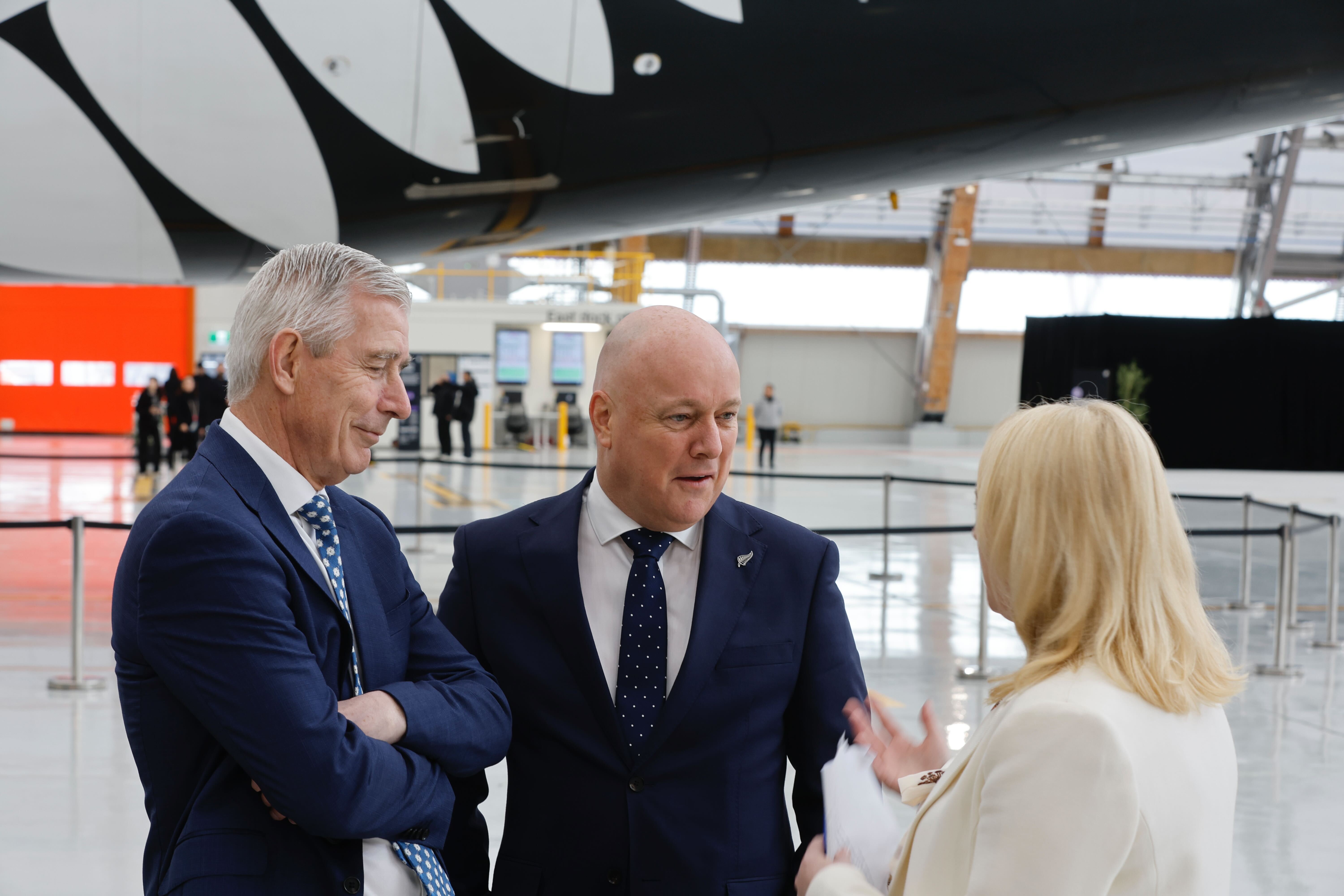
In attendance are chief executive Greg Foran, former chief executive Ralph Norris and Prime Minister Christopher Luxon, who is also a former Air New Zealand chief executive.
“No one else in the world has this,” Luxon said of the hangar. “It’s absolutely incredible and amazing.”
Luxon also congratulated incoming CEO Nikhil Ravishankar, who takes over on October 20.
Air NZ chair Dame Therese Walsh said she wanted to especially acknowledge the engineering and maintenance staff.
“Engineering and maintenance is the heart of the organisation,” she said.
“No plane leaves this hangar unless it is safe. That attention to detail is what makes us the world’s safest airline.”
Engineers can move between the new hangar and the existing Hangar 3 through a covered corridor.
Part of the airline’s Auckland maintenance base in Māngere, the hangar lets engineers service a Boeing 787-9 Dreamliner and two Airbus A320 or A321s simultaneously.
The new 10,000sq m engineering facility at Auckland Airport was announced in 2019.
Brendon McWilliam is the airline’s general manager for aircraft maintenance and delivery, and looks after engineers.
“It’s been quite a journey,” he said of the hangar. “You go back to 2019, Covid happened, things were tough post-Covid.”
Apart from the one Dreamliner/two narrowbody layout, McWilliam told the Herald the hangar could accommodate four narrowbody aircraft.
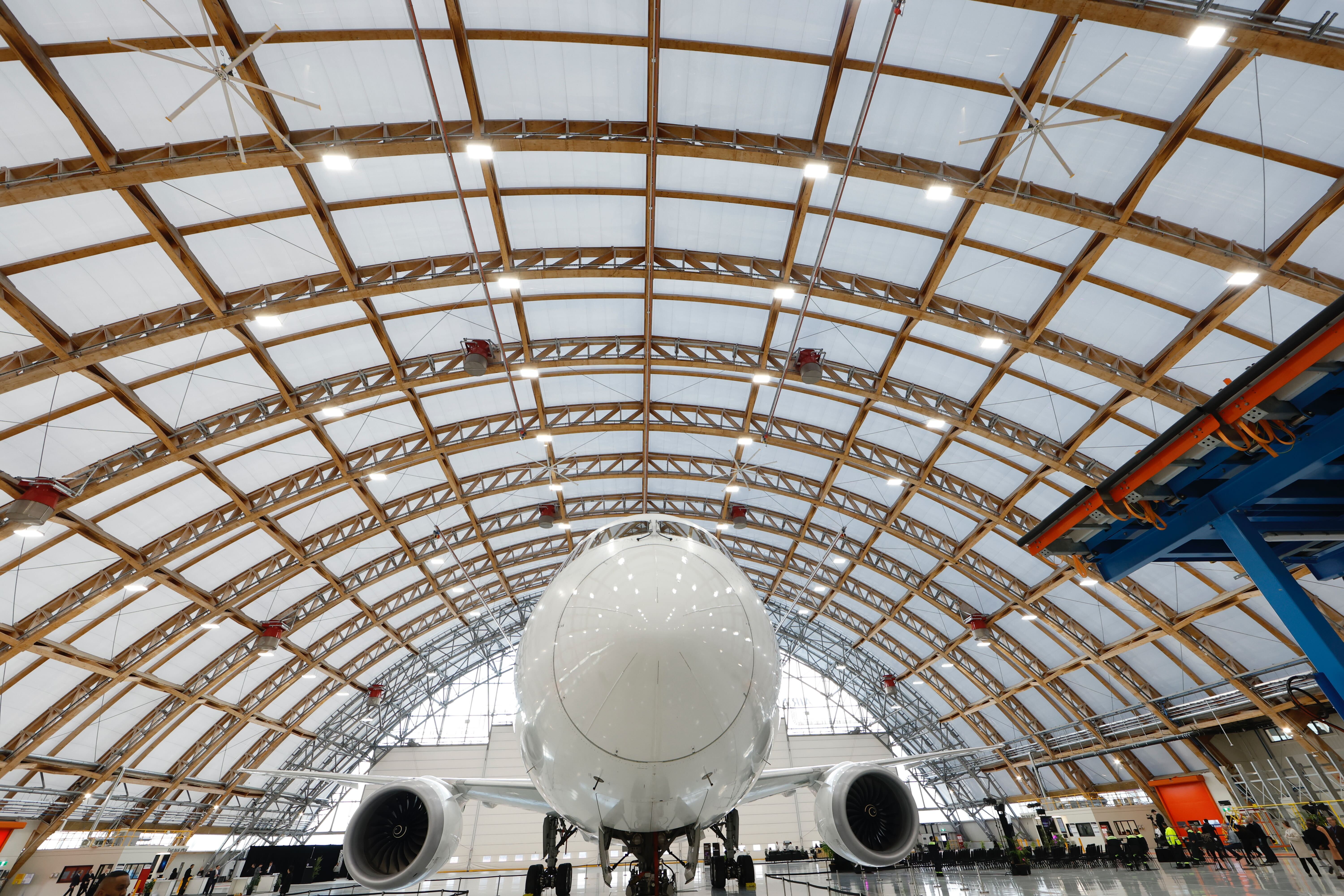
The airline said Hangar 4 was designed to serve the next 50 years of aviation.
The hangar is 35m high and 98m wide, and engineers will have access to a further 5000sq m of specialist workshops and engineering spaces.
Foran, who steps down from the role next month, said the opening of Hangar 4 was a proud moment for the airline.
He said the new hangar would let the airline maintain its current fleet while providing flexibility to adapt as aircraft technology evolves.
“This investment ensures we have fit-for-purpose, modern infrastructure for our engineers to service our fleet.”
The building is the largest single-span timber arch aircraft hangar in the Southern Hemisphere.
Luxon was the airline’s chief executive when Hangar 4 was first announced in 2019.
“Infrastructure like this is critical for New Zealand, and Air New Zealand’s future,” Luxon said.
“It supports highly skilled jobs and is future-fit for new innovation and growth.”
Luxon addressed media and was asked if he still had confidence in Minister of Finance Nicola Willis after the disastrous second-quarter GDP results.
He said he did, and insisted she was the best person for the job.
The airline said timber was chosen as a lightweight, sustainably sourced material capable of performing well in a coastal environment.
The airline said an Ethylene Tetrafluoroethylene (ETFE) roof delivered natural light and retained heat without the need for a heating system.
Ceiling fans will circulate warm air in winter.
Prefabricated trusses, each weighing 38 tonnes, were built in 25m sections.
They were assembled on site and lifted into place using New Zealand’s largest crawler crane.
“Underground service pits eliminate the need for surface cabling, offering both flexibility and efficiency for maintenance teams,” the airline added.
“The structure also connects with the adjacent Hangar 3 via shared workshops and tool stores, boosting efficiency across maintenance programmes.”
John Weekes is a business journalist covering aviation. He has previously covered consumer affairs, crime, politics and courts.