Trump says US strike in Venezuela kills 'infamous' gang leader

President Donald Trump said Friday (local time) that a “swift and lethal kinetic” US strike has killed Hector Rusthenford Guerrero Flores, whom he called “the infamous leader” of the Tren de Aragua gang.
Tren de Aragua has been labelled by the United States as a terrorist organisation. Guerrero Flores was charged in a New York federal court with racketeering conspiracy and other crimes, including lending support to terrorists in crimes that stretched more than a decade, authorities announced in December.
US Attorney Jay Clayton said at the time that the gang is responsible for countless acts of violence, extortion and drug trafficking in North America, South America and Europe. Trump nominated Clayton on Thursday to be director of national intelligence.
The US State Department had offered rewards of up to US$5 million (NZ$8.5 million) for information leading to Guerrero Flores’ arrest.
In a post on his social media site, Trump wrote, “Tren de Aragua terrorists no longer have safe haven in Venezuela or anywhere else and, under my leadership, we will find these vicious murderers and drug lords anytime, anyplace, and send them to the depths of hell where they belong".
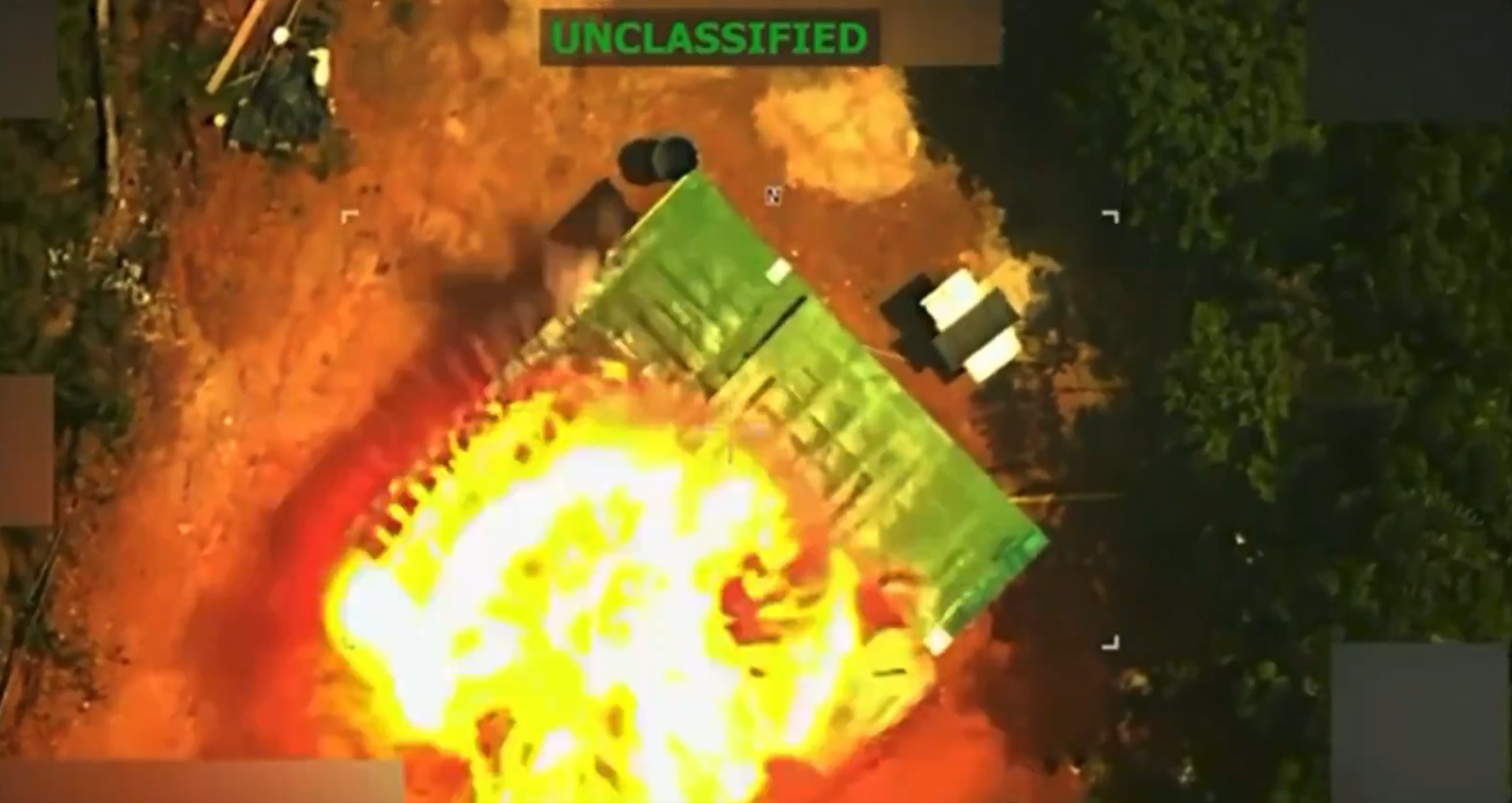
Trump has taken a series of extraordinary actions against the gang, including a series of strikes on small boats his administration has accused of smuggling drugs to America.
Trump and administration officials have consistently blamed Tren de Aragua for being at the root of the violence and illicit drug dealing that plague some US cities.
The president spent months repeating the claim — contradicted by a declassified US intelligence assessment — that Tren de Aragua had operated under Venezuelan President Nicolás Maduro’s control. The US whisked Maduro out of Venezuela to face US drug charges in January.
Tren de Aragua originated more than a decade ago at an infamously lawless prison with hardened criminals in Venezuela’s central state of Aragua. The gang has expanded in recent years as millions of Venezuelans migrated to other Latin American countries or the US in search of better living conditions.
The size of the gang is unclear. Countries with large populations of Venezuelan migrants, including Peru and Colombia, have accused the group of being behind a spree of violence in the region. Still, unlike other criminal organisations from Colombia, Central America and Brazil, Tren de Aragua has no large-scale involvement in smuggling cocaine across international borders, according to InSight Crime, a think tank that tracks crime across Latin America.
In Venezuela, gang leaders have long been known to participate in various illegal activities, including gold mining.