Putin rejects Zelensky's offer to meet, says he sees 'no point' in it
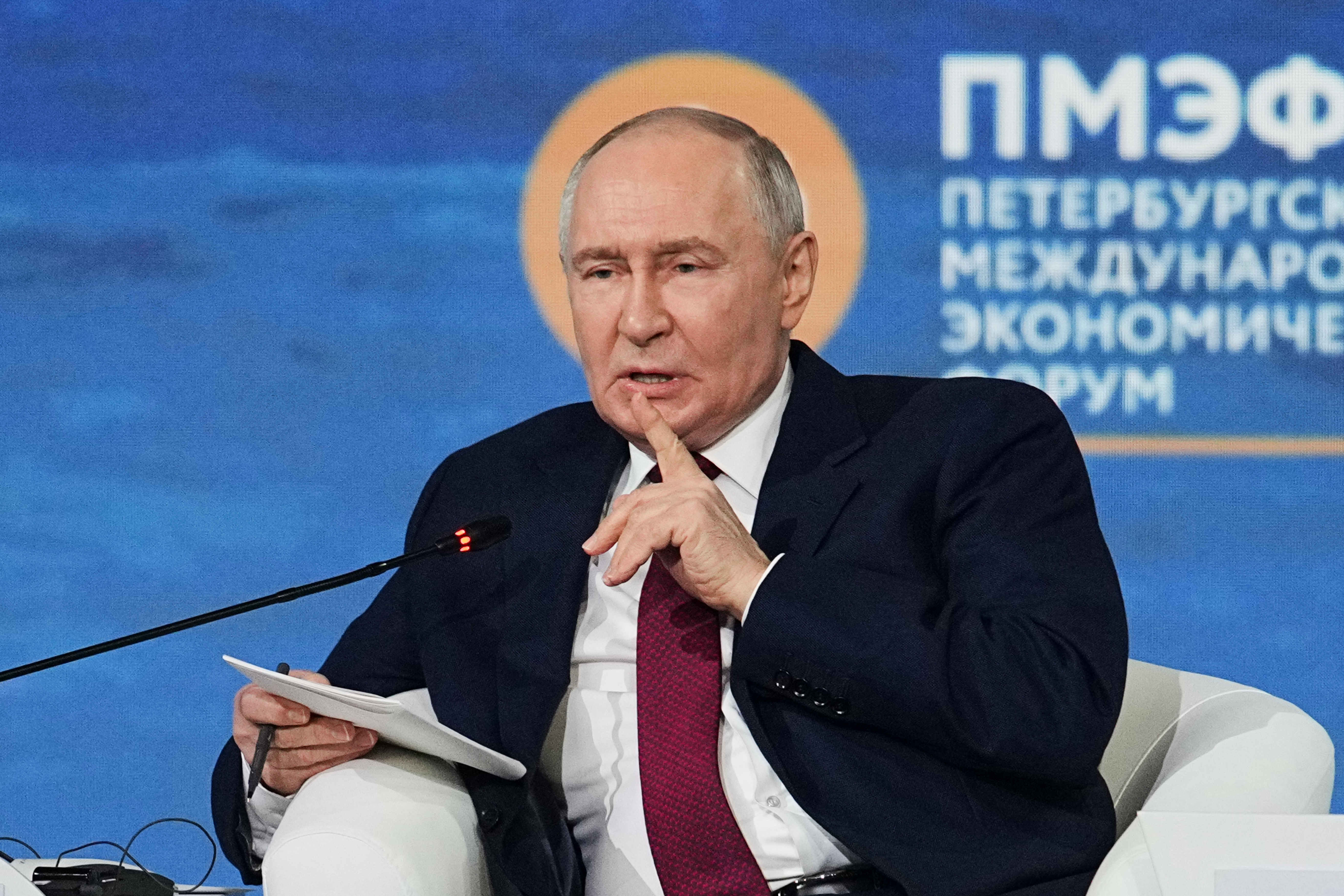
Russian President Vladimir Putin on Saturday rejected a proposal by Ukrainian President Volodymyr Zelensky for a face-to-face meeting on the 4-year-old conflict, saying he sees “no point” in it.
Friday's letter, the first public message Zelensky has written directly to Putin since Russia sent troops into Ukraine in 2022, was a sweeping critique of the Russian leader’s 26 years in power as well as some taunts about his age.
Speaking at the St Petersburg International Economic Forum, Putin described Zelensky’s open letter proposing the meeting as “boorish”.
“Is it a way to create conditions for personal meetings and talks, or create an environment which makes any personal meetings impossible?” Putin said at a question-and-answer session at his annual St Petersburg International Economic Forum. “I think it’s the second.”
Putin added that a Russian businessman whom he didn’t identify travelled to Kyiv last month and met with Zelensky to hear his offer of a personal meeting.
However, Putin said that he currently sees “no point” in such a meeting, especially after a May 22 drone attack by Ukraine on a college dormitory in the Russian-controlled Luhansk region that Moscow said killed 21 and wounded scores of others.
In response to Zelensky’s barbs about his age and long stay in power, the 73-year-old Putin pointed at other global leaders who are older, adding that “the main thing isn’t age; the main thing is the ability to work”.
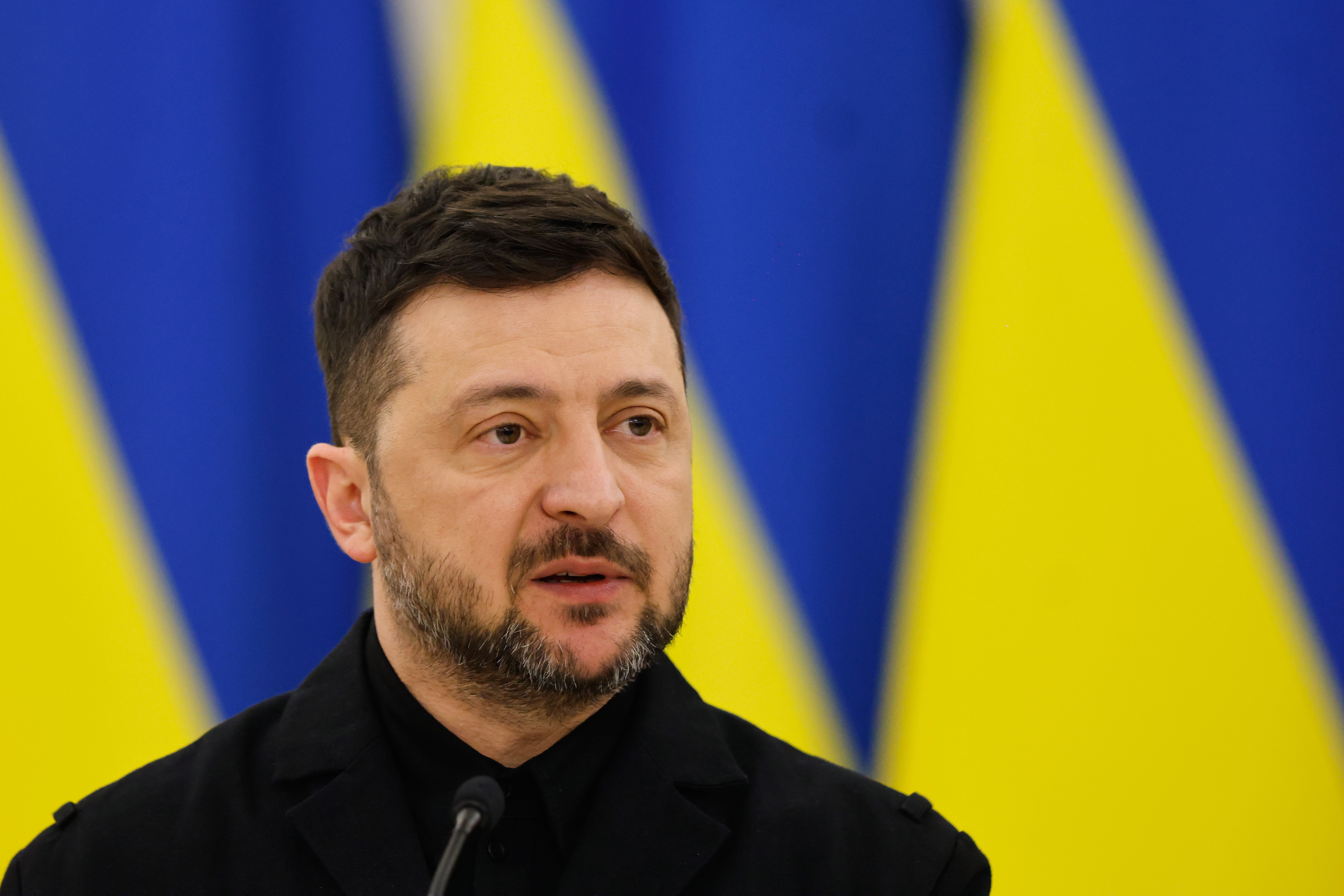
He also mocked Zelensky's rocky Oval Office meeting in 2025 and thanked US President Donald Trump for “educating” Zelensky “before the eyes of the whole world” and teaching him a proper dress code.
“There is still a lot to be done,” he said.
Zelensky acknowledged shifting US priorities, saying it would be wrong to simply wait for the Trump administration to return its attention to ending the fighting in Ukraine while it remains heavily focused on the Iran war.
In Washington, Trump said it “would be great” if Putin and Zelensky meet.
Putin has previously offered for Zelensky to come to Moscow for talks, an offer that the Ukrainian leader pointedly rejected. Putin said last month he doesn’t exclude a meeting in a third country, but only when there is a deal to sign.
On Friday, Putin again rejected Zelensky’s push for an immediate ceasefire, arguing that Moscow wants a comprehensive settlement, not a temporary truce.
Putin said Russia is open for a compromise on Ukraine in line with understandings reached at his last year’s summit with Trump in Anchorage, Alaska, adding that Ukraine needs to accept them to make a deal to end the conflict.
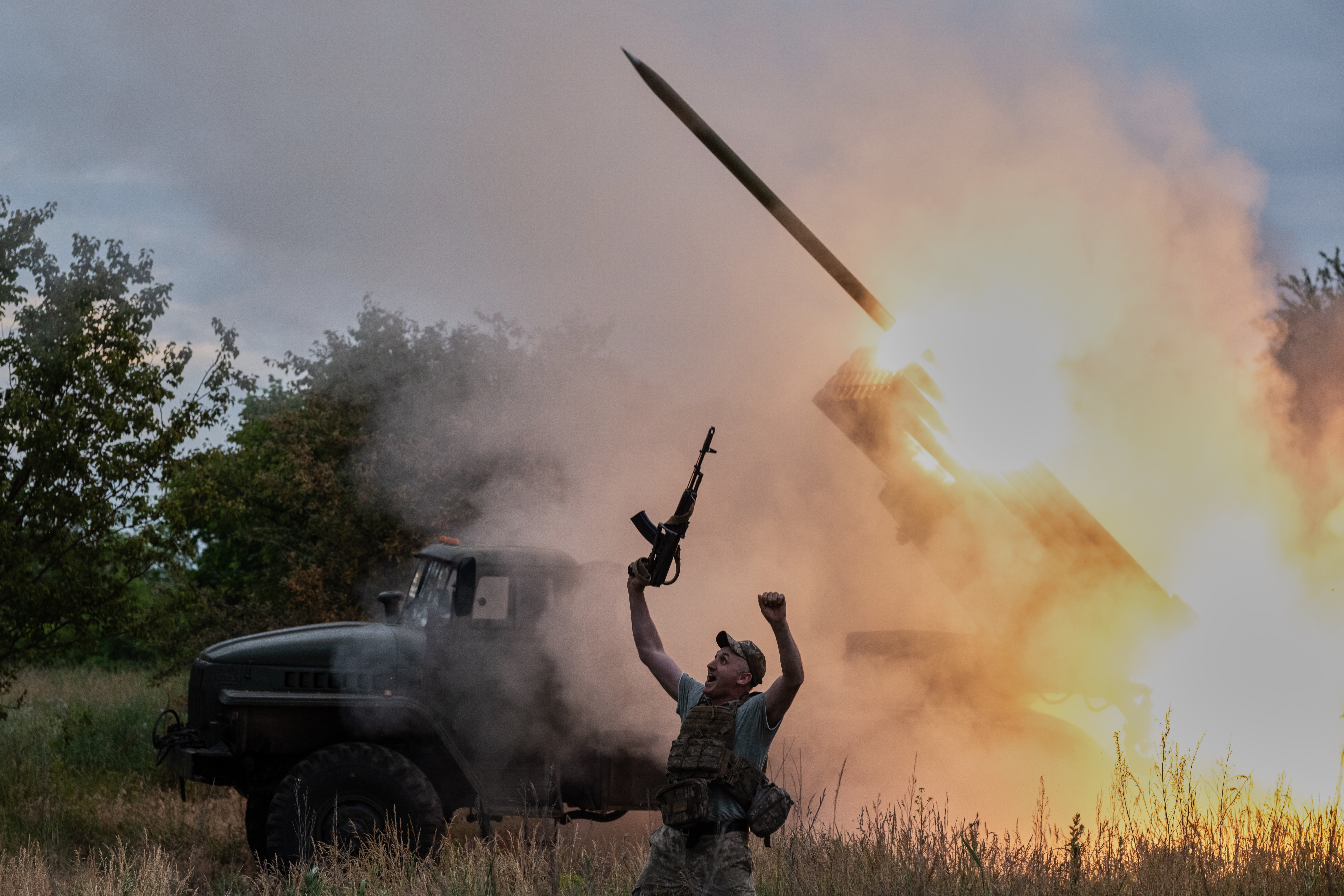
“Naturally, the Ukrainian side would like us to suspend the advances made by Russian troops,” he said. “But it would be better to end the war by agreeing to the compromises that were discussed in Anchorage.”
Asked about Iran, Putin voiced hope for an eventual deal to secure lasting peace. He shrugged off claims that Moscow provided Iran with satellite images, saying that Tehran could use widely available commercial ones.
"As for weapons, Iran hasn’t asked us for them, and we haven’t supplied any weapons to Iran,” he said, adding that Russia stands ready to take enriched uranium for storage as part of a potential peace deal, and that Moscow has stayed in contact with Iran, the US and Israel.
Global turbulence
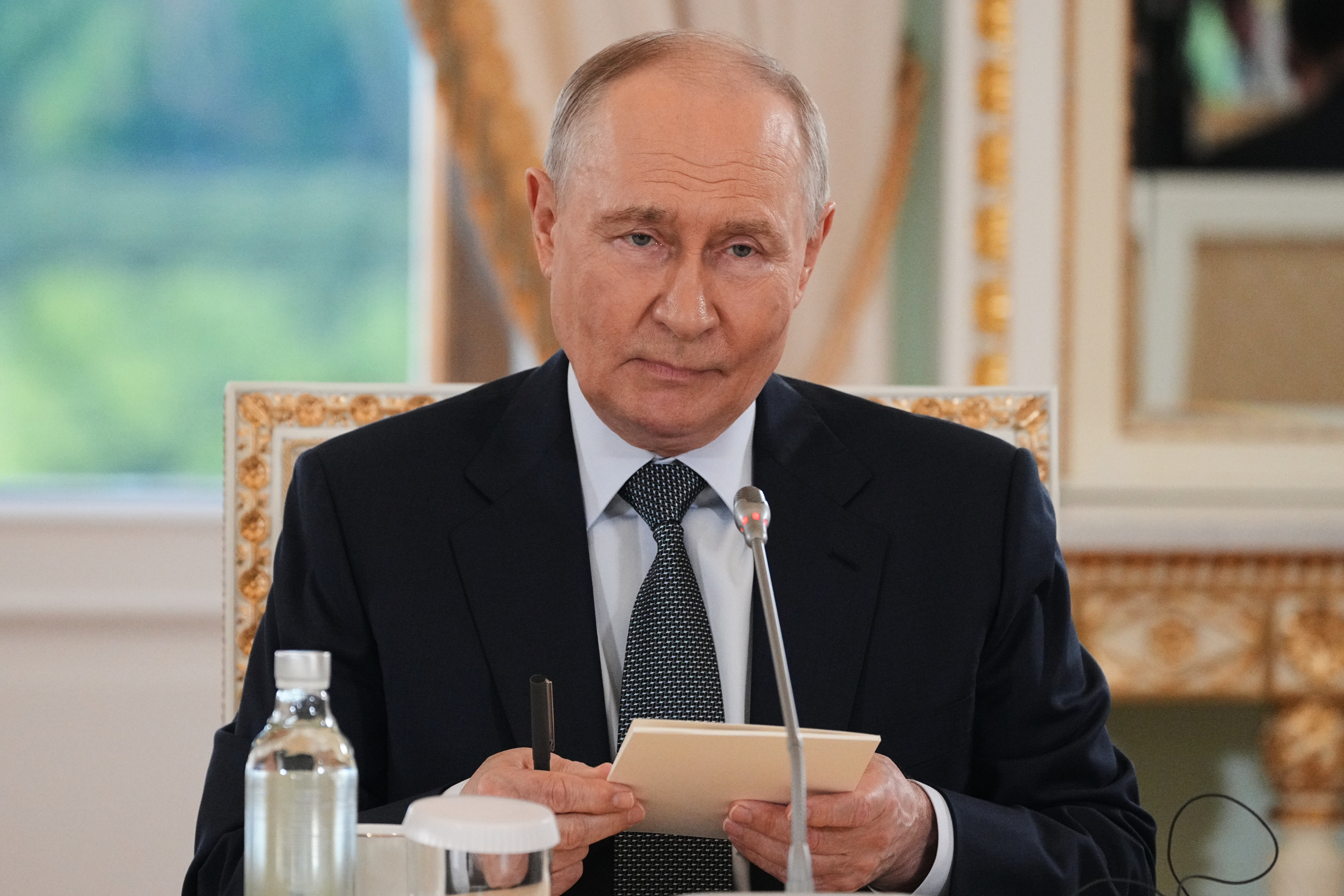
In a speech earlier at the forum, Putin said developing countries have gained an increasingly important role in the global economy, while the share of output by Western countries has shrunk.
He accused the West of undermining the global economy and finances with unilateral sanctions. By freezing Russian assets abroad through sanctions, Western nations eroded trust in their own currencies, he said.
“The sanctions and blocking of Russia’s sovereign reserves have irreversibly impacted the standing of international currencies, the dollar and the euro,” he said. “Just like Russia, any other country could lose access to their legitimate assets in dollars or euros, as well as Western financial and payment systems.”
He alleged that high state debt had helped undermine global trust in Western institutions.
“The roots of the current global turbulence lie in the transition from a vertical, hierarchical model, which served the interests of a small number of states, to a more complex, distributed and multipolar one,” Putin said. “Russia views global changes not only as a threat but also as immense opportunities. And to capitalise on them, we aim to act swiftly and pragmatically.”
The Russian leader said the world needed a “modern, flexible and responsible financial architecture — free from risks, bans and barriers”.
Putin stresses Russia's macroeconomic stability
Putin played down Russia’s economic slowdown and sought to emphasise its macroeconomic stability. He noted that Russia’s state debt is a fraction of that in Western countries and its budget deficit is considerably smaller, compared with the West.
The forum comes at a time when Russia’s economic outlook has clouded amid the conflict in Ukraine. The government raised taxes and increased domestic borrowing to keep its budget deficit under control.
On Friday, Putin told heads of international media on the forum's sidelines that it was an exaggeration to say Russia's economy was struggling. He noted that his government had taken deliberate steps to cool the economy to keep inflation under control.
Putin has used the St Petersburg forum, likened to the World Economic Forum in Davos, Switzerland, to showcase his country’s economic advances and encourage foreign investment. While Western officials and business leaders have stayed away after Putin sent troops into Ukraine in 2022, Russia has sought guests from elsewhere to underline its declared goal of promoting a “multipolar world”.
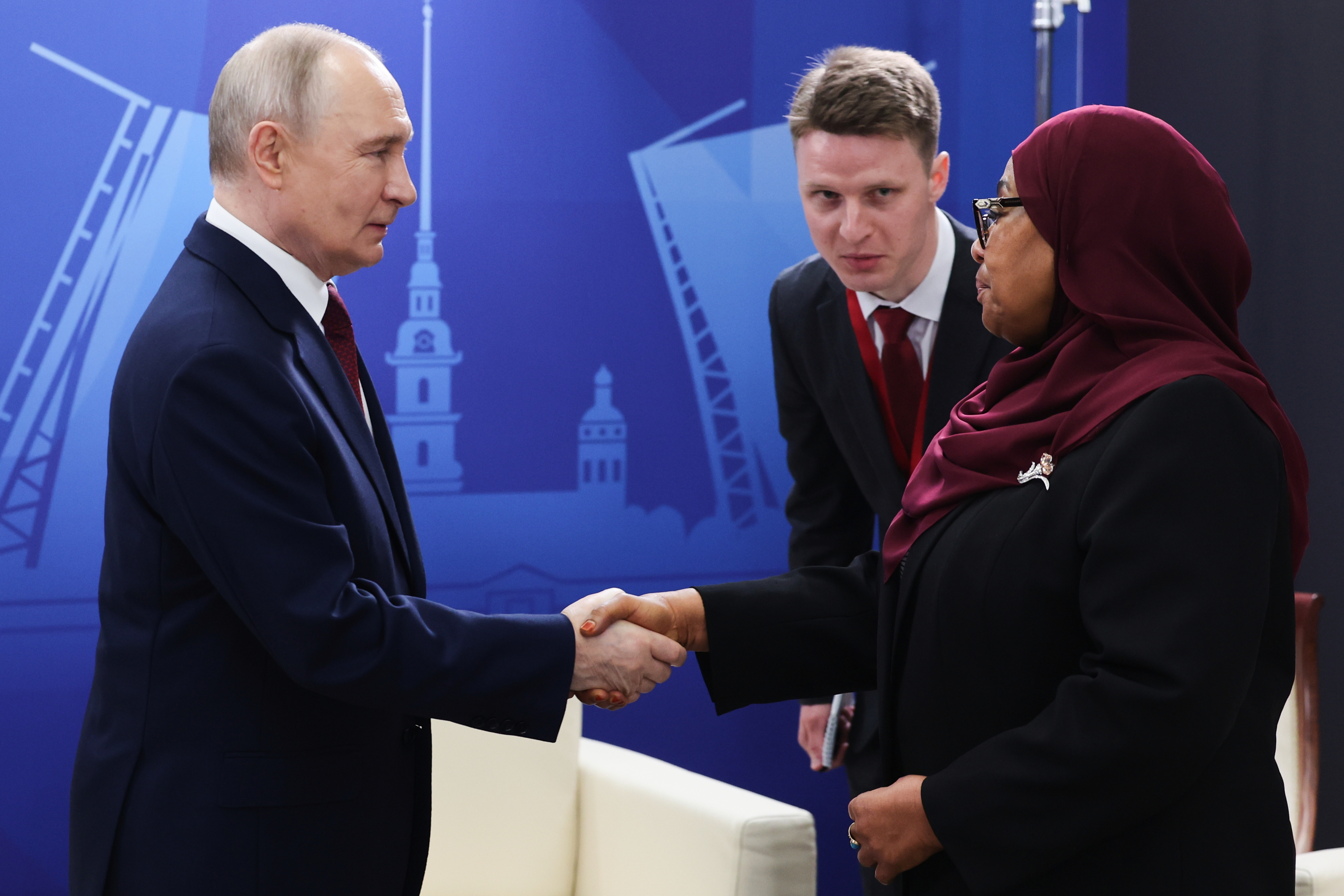
Saudi Arabia sent a large delegation this year, and the presidents of Uzbekistan and Tanzania and vice president of China also gave speeches. A US official, Rodney Mims Cook Jr, head of the US Commission of Fine Arts, is attending for the first time in years.
Cook was singled out in the audience during a question-and-answer session following Putin's speech. Cook praised the beauty of St Petersburg, and Putin thanked him for the remarks about his hometown and asked to convey his greetings to Trump.
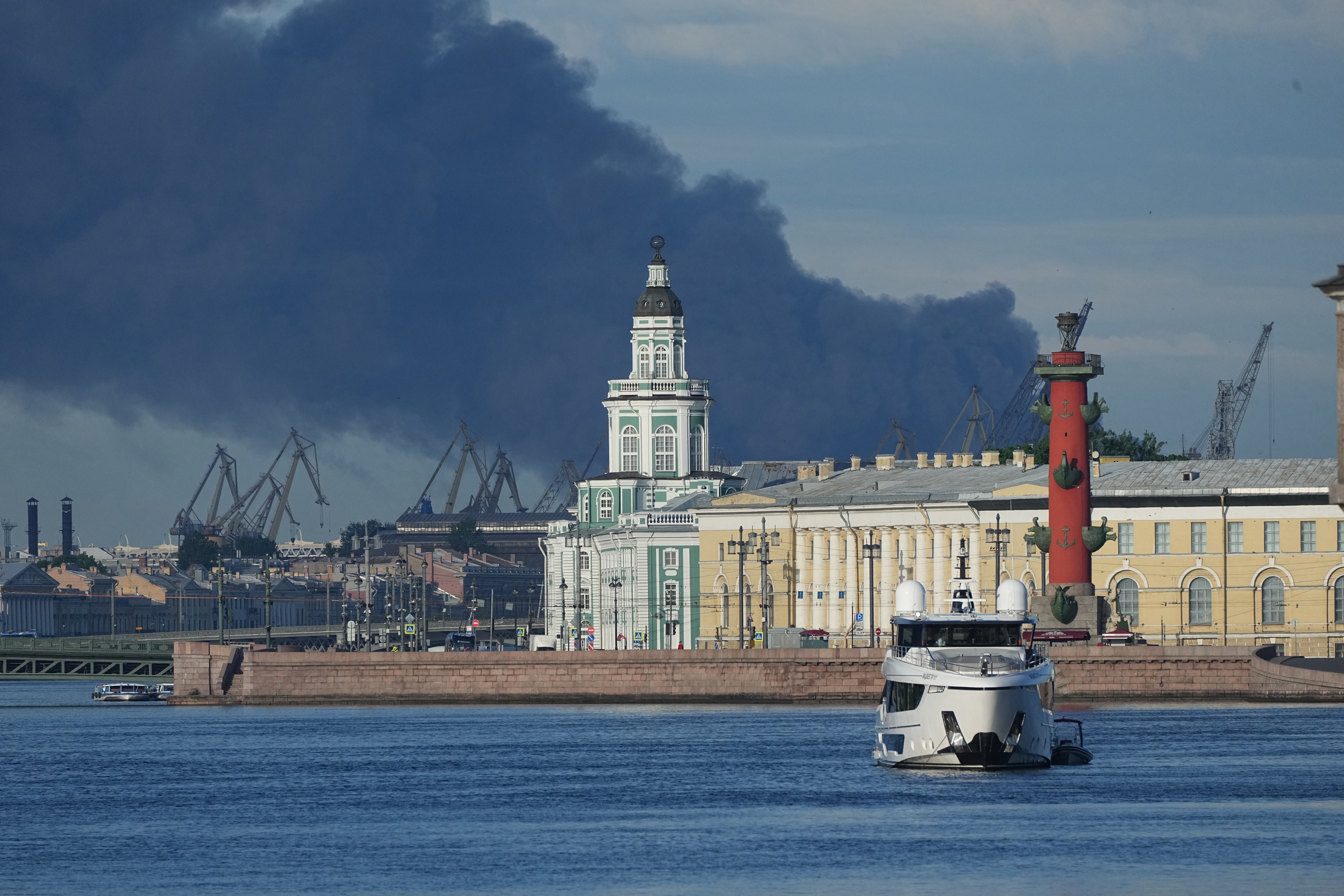
Hours before the forum opened Thursday, a Ukrainian drone attack set ablaze an oil terminal in St Petersburg and also hit a nearby naval base.
Putin declared that Russia was “calmly and resolutely” moving to reach its goals in Ukraine. He acknowledged the damage from Ukrainian drone attacks deep inside Russia and vowed to build up defences.
“They do inflict a certain damage,” he said. “For us, it means only one thing: we need to strengthen our security, strengthen air defences, and we will do that.”