My uncertain childhood was my path to architecture
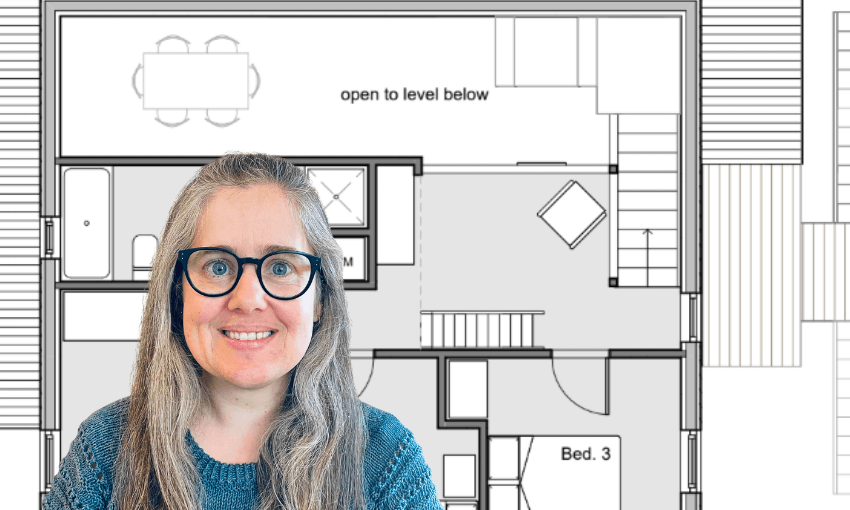
Architect Claire Tod feared her reality was too raw for a profession that celebrated perfection. It turns out, her experiences were her strength.
When I became a registered architect last year, I thought I’d feel elated, but instead I felt overwhelmingly uncomfortable. I had worked in the profession for nearly two decades, but I often felt that I didn’t belong. Looking back, part of me thought that might change when I became registered, but of course it didn’t: nothing was going to change how different my path to architecture was compared to the successful architects around me.
My architectural education began in the contrast between the two houses I grew up in. My mother’s house was a modest 1930s timber bungalow. During my childhood, my mum was dealing with the aftermath of severe trauma. She couldn’t always provide stability, but the house she worked hard to hold onto provided a nurturing place for me. It was a space of agency where I was allowed to paint my room pink and explore the wild, regenerating bush outside. My father’s house was a 1970s architecturally designed home with eight different roof slopes. It was a fun place to live. I used to climb into a round window to watch the southerlies roll in. It was my favourite spot. But the heavy, three-storey, high stucco cladding on untreated timber framing lacked weathertightness and basic safety. I learnt early on that architecture isn’t just about form, but capacity to hold life.
At five, I was navigating the scary, grey buildings of the Family Court. At 14, I learnt about wayfinding via the winding corridors in Wellington Hospital after my brother’s leg was amputated following a van accident. These early experiences of institutional architecture taught me that when a building ignores the emotional reality of its occupants it fails to provide emotional shelter when it is needed the most.
At 17, I learnt about what nourishing architecture could feel like from my school bus driver. He lived in a trailer with his family. The world might have seen a sub-standard structure, but I saw a home built on love and safety. It provided a seed from which their family could grow. It nurtured life. That was true architecture.
Throughout my architecture degree, I balanced studio life and working part time with supporting a relative through psychotic episodes. I would hide in empty bathrooms to take crisis calls from doctors. I feared that my reality was too raw for a profession that celebrated perfection. But this struggle taught me to value spaces that provide room to breathe. The small courtyard garden of Wellington Hospital’s psychiatric ward nourished me. Places like this aren’t just design features, they are lifelines, providing a vital connection to nature.
When I had the opportunity to design my own home, I was determined to give my children a space where they could thrive. After my own childhood, which at times felt structurally and emotionally unsafe, I was driven to design a certified Passivhaus (which requires rigorous energy efficient design so that they maintain a comfortable temperature) not for the prestige, but to provide certainty. I wanted our home to tread lightly, to be healthy and comfortable, without contributing to the energy crisis that we are facing.
It’s not just my own home, though. When I design for others, I design for certainty too, because everyone deserves to live in a building that is safe, healthy and comfortable. A home should be a basic human right. Sadly, in Aotearoa it isn’t, even though we have the tools to relieve the energy crisis and provide every home in Aotearoa comfort with the certainty of low energy bills.
I enjoy designing for the complexity of human life. All buildings should meet the fundamentals of life, because when they do, they allow people to be just who they need to be. They offer space to succeed, to fail, to learn, to heal, to connect, to withdraw.
I will never be an architect focused on perceived perfection, because for me architecture is about empathy. I have learnt just as much negotiating life as a parent, a daughter, a sister, a partner, a friend, as I have within the confines of my architectural career. I continue to learn.